Jump to HeaderJump to Main ContentJump to Footer
Michigan State University
  • Browse Stories By

    Topics

    Explore stories by subject area

    • Arts and Culture
    • Business and Economy
    • Climate and Environment
    • Education and Learning
    • Engineering, Science and Technology
    • Government and Society
    • Health and Medicine
    • Media and Communications
    • MSU Leadership and Impact
    • Sports and Recreation
    • Student and Campus Experience
    View All Stories

    Collections

    Curated story series

    • Turfgrass
    • Ask the Expert
    • Big Ideas
    • Climate solutions
    • Water at MSU
    • Mobility
    • Spartan Perspectives
    • Student views
    • Graduate voices
    • Faculty voices
    View All Collections

    Featured

    Editor's picks

    • The Spartans behind your favorite Michigan golf courses

      July 22, 2026

      The Spartans behind your favorite Michigan golf courses

    • MSU in the 1990s: 10 Spartan milestones

      July 14, 2026

      MSU in the 1990s: 10 Spartan milestones

MSUTODAY
  • Browse Stories By

< Browse Stories By

Topics

Explore stories by subject area

  • Arts and Culture
  • Business and Economy
  • Climate and Environment
  • Education and Learning
  • Engineering, Science and Technology
  • Government and Society
  • Health and Medicine
  • Media and Communications
  • MSU Leadership and Impact
  • Sports and Recreation
  • Student and Campus Experience
  • View All Stories

Collections

Curated story series

  • Turfgrass
  • Ask the Expert
  • Big Ideas
  • Climate solutions
  • Water at MSU
  • Mobility
  • Spartan Perspectives
  • Student views
  • Graduate voices
  • Faculty voices
  • View All Collections

Featured

Editor's picks

  • The Spartans behind your favorite Michigan golf courses

    July 22, 2026

    The Spartans behind your favorite Michigan golf courses

  • MSU in the 1990s: 10 Spartan milestones

    July 14, 2026

    MSU in the 1990s: 10 Spartan milestones

  • For Media
  • Experts
  • Releases and Statements
  • Sign Up
  • Update Information

Resources

  • A to Z Index
  • Find People
  • Maps
  • Email
  • Student Information System (SIS)
  • D2L
  • Libraries
  • Tech Support
  • MSU Misconduct Hotline
  • Social Media Directory
  • Events Calendar
  • For Media
Michigan State University
MSUToday
  • For Media
  • Experts
  • Releases and Statements
  • Sign Up
  • Update Information
MSUTODAY
Biodiversity and Wildlife

May 12, 2023

Shocking implications of electric fishes’ tailless sperm

Betting on tailless sperm that evolved from brave swimmers to hapless floaters seems like a crazy evolutionary gamble, but a group of fish seems to have done just that. Understanding that tradeoff holds promise to shed light on human disease and shake up biology lessons on traditional gender roles.
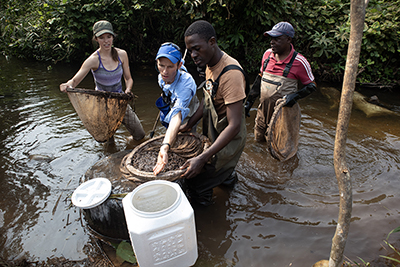
Jason Gallant and his team surveying a stream for electric fish in Gabon

Michigan State University integrative biologist Jason Gallant and colleagues are using nearly $1 million from the National Science Foundation to understand the implications from a small African fish which evolved to have sperm with no tails but an electric-powered mating call. 

“We want to know why electric fish get away with it when no other vertebrate can,” said Gallant, associate professor in the Department of Integrative Biology in the MSU College of Natural Science and a member of MSU’s Ecology, Evolution, and Behavior Program. “A general notion in biology is that sperm are cheap, and eggs are expensive – but these fish may be telling us that sperm are more expensive than we might think. They could be saving energy by cutting back on sperm tails.”
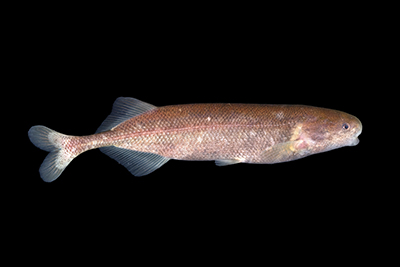
Paramormyrops Kingsleyae, an African weakly electric fish

The variety of fish called mormyroids are commonly called elephantfish because even though small, their elongated mouths look a bit like a trunk. They live in murky African waters so dense they rely on brief electric charges to find each other. The pulses of electrical output and the brainpower needed to pick analyze these pulses requires a lot of energy. Elephantfish may have prioritized spending their energy stores to finding females and then on relying on other ways to deliver sperm to egg.

And within that theory are so many questions.

Members of the MSU Electric Fish Lab will work to confirm the gene they believe turns off sperm tail development. One way they test that is to isolate the gene and insert it in another species of fish with traditionally wiggly sperm to see if those tails disappear. The researchers also have developed a way to measure respiration to determine how much energy the fish save by nixing sperm tails.
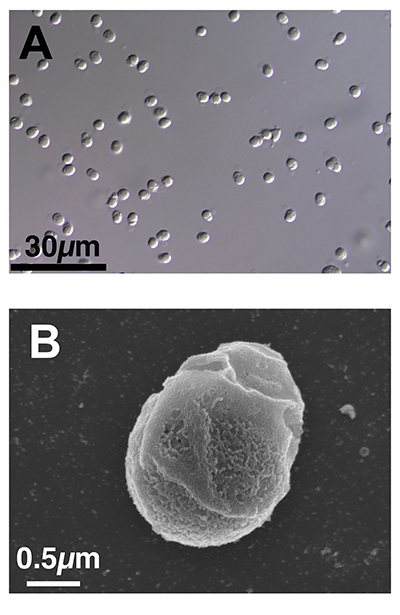
The sperm of the mormyrid weakly electric fish Paramormyrops kingsleyae

And the group believes the questions go beyond fish sperm. Flagella are abundant throughout our tree of life — including in the sperm of people. Flagella are related to another beating appendage called cilia, which are shorter hair-like structures that also move.

“It’s interesting that cilia make biological world go round: flagella are really just really long cilia and many of the same parts,” Gallant said.

And this is where both human health and gender norms enter the picture.

A human genetic disorder called primary ciliary dyskinesia, or PCD, brings chronic respiratory infection, abnormally positioned organs, fluid on the brain and infertility, all stemming from the lack of normally functioning cilia and flagella. The gene Gallant’s team is focusing on appears to be one of several factors in PCD, yet he notes its intriguing the mormyroids seem well and normal except for the tailless sperm. A better understanding of the function of the gene in fish could provide another piece of the PCD puzzle to understand human health problems.

And since fish that procreate with sperm that don’t swim is perplexing, the researchers are exploring how Elephantfish are far from traditionalists. A part of the research project will engage undergraduates to explore one of biology’s less-known stories.

“What’s neat about this grant is that we’re working with biology that turns our assumptions on their head,” Gallant said. “As humans we have assumptions that males are programmed to be the fertilizer. Females are passive recipients of sperm. But these sperm can’t even swim — they also have small testes, so aren’t competitive with other males.

“My pet hypothesis is that a lot of people get their ideas of how men and women should behave from biology lessons,” Gallant added. “If we teach them how diverse nature is, will that change the way they go about acting with each other?”

This story was originally published by the College of Natural Science. 

MEDIA CONTACTS

Val Osowski
Biodiversity and WildlifeClimate and EnvironmentNatural SciencesEngineering, Science and TechnologyMSU ResearchMSU Leadership and Impact

Latest News

MSUToday Weekly Update

The MSUToday Weekly Update email showcases how Spartans are making a difference through academic excellence, research impact and community outreach. Get inspired by these stories of innovation, collaboration and determination. Plus, enjoy photos and videos of campus and more MSU content to help keep you connected to the Spartan community.

Sign UpUpdate My Information

Connect With Us

Visit our Facebook pageVisit our page on XVisit our Instagram pageVisit our LinkedIn pageVisit our YouTube pageVisit our TikTok page

Health and Safety

  • MSU Police and Public Safety
  • Olin Health Center
  • Counseling & Psychiatric Services (CAPS)
  • University Health and Wellbeing
  • MSU Health Care
  • Civil Rights and Title IX
  • Our Commitment
  • Center for Survivors
  • Security & Fire Safety Report
  • University Policy on Relationship Violence and Sexual Misconduct
  • Notice of Non-Discrimination, Anti-Harassment and Non-Retaliation
  • Health Care Non-Discrimination Notice

Support Services

  • Disability Resources
  • Supportive Services
  • Learning Resources

Working at MSU

  • Human Resources
  • EBS Login
  • Job Postings
  • Employee Assistance Program

Reports

  • CARES Act Funding
  • Student Achievement and Outcomes

Contact us

517-355-1855

Address

Michigan State University 426 Auditorium Road East Lansing, MI 48824

Follow Us

  • Visit our Facebook page
  • Visit our page on X
  • Visit our Instagram page
  • Visit our TikTok page
  • Visit our LinkedIn page
  • Visit our YouTube page

If you're having accessibility issues, please let us know.

Know More: Campus Safety Information and ResourcesTransparency Reporting: Budget & Salary/Compensation
  • Contact Information|
  • Site Map|
  • Privacy Statement|
  • Site Accessibility|
  • Call MSU: (517) 355-1855|
  • Visit: msu.edu|
  • Notice of Nondiscrimination|

SPARTANS WILL|© Michigan State University|
