Jump to HeaderJump to Main ContentJump to Footer
Michigan State University
  • Browse Stories By

    Topics

    Explore stories by subject area

    • Arts and Culture
    • Business and Economy
    • Climate and Environment
    • Education and Learning
    • Engineering, Science and Technology
    • Government and Society
    • Health and Medicine
    • Media and Communications
    • MSU Leadership and Impact
    • Sports and Recreation
    • Student and Campus Experience
    View All Stories

    Collections

    Curated story series

    • Turfgrass
    • Ask the Expert
    • Big Ideas
    • Climate solutions
    • Water at MSU
    • Mobility
    • Spartan Perspectives
    • Student views
    • Graduate voices
    • Faculty voices
    View All Collections

    Featured

    Editor's picks

    • The Spartans behind your favorite Michigan golf courses

      July 22, 2026

      The Spartans behind your favorite Michigan golf courses

    • MSU in the 1990s: 10 Spartan milestones

      July 14, 2026

      MSU in the 1990s: 10 Spartan milestones

MSUTODAY
  • Browse Stories By

< Browse Stories By

Topics

Explore stories by subject area

  • Arts and Culture
  • Business and Economy
  • Climate and Environment
  • Education and Learning
  • Engineering, Science and Technology
  • Government and Society
  • Health and Medicine
  • Media and Communications
  • MSU Leadership and Impact
  • Sports and Recreation
  • Student and Campus Experience
  • View All Stories

Collections

Curated story series

  • Turfgrass
  • Ask the Expert
  • Big Ideas
  • Climate solutions
  • Water at MSU
  • Mobility
  • Spartan Perspectives
  • Student views
  • Graduate voices
  • Faculty voices
  • View All Collections

Featured

Editor's picks

  • The Spartans behind your favorite Michigan golf courses

    July 22, 2026

    The Spartans behind your favorite Michigan golf courses

  • MSU in the 1990s: 10 Spartan milestones

    July 14, 2026

    MSU in the 1990s: 10 Spartan milestones

  • For Media
  • Experts
  • Releases and Statements
  • Sign Up
  • Update Information

Resources

  • A to Z Index
  • Find People
  • Maps
  • Email
  • Student Information System (SIS)
  • D2L
  • Libraries
  • Tech Support
  • MSU Misconduct Hotline
  • Social Media Directory
  • Events Calendar
  • For Media
Michigan State University
MSUToday
  • For Media
  • Experts
  • Releases and Statements
  • Sign Up
  • Update Information
MSUTODAY
MSU Research

May 8, 2023

Developing sustainable management for potato early die complex

A $750K grant provided by the U.S. Department of Agriculture's National Institute of Food and Agriculture awarded to MSU researchers

By: Cameron Rudolph

A team of Michigan State University researchers has received a $750,000 grant from the U.S. Department of Agriculture’s National Institute of Food and Agriculture to develop and evaluate sustainable methods of managing potato early die complex.
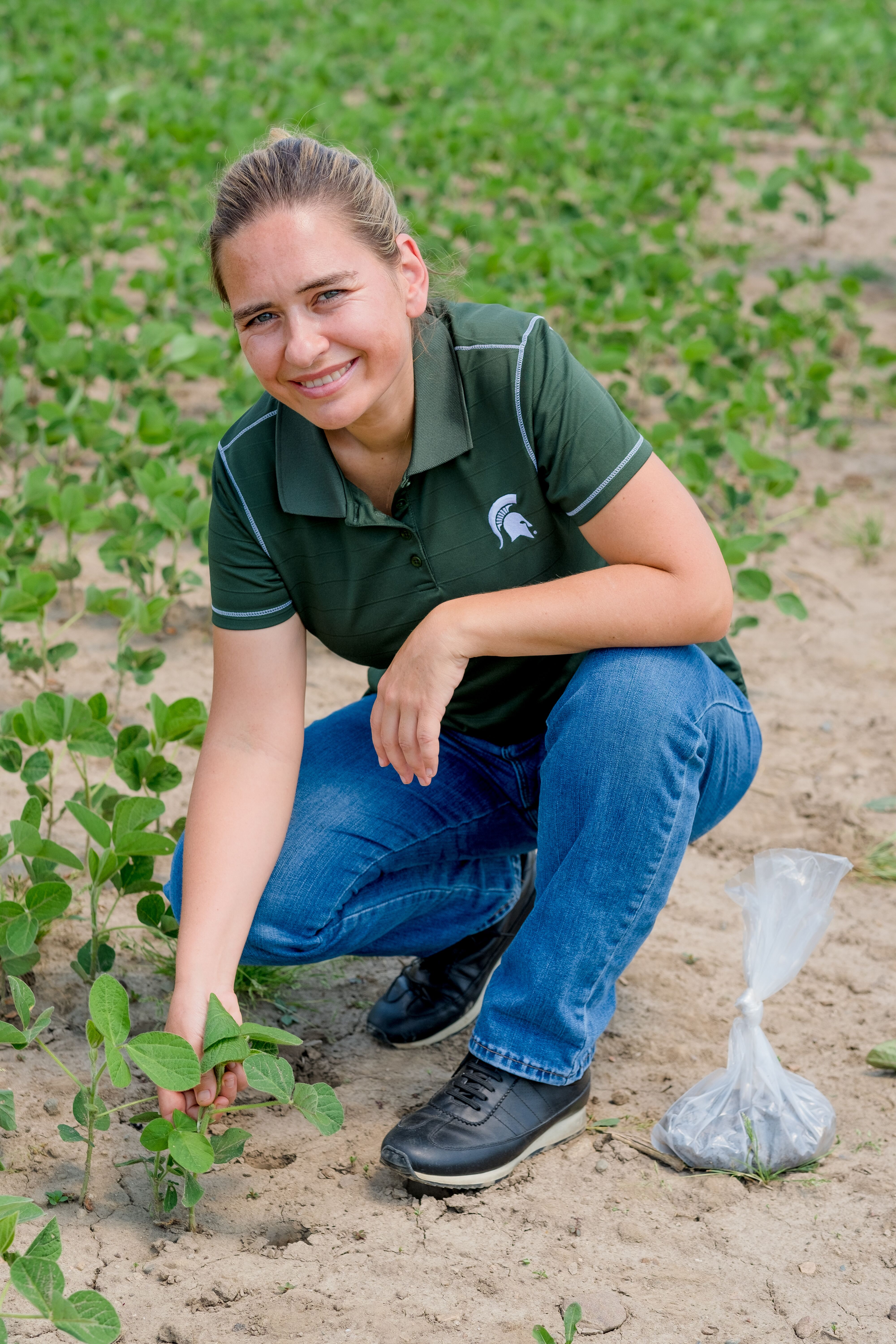
Marisol Quintanilla
Marisol Quintanilla

Michigan ranks eighth nationally in potato production, with more than 46,000 acres and 1.7 billion pounds harvested each year. According to the Michigan Potato Industry Commission, or MPIC, the industry contributes $1.24 billion to the state’s economy. Michigan is also the nation’s leader in producing potatoes for use in chips.

But there are a multitude of challenges facing potato growers. One of the most destructive diseases, potato early die complex, can reduce yields by as much as 50%. It is caused by the convergence of a fungus, Verticillium dahliae, and nematode, Pratylenchus penetrans, which compromises the plant’s health before it is able to reach maturity. Previous research on the disease has shown that other pathogens may influence it as well.

The new project will be led by Marisol Quintanilla, a nematologist and assistant professor in the MSU Department of Entomology. Other MSU scientists involved include:

  • Luisa Parrado, a doctoral student in Quintanilla’s laboratory who helped author the project proposal
  • Henry Chung, an assistant professor in the Department of Entomology
  • Jennifer Pechal, an assistant professor in the Department of Entomology
  • Chris Long, a potato extension specialist in the Department of Plant, Soil and Microbial Sciences
  • Jaime Willbur, an assistant professor in the Department of Plant, Soil and Microbial Sciences
  • Guiping Yan, an associate professor from North Dakota State University, will also contribute to the research

In a recent survey of Michigan potato growers conducted by Willbur, 45% said potato early die complex was one of their top three disease concerns, while 42% stated that current management strategies need to be improved.

The most common current treatment is fumigation, which has negative effects on the soil microbiome and can reduce the efficacy of biological controls. Quintanilla believes these biological controls may hold the key to better management.

“Our previous research has concluded that poultry manure and a compost blend are effective at reducing P. penetrans populations and improving potato yield,” said Quintanilla, whose position is supported in part by MSU AgBioResearch. “The pesticidal effect of these products is not fully understood, but literature suggests that it is attributed to a combination of mechanisms, including the activity of microbial communities that reside in these amendments.”

While soil amendments have typically been used to improve soil health, structure and quality, there is increasing focus on the potential to fight disease. Much of the preliminary research was funded by MPIC and Project GREEEN, a collaboration among MSU, the Michigan Department of Agriculture and Rural Development, and plant agriculture commodity organizations.

The goal of the new project is to provide insights on a compost blend that has the desired antimicrobial characteristics to fend off potato early die complex. The team will work to accomplish this through three objectives:

  • Quantify and identify microorganisms derived from manure-based amendments that are playing an important role in penetrans suppression.
  • Determine the impact and response of the biological activity of manure-based amendments on commercial potato fields and the suppression of the potato early die disease complex.
  • Collaborate with both in- and out-of-state extension educators to disseminate materials for growers.

Research will take place in the field and the laboratory. Two experiments will be hosted at a farm in southwest Michigan with a history of potato early die complex, and these will be replicated in North Dakota.

Extension materials will be created for use online and in print, including a potato management handbook. The handbook will be available in English and Spanish versions.

“Growers will be heavily involved in the process because this research is really geared toward meeting their needs,” Quintanilla said. “We want to make sure the resources we generate are accessible to as many growers as possible.”

This story was originally published on the College of Agriculture and Natural Resources website. 

MSU ResearchMSU Leadership and ImpactClimate and EnvironmentBiodiversity and Wildlife

Latest News

MSUToday Weekly Update

The MSUToday Weekly Update email showcases how Spartans are making a difference through academic excellence, research impact and community outreach. Get inspired by these stories of innovation, collaboration and determination. Plus, enjoy photos and videos of campus and more MSU content to help keep you connected to the Spartan community.

Sign UpUpdate My Information

Connect With Us

Visit our Facebook pageVisit our page on XVisit our Instagram pageVisit our LinkedIn pageVisit our YouTube pageVisit our TikTok page

Health and Safety

  • MSU Police and Public Safety
  • Olin Health Center
  • Counseling & Psychiatric Services (CAPS)
  • University Health and Wellbeing
  • MSU Health Care
  • Civil Rights and Title IX
  • Our Commitment
  • Center for Survivors
  • Security & Fire Safety Report
  • University Policy on Relationship Violence and Sexual Misconduct
  • Notice of Non-Discrimination, Anti-Harassment and Non-Retaliation
  • Health Care Non-Discrimination Notice

Support Services

  • Disability Resources
  • Supportive Services
  • Learning Resources

Working at MSU

  • Human Resources
  • EBS Login
  • Job Postings
  • Employee Assistance Program

Reports

  • CARES Act Funding
  • Student Achievement and Outcomes

Contact us

517-355-1855

Address

Michigan State University 426 Auditorium Road East Lansing, MI 48824

Follow Us

  • Visit our Facebook page
  • Visit our page on X
  • Visit our Instagram page
  • Visit our TikTok page
  • Visit our LinkedIn page
  • Visit our YouTube page

If you're having accessibility issues, please let us know.

Know More: Campus Safety Information and ResourcesTransparency Reporting: Budget & Salary/Compensation
  • Contact Information|
  • Site Map|
  • Privacy Statement|
  • Site Accessibility|
  • Call MSU: (517) 355-1855|
  • Visit: msu.edu|
  • Notice of Nondiscrimination|

SPARTANS WILL|© Michigan State University|
