Jump to HeaderJump to Main ContentJump to Footer
Michigan State University
  • Browse Stories By

    Topics

    Explore stories by subject area

    • Arts and Culture
    • Business and Economy
    • Climate and Environment
    • Education and Learning
    • Engineering, Science and Technology
    • Government and Society
    • Health and Medicine
    • Media and Communications
    • MSU Leadership and Impact
    • Sports and Recreation
    • Student and Campus Experience
    View All Stories

    Collections

    Curated story series

    • Turfgrass
    • Ask the Expert
    • Big Ideas
    • Climate solutions
    • Water at MSU
    • Mobility
    • Spartan Perspectives
    • Student views
    • Graduate voices
    • Faculty voices
    View All Collections

    Featured

    Editor's picks

    • The Spartans behind your favorite Michigan golf courses

      July 22, 2026

      The Spartans behind your favorite Michigan golf courses

    • MSU in the 1990s: 10 Spartan milestones

      July 14, 2026

      MSU in the 1990s: 10 Spartan milestones

MSUTODAY
  • Browse Stories By

< Browse Stories By

Topics

Explore stories by subject area

  • Arts and Culture
  • Business and Economy
  • Climate and Environment
  • Education and Learning
  • Engineering, Science and Technology
  • Government and Society
  • Health and Medicine
  • Media and Communications
  • MSU Leadership and Impact
  • Sports and Recreation
  • Student and Campus Experience
  • View All Stories

Collections

Curated story series

  • Turfgrass
  • Ask the Expert
  • Big Ideas
  • Climate solutions
  • Water at MSU
  • Mobility
  • Spartan Perspectives
  • Student views
  • Graduate voices
  • Faculty voices
  • View All Collections

Featured

Editor's picks

  • The Spartans behind your favorite Michigan golf courses

    July 22, 2026

    The Spartans behind your favorite Michigan golf courses

  • MSU in the 1990s: 10 Spartan milestones

    July 14, 2026

    MSU in the 1990s: 10 Spartan milestones

  • For Media
  • Experts
  • Releases and Statements
  • Sign Up
  • Update Information

Resources

  • A to Z Index
  • Find People
  • Maps
  • Email
  • Student Information System (SIS)
  • D2L
  • Libraries
  • Tech Support
  • MSU Misconduct Hotline
  • Social Media Directory
  • Events Calendar
  • For Media
Michigan State University
MSUToday
  • For Media
  • Experts
  • Releases and Statements
  • Sign Up
  • Update Information
MSUTODAY
Natural Resources and Conservation

April 21, 2023

New research analyzing socioecological influences on carbon in agroecosystems

Lauren Cooper is a contributing author to a new research paper published in the journal Landscape Ecology analyzing socioecological influences on carbon in agroecosystems.

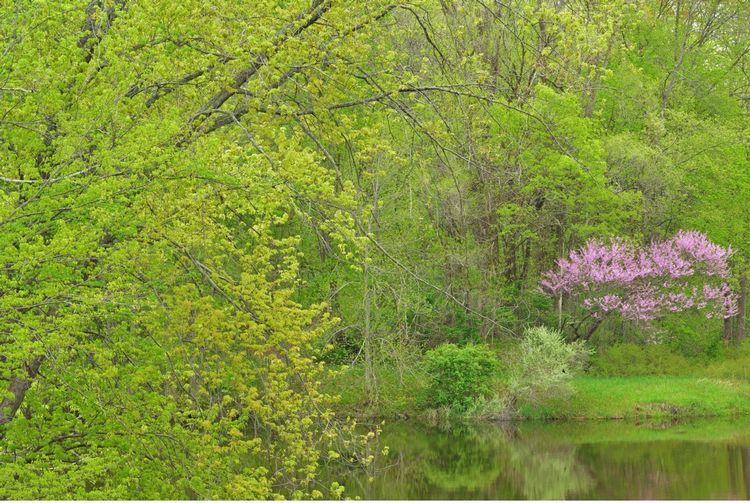
A spring scene on the Kalamazoo River

Researchers from Michigan State University, with colleagues from the University of South Dakota, recently published a paper analyzing socioecological influences on carbon in agroecosystems in the journal "Landscape Ecology." Lead author Gabriela Shirkey — a Ph.D. candidate with the Department of Geography, Environment and Spatial Science at Michigan State University — was joined by Ranjeet John, Jiquan Chen, Venkatesh Kolluru, Reza Gojani Amirkhiz, Sandra T. Marquart-Pyat, Lauren T. Cooper and Michael Collins in publishing “Land cover change and socioecological influences on terrestrial carbon production in an agroecosystem." This research effort aimed to better understand the relative contributions of anthropogenic and environmental factors in terrestrial carbon production as well as the societal influences on potential carbon sequestration efforts.

Co-author Lauren T. Cooper, of the Forest Carbon and Climate Program, shared these thoughts on the research: “Land cover change is one of the biggest drivers of climate change. While many studies focus on challenges and solutions at a national level, in this study we had the opportunity to look at historical and current land cover right here in Michigan. As Michigan looks to adopt nature-based climate solutions, this research highlights the role of distributed decision-making in protecting remaining natural places and in developing ambitious plans for restoration—including improving carbon storage, ecosystem function, and connectivity.”

Research findings indicated the most significant land cover types contributing to terrestrial carbon production were cropland, forestland, and urban areas, respectively. Croplands are known to have high contributions to NPP throughout the Midwest due to large corn-soy rotations. However, cropland and forestland cover decreased during the study period while urban land cover increased. Urbanization of the agroecosystem and removal of cropland, forest, and prairies can decrease not only NPP, but also carbon sequestration in soils as well as the available supply of food and fiber. Urbanization is also associated with an increase in managed turf which, while it represents a measurable amount of carbon sequestration, increases water demand. This is significant because turf, such as in sports fields and golf courses, has been identified as the largest irrigated “crop” in the US.

However, anthropogenic activities such as land use and management may have a stronger influence on NPP than land cover change alone. Socioeconomic changes in land management have been documented across the study area including large changes in land use, farmland management, and shifts in land ownership and tenure. In the context of the study’s landowner survey data, decisions about land use and management are influenced more by environmental stewardship motivations than beliefs about climate change or carbon cycle concerns.

The research findings support the authors’ hypotheses that human activities—including regional development and land management—have a collectively higher impact on NPP and LCLUC than abiotic drivers. By integrating both societal and ecological geospatial data, the authors constructed a socio-environmental system (SES) modeling framework suitable for replication in subsequent landscape studies which may aim to evaluate the patterns and processes of human-environmental interactions. The authors encourage future research and the consideration of additional metrics such as edge-effects, fragmentation, and patchiness of land cover types to further evaluate landscape composition in SES models.

Read the full article.

This story was repurposed for publishing from the College of Agriculture and Natural Resources.

Natural Resources and ConservationClimate and EnvironmentClimate and EnvironmentMSU ResearchMSU Leadership and Impact

Collection

more content from this collection

Climate Solutions

Latest News

MSUToday Weekly Update

The MSUToday Weekly Update email showcases how Spartans are making a difference through academic excellence, research impact and community outreach. Get inspired by these stories of innovation, collaboration and determination. Plus, enjoy photos and videos of campus and more MSU content to help keep you connected to the Spartan community.

Sign UpUpdate My Information

Connect With Us

Visit our Facebook pageVisit our page on XVisit our Instagram pageVisit our LinkedIn pageVisit our YouTube pageVisit our TikTok page

Health and Safety

  • MSU Police and Public Safety
  • Olin Health Center
  • Counseling & Psychiatric Services (CAPS)
  • University Health and Wellbeing
  • MSU Health Care
  • Civil Rights and Title IX
  • Our Commitment
  • Center for Survivors
  • Security & Fire Safety Report
  • University Policy on Relationship Violence and Sexual Misconduct
  • Notice of Non-Discrimination, Anti-Harassment and Non-Retaliation
  • Health Care Non-Discrimination Notice

Support Services

  • Disability Resources
  • Supportive Services
  • Learning Resources

Working at MSU

  • Human Resources
  • EBS Login
  • Job Postings
  • Employee Assistance Program

Reports

  • CARES Act Funding
  • Student Achievement and Outcomes

Contact us

517-355-1855

Address

Michigan State University 426 Auditorium Road East Lansing, MI 48824

Follow Us

  • Visit our Facebook page
  • Visit our page on X
  • Visit our Instagram page
  • Visit our TikTok page
  • Visit our LinkedIn page
  • Visit our YouTube page

If you're having accessibility issues, please let us know.

Know More: Campus Safety Information and ResourcesTransparency Reporting: Budget & Salary/Compensation
  • Contact Information|
  • Site Map|
  • Privacy Statement|
  • Site Accessibility|
  • Call MSU: (517) 355-1855|
  • Visit: msu.edu|
  • Notice of Nondiscrimination|

SPARTANS WILL|© Michigan State University|
