Jump to HeaderJump to Main ContentJump to Footer
Michigan State University
MSUTODAY
  • Browse Stories By

    Topics

    Explore stories by subject area

    • Arts and Culture
    • Business and Economy
    • Climate and Environment
    • Education and Learning
    • Engineering, Science and Technology
    • Government and Society
    • Health and Medicine
    • Media and Communications
    • MSU Leadership and Impact
    • Sports and Recreation
    • Student and Campus Experience
    View All Stories

    Collections

    Curated story series

    • Turfgrass
    • Ask the Expert
    • Big Ideas
    • Climate solutions
    • Water at MSU
    • Mobility
    • Spartan Perspectives
    • Student views
    • Graduate voices
    • Faculty voices
    View All Collections

    Featured

    Editor's picks

    • 9 reasons to love being a Spartan

      Aug. 28, 2026

      9 reasons to love being a Spartan

    • NIH awards multi-university team over $4M to improve women’s health

      Sept. 15, 2026

      NIH awards multi-university team over $4M to improve women’s health

MSUTODAY
  • Browse Stories By

< Browse Stories By

Topics

Explore stories by subject area

  • Arts and Culture
  • Business and Economy
  • Climate and Environment
  • Education and Learning
  • Engineering, Science and Technology
  • Government and Society
  • Health and Medicine
  • Media and Communications
  • MSU Leadership and Impact
  • Sports and Recreation
  • Student and Campus Experience
  • View All Stories

Collections

Curated story series

  • Turfgrass
  • Ask the Expert
  • Big Ideas
  • Climate solutions
  • Water at MSU
  • Mobility
  • Spartan Perspectives
  • Student views
  • Graduate voices
  • Faculty voices
  • View All Collections

Featured

Editor's picks

  • 9 reasons to love being a Spartan

    Aug. 28, 2026

    9 reasons to love being a Spartan

  • NIH awards multi-university team over $4M to improve women’s health

    Sept. 15, 2026

    NIH awards multi-university team over $4M to improve women’s health

  • For Media
  • Experts
  • Releases and Statements
  • Sign Up
  • Update Information

Resources

  • A to Z Index
  • Find People
  • Maps
  • Email
  • Student Information System (SIS)
  • D2L
  • Libraries
  • Tech Support
  • MSU Misconduct Hotline
  • Social Media Directory
  • Events Calendar
  • For Media
Michigan State University
MSUToday
  • For Media
  • Experts
  • Releases and Statements
  • Sign Up
  • Update Information
Natural Resources and Conservation

Jan. 11, 2023

The U.S. is committed to conservation. Now, how do we do it?

MSU research is informing how we can reach domestic and international conservation goals in the face of climate change

By: Matt Davenport

When the U.S. government committed last January to conserving 30% of the United States’ natural land and water by the year 2030, the decision was embraced by the majority of Americans. A poll found that 80% of voters supported what’s known as the “30 by 30 plan” but questions remain about how to decide which pieces of nature should be protected to reach that goal.

 

Sarah Saunders, Michigan State University adjunct scholar and senior manager of quantitative science at the National Audubon Society

Now, Michigan State University ecologists are part of a team that’s sharing data to help inform those choices throughout the U.S. and beyond. Their research identified North America’s climate change refugia, habitats that will be the most likely to support the persistence of the greatest amount of biodiversity in the face of a changing climate.


The team also included researchers at the National Audubon Society, the University of East Anglia in England and James Cook University in Australia. They released their work Jan. 11 in the journal Frontiers in Ecology and the Environment.


“We know climate change is happening,” said Mariah Meek, an assistant professor in MSU’s College of Natural Science and the Ecology, Evolution and Behavior program. “We wanted to take a forward-looking approach and find where the opportunities are to protect species that will still be able to inhabit their spaces in the future.”

 

Michigan State University Assistant Professor Mariah Meek

The team started with a collection of data and computer models that represent North America’s undeveloped land in the context of its biodiversity. With that information, the researchers accounted for more than 135,000 different species of plants, birds, fungi, reptiles, mammals, amphibians and invertebrates. For the land component, the data enabled researchers to break down the U.S., Canada and Mexico into square patches that were 20 km, or roughly 12 miles, across.


The researchers could then project how well those different patches would continue supporting their current species over the next several decades under four different warming scenarios: scenarios in which the average global temperature increases by 1.5, 2, 3 and 4 degrees Celsius.


This let the team identify the most resilient areas — the refugia — and compare those with currently protected areas, revealing opportunities to expand those protections.


“We still have ample opportunity to protect climate change refugia at this point, if we can limit warming to 2 degrees,” said Sarah Saunders, a senior manager of quantitative science at Audubon and the first author of the new research. Saunders was previously a postdoctoral researcher at MSU and is also currently an adjunct scholar in the Department of Integrative Biology.

Two maps show climate-change refugia in North America. The map on the left, labeled ?Climate-change refugia at 2 degrees warming? is largely filled with a light blue color. On the right, a map labeled ?Climate-change refugia at 3 degrees warming? is sparsely filled with a darker blue, with areas concentrated in northern and eastern Canada, along with the regions in the U.S. in the southern Midwest and along the Gulf Coast.Michigan State University researchers helped create maps of North America showing where habitats known as climate-change refugia exist that would be resilient to different warming scenarios. The opportunities to protect these habitats is much greater when we can limit warming. Credit: Frontiers in Ecology and the Environment

“Currently, less than 15% of refugia are protected, which surprised me,” Saunders said. “There’s a clear path forward for protecting refugia.”


“If we can protect those areas, those refugia, we’ll be covering a lot of species and improving chances for persistence into the future,” Meek said. But both she and Saunders emphasized the need to keep warming below that 2-degree threshold.


“The difference between under 2 degrees and over 2 degrees is stark. You would hope that it wouldn’t be, but it is,” Meek said. “It’s almost this tipping point where things start to get really bad and our opportunities diminish.”


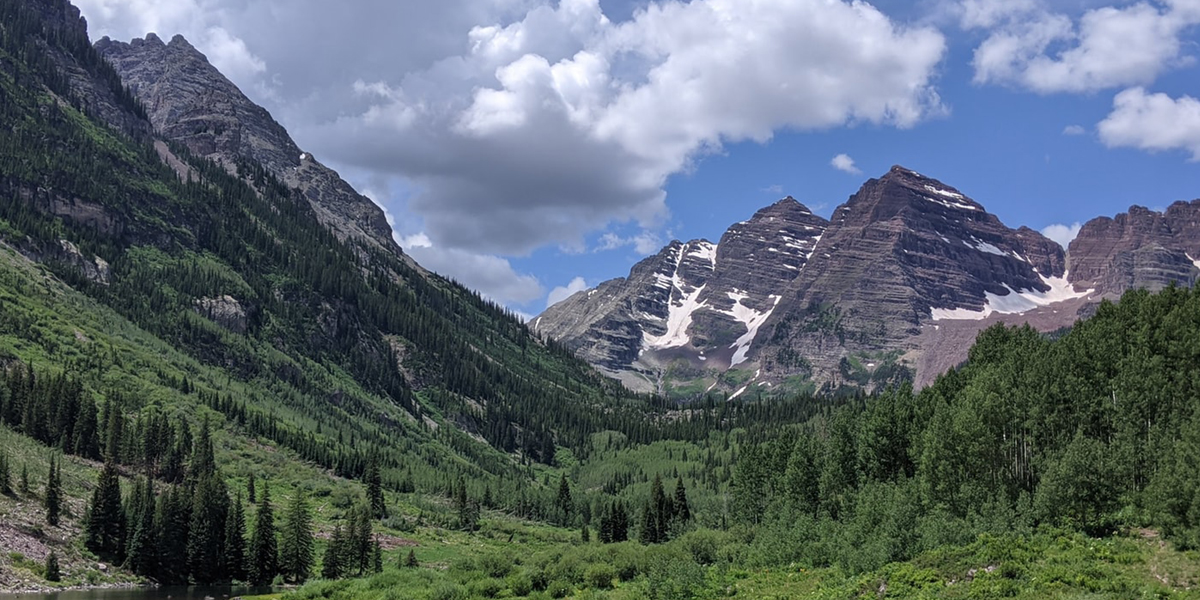
A photograph shows evergreen trees and grass at the foot of gray mountains stretching into blue sky with white clouds.
The western U.S. and mountains, like those found in Colorado, are home to a large area of refugia for terrestrial biodiversity. Credit: Lyndsey Dulfer/Unsplash

For example, the team found that at least half of the unprotected natural land in 31 U.S. states would qualify as refugia if warming is kept at or below 2 degrees Celsius. At 3 degrees, 27 states are eliminated from that list, leaving only four.


At higher temperatures, plants and fungi, which provide food for larger organisms and are critical to ecosystem functioning, are hit especially hard. Another troubling feature in higher warming scenarios is the mismatching of refugia. For example, the places where reptiles and amphibians are best protected aren’t the same as the places where the invertebrates they eat will survive.


“That has cascading effects, and it’s concerning,” Saunders said. “We’re not at that tipping point yet, but we’re getting close.”


“I think this paper is a wake-up call,” Meek said.


Still, she and Saunders stressed that we have the power to limit warming to 2 degrees through personal choices, collective actions and new policies that put an emphasis on protecting the planet. Humanity has the desire, as evidenced by the 30 by 30 initiative in the U.S., which itself is part of a larger global movement.


“The opportunities are there, and 30 by 30 is a great initiative, if we can go about it in a science-informed way,” Saunders said. “This research is one guide for doing that.”

MEDIA CONTACTS

Mariah Meek, Kaylie Crowe
Natural Resources and ConservationClimate and EnvironmentClimate and Climate SolutionsClimate and Environment

Collection

more content from this collection

Climate Solutions

Latest News

MSUToday Weekly Update

The MSUToday Weekly Update email showcases how Spartans are making a difference through academic excellence, research impact and community outreach. Get inspired by these stories of innovation, collaboration and determination. Plus, enjoy photos and videos of campus and more MSU content to help keep you connected to the Spartan community.

Sign UpUpdate My Information

Connect With Us

Visit our Facebook pageVisit our page on XVisit our Instagram pageVisit our LinkedIn pageVisit our YouTube pageVisit our TikTok page

Health and Safety

  • MSU Police and Public Safety
  • Olin Health Center
  • Counseling & Psychiatric Services (CAPS)
  • University Health and Wellbeing
  • MSU Health Care
  • Civil Rights and Title IX
  • Our Commitment
  • Center for Survivors
  • Security & Fire Safety Report
  • University Policy on Relationship Violence and Sexual Misconduct
  • Notice of Non-Discrimination, Anti-Harassment and Non-Retaliation
  • Health Care Non-Discrimination Notice

Support Services

  • Disability Resources
  • Supportive Services
  • Learning Resources

Working at MSU

  • Human Resources
  • EBS Login
  • Job Postings
  • Employee Assistance Program

Reports

  • CARES Act Funding
  • Student Achievement and Outcomes

Contact us

517-355-1855

Address

Michigan State University 426 Auditorium Road East Lansing, MI 48824

Follow Us

  • Visit our Facebook page
  • Visit our page on X
  • Visit our Instagram page
  • Visit our TikTok page
  • Visit our LinkedIn page
  • Visit our YouTube page

If you're having accessibility issues, please let us know.

Know More: Campus Safety Information and ResourcesTransparency Reporting: Budget & Salary/Compensation
  • Contact Information|
  • Site Map|
  • Privacy Statement|
  • Site Accessibility|
  • Call MSU: (517) 355-1855|
  • Visit: msu.edu|
  • Notice of Nondiscrimination|

SPARTANS WILL|© Michigan State University|

