Jump to HeaderJump to Main ContentJump to Footer
Michigan State University
  • Browse Stories By

    Topics

    Explore stories by subject area

    • Arts and Culture
    • Business and Economy
    • Climate and Environment
    • Education and Learning
    • Engineering, Science and Technology
    • Government and Society
    • Health and Medicine
    • Media and Communications
    • MSU Leadership and Impact
    • Sports and Recreation
    • Student and Campus Experience
    View All Stories

    Collections

    Curated story series

    • Turfgrass
    • Ask the Expert
    • Big Ideas
    • Climate solutions
    • Water at MSU
    • Mobility
    • Spartan Perspectives
    • Student views
    • Graduate voices
    • Faculty voices
    View All Collections

    Featured

    Editor's picks

    • The Spartans behind your favorite Michigan golf courses

      July 22, 2026

      The Spartans behind your favorite Michigan golf courses

    • MSU in the 1990s: 10 Spartan milestones

      July 14, 2026

      MSU in the 1990s: 10 Spartan milestones

MSUTODAY
  • Browse Stories By

< Browse Stories By

Topics

Explore stories by subject area

  • Arts and Culture
  • Business and Economy
  • Climate and Environment
  • Education and Learning
  • Engineering, Science and Technology
  • Government and Society
  • Health and Medicine
  • Media and Communications
  • MSU Leadership and Impact
  • Sports and Recreation
  • Student and Campus Experience
  • View All Stories

Collections

Curated story series

  • Turfgrass
  • Ask the Expert
  • Big Ideas
  • Climate solutions
  • Water at MSU
  • Mobility
  • Spartan Perspectives
  • Student views
  • Graduate voices
  • Faculty voices
  • View All Collections

Featured

Editor's picks

  • The Spartans behind your favorite Michigan golf courses

    July 22, 2026

    The Spartans behind your favorite Michigan golf courses

  • MSU in the 1990s: 10 Spartan milestones

    July 14, 2026

    MSU in the 1990s: 10 Spartan milestones

  • For Media
  • Experts
  • Releases and Statements
  • Sign Up
  • Update Information

Resources

  • A to Z Index
  • Find People
  • Maps
  • Email
  • Student Information System (SIS)
  • D2L
  • Libraries
  • Tech Support
  • MSU Misconduct Hotline
  • Social Media Directory
  • Events Calendar
  • For Media
Michigan State University
MSUToday
  • For Media
  • Experts
  • Releases and Statements
  • Sign Up
  • Update Information
MSUTODAY
Artificial Intelligence

Aug. 10, 2022

Using AI to find new uses for drugs in treating diseases

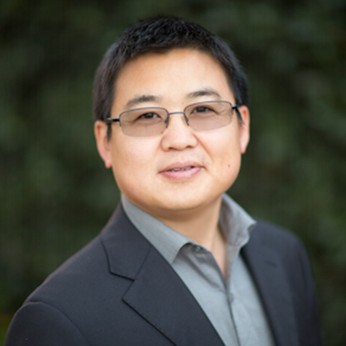
Bin Chen
Bin Chen. Courtesy photo

A team of Michigan State University researchers has received a $1.7 million federal grant to speed up the search for new drugs in the fight against a range of diseases by using artificial intelligence.

The project, funded by the National Institutes of Health over four years, calls on the expertise of a multi-disciplinary team of scientists – including computational biologists, computer scientists, medicinal chemists, and pharmacology scientists – in different departments at MSU.

The multi-disciplinary approach is “super important,” said Bin Chen, an associate professor in the Departments of Pediatrics and Human Development, Pharmacology and Toxicology, and Computer Science and Engineering. “Computer scientists play critical roles here,” he said, as do the other disciplines. “Their involvement is essential,” he said.

Chen is a lead principal investigator for the project. The other principal investigator is Jiayu Zhou, PhD, an associate professor of Computer Science and Engineering and an authority on machine learning, data mining, and biomedical informatics. The team also includes Richard Neubig, MD, PhD, and Edmund Ellsworth, PhD, professors of Pharmacology and Toxicology.

A team led by Chen already has been using artificial intelligence to screen and repurpose existing drugs for diseases other than those for which they originally were intended. The new project expands on that by using artificial intelligence and machine learning – a subcategory of artificial intelligence that allows computers to recognize patterns and adjust without being reprogrammed – to predict how novel compounds, including many that do not yet exist, would act on gene expression in humans to combat disease.

“Finding novel compounds with new intellectual property might be the best way to get new drugs to the patients,” said Chen. Without the computational power and innovative machine learning, the search through millions and billions of potential compounds would be impossibly time-consuming and prohibitively expensive, he said.

“If we are able to use artificial intelligence, we can predict a compound’s gene expression profile based solely on its chemical structure and match its profile to a disease’s gene expression profile,” he said.

Generating gene expression profiles for millions of chemical compounds in a laboratory is difficult, if not impossible, today due to the high costs.

“Now we can use A.I. to help,” Chen said. “We need very advanced machine learning to search through these compounds.”

After computer modeling, the compounds that show potential will be synthesized in a laboratory for further preclinical evaluation. Initially, the team will design new compounds based on the two drugs identified in earlier research that could be used to inhibit liver cancer and SARS-CoV-2.

One common approach in drug discovery is to find compounds that target one specific protein, Chen said.

“Our approach is different,” he said. “We aim to find compounds that could globally restore the expression of dysregulated genes of the disease. In academia, we have the patience to spend time addressing some fundamental technical challenges.”

This story originally ran on the College of Human Medicine website. 

Artificial IntelligenceEngineering, Science and TechnologyPregnancy and PostpartumHealth and MedicineDiseases, Conditions and Treatments

Latest News

MSUToday Weekly Update

The MSUToday Weekly Update email showcases how Spartans are making a difference through academic excellence, research impact and community outreach. Get inspired by these stories of innovation, collaboration and determination. Plus, enjoy photos and videos of campus and more MSU content to help keep you connected to the Spartan community.

Sign UpUpdate My Information

Connect With Us

Visit our Facebook pageVisit our page on XVisit our Instagram pageVisit our LinkedIn pageVisit our YouTube pageVisit our TikTok page

Health and Safety

  • MSU Police and Public Safety
  • Olin Health Center
  • Counseling & Psychiatric Services (CAPS)
  • University Health and Wellbeing
  • MSU Health Care
  • Civil Rights and Title IX
  • Our Commitment
  • Center for Survivors
  • Security & Fire Safety Report
  • University Policy on Relationship Violence and Sexual Misconduct
  • Notice of Non-Discrimination, Anti-Harassment and Non-Retaliation
  • Health Care Non-Discrimination Notice

Support Services

  • Disability Resources
  • Supportive Services
  • Learning Resources

Working at MSU

  • Human Resources
  • EBS Login
  • Job Postings
  • Employee Assistance Program

Reports

  • CARES Act Funding
  • Student Achievement and Outcomes

Contact us

517-355-1855

Address

Michigan State University 426 Auditorium Road East Lansing, MI 48824

Follow Us

  • Visit our Facebook page
  • Visit our page on X
  • Visit our Instagram page
  • Visit our TikTok page
  • Visit our LinkedIn page
  • Visit our YouTube page

If you're having accessibility issues, please let us know.

Know More: Campus Safety Information and ResourcesTransparency Reporting: Budget & Salary/Compensation
  • Contact Information|
  • Site Map|
  • Privacy Statement|
  • Site Accessibility|
  • Call MSU: (517) 355-1855|
  • Visit: msu.edu|
  • Notice of Nondiscrimination|

SPARTANS WILL|© Michigan State University|