Jump to HeaderJump to Main ContentJump to Footer
Michigan State University
  • Browse Stories By

    Topics

    Explore stories by subject area

    • Arts and Culture
    • Business and Economy
    • Climate and Environment
    • Education and Learning
    • Engineering, Science and Technology
    • Government and Society
    • Health and Medicine
    • Media and Communications
    • MSU Leadership and Impact
    • Sports and Recreation
    • Student and Campus Experience
    View All Stories

    Collections

    Curated story series

    • Turfgrass
    • Ask the Expert
    • Big Ideas
    • Climate solutions
    • Water at MSU
    • Mobility
    • Spartan Perspectives
    • Student views
    • Graduate voices
    • Faculty voices
    View All Collections

    Featured

    Editor's picks

    • The Spartans behind your favorite Michigan golf courses

      July 22, 2026

      The Spartans behind your favorite Michigan golf courses

    • MSU in the 1990s: 10 Spartan milestones

      July 14, 2026

      MSU in the 1990s: 10 Spartan milestones

MSUTODAY
  • Browse Stories By

< Browse Stories By

Topics

Explore stories by subject area

  • Arts and Culture
  • Business and Economy
  • Climate and Environment
  • Education and Learning
  • Engineering, Science and Technology
  • Government and Society
  • Health and Medicine
  • Media and Communications
  • MSU Leadership and Impact
  • Sports and Recreation
  • Student and Campus Experience
  • View All Stories

Collections

Curated story series

  • Turfgrass
  • Ask the Expert
  • Big Ideas
  • Climate solutions
  • Water at MSU
  • Mobility
  • Spartan Perspectives
  • Student views
  • Graduate voices
  • Faculty voices
  • View All Collections

Featured

Editor's picks

  • The Spartans behind your favorite Michigan golf courses

    July 22, 2026

    The Spartans behind your favorite Michigan golf courses

  • MSU in the 1990s: 10 Spartan milestones

    July 14, 2026

    MSU in the 1990s: 10 Spartan milestones

  • For Media
  • Experts
  • Releases and Statements
  • Sign Up
  • Update Information

Resources

  • A to Z Index
  • Find People
  • Maps
  • Email
  • Student Information System (SIS)
  • D2L
  • Libraries
  • Tech Support
  • MSU Misconduct Hotline
  • Social Media Directory
  • Events Calendar
  • For Media
Michigan State University
MSUToday
  • For Media
  • Experts
  • Releases and Statements
  • Sign Up
  • Update Information
MSUTODAY
MSU International Impact

July 13, 2022

Identifying farming strategies for global agricultural sustainability

Olivia Smith
 

It is a fundamental fact of life that the survival of our species is dependent on nations around the globe producing sufficient amounts of nutritious food.

However, when we look to point a finger at the largest contributors to the decline in global biodiversity, the increase in greenhouse gas emissions, and the leading sources of nutrient loading, pesticide pollution and the decline of our sources of fresh water, it’s no secret that agriculture is a major culprit. Many would argue that a major factor in the long-term health of our planet, and ultimately us, is dependent on reducing these negative impacts of food production. But, just what combination of farming strategies will produce sufficient nutritious food, minimize environmental harm, and improve natural, social, and human wellbeing?

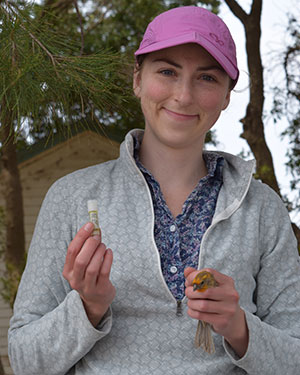
That question has been an ongoing theme in the work and research of Olivia Smith, a postdoctoral fellow with the Center for Global Change and Earth Observations, the Ecology, Evolution, and Behavior program at MSU, and the National Institute of Food and Agriculture. In “Identifying Farming Strategies Associated with Achieving Global Agricultural Sustainability,” a new study recently published in the journal Frontiers in Sustainable Food Systems, Smith and her colleagues set out to explore and evaluate a variety of strategies designed to promote sustainable food systems that serve as a key part of the United Nations Sustainable Development Goals. SDGs include such desired outcomes as no poverty, zero hunger, good health and wellbeing, quality education, decent work, economic growth and reduced inequalities.

“Increasing use of pesticides, fertilizers, and irrigation within traditional agriculture over the past century has certainly led to a dramatic increase in the food supply and other products, but those gains have often been at the expense of our environment and public health,” said Smith. “When we look at farming strategies that we believe are best suited to promoting long-term environmental and socioeconomic sustainability, these typically include reducing inputs such as fertilizers, pesticides, and freshwater, substituting conventional crops with genetically modified alternatives, and using organic production methods.”

However, while debate remains as to which systems, or combinations or systems, are most able to achieve sustainable food systems, more research has focused on the merits of these approaches, rather than looking at how socioeconomic and food production factors relate to the adoption of these strategies. For example, do the socioeconomic conditions of a country drive the implementation of certain agricultural strategies, or does the implementation of agricultural strategies drive the development of the country?

To answer these questions, Smith and her team collected data from the United Nations Food and Agriculture Organization, United Nations Human Development Programme, the World Bank and other global databases pertaining to the environmental, economic, social, and production aspects of food systems in 121 countries. The team’s analyses suggests that countries that are most on track to meeting the United Nations SDGs are currently practicing high levels of organic agriculture and those least on track to reach climate action goals were those with the highest input intensities, but countries with the highest prevalence of GM production had reduced agricultural emissions.

For the full story, visit globalchange.msu.edu.

MEDIA CONTACTS

Diane Huhn
MSU International ImpactMSU Leadership and ImpactSocial SciencesGovernment and SocietyClimate and Environment

Collection

more content from this collection

Climate Solutions

Latest News

MSUToday Weekly Update

The MSUToday Weekly Update email showcases how Spartans are making a difference through academic excellence, research impact and community outreach. Get inspired by these stories of innovation, collaboration and determination. Plus, enjoy photos and videos of campus and more MSU content to help keep you connected to the Spartan community.

Sign UpUpdate My Information

Connect With Us

Visit our Facebook pageVisit our page on XVisit our Instagram pageVisit our LinkedIn pageVisit our YouTube pageVisit our TikTok page

Health and Safety

  • MSU Police and Public Safety
  • Olin Health Center
  • Counseling & Psychiatric Services (CAPS)
  • University Health and Wellbeing
  • MSU Health Care
  • Civil Rights and Title IX
  • Our Commitment
  • Center for Survivors
  • Security & Fire Safety Report
  • University Policy on Relationship Violence and Sexual Misconduct
  • Notice of Non-Discrimination, Anti-Harassment and Non-Retaliation
  • Health Care Non-Discrimination Notice

Support Services

  • Disability Resources
  • Supportive Services
  • Learning Resources

Working at MSU

  • Human Resources
  • EBS Login
  • Job Postings
  • Employee Assistance Program

Reports

  • CARES Act Funding
  • Student Achievement and Outcomes

Contact us

517-355-1855

Address

Michigan State University 426 Auditorium Road East Lansing, MI 48824

Follow Us

  • Visit our Facebook page
  • Visit our page on X
  • Visit our Instagram page
  • Visit our TikTok page
  • Visit our LinkedIn page
  • Visit our YouTube page

If you're having accessibility issues, please let us know.

Know More: Campus Safety Information and ResourcesTransparency Reporting: Budget & Salary/Compensation
  • Contact Information|
  • Site Map|
  • Privacy Statement|
  • Site Accessibility|
  • Call MSU: (517) 355-1855|
  • Visit: msu.edu|
  • Notice of Nondiscrimination|

SPARTANS WILL|© Michigan State University|
