Jump to HeaderJump to Main ContentJump to Footer
Michigan State University
  • Browse Stories By

    Topics

    Explore stories by subject area

    • Arts and Culture
    • Business and Economy
    • Climate and Environment
    • Education and Learning
    • Engineering, Science and Technology
    • Government and Society
    • Health and Medicine
    • Media and Communications
    • MSU Leadership and Impact
    • Sports and Recreation
    • Student and Campus Experience
    View All Stories

    Collections

    Curated story series

    • Turfgrass
    • Ask the Expert
    • Big Ideas
    • Climate solutions
    • Water at MSU
    • Mobility
    • Spartan Perspectives
    • Student views
    • Graduate voices
    • Faculty voices
    View All Collections

    Featured

    Editor's picks

    • The Spartans behind your favorite Michigan golf courses

      July 22, 2026

      The Spartans behind your favorite Michigan golf courses

    • MSU in the 1990s: 10 Spartan milestones

      July 14, 2026

      MSU in the 1990s: 10 Spartan milestones

MSUTODAY
  • Browse Stories By

< Browse Stories By

Topics

Explore stories by subject area

  • Arts and Culture
  • Business and Economy
  • Climate and Environment
  • Education and Learning
  • Engineering, Science and Technology
  • Government and Society
  • Health and Medicine
  • Media and Communications
  • MSU Leadership and Impact
  • Sports and Recreation
  • Student and Campus Experience
  • View All Stories

Collections

Curated story series

  • Turfgrass
  • Ask the Expert
  • Big Ideas
  • Climate solutions
  • Water at MSU
  • Mobility
  • Spartan Perspectives
  • Student views
  • Graduate voices
  • Faculty voices
  • View All Collections

Featured

Editor's picks

  • The Spartans behind your favorite Michigan golf courses

    July 22, 2026

    The Spartans behind your favorite Michigan golf courses

  • MSU in the 1990s: 10 Spartan milestones

    July 14, 2026

    MSU in the 1990s: 10 Spartan milestones

  • For Media
  • Experts
  • Releases and Statements
  • Sign Up
  • Update Information

Resources

  • A to Z Index
  • Find People
  • Maps
  • Email
  • Student Information System (SIS)
  • D2L
  • Libraries
  • Tech Support
  • MSU Misconduct Hotline
  • Social Media Directory
  • Events Calendar
  • For Media
Michigan State University
MSUToday
  • For Media
  • Experts
  • Releases and Statements
  • Sign Up
  • Update Information
MSUTODAY
Climate and Environment

June 27, 2022

Thick ‘rock snot’ continues to be found in Michigan rivers

Didymo, a nuisance alga known as rock snot, could be trouble for the treasured trout fishery in the Upper Manistee River.

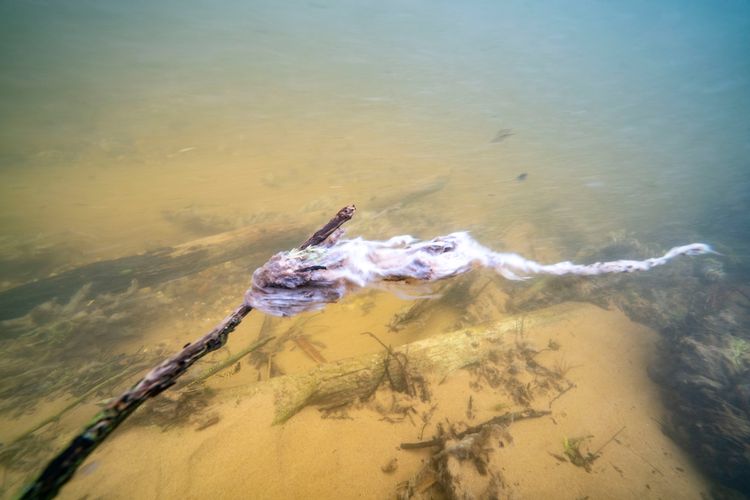
Didymo will cling to objects underwater. The white in these images is extracellular didymo stalks. The stalk material lacks chlorophyll which is why blooms appear a pale yellowish brown to white color, but not green like typical algae blooms. Photo credit: Erik Rambo.

Anglers and paddlers are noticing a new phenomenon on the Upper Manistee River — a thick, brown snotty looking algae is clinging to rocks, downed trees and anything else under the water. Didymo (Didymosphenia geminata), more often referred to as "rock snot" due to its unappealing appearance, was reported in the Upper Manistee River last fall and it continues to plague popular fishing locations on the river. While non-toxic, didymo covers streambeds and reduces habitat for macroinvertebrates, an important food for fish such as trout.

Didymo is microscopic but under the right conditions it can “bloom,” forming dense mats of extracellular stalks giving it a snot-like appearance and making it visible in streambeds. Despite its name, it’s not actually slimy but instead feels like wet wool. Mats can be over six inches thick, making fishing, boating and swimming unpleasant. In addition, didymo mats trap sediments and can have potentially long-lasting effects on the food chain as they smother other plants, insects and mollusks.

Didymo is native to the northern regions of Europe, Asia and North America and is likely native to Lake Superior and parts of Canada, according to Michigan’s Invasive Species Program. While didymo cells have been documented in the Great Lakes Basin and Michigan waters in low abundance, nuisance blooms are a recent issue and first appeared in the St. Marys River in 2015. Didymo tends to grow in clear, shallow, moderately flowing freshwater streams with rocky substrate. Researchers are still working to determine what triggers didymo’s nuisance blooms.
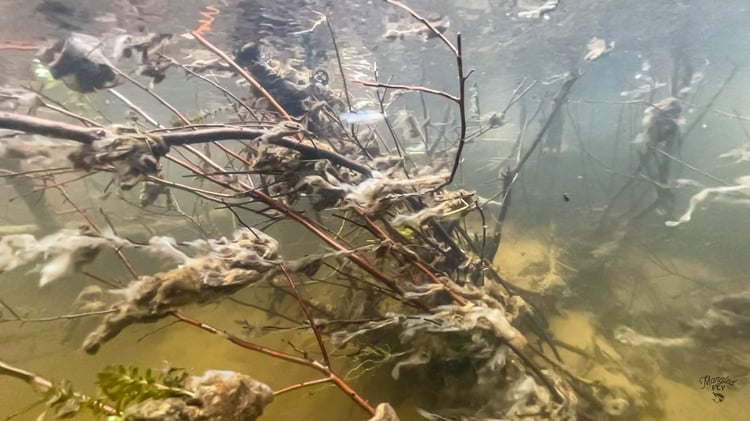
An underwater tree mangled with didymo

Didymo blooms have generally increased across the United States. Scientists believe this may be partly due to changing environmental conditions. Didymo may also be spreading to new waterways on fishing gear, a common method in which nuisance species spread. Research has shown didymo can survive for 40 days in cool, dark, damp conditions such as on angling equipment, neoprene and felt-soled waders, and boots.

What can you do to help?

There is no effective method to eradicate didymo from the environment. To prevent spreading it and other nuisance species, it is critical for recreational users to decontaminate their equipment after leaving a waterway. Decontamination includes cleaning, draining and drying everything that has entered the water, including boats, anchors and anchor lines, trailers, boots, waders, nets and other equipment.

Decontamination steps when moving any gear from one waterbody to another should include the following:

  • Clean all mud, debris and aquatic plant material from equipment such as boats, trailers, waders, hip boots, dip nets and other field gear. Didymo, like many nuisance and invasive species, is not always visible so wiping down equipment is beneficial, even if you cannot see it. For didymo, a study has shown that soaking equipment for one minute in hot water or a chemical disinfectant such as bleach (diluted to 2% strength) or soapy water (5% solution) is an effective cleaning technique.
  • Drain live wells, bilges, bait buckets and any other water from equipment before leaving the access site.
  • Dry your gear and watercraft for at least five days, if possible, before going to a new waterbody.

Other tips to consider when fishing in waterways known to have didymo:

  • Plan time to decontaminate between trips.
  • Avoid hopping between multiple rivers in a single day.
  • Designate specific gear, especially porous items like felt soled waders and anchor rope, for use only in infested waters.

Visit Michigan State University Extension’s Michigan Clean Boats, Clean Waters program for more information on preventing the spread of aquatic invasive species on boating and fishing equipment.
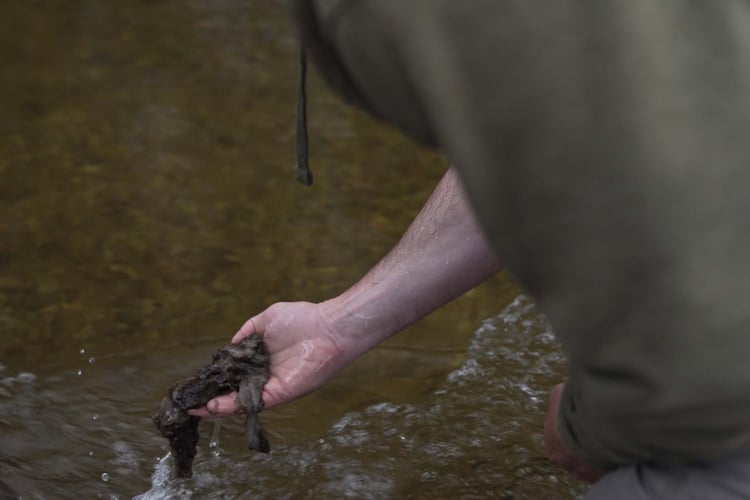
While didymo is often referred to as ‘rock snot,’ it is not slimy like typical algae and instead feels like wet wool.

Report didymo sightings

In addition to cleaning gear, one of the most important steps you can take is to report observations of didymo and any other suspected invasive species to conservation organizations. You can report to the Midwest Invasive Species Information Network, a regional database used by invasive species specialists predominantly in Michigan and the Midwest. After creating an account, you can report your observation and biologists will be notified. Additionally, didymo can be reported by emailing the location and photos to EGLE-WRD-AIP@Michigan.gov. The United States Geological Survey also maintains a Nonindigenous Aquatic Species database that accepts reports from the public.

To read more, visit canr.msu.edu.

MEDIA CONTACTS

Jo Latimore
Climate and EnvironmentBiodiversity and WildlifeWater

Latest News

MSUToday Weekly Update

The MSUToday Weekly Update email showcases how Spartans are making a difference through academic excellence, research impact and community outreach. Get inspired by these stories of innovation, collaboration and determination. Plus, enjoy photos and videos of campus and more MSU content to help keep you connected to the Spartan community.

Sign UpUpdate My Information

Connect With Us

Visit our Facebook pageVisit our page on XVisit our Instagram pageVisit our LinkedIn pageVisit our YouTube pageVisit our TikTok page

Health and Safety

  • MSU Police and Public Safety
  • Olin Health Center
  • Counseling & Psychiatric Services (CAPS)
  • University Health and Wellbeing
  • MSU Health Care
  • Civil Rights and Title IX
  • Our Commitment
  • Center for Survivors
  • Security & Fire Safety Report
  • University Policy on Relationship Violence and Sexual Misconduct
  • Notice of Non-Discrimination, Anti-Harassment and Non-Retaliation
  • Health Care Non-Discrimination Notice

Support Services

  • Disability Resources
  • Supportive Services
  • Learning Resources

Working at MSU

  • Human Resources
  • EBS Login
  • Job Postings
  • Employee Assistance Program

Reports

  • CARES Act Funding
  • Student Achievement and Outcomes

Contact us

517-355-1855

Address

Michigan State University 426 Auditorium Road East Lansing, MI 48824

Follow Us

  • Visit our Facebook page
  • Visit our page on X
  • Visit our Instagram page
  • Visit our TikTok page
  • Visit our LinkedIn page
  • Visit our YouTube page

If you're having accessibility issues, please let us know.

Know More: Campus Safety Information and ResourcesTransparency Reporting: Budget & Salary/Compensation
  • Contact Information|
  • Site Map|
  • Privacy Statement|
  • Site Accessibility|
  • Call MSU: (517) 355-1855|
  • Visit: msu.edu|
  • Notice of Nondiscrimination|

SPARTANS WILL|© Michigan State University|
