Jump to HeaderJump to Main ContentJump to Footer
Michigan State University
MSUTODAY
  • Browse Stories By

    Topics

    Explore stories by subject area

    • Arts and Culture
    • Business and Economy
    • Climate and Environment
    • Education and Learning
    • Engineering, Science and Technology
    • Government and Society
    • Health and Medicine
    • Media and Communications
    • MSU Leadership and Impact
    • Sports and Recreation
    • Student and Campus Experience
    View All Stories

    Collections

    Curated story series

    • Turfgrass
    • Ask the Expert
    • Big Ideas
    • Climate solutions
    • Water at MSU
    • Mobility
    • Spartan Perspectives
    • Student views
    • Graduate voices
    • Faculty voices
    View All Collections

    Featured

    Editor's picks

    • 9 reasons to love being a Spartan

      Aug. 28, 2026

      9 reasons to love being a Spartan

    • NIH awards multi-university team over $4M to improve women’s health

      Sept. 15, 2026

      NIH awards multi-university team over $4M to improve women’s health

MSUTODAY
  • Browse Stories By

< Browse Stories By

Topics

Explore stories by subject area

  • Arts and Culture
  • Business and Economy
  • Climate and Environment
  • Education and Learning
  • Engineering, Science and Technology
  • Government and Society
  • Health and Medicine
  • Media and Communications
  • MSU Leadership and Impact
  • Sports and Recreation
  • Student and Campus Experience
  • View All Stories

Collections

Curated story series

  • Turfgrass
  • Ask the Expert
  • Big Ideas
  • Climate solutions
  • Water at MSU
  • Mobility
  • Spartan Perspectives
  • Student views
  • Graduate voices
  • Faculty voices
  • View All Collections

Featured

Editor's picks

  • 9 reasons to love being a Spartan

    Aug. 28, 2026

    9 reasons to love being a Spartan

  • NIH awards multi-university team over $4M to improve women’s health

    Sept. 15, 2026

    NIH awards multi-university team over $4M to improve women’s health

  • For Media
  • Experts
  • Releases and Statements
  • Sign Up
  • Update Information

Resources

  • A to Z Index
  • Find People
  • Maps
  • Email
  • Student Information System (SIS)
  • D2L
  • Libraries
  • Tech Support
  • MSU Misconduct Hotline
  • Social Media Directory
  • Events Calendar
  • For Media
Michigan State University
MSUToday
  • For Media
  • Experts
  • Releases and Statements
  • Sign Up
  • Update Information
Climate and Climate Solutions

May 31, 2022

Capturing carbon with crops, trees and bioenergy

MSU researchers find an integrated approach to land management practices can reduce carbon dioxide in the atmosphere far more than earlier estimates

By: Emilie Lorditch

An integrated approach to land management practices in the U.S. can reduce carbon dioxide in the atmosphere far more than earlier estimates based on separate approaches, Michigan State University researchers say. Their research was published May 31 in the journal Global Change Biology.
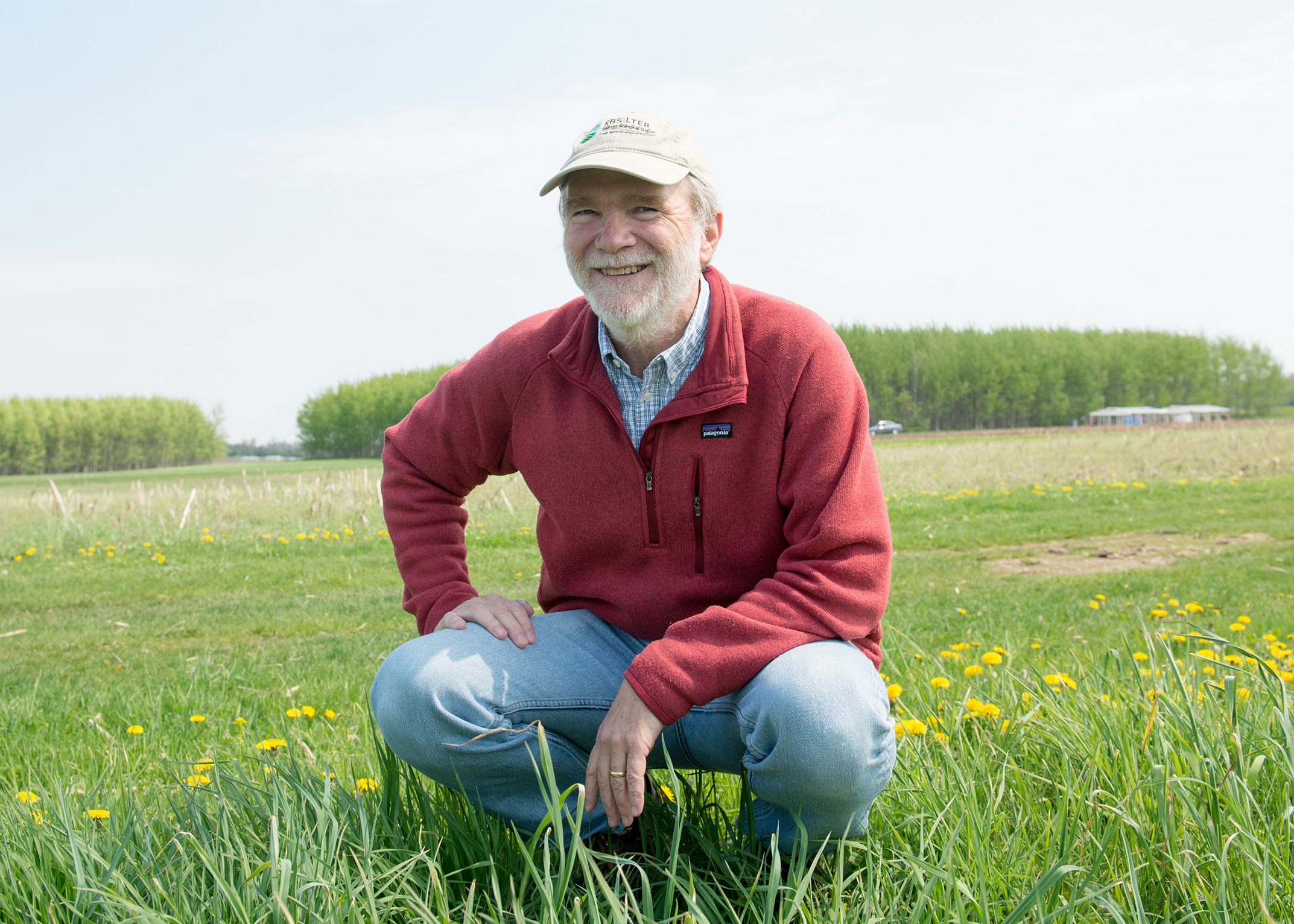
Phil Robertson
MSU’s Phil Robertson is an internationally recognized crop and soil scientist and ecosystem ecologist. Credit: Derrick Turner, University Communications

“Using only land management or bioenergy in an either-or scenario turns out to be short-sighted,” said Phil Robertson, a University Distinguished Professor of Plant, Soil and Microbial Sciences at MSU’s Kellogg Biological Station. “When we combine them, we find potential carbon dioxide storage capacity levels that neither approach alone can attain.”

Researchers are now finding how combining those practices might reduce carbon dioxide levels critical for keeping the global temperature increase below two degrees Celsius by year 2100.

Land management that naturally captures more carbon dioxide in soils, trees and natural areas has long been known for its potential to curb emissions. Bioenergy uses plant-based fuels to run cars on ethanol or electricity, and during its production the carbon dioxide it releases can be geologically stored or sequestered below ground.

Robertson and colleagues from Colorado State University and the University of Aberdeen in the U.K. assigned management practices known to reduce or capture greenhouse gases in cropland, grazing lands and forests to different portions of the U.S. landscape. Practices included reforestation, forest and grassland management, cropland practices like cover crops and no-till, and bioenergy production on lands not used to grow food. Many of these practices have additional benefits including improving soil health, biodiversity and water quality.

“We knew there might be some advantage to an integrated approach, but we were surprised at just how large it could be,” Robertson said, who has joint appointments in the College of Agriculture and Natural Resources and the College of Natural Science. “A 50% increase in the capacity for changes in land management to capture carbon dioxide is big, especially because we currently lack other affordable options for doing so.”

“We’re excited to explore this approach further and fine tune our understanding,” Robertson added. “But for now, we’re confident that an integrated approach that combines bioenergy and advanced management of crop, forest and grazing lands can provide climate benefits far greater than previously realized.”

Principal funding for this research came from the Department of Energy’s Great Lakes Bioenergy Research Center, the National Science Foundation’s Long-term Ecological Research Program and the USDA’s Long-term Agroecosystem Research Program.



Climate and Climate SolutionsClimate and EnvironmentAgricultural Sciences and FarmingAgricultural Sciences and Farming

Latest News

MSUToday Weekly Update

The MSUToday Weekly Update email showcases how Spartans are making a difference through academic excellence, research impact and community outreach. Get inspired by these stories of innovation, collaboration and determination. Plus, enjoy photos and videos of campus and more MSU content to help keep you connected to the Spartan community.

Sign UpUpdate My Information

Connect With Us

Visit our Facebook pageVisit our page on XVisit our Instagram pageVisit our LinkedIn pageVisit our YouTube pageVisit our TikTok page

Health and Safety

  • MSU Police and Public Safety
  • Olin Health Center
  • Counseling & Psychiatric Services (CAPS)
  • University Health and Wellbeing
  • MSU Health Care
  • Civil Rights and Title IX
  • Our Commitment
  • Center for Survivors
  • Security & Fire Safety Report
  • University Policy on Relationship Violence and Sexual Misconduct
  • Notice of Non-Discrimination, Anti-Harassment and Non-Retaliation
  • Health Care Non-Discrimination Notice

Support Services

  • Disability Resources
  • Supportive Services
  • Learning Resources

Working at MSU

  • Human Resources
  • EBS Login
  • Job Postings
  • Employee Assistance Program

Reports

  • CARES Act Funding
  • Student Achievement and Outcomes

Contact us

517-355-1855

Address

Michigan State University 426 Auditorium Road East Lansing, MI 48824

Follow Us

  • Visit our Facebook page
  • Visit our page on X
  • Visit our Instagram page
  • Visit our TikTok page
  • Visit our LinkedIn page
  • Visit our YouTube page

If you're having accessibility issues, please let us know.

Know More: Campus Safety Information and ResourcesTransparency Reporting: Budget & Salary/Compensation
  • Contact Information|
  • Site Map|
  • Privacy Statement|
  • Site Accessibility|
  • Call MSU: (517) 355-1855|
  • Visit: msu.edu|
  • Notice of Nondiscrimination|

SPARTANS WILL|© Michigan State University|