Jump to HeaderJump to Main ContentJump to Footer
Michigan State University
MSUToday
  • For Media
  • Experts
  • Releases and Statements
  • Sign Up
  • Update Information
MSUTODAY
  • Browse Stories By

    Topics

    Explore stories by subject area

    • Arts and Culture
    • Business and Economy
    • Climate and Environment
    • Education and Learning
    • Engineering, Science and Technology
    • Government and Society
    • Health and Medicine
    • Media and Communications
    • MSU Leadership and Impact
    • Sports and Recreation
    • Student and Campus Experience
    View All Stories

    Collections

    Curated story series

    • Alumni stories
    • Turfgrass
    • Ask the Expert
    • Big Ideas
    • Climate solutions
    • Water at MSU
    • Mobility
    • Spartan Perspectives
    • Student views
    • Graduate voices
    • Faculty voices
    View All Collections

    Featured

    Editor's picks

    • MSU earns top 100 ranking by Times Higher Education

      Oct. 12, 2026

      MSU earns top 100 ranking by Times Higher Education

    • New spaces, new opportunities at MSU 

      Oct. 14, 2026

      New spaces, new opportunities at MSU 

MSUTODAY
  • Browse Stories By

< Browse Stories By

Topics

Explore stories by subject area

  • Arts and Culture
  • Business and Economy
  • Climate and Environment
  • Education and Learning
  • Engineering, Science and Technology
  • Government and Society
  • Health and Medicine
  • Media and Communications
  • MSU Leadership and Impact
  • Sports and Recreation
  • Student and Campus Experience
  • View All Stories

Collections

Curated story series

  • Alumni stories
  • Turfgrass
  • Ask the Expert
  • Big Ideas
  • Climate solutions
  • Water at MSU
  • Mobility
  • Spartan Perspectives
  • Student views
  • Graduate voices
  • Faculty voices
  • View All Collections

Featured

Editor's picks

  • MSU earns top 100 ranking by Times Higher Education

    Oct. 12, 2026

    MSU earns top 100 ranking by Times Higher Education

  • New spaces, new opportunities at MSU 

    Oct. 14, 2026

    New spaces, new opportunities at MSU 

  • For Media
  • Experts
  • Releases and Statements
  • Sign Up
  • Update Information

Natural Sciences

April 8, 2022

SHARE

In soil, death doesn’t stop the spread of antibiotic resistance

Michigan State researchers show that live soil bacteria can readily obtain genes for antimicrobial resistance from dead bacteria

Dead bacteria can still make their presence felt in the land of the living. New research led by Michigan State University integrative biologists is showing that this could have big implications for antibiotic resistance on farms.

 

MSU Associate Professor Sarah Evans

The results were published March 24 in the journal Applied and Environmental Microbiology.

The World Health Organization has called antibiotic resistance one of the biggest threats to food security. Infectious bacteria that can evade antibiotic treatments are huge concerns for the well-being of livestock, the food industry and the public.

“Outside of medicine antibiotic resistance isn’t talked about maybe as urgently as it should be,” said Sarah Evans, an associate professor in the College of Natural Science and the Ecology, Evolution and Behavior Program. “We thought these were processes that needed to be studied more in the field.”

So Evans and her team took a closer look at one of those processes: how DNA from dead bacteria could introduce antibiotic resistance to living bacteria in the soil. In better understanding that process, the team is also looking to find ways to help stop it.
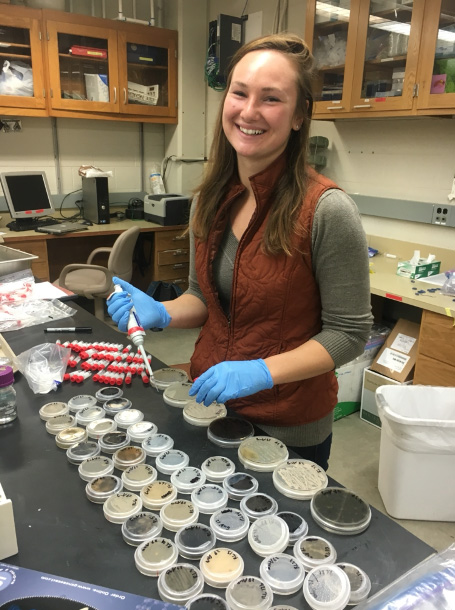
 

A photo shows Heather Kittredge in lab, holding a pipette near many sample containers.
Heather Kittredge isolating bacteria from the environment. Credit: Robert Logan

“People think a lot about live bacteria,” said Heather Kittredge, who led the research for Evans’s lab as a doctoral student. “Maybe we should be thinking about the dead ones, too. They have biological activity beyond death.”


The idea might sound like something out of a zombie movie. It is, however, an established and prevalent — albeit less well-known — part of evolution. It’s an example of what’s called horizontal gene transfer, in which genes are more handed off than handed down.


When bacteria die, they burst and leave DNA behind. This lets living bacteria collect those genes and put them to work. For example, if a dead bacterium happened to have genes that contributed to antibiotic resistance, a living microbe could pick those up and gain their powers.


Microbiologists have extensively studied genetics and bacteria in petri dishes to know that this is indeed a way antibiotic resistance spreads. But less is known about how the process plays out in nature, especially in soil, where antibiotic resistant pathogens can develop and eventually wreak havoc on human health.

A series of microscope images shows a bacterial cell in green at the bottom of the frame extending a long, thin arm-like appendage to grab a clump of DNA shown in red at the top of the frame.This series of microscope images from Ankur Dalia’s lab at Indiana University shows how living bacteria (green) use a long, arm-like apparatus to reel in DNA from the environment (red). “It’s almost like a fishing line,” MSU’s Heather Kittredge said. Credit: Image courtesy the Dalia Lab, Indiana University

“Soil is still somewhat of a black box,” said Kittredge, who is now a postdoctoral researcher at the University of Connecticut. “We wanted to know how this happens in the wild, what factors contribute to it and what we can do about it.”


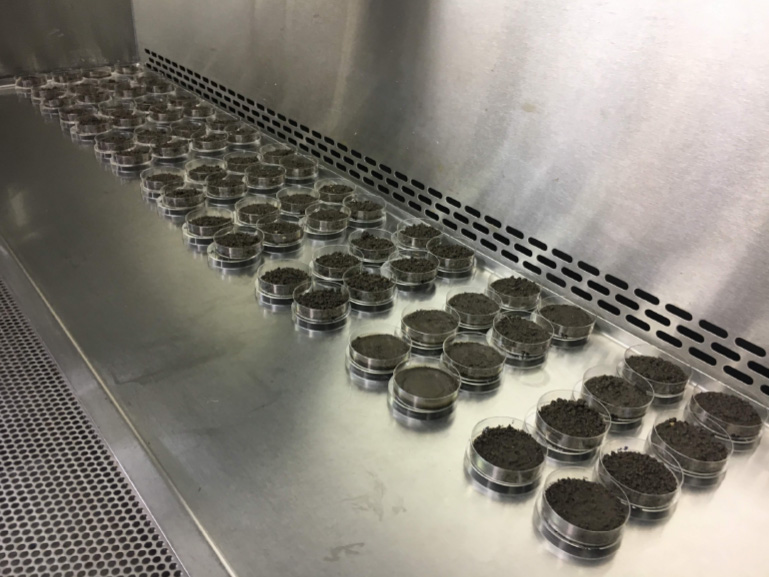
A photograph shows dozens of clear, circular dishes filled with agricultural soil sitting inside a sterile metal cabinet used for culturing bacteria.
A collection of soil microcosms where live bacteria acquired antibiotic resistance genes from dead bacteria. Credit: Heather Kittredge

To learn all this, the Spartans collected soil samples from sites around W. K. Kellogg Biological Station, where Evans is also a faculty member. They sterilized the soil and added living cells of the soil bacteria Pseudomonas stutzeri along with DNA from antibiotic resistant forms of P. stutzeri. They could then observe how often the living cells incorporated the DNA under different conditions.


What they found is that live bacteria could integrate the DNA even when it was present at low concentrations and live cells that picked up DNA persisted throughout the 15-day duration of the experiments. But DNA is known to survive in soil longer than that, Kittredge added.


“Overall, this work demonstrates that dead bacteria … are an overlooked path to antibiotic resistance,” the team wrote in its publication.


The researchers also noted that living cells were more likely to integrate DNA from dead cells when they started off closer to it, which wasn’t surprising. Living cells need to touch the DNA in order to collect it.


What was surprising, though, was the role of soil moisture. Although the living cells collected DNA over a range of realistic moisture levels, they were most efficient in slightly drier conditions. But bacteria are more mobile in wet soil, which would presumably increase their likelihood of bumping into DNA.


“They also grow at higher rates in higher moisture,” Kittredge said. “So when they grow the most isn’t the same as when the have the highest rates of gene transfer.”


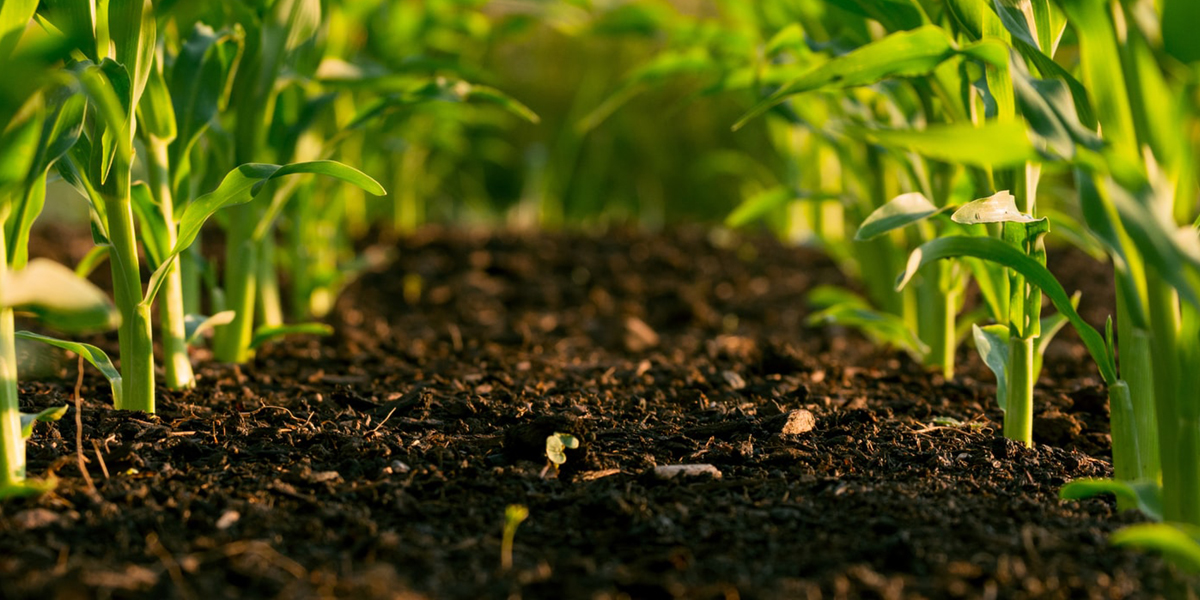
A photograph shows rows of green plants sprouting from dark brown soil.
When bacteria die in soil, they leave behind genes that can be picked up and used by living microbes. Credit: Steven Weeks/Unsplash

So why aren’t bacteria that are more mobile and more prolific better at picking up genes? That’s something the team wants to investigate, in part because understanding it could present opportunities to slow gene transfer. In the meantime, though, this research has already offered ideas on stemming horizontal transfer of antibiotic resistant genes on farms.


For example, manure from livestock is used as fertilizer on farmland used to grow food crops. To help in the battle against antibiotic resistance, manure is often heat-treated to kill any bacteria present.


“But the temperature at which bacteria die and at which DNA is destroyed are different,” Kittredge said. “Increasing the temperature treatment to degrade DNA could potentially go a long way.”


This work could also have applications in helping researchers promote the transfer of beneficial genes.

MEDIA CONTACTS

Sarah Evans, Val Osowski
Natural SciencesEngineering, Science and TechnologyNatural SciencesBiodiversity and WildlifeClimate and Environment

MSUToday Weekly Update

The MSUToday Weekly Update email showcases how Spartans are making a difference through academic excellence, research impact and community outreach. Get inspired by these stories of innovation, collaboration and determination. Plus, enjoy photos and videos of campus and more MSU content to help keep you connected to the Spartan community.

Sign UpUpdate My Information

Connect With Us

Visit our Facebook pageVisit our page on XVisit our Instagram pageVisit our LinkedIn pageVisit our YouTube pageVisit our TikTok page

Resources

  • A to Z Index
  • Find People
  • Maps
  • Email
  • Student Information System (SIS)
  • D2L
  • Libraries
  • Tech Support
  • MSU Misconduct Hotline
  • Social Media Directory
  • Events Calendar
  • For Media

Health and Safety

  • MSU Police and Public Safety
  • Olin Health Center
  • Counseling & Psychiatric Services (CAPS)
  • University Health and Wellbeing
  • MSU Health Care
  • Civil Rights and Title IX
  • Our Commitment
  • Center for Survivors
  • Security & Fire Safety Report
  • University Policy on Relationship Violence and Sexual Misconduct
  • Notice of Non-Discrimination, Anti-Harassment and Non-Retaliation
  • Health Care Non-Discrimination Notice

Support Services

  • Disability Resources
  • Supportive Services
  • Learning Resources

Working at MSU

  • Human Resources
  • EBS Login
  • Job Postings
  • Employee Assistance Program

Reports

  • CARES Act Funding
  • Student Achievement and Outcomes

Contact us

517-355-1855

Address

Michigan State University 426 Auditorium Road East Lansing, MI 48824

Follow Us

  • Visit our Facebook page
  • Visit our page on X
  • Visit our Instagram page
  • Visit our TikTok page
  • Visit our LinkedIn page
  • Visit our YouTube page

If you're having accessibility issues, please let us know.

Know More: Campus Safety Information and ResourcesTransparency Reporting: Budget & Salary/Compensation
  • Contact Information|
  • Site Map|
  • Privacy Statement|
  • Site Accessibility|
  • Call MSU: (517) 355-1855|
  • Visit: msu.edu|
  • Notice of Nondiscrimination|

SPARTANS WILL|© Michigan State University|

Latest News