Jump to HeaderJump to Main ContentJump to Footer
Michigan State University
  • Browse Stories By

    Topics

    Explore stories by subject area

    • Arts and Culture
    • Business and Economy
    • Climate and Environment
    • Education and Learning
    • Engineering, Science and Technology
    • Government and Society
    • Health and Medicine
    • Media and Communications
    • MSU Leadership and Impact
    • Sports and Recreation
    • Student and Campus Experience
    View All Stories

    Collections

    Curated story series

    • Turfgrass
    • Ask the Expert
    • Big Ideas
    • Climate solutions
    • Water at MSU
    • Mobility
    • Spartan Perspectives
    • Student views
    • Graduate voices
    • Faculty voices
    View All Collections

    Featured

    Editor's picks

    • The Spartans behind your favorite Michigan golf courses

      July 22, 2026

      The Spartans behind your favorite Michigan golf courses

    • MSU in the 1990s: 10 Spartan milestones

      July 14, 2026

      MSU in the 1990s: 10 Spartan milestones

MSUTODAY
  • Browse Stories By

< Browse Stories By

Topics

Explore stories by subject area

  • Arts and Culture
  • Business and Economy
  • Climate and Environment
  • Education and Learning
  • Engineering, Science and Technology
  • Government and Society
  • Health and Medicine
  • Media and Communications
  • MSU Leadership and Impact
  • Sports and Recreation
  • Student and Campus Experience
  • View All Stories

Collections

Curated story series

  • Turfgrass
  • Ask the Expert
  • Big Ideas
  • Climate solutions
  • Water at MSU
  • Mobility
  • Spartan Perspectives
  • Student views
  • Graduate voices
  • Faculty voices
  • View All Collections

Featured

Editor's picks

  • The Spartans behind your favorite Michigan golf courses

    July 22, 2026

    The Spartans behind your favorite Michigan golf courses

  • MSU in the 1990s: 10 Spartan milestones

    July 14, 2026

    MSU in the 1990s: 10 Spartan milestones

  • For Media
  • Experts
  • Releases and Statements
  • Sign Up
  • Update Information

Resources

  • A to Z Index
  • Find People
  • Maps
  • Email
  • Student Information System (SIS)
  • D2L
  • Libraries
  • Tech Support
  • MSU Misconduct Hotline
  • Social Media Directory
  • Events Calendar
  • For Media
Michigan State University
MSUToday
  • For Media
  • Experts
  • Releases and Statements
  • Sign Up
  • Update Information
MSUTODAY
Natural Sciences

March 10, 2022

Flip the switch: Looking at how algae activate cell cycles

Researchers from the Benning lab at the MSU-DOE Plant Research Laboratory have been looking into the signals for activating different states of the cell cycle in microalga, which has potential applications for future biofuel production and cancer research.

The study was published in G3: Genes, Genomes, Genetics.

Algal cells have two main cell cycles states: the cell division cycle and a resting state known as quiescence. Theoretically, the cells switch between the two states in order to adapt to their environment. For example, when nutrients are readily available, the algae enter the cell division cycle and use said nutrients to grow and multiply. When nutrients are limited, the algae enter quiescence to keep from using all their energy.
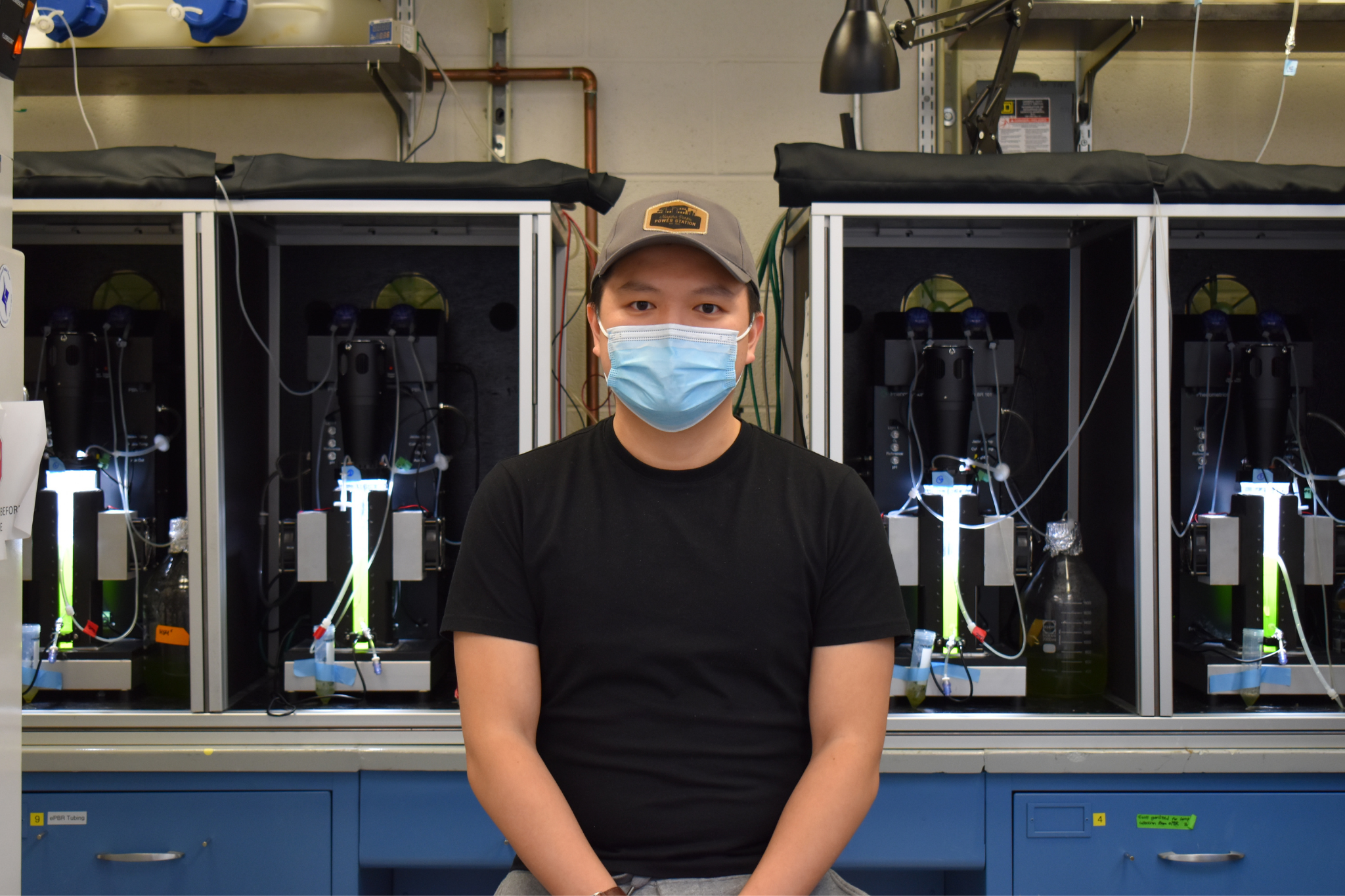
Yang Tsung Lin

When switching between the two states, the cell goes through changes at both the metabolic and gene level. Genes within the cell will switch on and off to control which cell cycle state it is in. These genes are like a light switch for the cell division cycle – when the switch is on, the cell is working to grow and multiply. When it’s off, the cell rests.

The researchers are looking at how the microalga Chlamydomonas reinhardtii switches into different cell states by altering this gene expression.

The study focuses on a cell cycle regulator in the microalga called CHT7. The researchers saw the mutant strain, named cht7, that was lacking this regulator was unable to enter and exit quiescence properly. There was nothing to completely turn the switch on and off. The researchers grew the cht7 mutant cell in a photobioreactor and further analyzed it using RNA-sequencing to better understand why this was.
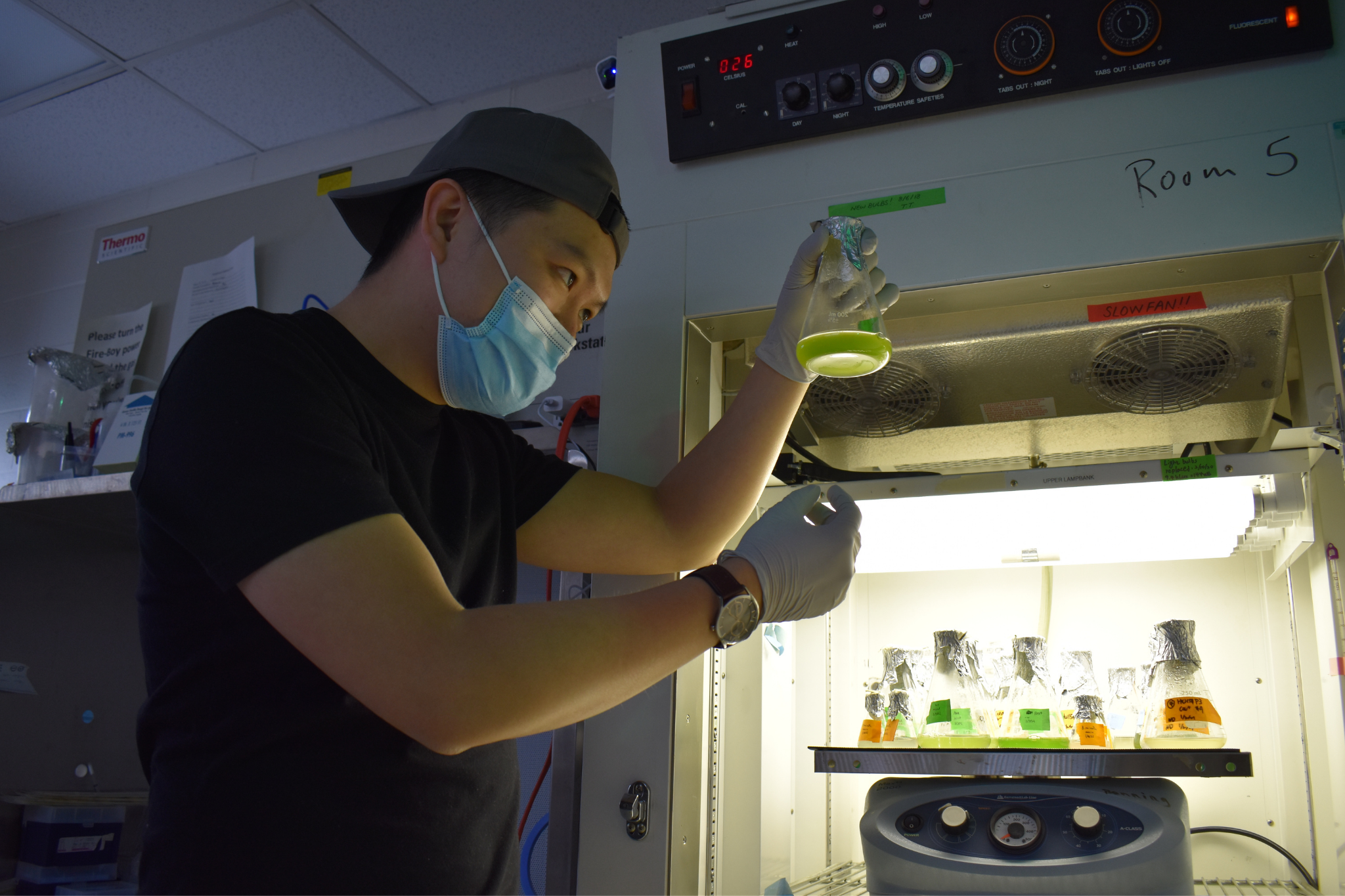
Tsung checks an algal cell culture grown in a light chamber.

“We found the cht7 mutant cell has abnormally active DNA replication throughout its life cycle,” said Yang-Tsung Lin, graduate student in the Benning lab and first author of the study. “Normally, an algal cell only duplicates its DNA for cell division at certain times during the day. However, the cht7 cells seem unable to turn down the expression of genes for DNA replication and mitosis, which leads to higher DNA content and abnormal cell shapes in the mutant.”

The CHT7 protein therefore seems to be the one to flip the switch, signaling the cell to enter or exit quiescence.

“Tsung’s data suggest the existence of a master regulator of the cell cycle and cell division,” said Barbara Sears, professor emerita of Plant Biology and co-author of the study. “His meticulous investigation identified a massive number of genes that are under the control of the CHT7 gene and are essential to DNA replication, chromosome organization, division of both chloroplasts and cells and genes needed for cell wall synthesis.”
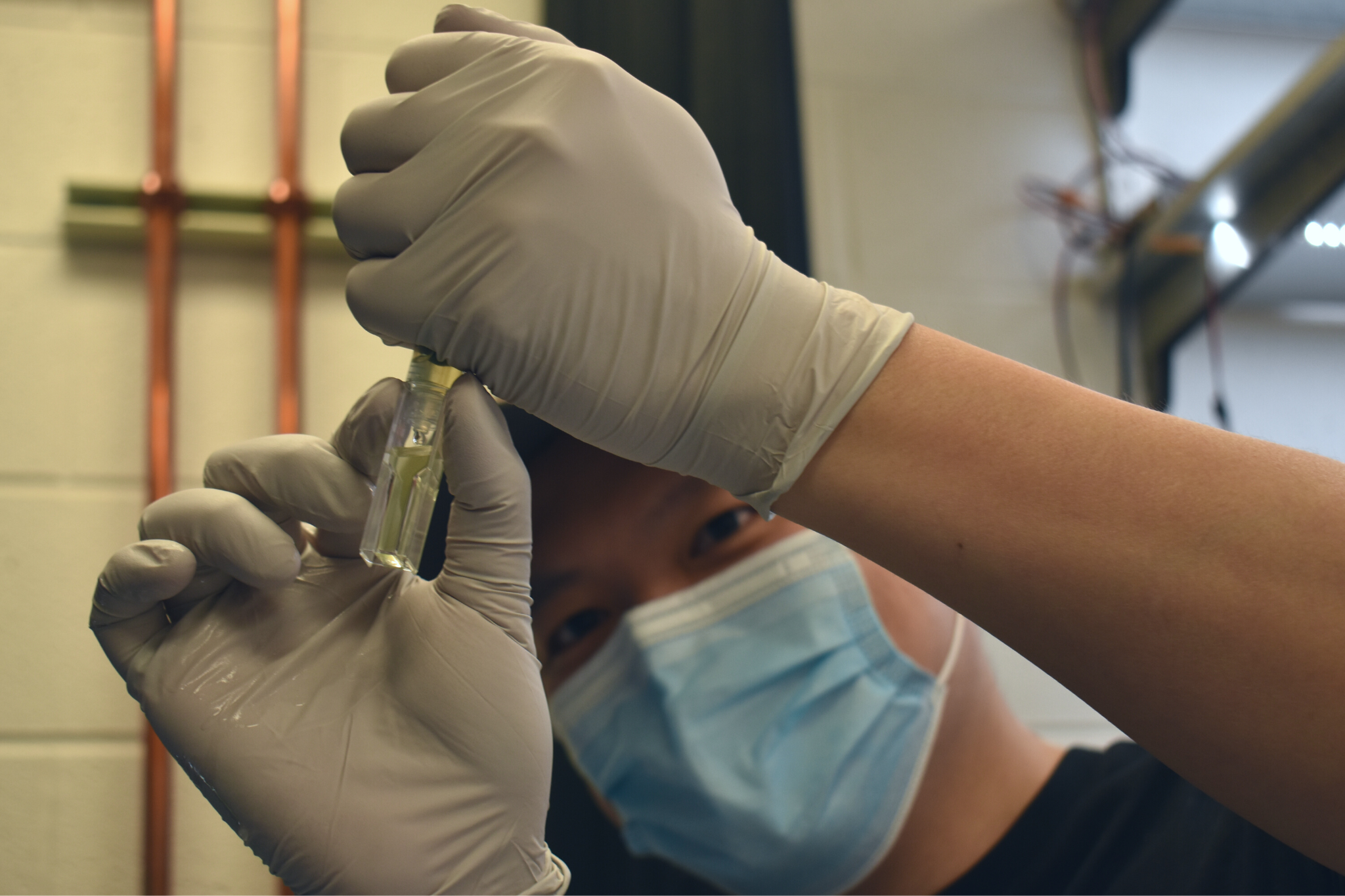
To access cell growth, Tsung transfers samples collected from an ePBR to a cuvette for OD measurement.

This study has implications for future biofuel production and cancer research.

“We originally embarked on this study in algae to understand how the metabolic status of the cell affects growth versus the accumulation of useful compounds such as oils that can serve as feedstocks for biofuels,” said Christoph Benning, senior author of this study, director of the PRL and University Distinguished Professor in the departments of Biochemistry and Molecular Biology and Plant Biology.

He continued, “Proteins similar to CHT7 can even be found in humans, where disruption of cell cycle control can lead to cancer. Hence finding key players involved in the regulation of the cell cycle has implications ranging from the production of algal feed stocks to addressing cancer in humans.”

Funding for this research was primarily provided by the National Science Foundation. Additional funding was provided by MSU AgBioResearch; the Chemical Sciences, Geoscience and Biosciences Division, Office of Basic Energy Sciences, Office of Science, U.S. Department of Energy; and the National Institutes of Health.


Natural SciencesEngineering, Science and TechnologyNatural SciencesNatural Sciences

Latest News

MSUToday Weekly Update

The MSUToday Weekly Update email showcases how Spartans are making a difference through academic excellence, research impact and community outreach. Get inspired by these stories of innovation, collaboration and determination. Plus, enjoy photos and videos of campus and more MSU content to help keep you connected to the Spartan community.

Sign UpUpdate My Information

Connect With Us

Visit our Facebook pageVisit our page on XVisit our Instagram pageVisit our LinkedIn pageVisit our YouTube pageVisit our TikTok page

Health and Safety

  • MSU Police and Public Safety
  • Olin Health Center
  • Counseling & Psychiatric Services (CAPS)
  • University Health and Wellbeing
  • MSU Health Care
  • Civil Rights and Title IX
  • Our Commitment
  • Center for Survivors
  • Security & Fire Safety Report
  • University Policy on Relationship Violence and Sexual Misconduct
  • Notice of Non-Discrimination, Anti-Harassment and Non-Retaliation
  • Health Care Non-Discrimination Notice

Support Services

  • Disability Resources
  • Supportive Services
  • Learning Resources

Working at MSU

  • Human Resources
  • EBS Login
  • Job Postings
  • Employee Assistance Program

Reports

  • CARES Act Funding
  • Student Achievement and Outcomes

Contact us

517-355-1855

Address

Michigan State University 426 Auditorium Road East Lansing, MI 48824

Follow Us

  • Visit our Facebook page
  • Visit our page on X
  • Visit our Instagram page
  • Visit our TikTok page
  • Visit our LinkedIn page
  • Visit our YouTube page

If you're having accessibility issues, please let us know.

Know More: Campus Safety Information and ResourcesTransparency Reporting: Budget & Salary/Compensation
  • Contact Information|
  • Site Map|
  • Privacy Statement|
  • Site Accessibility|
  • Call MSU: (517) 355-1855|
  • Visit: msu.edu|
  • Notice of Nondiscrimination|

SPARTANS WILL|© Michigan State University|