Jump to HeaderJump to Main ContentJump to Footer
Michigan State University
  • Browse Stories By

    Topics

    Explore stories by subject area

    • Arts and Culture
    • Business and Economy
    • Climate and Environment
    • Education and Learning
    • Engineering, Science and Technology
    • Government and Society
    • Health and Medicine
    • Media and Communications
    • MSU Leadership and Impact
    • Sports and Recreation
    • Student and Campus Experience
    View All Stories

    Collections

    Curated story series

    • Turfgrass
    • Ask the Expert
    • Big Ideas
    • Climate solutions
    • Water at MSU
    • Mobility
    • Spartan Perspectives
    • Student views
    • Graduate voices
    • Faculty voices
    View All Collections

    Featured

    Editor's picks

    • The Spartans behind your favorite Michigan golf courses

      July 22, 2026

      The Spartans behind your favorite Michigan golf courses

    • MSU in the 1990s: 10 Spartan milestones

      July 14, 2026

      MSU in the 1990s: 10 Spartan milestones

MSUTODAY
  • Browse Stories By

< Browse Stories By

Topics

Explore stories by subject area

  • Arts and Culture
  • Business and Economy
  • Climate and Environment
  • Education and Learning
  • Engineering, Science and Technology
  • Government and Society
  • Health and Medicine
  • Media and Communications
  • MSU Leadership and Impact
  • Sports and Recreation
  • Student and Campus Experience
  • View All Stories

Collections

Curated story series

  • Turfgrass
  • Ask the Expert
  • Big Ideas
  • Climate solutions
  • Water at MSU
  • Mobility
  • Spartan Perspectives
  • Student views
  • Graduate voices
  • Faculty voices
  • View All Collections

Featured

Editor's picks

  • The Spartans behind your favorite Michigan golf courses

    July 22, 2026

    The Spartans behind your favorite Michigan golf courses

  • MSU in the 1990s: 10 Spartan milestones

    July 14, 2026

    MSU in the 1990s: 10 Spartan milestones

  • For Media
  • Experts
  • Releases and Statements
  • Sign Up
  • Update Information

Resources

  • A to Z Index
  • Find People
  • Maps
  • Email
  • Student Information System (SIS)
  • D2L
  • Libraries
  • Tech Support
  • MSU Misconduct Hotline
  • Social Media Directory
  • Events Calendar
  • For Media
Michigan State University
MSUToday
  • For Media
  • Experts
  • Releases and Statements
  • Sign Up
  • Update Information
MSUTODAY
Climate and Climate Solutions

Feb. 17, 2022

The quest to recycle the unrecyclable

Thirty percent of plastic ends up in products that can’t be recycled even if collected. DOE is investing in Spartan research to help fix that.

By: Matt Davenport

The plastics problem, like onions, has layers. With a $1.7 million grant from the U.S. Department of Energy, Michigan State University’s Muhammad Rabnawaz is starting to peel away some of those problematic layers to make plastics more recyclable.

 

MSU Assistant Professor Muhammad Rabnawaz Credit: Derrick L. Turner

Rabnawaz’s grant is one of seven awarded by DOE, totaling $13.4 million, to reduce plastic waste and emissions from the plastics industry in the United States.


“I’m proud that Michigan’s academic and scientific communities continue to lead the world in research and cutting-edge innovation that has been invaluable in the fight to address climate change,” said U.S. Sen. Gary Peters of Michigan. “Michigan State University is a world-class institution — and I’m excited they will continue to spearhead efforts to reduce plastic waste and create more sustainable environments, making our communities even better places to work, live and raise a family.”


However dutiful Americans are about recycling, less than 10% of plastic waste is actually processed for reuse with the rest ending up in landfills or polluting the environment. One reason is that almost a third of plastics used by manufacturers ends up going into flexible, multilayered packaging that isn’t intended to be recycled in the first place.


So Rabnawaz is working to make these inherently unrecyclable products recyclable to reduce future waste.


“If you go into a grocery store, you will find multilayer packaging everywhere. It’s ubiquitous,” said Rabnawaz, an assistant professor in MSU’s top-ranked School of Packaging in the College of Agriculture and Natural Resources. “For the last several decades, scientists and industry folks have been so focused on performance and cost and not so much on the design for recycling.”


That’s because the packaging works. Each of the layers serves a purpose. The problem is that these packages become garbage when the consumer is done with them.


Take potato chip bags, for example. To keep the chips fresh, the bags contain a layer of plastic coated with metal that blocks out light and oxygen. Then another layer of pristine plastic is sealed shut to keep air out. Juice boxes use similar layers, plus a paper layer that manufacturers print their labels on.


And these examples are simplified. Instead of two or three layers, many multilayer packages can use a dozen layers. Bringing all these layers together improves the performance of the packaging, but it comes at the cost of recyclability.


“So we thought, ‘Well, what if, instead of using seven or 12 layers, we use as few as possible’ and do it in a way that you can still recycle them,” Rabnawaz said.
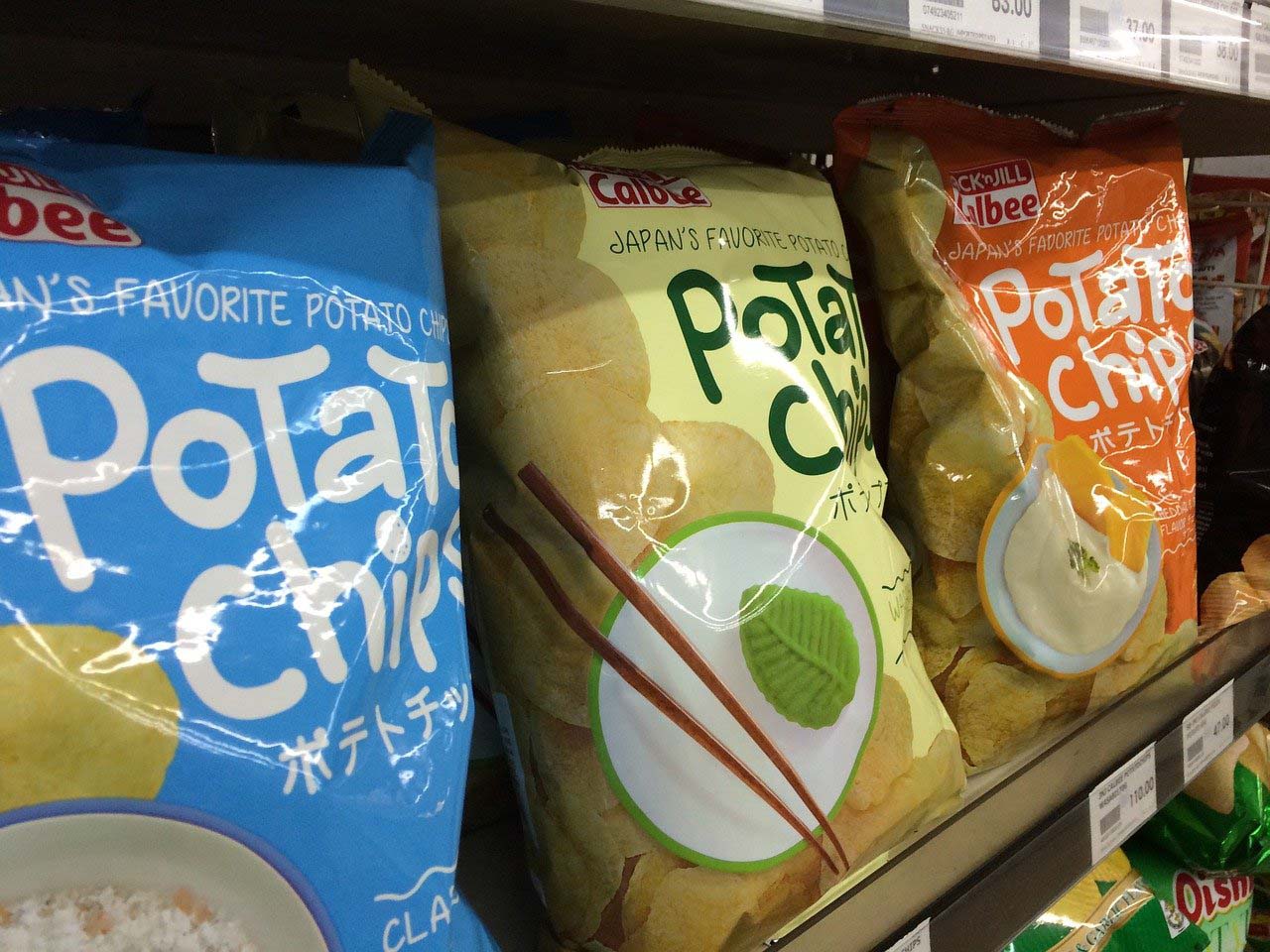
 

A photo shows several colorful potato chip bags on a shelf in a grocery store. Credit: pdiaz/Pixabay
Flexible multilayer packaging, like that used in potato chip bags and other food containers, uses a significant amount of plastic that isn’t recyclable. Spartan researchers are working to change that. Credit: pdiaz/Pixabay

He and his team are devising ways to simplify the multilayer scheme to promote sustainability while preserving the performance of the packaging. But doing more with less is not less complicated. Rabnawaz said one of the biggest challenges early on was convincing people outside his lab that his team’s plan would work.


But Rabnawaz has a track record of getting things done. He’s MSU’s 2021 Innovator of the Year and a 2021 National Science Foundation CAREER award winner. He’s also not alone in the effort to reinvent multilayer packaging.


Joining him are two of his world-class colleagues in the School of Packaging, Professors Laurent Matuana and Rafael Auras. Spartan experts Shiwang Cheng, an assistant professor in the Chemical Engineering and Materials Science Department, and Huan Lei an assistant professor in the Department of Computational Mathematics, Science and Engineering, have also joined the effort. The team is also collaborating with researchers from Pacific Northwest National Laboratory and Amcor, a leading company in responsible packaging.


“The partnerships are really helpful for getting people to realize the potential of this work,” Rabnawaz said. “Having industry people involved, they know what is practical and what is not, so they have very valuable feedback.”


“Plastics offer an incredible value to everyday life, from reducing food waste, protecting our health and for making life more convenient. But we need better end-of-life solutions that minimize negative environmental impact,” said Matthew Daum, director of the School of Packaging, where he’s also a professor. “This research, with Amcor’s support, has potential for scalable solutions that make a positive environmental and industry impact. This isn’t research that stays in the lab, it is meant to translate into real-world solutions.”


Other companies have also reached out to Rabnawaz, wanting to learn more about his lab’s various projects in sustainable packaging. It turns out that the research isn’t just good for the planet, it’s also got a strong business case.


The global market for multilayer packaging is estimated to be worth $250 billion by the end of the decade. Spartan research that leads to materials that can capture even a fraction of that market could be worth millions, if not billions of dollars.


 “And you’ll be able to recycle them,” Rabnawaz said.

MEDIA CONTACTS

Muhammad Rabnawaz, Kaylie Crowe
Climate and Climate SolutionsClimate and EnvironmentBusiness and EconomyMSU ResearchMSU Leadership and Impact

Collection

more content from this collection

Climate Solutions

Latest News

MSUToday Weekly Update

The MSUToday Weekly Update email showcases how Spartans are making a difference through academic excellence, research impact and community outreach. Get inspired by these stories of innovation, collaboration and determination. Plus, enjoy photos and videos of campus and more MSU content to help keep you connected to the Spartan community.

Sign UpUpdate My Information

Connect With Us

Visit our Facebook pageVisit our page on XVisit our Instagram pageVisit our LinkedIn pageVisit our YouTube pageVisit our TikTok page

Health and Safety

  • MSU Police and Public Safety
  • Olin Health Center
  • Counseling & Psychiatric Services (CAPS)
  • University Health and Wellbeing
  • MSU Health Care
  • Civil Rights and Title IX
  • Our Commitment
  • Center for Survivors
  • Security & Fire Safety Report
  • University Policy on Relationship Violence and Sexual Misconduct
  • Notice of Non-Discrimination, Anti-Harassment and Non-Retaliation
  • Health Care Non-Discrimination Notice

Support Services

  • Disability Resources
  • Supportive Services
  • Learning Resources

Working at MSU

  • Human Resources
  • EBS Login
  • Job Postings
  • Employee Assistance Program

Reports

  • CARES Act Funding
  • Student Achievement and Outcomes

Contact us

517-355-1855

Address

Michigan State University 426 Auditorium Road East Lansing, MI 48824

Follow Us

  • Visit our Facebook page
  • Visit our page on X
  • Visit our Instagram page
  • Visit our TikTok page
  • Visit our LinkedIn page
  • Visit our YouTube page

If you're having accessibility issues, please let us know.

Know More: Campus Safety Information and ResourcesTransparency Reporting: Budget & Salary/Compensation
  • Contact Information|
  • Site Map|
  • Privacy Statement|
  • Site Accessibility|
  • Call MSU: (517) 355-1855|
  • Visit: msu.edu|
  • Notice of Nondiscrimination|

SPARTANS WILL|© Michigan State University|
