Jump to HeaderJump to Main ContentJump to Footer
Michigan State University
MSUTODAY
  • Browse Stories By

    Topics

    Explore stories by subject area

    • Arts and Culture
    • Business and Economy
    • Climate and Environment
    • Education and Learning
    • Engineering, Science and Technology
    • Government and Society
    • Health and Medicine
    • Media and Communications
    • MSU Leadership and Impact
    • Sports and Recreation
    • Student and Campus Experience
    View All Stories

    Collections

    Curated story series

    • Turfgrass
    • Ask the Expert
    • Big Ideas
    • Climate solutions
    • Water at MSU
    • Mobility
    • Spartan Perspectives
    • Student views
    • Graduate voices
    • Faculty voices
    View All Collections

    Featured

    Editor's picks

    • 9 reasons to love being a Spartan

      Aug. 28, 2026

      9 reasons to love being a Spartan

    • NIH awards multi-university team over $4M to improve women’s health

      Sept. 15, 2026

      NIH awards multi-university team over $4M to improve women’s health

MSUTODAY
  • Browse Stories By

< Browse Stories By

Topics

Explore stories by subject area

  • Arts and Culture
  • Business and Economy
  • Climate and Environment
  • Education and Learning
  • Engineering, Science and Technology
  • Government and Society
  • Health and Medicine
  • Media and Communications
  • MSU Leadership and Impact
  • Sports and Recreation
  • Student and Campus Experience
  • View All Stories

Collections

Curated story series

  • Turfgrass
  • Ask the Expert
  • Big Ideas
  • Climate solutions
  • Water at MSU
  • Mobility
  • Spartan Perspectives
  • Student views
  • Graduate voices
  • Faculty voices
  • View All Collections

Featured

Editor's picks

  • 9 reasons to love being a Spartan

    Aug. 28, 2026

    9 reasons to love being a Spartan

  • NIH awards multi-university team over $4M to improve women’s health

    Sept. 15, 2026

    NIH awards multi-university team over $4M to improve women’s health

  • For Media
  • Experts
  • Releases and Statements
  • Sign Up
  • Update Information

Resources

  • A to Z Index
  • Find People
  • Maps
  • Email
  • Student Information System (SIS)
  • D2L
  • Libraries
  • Tech Support
  • MSU Misconduct Hotline
  • Social Media Directory
  • Events Calendar
  • For Media
Michigan State University
MSUToday
  • For Media
  • Experts
  • Releases and Statements
  • Sign Up
  • Update Information
Natural Resources and Conservation

Feb. 7, 2022

Ask the Expert: Let’s talk about cut flowers

MSU experts share tips and considerations for conscientious consumers looking to buy flowers for Valentine’s Day and other occasions

By: Matt Davenport

"Ask the Expert" articles provide information and insights from MSU scientists, researchers and scholars about national and global issues, complex research and general-interest subjects based on their areas of academic expertise and study. They may feature historical information, background, research findings, or offer tips.  

­

There’s never a bad time to buy cut flowers for yourself or to give them as a “just because” gift. But there are certain holidays when these blooms are especially welcome (looking at you, Valentine’s Day). It might come as a surprise, however, that the most familiar flowers you’ll find at florists, grocery stores and online are imported. About 80% of our cut roses, carnations and chrysanthemums originate outside the United States.
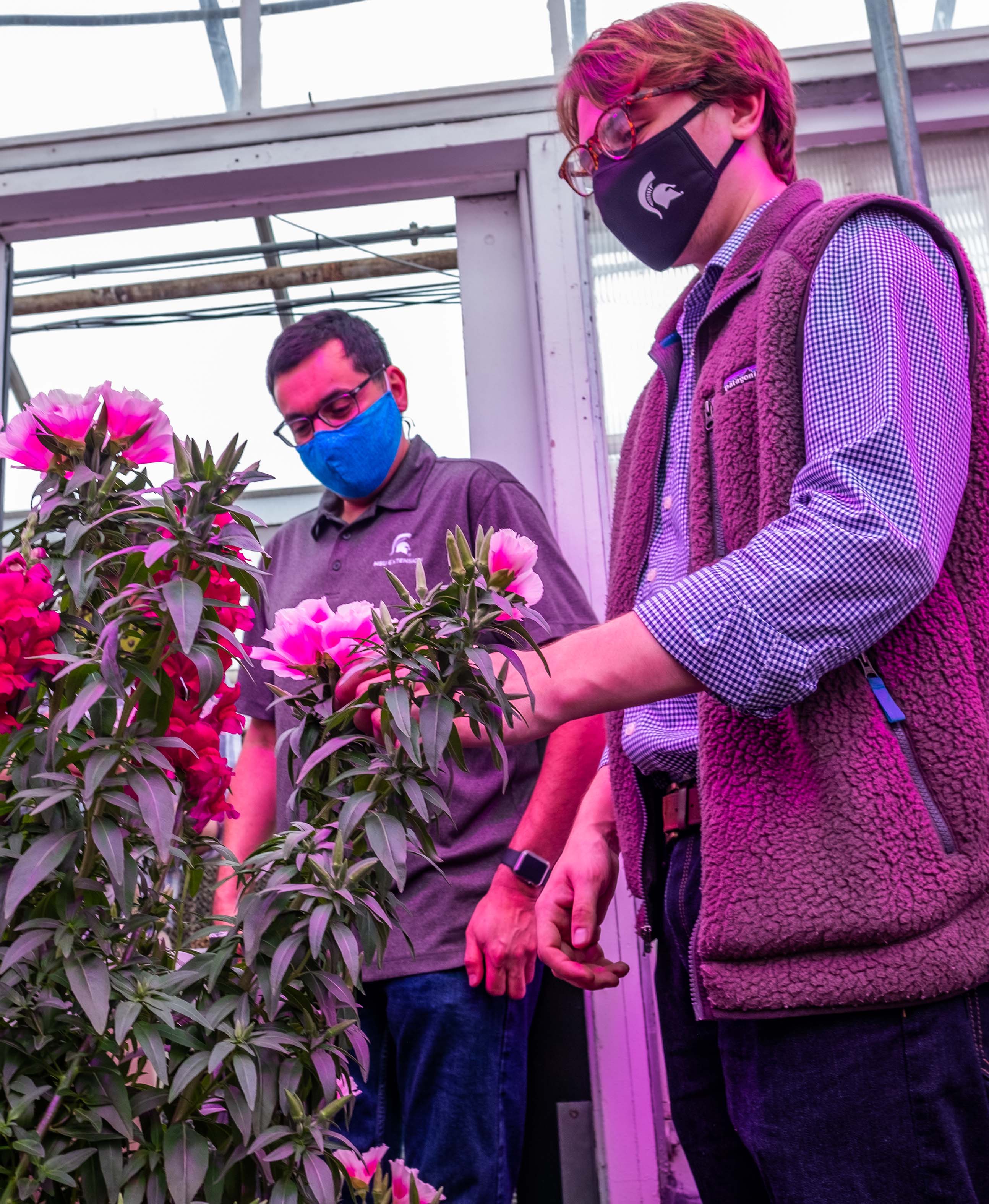
 

Roberto Lopez (left) and Caleb Spall (right)
MSU floriculture researchers Roberto Lopez (left) and Caleb Spall (right). Credit: Derrick L. Turner

For those consumers that want to support local, regional or domestic cut flower growers, specialty cut flowers are the answer, say MSU floriculture experts Roberto Lopez and Caleb Spall. These flowers — mainly those that are not part of the “Big Three” mentioned earlier — can offer a wider range of colors, fragrances, textures and overall beauty.


Lopez and Spall from the College of Agriculture and Natural Resources are working to help greenhouse growers succeed in the blooming and booming specialty cut flower industry. We caught up with these two Spartan researchers to learn how we can help support local growers and make more ecofriendly choices when shopping for floral gifts.


What are specialty cut flowers?


Caleb Spall, master’s candidate and 2021 American Floral Endowment Paul Ecke, Jr. Scholar:


Traditionally, they're defined as any cut flower other than roses, carnations or chrysanthemums. It’s a pretty simple definition, but it encompasses a huge variety of fresh and dried cut flowers, woody stems and even cut foliage.


Roberto Lopez, associate professor of horticulture and extension specialist:


Roses, carnations and chrysanthemums were grown domestically in parts of the U.S. with high light intensities and moderate temperature such as in Colorado and California. But as labor, energy and greenhouse operation costs increased, the industry moved — primarily to Colombia, Ecuador and parts of Africa that have the ideal climate for year-round production. Those three crops hold up well during shipping and have a long vase-life, so production location is more flexible.


The specialty cut flower industry in the U.S. is booming, but most specialty cut flowers do not ship very well. For example, if snapdragon cut flowers are laid flat in a box, they start to defy gravity and bend upwards during transit. The resulting bent stems are then no longer considered to be marketable when they reach their destination.  


Why might folks want to consider buying specialty cut flowers?


Spall: Specialty cut flowers can have so many different textures and colors and can make an arrangement even more unique and eye-catching compared to a traditional arrangement of, say, just roses.


Younger consumers are interested in native, organically grown, diverse and exciting cut flowers that are locally-sourced and grown within a certain radius of where they live. Some view traditional cut flowers as being produced thousands of miles away and having a substantial carbon footprint due to this long-distance shipping.


Where can people find specialty cut flowers?


Spall: There’s a wide variety of venues where people can purchase specialty cut flowers or cut your own at a u-cut farm, but that will vary with season. I also personally like to go to farmers’ markets in the spring and summer. You can also find the flowers year-round at florist shops and specialty markets and even supermarkets.


Locally, some examples are Stiles Pumpkin Farm and Back Road Blossoms U-Cut Flowers in Durand. I live close to the East Lansing Farmers Market, and the farmers and vendors have beautiful, locally grown arrangements and individual stems that often sell out quickly. Then Horrocks Farm Market in Lansing and Meijer locations are open year-round.


Lopez: Also, consumers can participate in CSAs, or community supported agriculture. Just to give you an example for something very local, the MSU Student Organic Farm has a CSA year-round and during the summer months they offer cut flower shares in addition to their traditional produce shares.


I would encourage people to visit the websites of the Association of Specialty Cut Flower Growers, Certified American Grown, or the Michigan Flower Growers Cooperative to find information on where to buy flowers grown in their area.


Sounds like it could be a little tricky to find specialty cut flowers from Michigan in February. Do you have any other tips that could help people make more sustainable flower choices in winter?


Lopez: One of the things I always look at when I see cut flowers in a grocery or big box store — like Costco or Trader Joe’s, for example — is the origin and verification labels.  U.S. growers are proud of their products so you may see labels like “California grown” or “Certified American Grown”.  


Flowers that are grown domestically or imported may have labels verifying that they are sustainably grown. You may see cut flowers labeled as certified by Veriflora, MPS, or the Rainforest Alliance, a nonprofit group working to protect the environment and farmers for a lot of the traditional cut flowers.


Author’s note: MPS stands for Milieu Programma Sierteelt, which is Dutch for “Environmental Program Floriculture."


Spall: There are other labels and certifications, too. For instance, certification is available from the Fair Food Program, an organization that works to preserve workers’ rights, wages and protection. I would encourage people who are buying flowers to look at the various certifications and support the organizations that not only focus on how the plants are produced, but also the health and well-being of people who are producing the plants. It’s important to remember that by purchasing cut flowers, you are supporting growers and the individuals who harvest them.



Fuchsia stock flowers blossom inside an MSU research greenhouse. Credit: Derrick L. TurnerMagenta-colored stock flowers blossom inside an MSU research greenhouse. Credit: Derrick L. Turner

Do you have a favorite specialty cut flower to give as a gift?


Lopez: I have several favorites, but I would probably go with stock and tuberose just because of their fragrance. They are very unique.


Spall: I really like stock as well. I also like ranunculus, or buttercups. But I tend to lean toward tropical cut flowers and my favorite are calla lilies. They’re part of a family of plants that are used as house and garden plants.


What’s the specialty cut flower industry like in Michigan?


Lopez: There are a lot of small operations here that grow their crops in the field or in unheated high tunnels or hoop houses. The demand for specialty cut flower production education is very high. Any time we give a cut flower talk, there’s very high attendance and lots of questions.


The demand for a consistent, year-round supply of specialty cut flowers exists from florists, wedding planners, hotels and restaurants. And there’s no way that you’ll be able to produce cut flowers year-round without a greenhouse in Michigan and that’s what our research is aiming to support.


Spall: The demand for year-round cut flowers is growing. And not just from hotels and restaurants, but consumers too. More consumers are interested in having the same consistent product year-round just as consumers do in European countries, where the consumption of cut flowers is more than double of that in the U.S.


I think as the demand continues to increase, more greenhouse growers will be interested in cultivating specialty cut flowers year-round and tapping into local and regional markets. But I think people are still learning to adopt specific production techniques, plus the investment into a controlled environment greenhouse is high and it can be daunting to make that initial jump. There’s the greenhouse structure itself, then upkeep, heating and supplemental lighting, which you’ll definitely need in northern climates like Michigan.


Aside from buying flowers, how can people support local growers?


Spall: A great way to support local growers would be to get the word out about their farm, Facebook pages and products, whether that’s by using social media or by telling friends and neighbors.


Any final words of advice for folks shopping for Valentine’s Day flowers?


Spall: I’d recommend purchasing cut flowers from local floral shops as they have the ideal conditions for keeping those beauties fresh and can have that personal touch you are looking for. I would encourage people to order their flowers ahead of time, as supplies can run out very quickly!


To learn more about Spall and Lopez’s specialty cut flower research and how it can help local growers, read our story about their work from May 2021.

Natural Resources and ConservationClimate and EnvironmentAgricultural Sciences and FarmingAgricultural Sciences and Farming

Collection

more content from this collection

Ask the Expert

Latest News

MSUToday Weekly Update

The MSUToday Weekly Update email showcases how Spartans are making a difference through academic excellence, research impact and community outreach. Get inspired by these stories of innovation, collaboration and determination. Plus, enjoy photos and videos of campus and more MSU content to help keep you connected to the Spartan community.

Sign UpUpdate My Information

Connect With Us

Visit our Facebook pageVisit our page on XVisit our Instagram pageVisit our LinkedIn pageVisit our YouTube pageVisit our TikTok page

Health and Safety

  • MSU Police and Public Safety
  • Olin Health Center
  • Counseling & Psychiatric Services (CAPS)
  • University Health and Wellbeing
  • MSU Health Care
  • Civil Rights and Title IX
  • Our Commitment
  • Center for Survivors
  • Security & Fire Safety Report
  • University Policy on Relationship Violence and Sexual Misconduct
  • Notice of Non-Discrimination, Anti-Harassment and Non-Retaliation
  • Health Care Non-Discrimination Notice

Support Services

  • Disability Resources
  • Supportive Services
  • Learning Resources

Working at MSU

  • Human Resources
  • EBS Login
  • Job Postings
  • Employee Assistance Program

Reports

  • CARES Act Funding
  • Student Achievement and Outcomes

Contact us

517-355-1855

Address

Michigan State University 426 Auditorium Road East Lansing, MI 48824

Follow Us

  • Visit our Facebook page
  • Visit our page on X
  • Visit our Instagram page
  • Visit our TikTok page
  • Visit our LinkedIn page
  • Visit our YouTube page

If you're having accessibility issues, please let us know.

Know More: Campus Safety Information and ResourcesTransparency Reporting: Budget & Salary/Compensation
  • Contact Information|
  • Site Map|
  • Privacy Statement|
  • Site Accessibility|
  • Call MSU: (517) 355-1855|
  • Visit: msu.edu|
  • Notice of Nondiscrimination|

SPARTANS WILL|© Michigan State University|