Jump to HeaderJump to Main ContentJump to Footer
Michigan State University
MSUTODAY
  • Browse Stories By

    Topics

    Explore stories by subject area

    • Arts and Culture
    • Business and Economy
    • Climate and Environment
    • Education and Learning
    • Engineering, Science and Technology
    • Government and Society
    • Health and Medicine
    • Media and Communications
    • MSU Leadership and Impact
    • Sports and Recreation
    • Student and Campus Experience
    View All Stories

    Collections

    Curated story series

    • Alumni stories
    • Turfgrass
    • Ask the Expert
    • Big Ideas
    • Climate solutions
    • Water at MSU
    • Mobility
    • Spartan Perspectives
    • Student views
    • Graduate voices
    • Faculty voices
    View All Collections

    Featured

    Editor's picks

    • 9 reasons to love being a Spartan

      Aug. 28, 2026

      9 reasons to love being a Spartan

    • NIH awards multi-university team over $4M to improve women’s health

      Sept. 15, 2026

      NIH awards multi-university team over $4M to improve women’s health

MSUTODAY
  • Browse Stories By

< Browse Stories By

Topics

Explore stories by subject area

  • Arts and Culture
  • Business and Economy
  • Climate and Environment
  • Education and Learning
  • Engineering, Science and Technology
  • Government and Society
  • Health and Medicine
  • Media and Communications
  • MSU Leadership and Impact
  • Sports and Recreation
  • Student and Campus Experience
  • View All Stories

Collections

Curated story series

  • Alumni stories
  • Turfgrass
  • Ask the Expert
  • Big Ideas
  • Climate solutions
  • Water at MSU
  • Mobility
  • Spartan Perspectives
  • Student views
  • Graduate voices
  • Faculty voices
  • View All Collections

Featured

Editor's picks

  • 9 reasons to love being a Spartan

    Aug. 28, 2026

    9 reasons to love being a Spartan

  • NIH awards multi-university team over $4M to improve women’s health

    Sept. 15, 2026

    NIH awards multi-university team over $4M to improve women’s health

  • For Media
  • Experts
  • Releases and Statements
  • Sign Up
  • Update Information

Resources

  • A to Z Index
  • Find People
  • Maps
  • Email
  • Student Information System (SIS)
  • D2L
  • Libraries
  • Tech Support
  • MSU Misconduct Hotline
  • Social Media Directory
  • Events Calendar
  • For Media
Michigan State University
MSUToday
  • For Media
  • Experts
  • Releases and Statements
  • Sign Up
  • Update Information
Nuclear Science

Dec. 9, 2021

Training for the frontiers of physics

The U.S. Department of Energy is helping MSU create a one-of-a-kind training experience for Spartan graduate students

By: Matt Davenport

Michigan State University is creating a new program to help Spartan students push the frontiers of physics and power the economy with nearly $2 million in grant funding from the U.S. Department of Energy Office of Science, or DOE-SC.
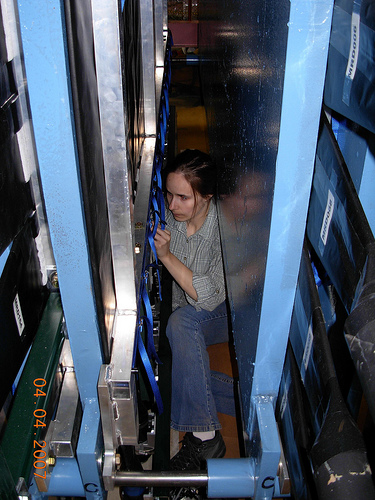
 

In a photo from 2007, Kendall Mahn had wedged herself between large blue and silver metallic plates to work on electronics in an instrument used for high energy particle physics experiments.
As a graduate student, Kendall Mahn got extensive hands-on experience working with detectors in particle physics experiments. Now, as an associate professor of physics and astronomy at MSU, she’s working to make such experiences more common for students, with added support, education and training, as part of the new TRAIN-MI program. Credit: Courtesy of Kendall Mahn

The High Energy Physics Instrumentation Traineeship in Michigan, dubbed TRAIN-MI, will provide graduate students with a distinctive educational program focused on building high-tech tools to study high energy physics. These instruments will help scientists better understand what the universe is made of, for example, by probing abundant but mysterious particles such as neutrinos and dark matter, said Kendall Mahn, the program’s leader.


“There’s another piece of this, too, in that this is a hidden engine of our economic strength,” said Mahn, an associate professor in the College of Natural Science's Department of Physics and Astronomy.


Answering the universe’s big questions takes time, but the tools researchers develop to answer those questions can often make a more immediate impact. Advances made for these technologies can also help improve devices people use every day in their phones, computers and medical devices.


Beyond that, training students how to build these instruments provides them with skills needed to fill jobs at the companies, universities and national labs that make the United States a leader in science and innovation.
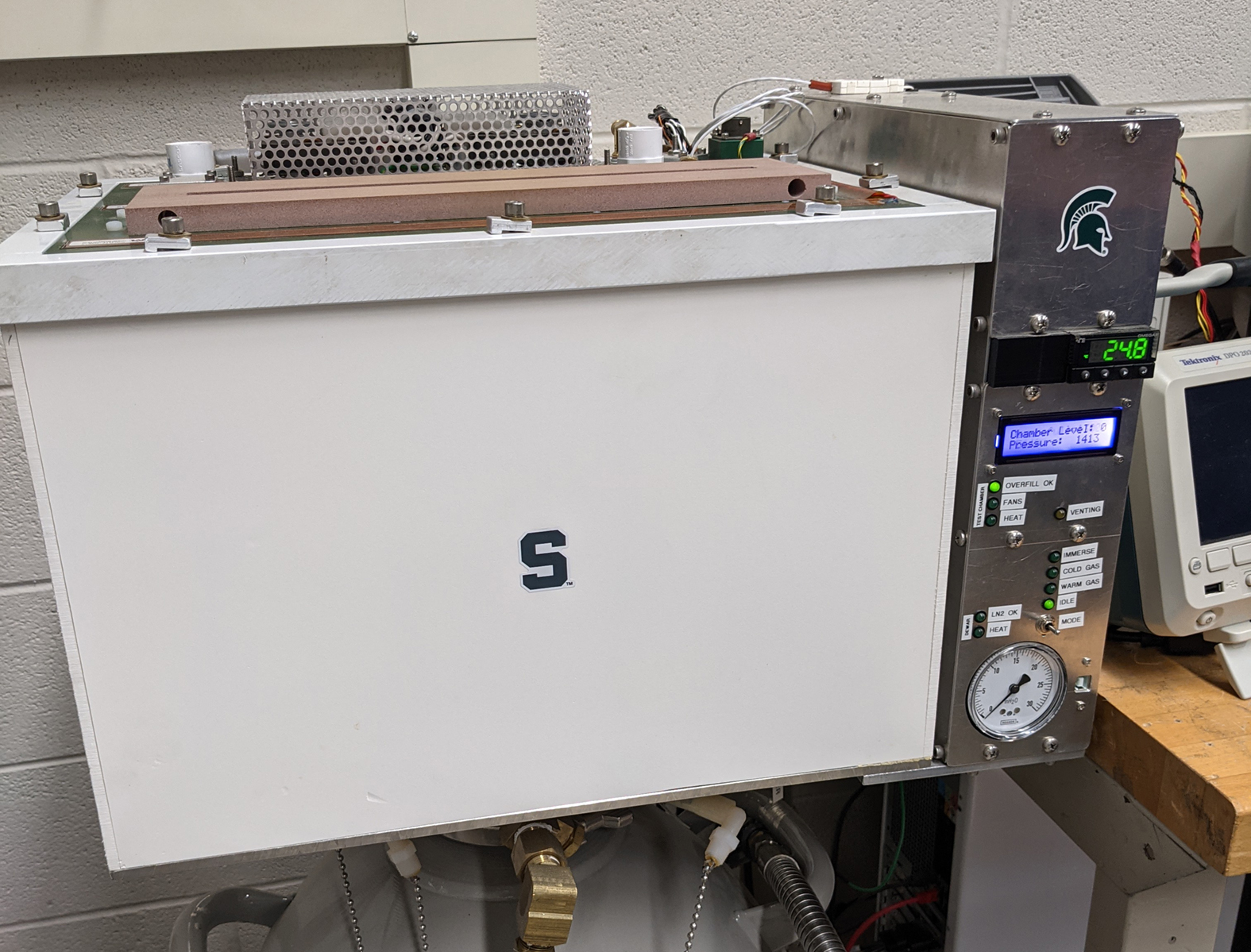
 

A white box with a green block “S” sticker is connected by wires to a slimmer silver box with a digital display reading “248”, an analog gauge and a green Spartan helmet.
A photo of what’s called a “cold test stand” developed at MSU to test electronics for the Deep Underground Neutrino Experiment, or DUNE, at cold temperatures. Credit: Courtesy of Kendall Mahn

“I see our responsibility as trying to give students as wide a buffet of skills as possible and helping them plug into those different communities,” Mahn said. “We’re going to be training a generation of students who are prepared to help.”


Joining Mahn on the effort to build the program are her MSU colleagues  Wade Fisher, a professor of physics; Nathan Whitehorn, an assistant professor of physics; and Kyle Brown, an assistant professor of chemistry at the Facility for Rare Isotope Beams, or FRIB. MSU is one of three institutions to receive a grant like this from DOE, Mahn said. Stanford University and the University of California, Davis are the other two.


“MSU is a really unique place for a unique opportunity like this,” she said. “We have a strong, warm and welcoming environment for this kind of work.”


It also turns out that the instruments used in high energy particle physics can also be of service in nuclear physics, which is another one of MSU’s scientific strengths. After all, the university is home to FRIB, which is a one-of-a-kind particle accelerator, and the nation’s top-ranked nuclear physics graduate program. FRIB’s Brown is facilitating a prominent role for nuclear physics students in the TRAIN-MI program.
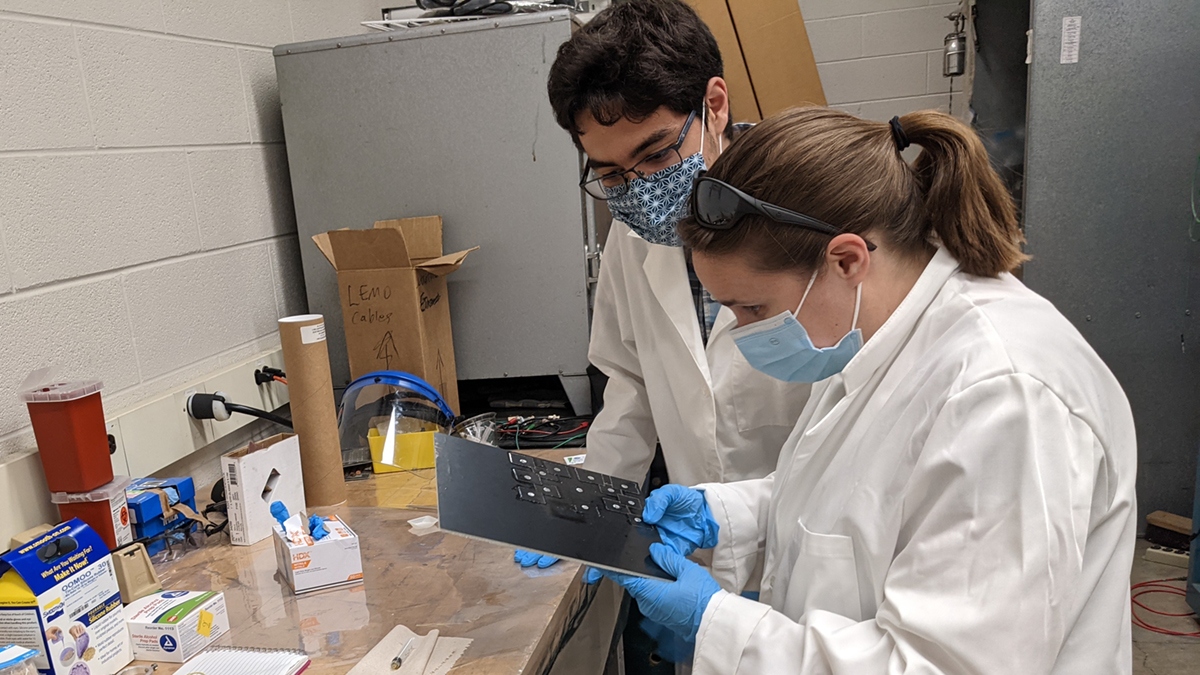
 

Kendall Mahn, MSU associate professor of physics and astronomy, works on a project at a workbench with Elias Taira, a Charles Drew Science Scholar.
Kendall Mahn, MSU associate professor of physics and astronomy, works on a project at a workbench with Elias Taira, a Charles Drew Science Scholar. Credit: Courtesy of Kendall Mahn

“There’s a really good connection with the nuclear science program, which gives us a very collaborative atmosphere,” Mahn said.


But she hopes graduate students from outside physics will also participate in the TRAIN-MI program, which offers coursework, mentorship and certification upon completion. To ensure students get hands-on experience working with technology on real experiments, MSU is also partnering with Brookhaven National Laboratory in New York; Fermi National Accelerator Laboratory and Argonne National Laboratory in Illinois; and SLAC National Accelerator Laboratory, originally the Stanford Linear Accelerator Center, in California.


“I want graduate students to know about this program and come on down,” Mahn said. “It’s an opportunity to gain a lot of useful and exciting skills.”
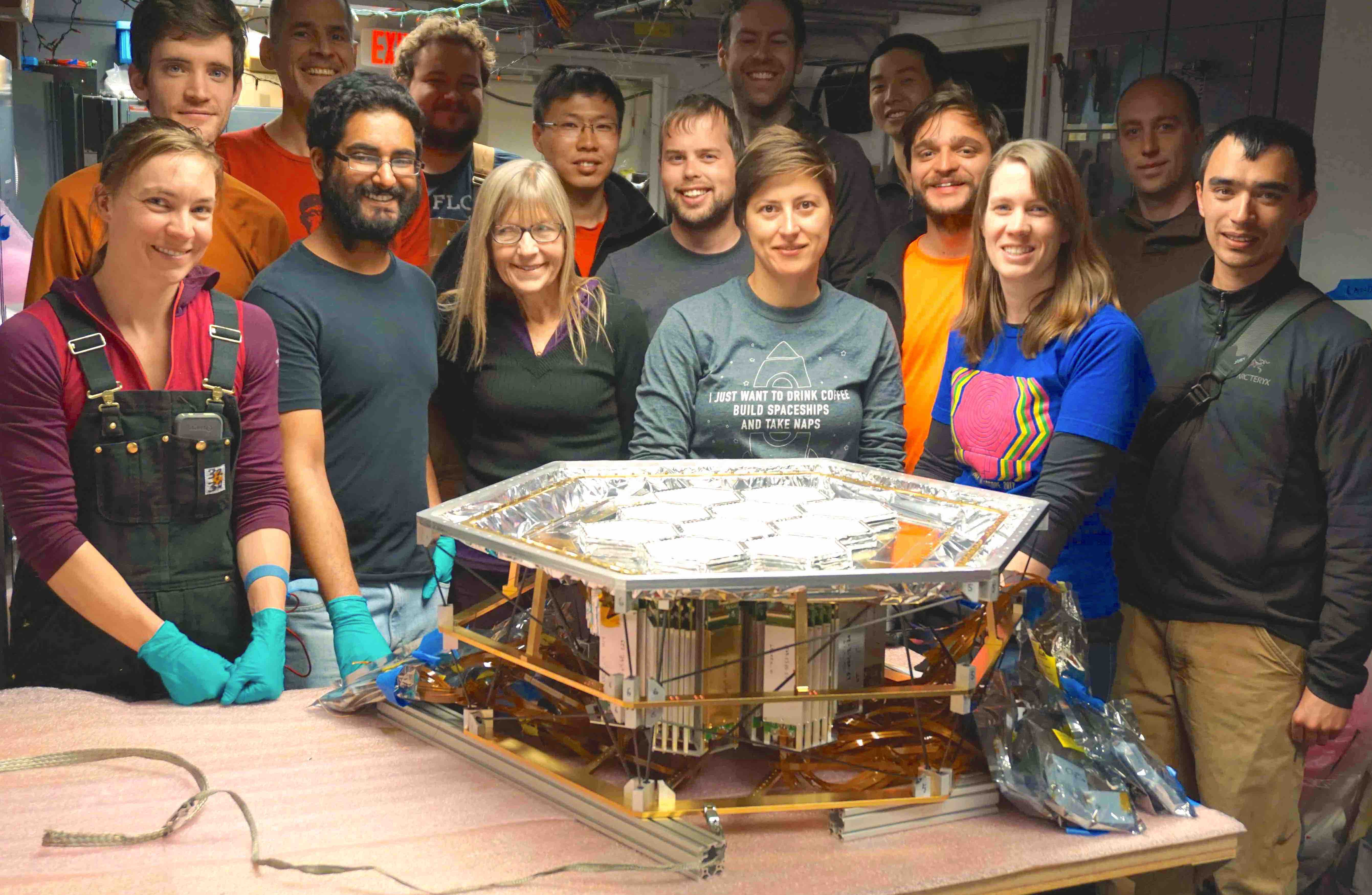
 

Several scientists stand around a large, silvery hexagonal instrument sitting on a table.
With the TRAIN-MI program, Spartan students will gain hands on experience developing real instruments, like the component of the South Pole Telescope, resting on the table in this photo from 2017, that Nathan Whitehorn (second from right) helped build and design before joining MSU. Michigan State is now part of the international team developing next-generation tools to study radiation emanating from the Big Bang. Credit: Courtesy Nathan Whitehorn

The idea for this program comes from Mahn’s own experiences as a graduate student in particle physics. While earning her Ph.D. at Columbia University, she had a rare opportunity to help assemble two detectors, including building one from scratch. Projects in particle physics are large and time-consuming, so once they’re up and running, students may not get much hands-on experience with high energy instrumentation.


“There are huge experiments happening in particle physics now, but many students won’t get to know how detectors work in an intimate way or learn how to build them,” Mahn said.


She saw a way to help students broaden their expertise with a graduate certification program. Building on a framework provided by the MSU Accelerator Science and Engineering Traineeship model developed at FRIB and with generous support from DOE-SC, TRAIN-MI is now a reality.


“We’ll give students support, training and a chance to build new instruments with other like-minded people,” Mahn said. “It’s really fun to build something that works and tells you something new about the world. Especially right now, after months of isolation and screen time, it’s very satisfying to build something with other people.”


MEDIA CONTACTS

Kendall Mahn
Nuclear ScienceEngineering, Science and TechnologyEngineering, Science and TechnologyMSU ResearchMSU Leadership and Impact

Latest News

MSUToday Weekly Update

The MSUToday Weekly Update email showcases how Spartans are making a difference through academic excellence, research impact and community outreach. Get inspired by these stories of innovation, collaboration and determination. Plus, enjoy photos and videos of campus and more MSU content to help keep you connected to the Spartan community.

Sign UpUpdate My Information

Connect With Us

Visit our Facebook pageVisit our page on XVisit our Instagram pageVisit our LinkedIn pageVisit our YouTube pageVisit our TikTok page

Health and Safety

  • MSU Police and Public Safety
  • Olin Health Center
  • Counseling & Psychiatric Services (CAPS)
  • University Health and Wellbeing
  • MSU Health Care
  • Civil Rights and Title IX
  • Our Commitment
  • Center for Survivors
  • Security & Fire Safety Report
  • University Policy on Relationship Violence and Sexual Misconduct
  • Notice of Non-Discrimination, Anti-Harassment and Non-Retaliation
  • Health Care Non-Discrimination Notice

Support Services

  • Disability Resources
  • Supportive Services
  • Learning Resources

Working at MSU

  • Human Resources
  • EBS Login
  • Job Postings
  • Employee Assistance Program

Reports

  • CARES Act Funding
  • Student Achievement and Outcomes

Contact us

517-355-1855

Address

Michigan State University 426 Auditorium Road East Lansing, MI 48824

Follow Us

  • Visit our Facebook page
  • Visit our page on X
  • Visit our Instagram page
  • Visit our TikTok page
  • Visit our LinkedIn page
  • Visit our YouTube page

If you're having accessibility issues, please let us know.

Know More: Campus Safety Information and ResourcesTransparency Reporting: Budget & Salary/Compensation
  • Contact Information|
  • Site Map|
  • Privacy Statement|
  • Site Accessibility|
  • Call MSU: (517) 355-1855|
  • Visit: msu.edu|
  • Notice of Nondiscrimination|

SPARTANS WILL|© Michigan State University|