In collaboration with an international team of researchers, Michigan State University has helped create the world’s lightest version, or isotope, of magnesium to date.
Forged at the National Superconducting Cyclotron Laboratory at MSU, or NSCL, this isotope is so unstable, it falls apart before scientists can measure it directly. Yet this isotope that isn’t keen on existing can help researchers better understand how the atoms that define our existence are made.
Led by researchers from Peking University in China, the team included scientists from Washington University in St. Louis, MSU and other institutions.
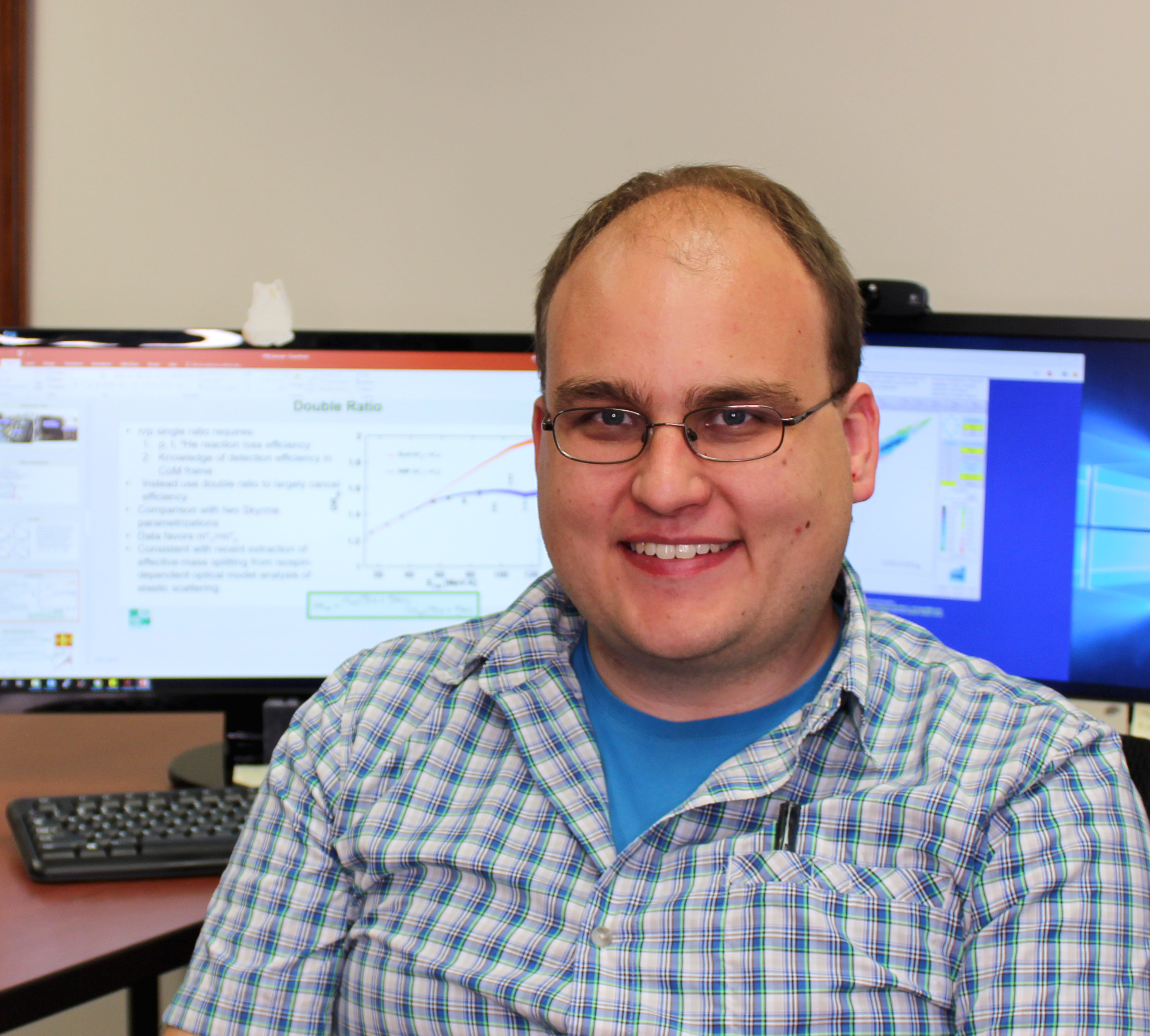
“One of the big questions I’m interested in is where do the universe’s elements come from,” said Kyle Brown, an assistant professor of chemistry at the Facility for Rare Isotope Beams, or FRIB. Brown was one of the leaders of the new study, published online Dec. 22 by the journal Physical Review Letters.
“How are these elements made? How do these processes happen?” asked Brown.
The new isotope won’t answer those questions by itself, but it can help refine the theories and models scientists develop to account for such mysteries.
Earth is full of natural magnesium, forged long ago in the stars, that has since become a key component of our diets and minerals in the planet’s crust. But this magnesium is stable. Its atomic core, or nucleus, doesn’t fall apart.
The new magnesium isotope, however, is far too unstable to be found in nature. But by using particle accelerators to make increasingly exotic isotopes like this one, scientists can push the limits of models that help explain how all nuclei are built and stay together.
This, in turn, helps predict what happens in extreme cosmic environments that we may never be able to directly mimic on or measure from Earth.
“By testing these models and making them better and better, we can extrapolate out to how things work where we can’t measure them,” Brown said. “We’re measuring the things we can measure to predict the things we can’t.”
NSCL has been helping scientists worldwide further humanity’s understanding of the universe since 1982. FRIB will continue that tradition when experiments begin in 2022. FRIB is a U.S. Department of Energy Office of Science, or DOE-SC, user facility, supporting the mission of the DOE-SC Office of Nuclear Physics.
“FRIB is going to measure a lot of things we haven’t been able to measure in the past,” Brown said. “We actually have an approved experiment set to run at FRIB. And, we should be able to create another nucleus that hasn’t been made before.”
Heading into that future experiment, Brown has been involved with four different projects that have made new isotopes. That includes the newest, which is known as magnesium-18.
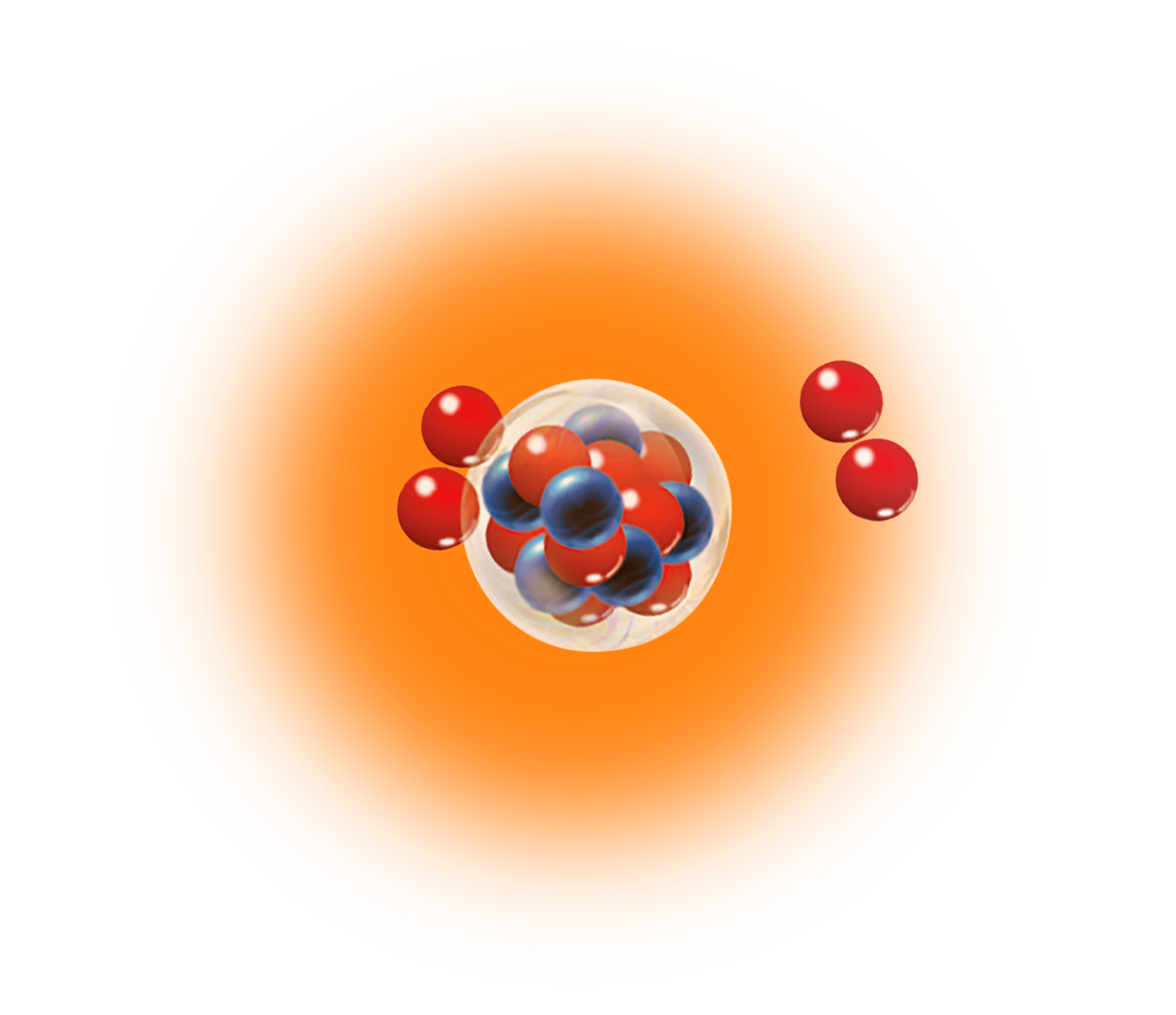
All magnesium atoms have 12 protons inside their nuclei. Previously, the lightest version of magnesium had 7 neutrons, giving it a total of 19 protons and neutrons — hence its designation as magnesium-19.
To make magnesium-18, which is lighter by one neutron, the team started with a stable version of magnesium, magnesium-24. The cyclotron at NSCL accelerated a beam of magnesium-24 nuclei to about half the speed of light and sent that beam barreling into a target, which is a metal foil made from the element beryllium. And that was just the first step.
“That collision gives you a bunch of different isotopes lighter than magnesium-24,” Brown said. “But from that soup, we can select out the isotope we want.”
In this case, that isotope is magnesium-20. This version is unstable, meaning it decays, usually within tenths of a second. So the team is on a clock to get that magnesium-20 to collide with another beryllium target about 30 meters, or 100 feet, away.
“But it’s traveling at half the speed of light,” Brown said. “It gets there pretty quickly.”
It’s that next collision that creates magnesium-18, which has a lifetime somewhere in the ballpark of a sextillionth of a second. That’s such a short time that magnesium-18 doesn’t cloak itself with electrons to become a full-fledged atom before falling apart. It exists only as a naked nucleus.
In fact, it’s such a short time that magnesium-18 never leaves the beryllium target. The new isotope decays inside the target.
This means scientists can’t examine the isotope directly, but they can characterize tell-tale signs of its decay. Magnesium-18 first ejects two protons from its nucleus to become neon-16, which then ejects two more protons to become oxygen-14. By analyzing the protons and oxygen that do escape the target, the team can deduce properties of magnesium-18.
“This was a team effort. Everyone worked really hard on this project,” Brown said. “It’s pretty exciting. It’s not every day people discover a new isotope.”
That said, scientists are adding new entries every year to the list of known isotopes, which number in the thousands.
“We’re adding drops to a bucket, but they’re important drops,” Brown said. “We can put our names on this one, the whole team can. And I can tell my parents that I helped discover this nucleus that nobody else has seen before.”
This research was supported by: the DOE-SC Office of Nuclear Physics under grant no. DE-FG02-87ER-40316; the U.S. National Science Foundation under grant no. PHY-1565546; the State Key Laboratory of Nuclear Physics and Technology, Peking University under grant no. NPT2020KFY1; the National Key Research and Development Program of China under grant no. 2018YFA0404403; and the National Natural Science Foundation of China under grant nos. 12035001, 11775003, 11975282, and11775316. Additional support was provided by the China Scholarship Council under grant no. 201806010506.
NSCL is a national user facility funded by the National Science Foundation, supporting the mission of the Nuclear Physics program in the NSF Physics Division.
Michigan State University (MSU) operates the Facility for Rare Isotope Beams (FRIB) as a user facility for the U.S. Department of Energy Office of Science (DOE-SC), supporting the mission of the DOE-SC Office of Nuclear Physics.
The U.S. Department of Energy Office of Science is the single largest supporter of basic research in the physical sciences in the United States and is working to address some of today’s most pressing challenges. For more information, visit energy.gov/science.

