Jump to HeaderJump to Main ContentJump to Footer
Michigan State University
MSUToday
  • For Media
  • Experts
  • Releases and Statements
  • Sign Up
  • Update Information
MSUTODAY
  • Browse Stories By

    Topics

    Explore stories by subject area

    • Arts and Culture
    • Business and Economy
    • Climate and Environment
    • Education and Learning
    • Engineering, Science and Technology
    • Government and Society
    • Health and Medicine
    • Media and Communications
    • MSU Leadership and Impact
    • Sports and Recreation
    • Student and Campus Experience
    View All Stories

    Collections

    Curated story series

    • Turfgrass
    • Ask the Expert
    • Big Ideas
    • Climate solutions
    • Water at MSU
    • Mobility
    • Spartan Perspectives
    • Student views
    • Graduate voices
    • Faculty voices
    View All Collections

    Featured

    Editor's picks

    • 9 reasons to love being a Spartan

      Aug. 28, 2026

      9 reasons to love being a Spartan

    • NIH awards multi-university team over $4M to improve women’s health

      Sept. 15, 2026

      NIH awards multi-university team over $4M to improve women’s health

MSUTODAY
  • Browse Stories By

< Browse Stories By

Topics

Explore stories by subject area

  • Arts and Culture
  • Business and Economy
  • Climate and Environment
  • Education and Learning
  • Engineering, Science and Technology
  • Government and Society
  • Health and Medicine
  • Media and Communications
  • MSU Leadership and Impact
  • Sports and Recreation
  • Student and Campus Experience
  • View All Stories

Collections

Curated story series

  • Turfgrass
  • Ask the Expert
  • Big Ideas
  • Climate solutions
  • Water at MSU
  • Mobility
  • Spartan Perspectives
  • Student views
  • Graduate voices
  • Faculty voices
  • View All Collections

Featured

Editor's picks

  • 9 reasons to love being a Spartan

    Aug. 28, 2026

    9 reasons to love being a Spartan

  • NIH awards multi-university team over $4M to improve women’s health

    Sept. 15, 2026

    NIH awards multi-university team over $4M to improve women’s health

  • For Media
  • Experts
  • Releases and Statements
  • Sign Up
  • Update Information

Nature is full of big questions that are easy to ask and hard to answer. With some good old-fashioned hard work and help from a humble, gilled vertebrate, though, Michigan State University’s Sarah Fitzpatrick and Isabela Lima Borges have made headway on one of those mysteries.

 

MSU Assistant Professor Sarah Fitzpatrick

The Spartans helmed an extensive study of Trinidadian guppies to gather elusive data on relatively short swims. This information can help explain the larger mystery of why some individuals leave the safety of home to pursue life elsewhere.


“Traveling can be dangerous and it takes energy. Given all the risks, why do things move around at all?” said Fitzpatrick, an assistant professor of integrative biology in the College of Natural Science based at W. K. Kellogg Biological Station, or KBS. “It’s such a fundamental part of ecology that we know so little about.”


Answers to this question relied largely on theories, but thanks to a new study published in the journal Ecology Letters on Nov. 25, the team provided concrete data to back these up.
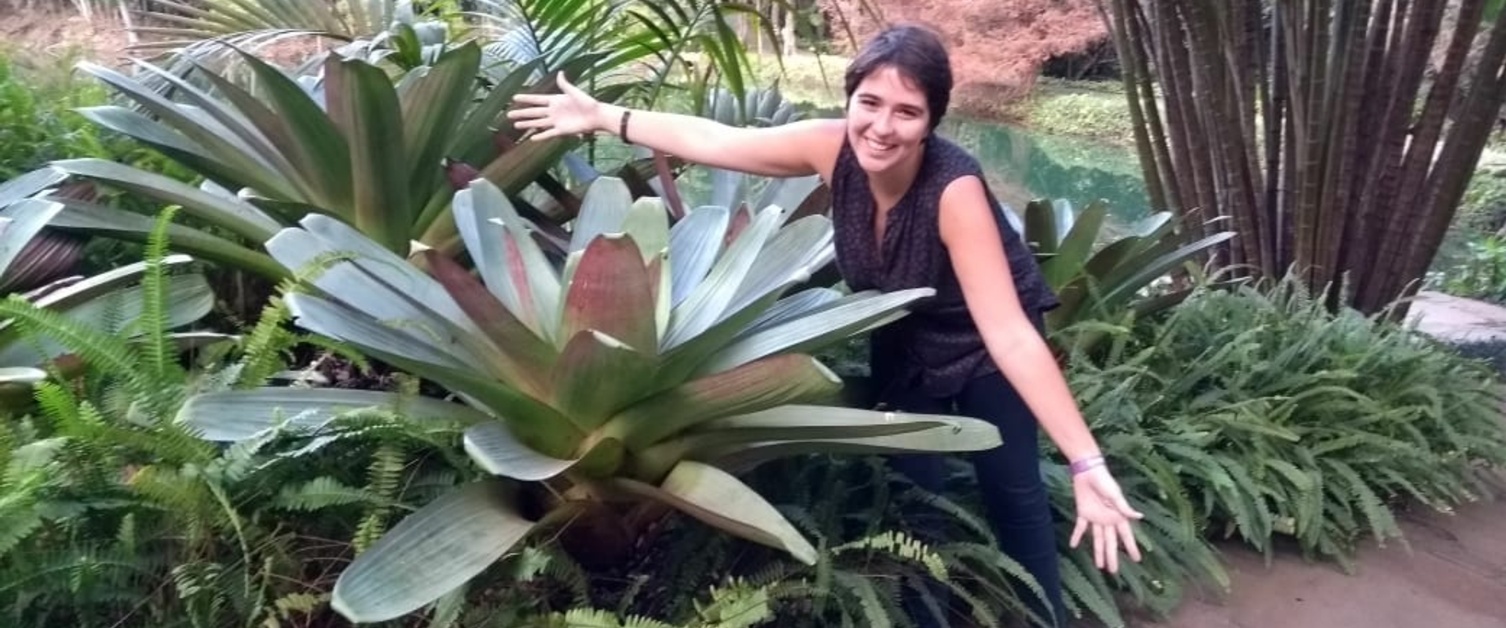
 

MSU graduate student researcher Isabela Lima Borges

The data are also valuable from a conservation standpoint, said Borges, the first author of the new study and a graduate student researcher in the Department of Integrative Biology, also at KBS. By revealing more about an animal’s natural behavior, researchers can better spot when human activity starts to change it.


The team showed that although most guppies stayed put throughout their lives, males that ventured off were more likely to have offspring than their homebody counterparts. Females tended to move less and also saw no advantage to moving more. Still, there was a clear reward for males that swam the coop.


“We get the chicken and the egg,” said Borges. “We see that males move more and that males benefit more from moving.”


This wasn’t a total surprise. Theory suggests that because staying in one’s home is often safer — for example, there’s a lower risk of being eaten — there must be an advantage to traveling. Otherwise, why leave? But the data to confirm the benefits were scant.


“What we did was go further and track advantages for guppies that left home,” said Fitzpatrick, who is also a core faculty member of MSU’s Ecology, Evolution and Biology program and the coordinator of the KBS Molecular Ecology and Genomics Lab. “It’s cool to see a result that makes sense.”
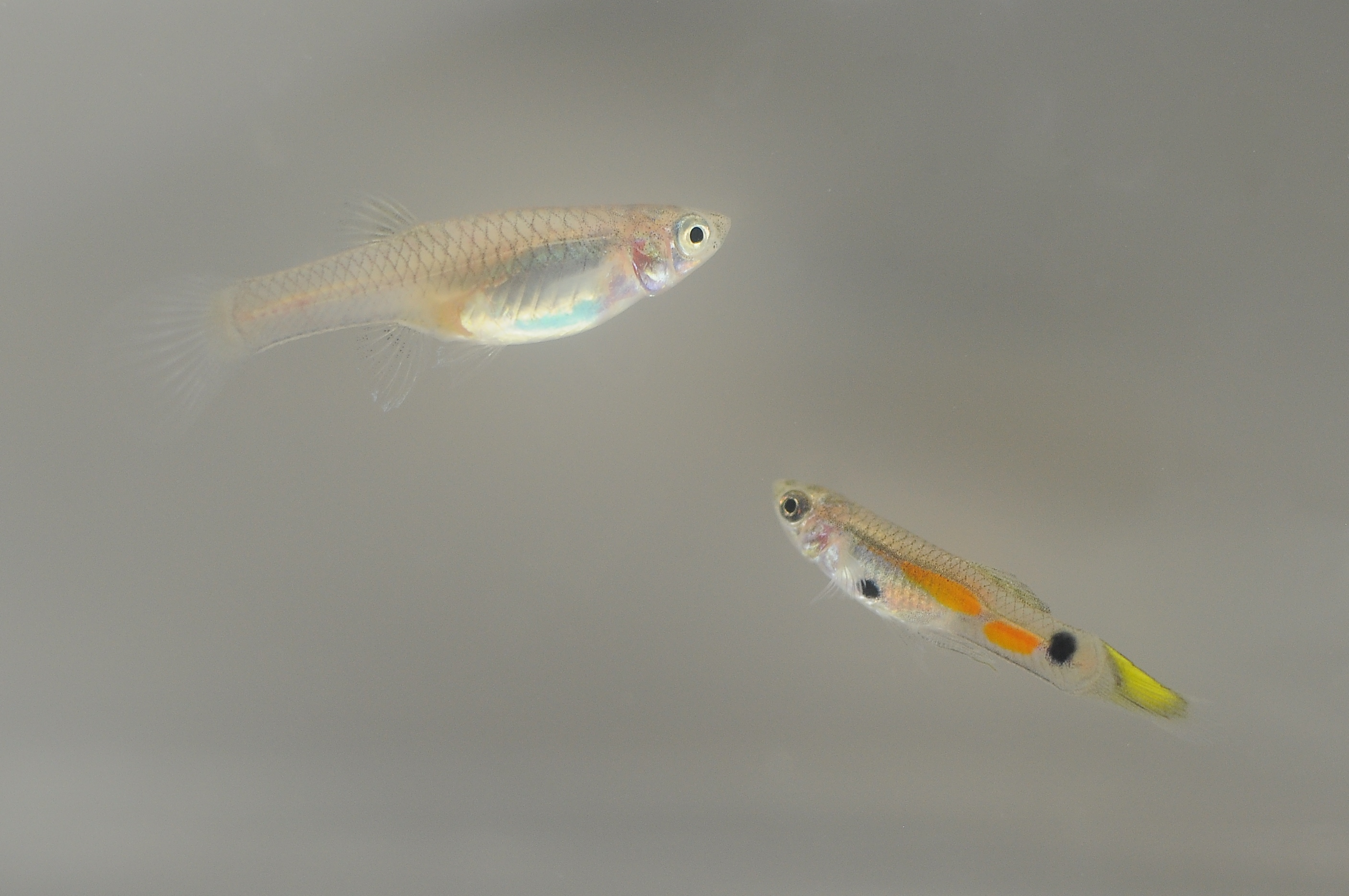
 

Female guppies, like the fish the left, saw no reproductive advantage from leaving home. On the other hand, males, like the fish on the right, who moved more had more offspring. Credit: Courtesy of the Fitzpatrick Lab
Female guppies, like the fish on the left, saw no reproductive advantage from leaving home. On the other hand, males, like the fish on the right, who moved more had more offspring. Credit: Emily Kane

Though the reproductive exploits of the unassuming guppy may not seem like big news, they can inform how other species answer the should-I-stay-or-should-I-go question.


“Although this is a study of one species, there are many broader theories that can be informed by it,” said Borges. “For example, we expect to see this behavior in other species that don’t have male parental care.”


These broader implications are made possible by the Trinidadian guppy’s special place in science. The fish live in streams throughout Trinidad and each stream presents the guppies that call it home with slightly different conditions. Thus, the different streams are almost like different iterations of the same natural experiment, Borges said.


Because of this, scientists have studied the fish for decades and have established the guppy as a model organism. With a wealth of history and knowledge at their disposal, scientists can use what they learn about guppies to inform their understanding of larger motifs in the natural world.


It’s similar to how scientists have long relied on fruit flies to test ideas about genetics and evolution in the lab, Fitzpatrick said, with a few notable differences. Guppies have backbones and scientists can study them in the wild with relative ease.


“I tell people that guppies are the fruit fly of the vertebrate world,” said Fitzpatrick, “With them, we can study evolution in action in natural environments.”
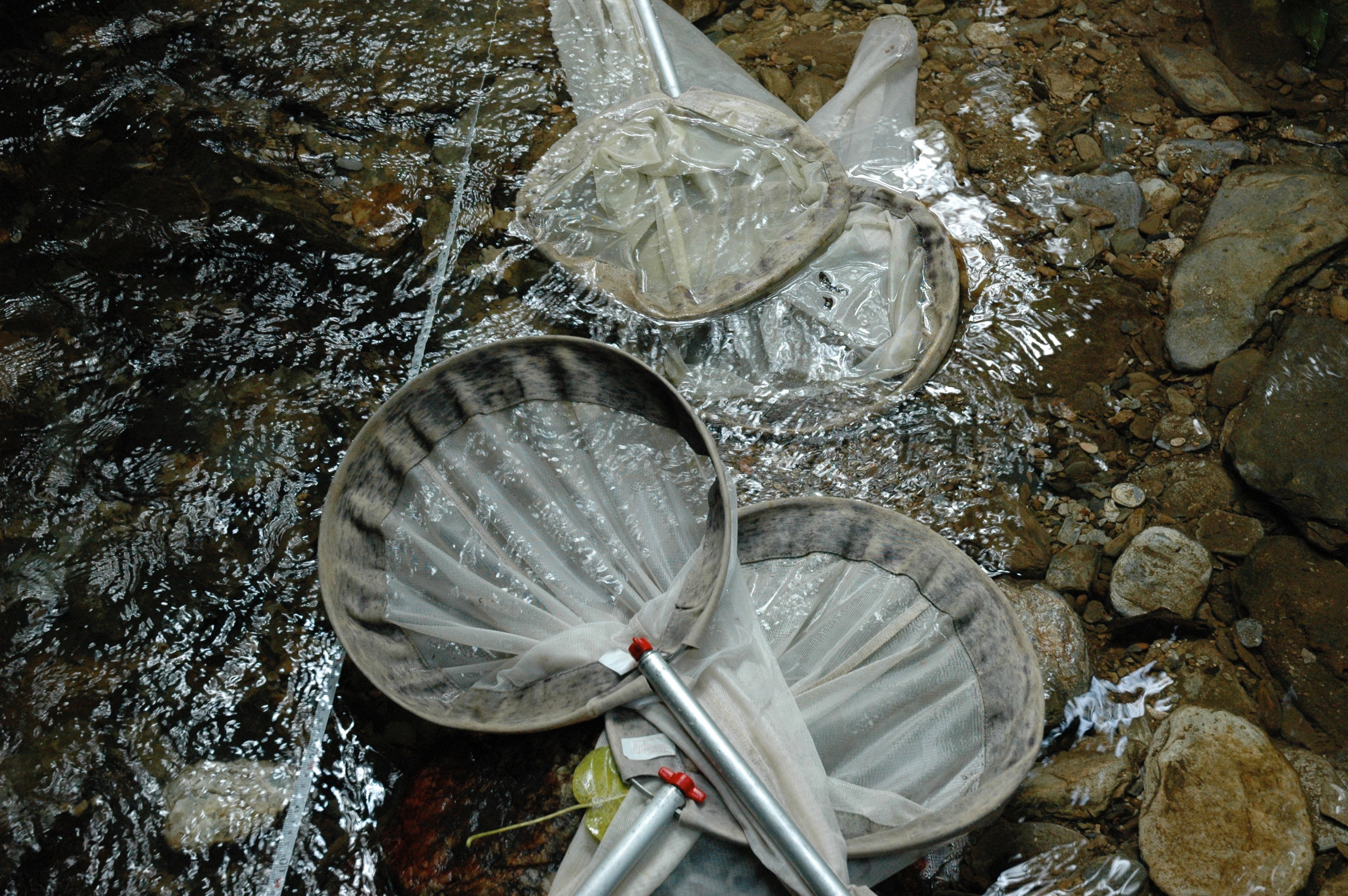
 

Four mesh butterfly nets rest in a stream with clear water and a rocky bed.
The team used butterfly nets to extract Trinidadian guppies from their home streams. Credit: Courtesy of the Fitzpatrick Lab

That said, the study was still intensive. “This was super hard and this is an ‘easy’ species to study,” Borges said, which helps explain, in part, why such robust data hadn’t been available before.


Working with collaborators at Colorado State University and the University of Texas at Austin, the researchers “tattooed” about 1,300 guppies. The researchers essentially color-coded individual fish with small injectable tags to track the guppies’ movements.


The team then fished the guppies out of their streams once a month for a year, noting their position, taking photographs and recording other measurements before returning the fish to the water.


The data showed that most fish stayed in the same pools they were born in, but others ventured dozens of meters away (moving more than 10 meters or about 33 feet was considered far for a guppy). The record holder swam around 250 meters — a bit over 800 feet.
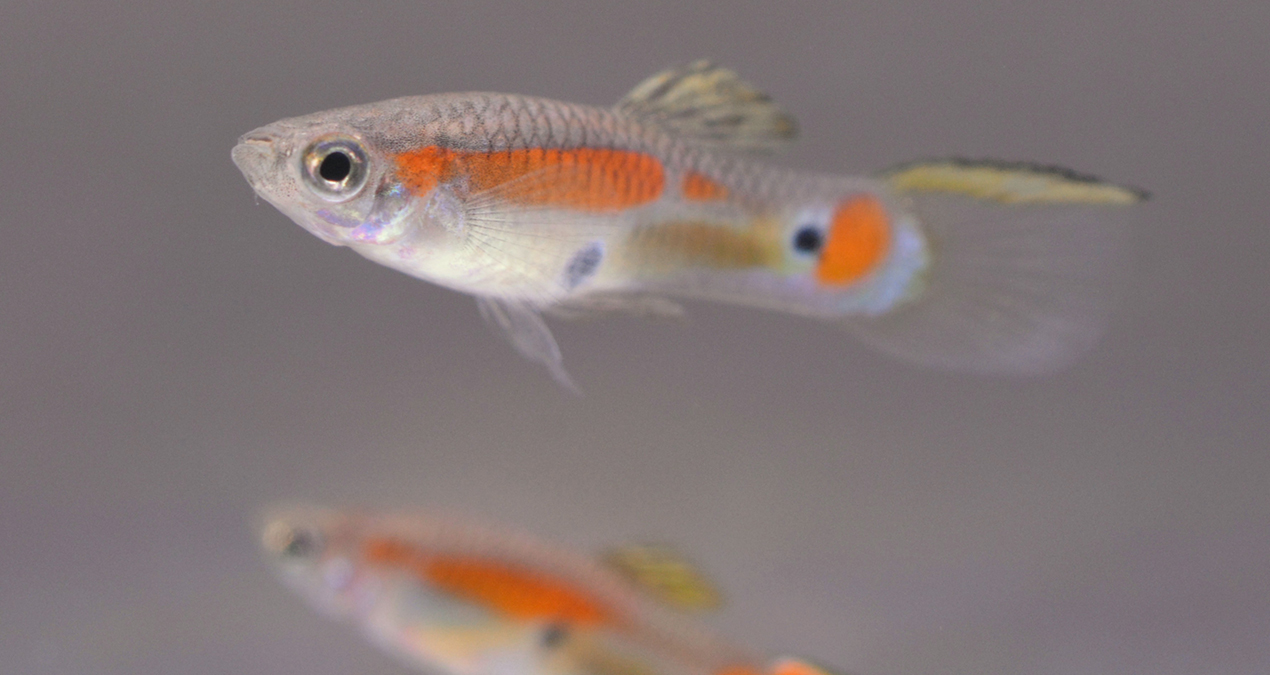
 

A photograph shows two small silvery fish with its natural markings, orange bands running along the length of their bodies and two dark spots.
The male Trinidadian guppy is a colorful fish, even without tattoos. Credit: Emily Kane

Beyond documenting the reproductive benefit of moving, the team also noted other trends in their data. For example, larger males were more likely to move farther than smaller males. And fish that lived longer tended to move more.


Yet, for all the answers this study offers, Fitzpatrick hopes the work helps inspire simple questions, even for folks who don’t study ecology or evolution.


“I would want people to look outside and wonder when they see an animal, how far from home has that individual moved and why?” she said.


MEDIA CONTACTS

Sarah Fitzpatrick
Natural SciencesEngineering, Science and TechnologyBiodiversity and WildlifeClimate and EnvironmentNatural Sciences

Resources

  • A to Z Index
  • Find People
  • Maps
  • Email
  • Student Information System (SIS)
  • D2L
  • Libraries
  • Tech Support
  • MSU Misconduct Hotline
  • Social Media Directory
  • Events Calendar
  • For Media

Health and Safety

  • MSU Police and Public Safety
  • Olin Health Center
  • Counseling & Psychiatric Services (CAPS)
  • University Health and Wellbeing
  • MSU Health Care
  • Civil Rights and Title IX
  • Our Commitment
  • Center for Survivors
  • Security & Fire Safety Report
  • University Policy on Relationship Violence and Sexual Misconduct
  • Notice of Non-Discrimination, Anti-Harassment and Non-Retaliation
  • Health Care Non-Discrimination Notice

Support Services

  • Disability Resources
  • Supportive Services
  • Learning Resources

Working at MSU

  • Human Resources
  • EBS Login
  • Job Postings
  • Employee Assistance Program

Reports

  • CARES Act Funding
  • Student Achievement and Outcomes

Contact us

517-355-1855

Address

Michigan State University 426 Auditorium Road East Lansing, MI 48824

Follow Us

  • Visit our Facebook page
  • Visit our page on X
  • Visit our Instagram page
  • Visit our TikTok page
  • Visit our LinkedIn page
  • Visit our YouTube page

If you're having accessibility issues, please let us know.

Know More: Campus Safety Information and ResourcesTransparency Reporting: Budget & Salary/Compensation
  • Contact Information|
  • Site Map|
  • Privacy Statement|
  • Site Accessibility|
  • Call MSU: (517) 355-1855|
  • Visit: msu.edu|
  • Notice of Nondiscrimination|

SPARTANS WILL|© Michigan State University|

Natural Sciences

Dec. 6, 2021

Mating, tattoos and leaving home: A tale of growing up guppy

MSU researchers have added an important piece to nature’s ecological and evolutionary puzzle with an assist from Trinidadian guppies

By: Matt Davenport

Latest News

MSUToday Weekly Update

The MSUToday Weekly Update email showcases how Spartans are making a difference through academic excellence, research impact and community outreach. Get inspired by these stories of innovation, collaboration and determination. Plus, enjoy photos and videos of campus and more MSU content to help keep you connected to the Spartan community.

Sign UpUpdate My Information

Connect With Us

Visit our Facebook pageVisit our page on XVisit our Instagram pageVisit our LinkedIn pageVisit our YouTube pageVisit our TikTok page