Jump to HeaderJump to Main ContentJump to Footer
Michigan State University
MSUTODAY
  • Browse Stories By

    Topics

    Explore stories by subject area

    • Arts and Culture
    • Business and Economy
    • Climate and Environment
    • Education and Learning
    • Engineering, Science and Technology
    • Government and Society
    • Health and Medicine
    • Media and Communications
    • MSU Leadership and Impact
    • Sports and Recreation
    • Student and Campus Experience
    View All Stories

    Collections

    Curated story series

    • Turfgrass
    • Ask the Expert
    • Big Ideas
    • Climate solutions
    • Water at MSU
    • Mobility
    • Spartan Perspectives
    • Student views
    • Graduate voices
    • Faculty voices
    View All Collections

    Featured

    Editor's picks

    • 9 reasons to love being a Spartan

      Aug. 28, 2026

      9 reasons to love being a Spartan

    • NIH awards multi-university team over $4M to improve women’s health

      Sept. 15, 2026

      NIH awards multi-university team over $4M to improve women’s health

MSUTODAY
  • Browse Stories By

< Browse Stories By

Topics

Explore stories by subject area

  • Arts and Culture
  • Business and Economy
  • Climate and Environment
  • Education and Learning
  • Engineering, Science and Technology
  • Government and Society
  • Health and Medicine
  • Media and Communications
  • MSU Leadership and Impact
  • Sports and Recreation
  • Student and Campus Experience
  • View All Stories

Collections

Curated story series

  • Turfgrass
  • Ask the Expert
  • Big Ideas
  • Climate solutions
  • Water at MSU
  • Mobility
  • Spartan Perspectives
  • Student views
  • Graduate voices
  • Faculty voices
  • View All Collections

Featured

Editor's picks

  • 9 reasons to love being a Spartan

    Aug. 28, 2026

    9 reasons to love being a Spartan

  • NIH awards multi-university team over $4M to improve women’s health

    Sept. 15, 2026

    NIH awards multi-university team over $4M to improve women’s health

  • For Media
  • Experts
  • Releases and Statements
  • Sign Up
  • Update Information

Resources

  • A to Z Index
  • Find People
  • Maps
  • Email
  • Student Information System (SIS)
  • D2L
  • Libraries
  • Tech Support
  • MSU Misconduct Hotline
  • Social Media Directory
  • Events Calendar
  • For Media
Michigan State University
MSUToday
  • For Media
  • Experts
  • Releases and Statements
  • Sign Up
  • Update Information
MSU Research

Nov. 18, 2021

Keeping a watch on air pollution

Spartan engineers are leading an all-Michigan effort to create wearable devices that monitor exposure to dangerous particle pollutants

By: Matt Davenport

Air pollution is responsible for an estimated 7 million premature deaths every year, according to new air quality guidelines recently published by the World Health Organization. That’s roughly one in nine deaths globally.


But except in extreme cases such as wildfires that can spread smoke hundreds of miles, air quality is easily overlooked. Many of the pollutants that affect hearts, lungs and brains are invisible. And current technologies that monitor air pollution can take weeks to collect and process data.
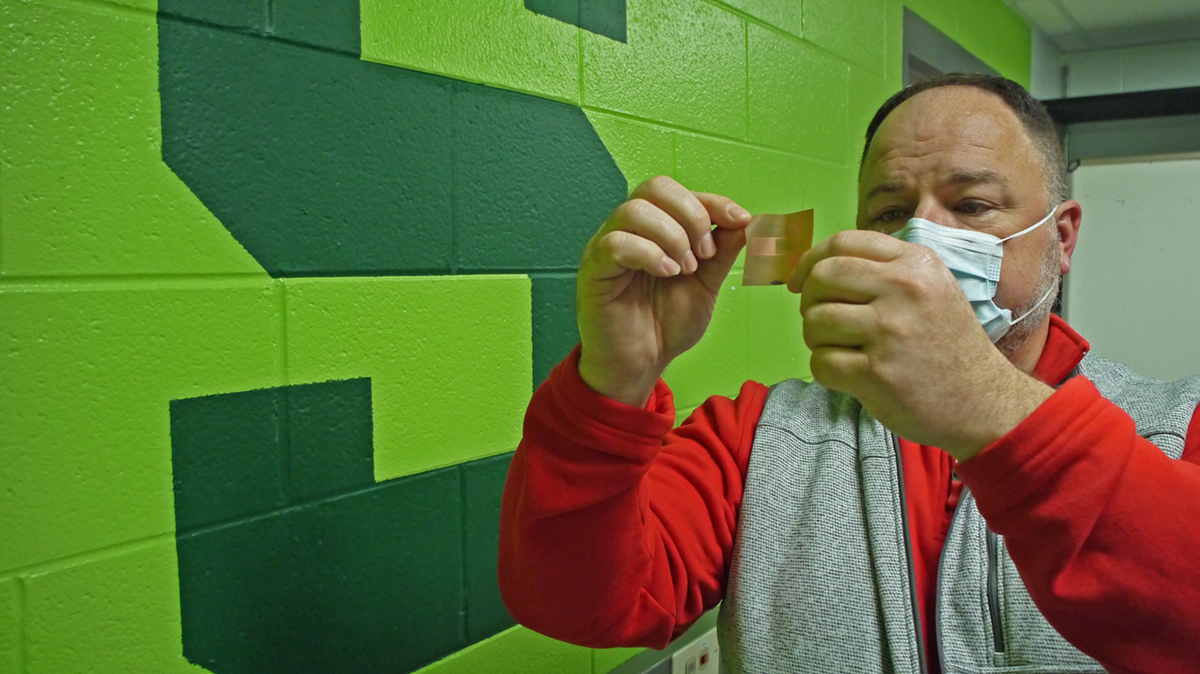
 

MSU Professor Andrew Mason holds a flexible electronic circuit designed by his lab
MSU Professor Andrew Mason holds a flexible electronic circuit designed by his lab. Credit: Matt Davenport

“That’s helpful for epidemiological studies, but it doesn’t tell you what’s going on today,” said Andrew Mason, a professor of electrical and computer engineering in Michigan State University’s College of Engineering.


Teaming up with researchers at Oakland University and the University of Michigan, Mason’s lab is working to empower individuals to better protect themselves and their communities from air pollution in real time. With the support of a $2.78 million grant, the team is creating wearable devices that can track exposure to pollutants and help people steer clear of pollution. The grant is funded by the National Institute of Environmental Health Sciences, one of the National Institutes of Health.


“The whole idea is that the technology we build would go into a future fitness watch,” said Mason. “This would generate data at a level that’s nowhere near available right now. We could deliver information back to the wearer and it would help researchers better understand the health impacts of air pollution.”


The wearable devices would also share information about air quality to create a map of conditions, similar to how smartphone apps can map traffic and navigate drivers to the least congested routes.

A photo taken through a microscope shows a device designed in Andrew Mason's lab for a previous project, with tiny electronics and channels for fluids are at its heart.The new grant work will build on MSU Professor Andrew Mason's past work, some of which is shown here under a microscope. Tiny electronics and channels for fluids will be at the heart of the team's sensing devices. Credit: Matt Davenport

“Say you’re going for a bike ride,” Mason said. “You could find the path that’s going to be safer than others, the one with the least exposure.”


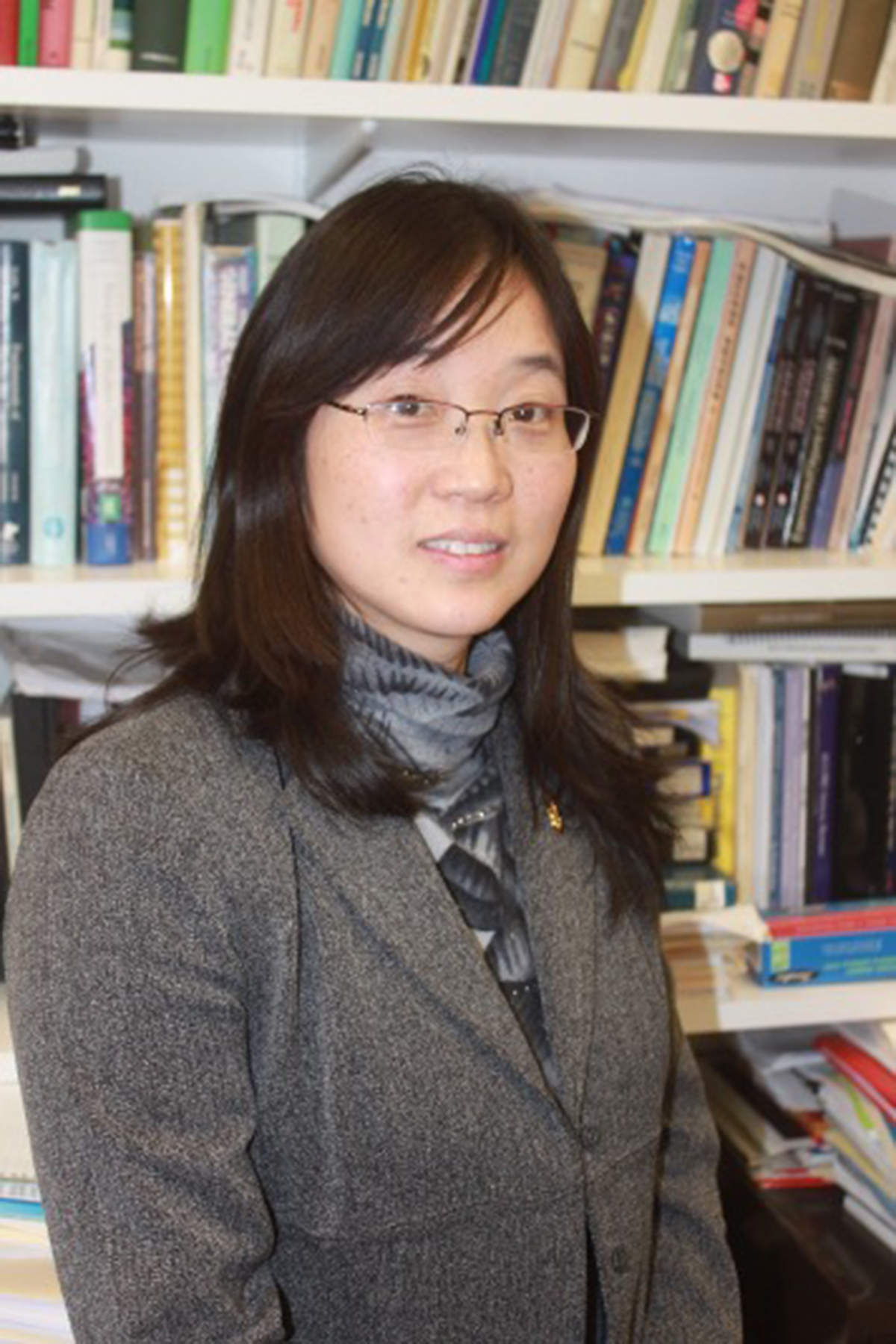
Professor Xiangqun Zeng of Oakland University
Professor Xiangqun Zeng of Oakland University. Photo courtesy of Xiangqun Zeng

Joining Mason on the project are Xiangqun Zeng of Oakland University and J. Timothy Dvonch of the University of Michigan. This is the third grant in which Mason and Zeng are teaming up, but the first two focused on sensing gases in the environment. The new grant work will focus on detecting and identifying pollution in the form of particulate matter, including soot and toxic metals generated by cars, trucks and industrial sources, primarily from burning fossil fuels.


“Atmospheric gases are bad and deadly, too, but the main health impact in air pollution comes from exposure to particulate matter,” Mason said.


Particulate pollution can be especially dangerous for children and people who are pregnant. An analysis of data from the U.S. Environmental Protection Agency also found that people of color are exposed to disproportionately high amounts of particulate pollution.


A network of wearable devices would provide unprecedented data about air quality over space and time, helping inform policies and interventions to help protect the most vulnerable, the team said.


But developing those devices is no small feat. The researchers will need to build technology that can count particles, characterize what they’re made of and determine their size down to nanometer scale.


“Knowing the size is very important,” Mason said. “That determines how far a particle can penetrate into your body when you breathe. How deep will it make it into your lungs? Can it reach your bloodstream?”


On top of all that, the team has challenged itself to become the first to fit such technology into something the size of a wristwatch.


Associate Professor J. Timothy Dvonch of the University of Michigan
Associate Professor J. Timothy Dvonch of the University of Michigan. Photo courtesy of J. Timothy Dvonch

“Currently, there is no personal monitoring device available because of the complexity,” said Zeng, a distinguished professor of chemistry at Oakland University. “The most exciting aspect of this project is its significance and innovation.” 


“It will be a challenge to accomplish all of the project goals,” said Dvonch, an associate professor of environmental health sciences at the University of Michigan. “However, the project team is very organized and efficient, and I expect this will allow us to overcome the challenges we may face.”


“We are a dream team because of our complementary expertise,” Zeng said.


As part of the project, the team will be testing its prototypes in Metro Detroit.


“Not only will the developed monitoring devices from our project be applicable to assessing air pollution exposures across many parts of the globe, importantly our project will be able to test, evaluate and begin to address these particulate matter exposure issues right here in Michigan communities,” Dvonch said.

MEDIA CONTACTS

Andrew Mason, Caroline Brooks
MSU ResearchMSU Leadership and ImpactPollutionClimate and EnvironmentEngineeringEngineering, Science and Technology

Latest News

MSUToday Weekly Update

The MSUToday Weekly Update email showcases how Spartans are making a difference through academic excellence, research impact and community outreach. Get inspired by these stories of innovation, collaboration and determination. Plus, enjoy photos and videos of campus and more MSU content to help keep you connected to the Spartan community.

Sign UpUpdate My Information

Connect With Us

Visit our Facebook pageVisit our page on XVisit our Instagram pageVisit our LinkedIn pageVisit our YouTube pageVisit our TikTok page

Health and Safety

  • MSU Police and Public Safety
  • Olin Health Center
  • Counseling & Psychiatric Services (CAPS)
  • University Health and Wellbeing
  • MSU Health Care
  • Civil Rights and Title IX
  • Our Commitment
  • Center for Survivors
  • Security & Fire Safety Report
  • University Policy on Relationship Violence and Sexual Misconduct
  • Notice of Non-Discrimination, Anti-Harassment and Non-Retaliation
  • Health Care Non-Discrimination Notice

Support Services

  • Disability Resources
  • Supportive Services
  • Learning Resources

Working at MSU

  • Human Resources
  • EBS Login
  • Job Postings
  • Employee Assistance Program

Reports

  • CARES Act Funding
  • Student Achievement and Outcomes

Contact us

517-355-1855

Address

Michigan State University 426 Auditorium Road East Lansing, MI 48824

Follow Us

  • Visit our Facebook page
  • Visit our page on X
  • Visit our Instagram page
  • Visit our TikTok page
  • Visit our LinkedIn page
  • Visit our YouTube page

If you're having accessibility issues, please let us know.

Know More: Campus Safety Information and ResourcesTransparency Reporting: Budget & Salary/Compensation
  • Contact Information|
  • Site Map|
  • Privacy Statement|
  • Site Accessibility|
  • Call MSU: (517) 355-1855|
  • Visit: msu.edu|
  • Notice of Nondiscrimination|

SPARTANS WILL|© Michigan State University|