Jump to HeaderJump to Main ContentJump to Footer
Michigan State University
MSUTODAY
  • Browse Stories By

    Topics

    Explore stories by subject area

    • Arts and Culture
    • Business and Economy
    • Climate and Environment
    • Education and Learning
    • Engineering, Science and Technology
    • Government and Society
    • Health and Medicine
    • Media and Communications
    • MSU Leadership and Impact
    • Sports and Recreation
    • Student and Campus Experience
    View All Stories

    Collections

    Curated story series

    • Turfgrass
    • Ask the Expert
    • Big Ideas
    • Climate solutions
    • Water at MSU
    • Mobility
    • Spartan Perspectives
    • Student views
    • Graduate voices
    • Faculty voices
    View All Collections

    Featured

    Editor's picks

    • 9 reasons to love being a Spartan

      Aug. 28, 2026

      9 reasons to love being a Spartan

    • NIH awards multi-university team over $4M to improve women’s health

      Sept. 15, 2026

      NIH awards multi-university team over $4M to improve women’s health

MSUTODAY
  • Browse Stories By

< Browse Stories By

Topics

Explore stories by subject area

  • Arts and Culture
  • Business and Economy
  • Climate and Environment
  • Education and Learning
  • Engineering, Science and Technology
  • Government and Society
  • Health and Medicine
  • Media and Communications
  • MSU Leadership and Impact
  • Sports and Recreation
  • Student and Campus Experience
  • View All Stories

Collections

Curated story series

  • Turfgrass
  • Ask the Expert
  • Big Ideas
  • Climate solutions
  • Water at MSU
  • Mobility
  • Spartan Perspectives
  • Student views
  • Graduate voices
  • Faculty voices
  • View All Collections

Featured

Editor's picks

  • 9 reasons to love being a Spartan

    Aug. 28, 2026

    9 reasons to love being a Spartan

  • NIH awards multi-university team over $4M to improve women’s health

    Sept. 15, 2026

    NIH awards multi-university team over $4M to improve women’s health

  • For Media
  • Experts
  • Releases and Statements
  • Sign Up
  • Update Information

Resources

  • A to Z Index
  • Find People
  • Maps
  • Email
  • Student Information System (SIS)
  • D2L
  • Libraries
  • Tech Support
  • MSU Misconduct Hotline
  • Social Media Directory
  • Events Calendar
  • For Media
Michigan State University
MSUToday
  • For Media
  • Experts
  • Releases and Statements
  • Sign Up
  • Update Information
Natural Resources and Conservation

Nov. 10, 2021

Helping sea lions get home

Doctoral student Veronica Frans has created a new way of redefining New Zealand sea lions’ habitat.

Majestic flippers instead of legs put the “sea” in sea lions, yet in New Zealand, the endangered beasts are dragging their bulky way back to forests and back yards in a story of conservation success and complicated opportunities.

Michigan State University doctoral student Veronica Frans and colleagues have come up with a new way of redefining the endangered New Zealand sea lions’ habitat in the face of expanding populations. The work will help take the surprise out of coming across sea lions on a forest hike or on a back porch. Which is already happening there.

The work appears in this month’s journal “Methods in Ecology and Evolution.”

Frans and colleagues from New Zealand, Germany and Belgium worked to supersize the information that comprises species distribution models to include much more information that more realistically reflects where the sea lions are going. Conservation managers have long complained these models don’t reflect reality, so creating a better tool can identify barriers to appealing habitat and help people prepare to welcome conservation success.
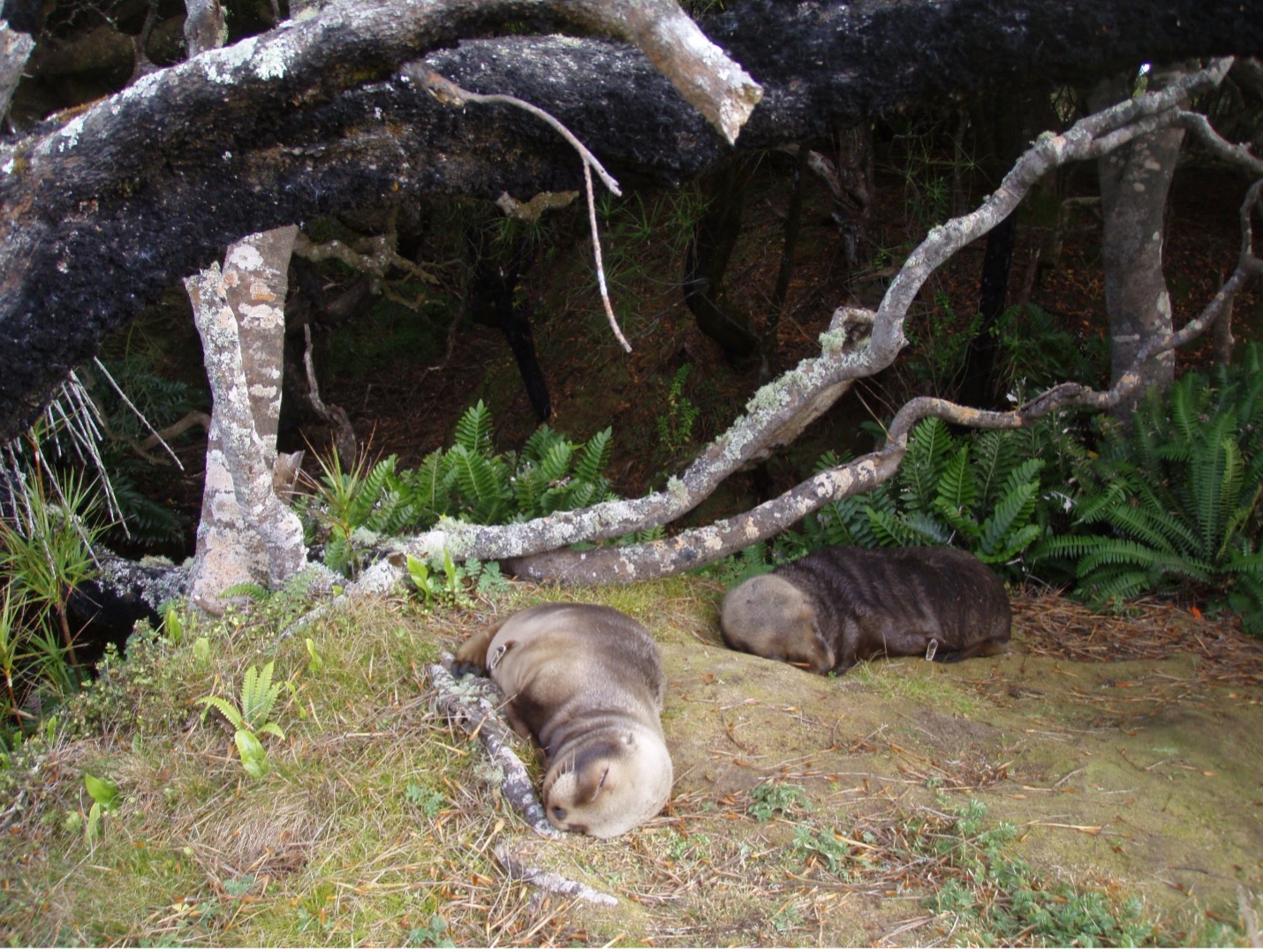
Sea lion pups laying on the forest floor
Finding New Zealand sea lion pups in the forest. Photo credit: Amélie Augé

“It’s one thing for wildlife rangers to look out for sea lions on sandy beaches, but it’s another challenge for them to tromp through forests to find baby sea lions hiding under the trees,” said Frans, who is a member of MSU’s Center for Systems Integration and Sustainability. “While we can’t know for sure where female sea lions will go on the mainland, we can use models to make helpful predictions.”

Humans drove New Zealand sea lions off the mainland to nearby islands over 200 years ago. There are an estimated 12,000 left, and New Zealand’s sea lions are among the rarest in the world. Conservation efforts to protect the creatures have created populations large enough to return to the mainland. Mother sea lions are protective of their young and have been found up to 2km (a little over a mile) into the forest.

While encountering a baby sea lion under a pine tree is, well, adorable, there are many perils to both the animals and to people. Their potential habitat includes barriers such as roads, livestock fencing and commercial pine forests. Sea lions there have been hit by cars and killed deliberately. Moreover, sea lion mothers, which weigh up to 160 kg (about 350 pounds), are ferociously protective of their pups.
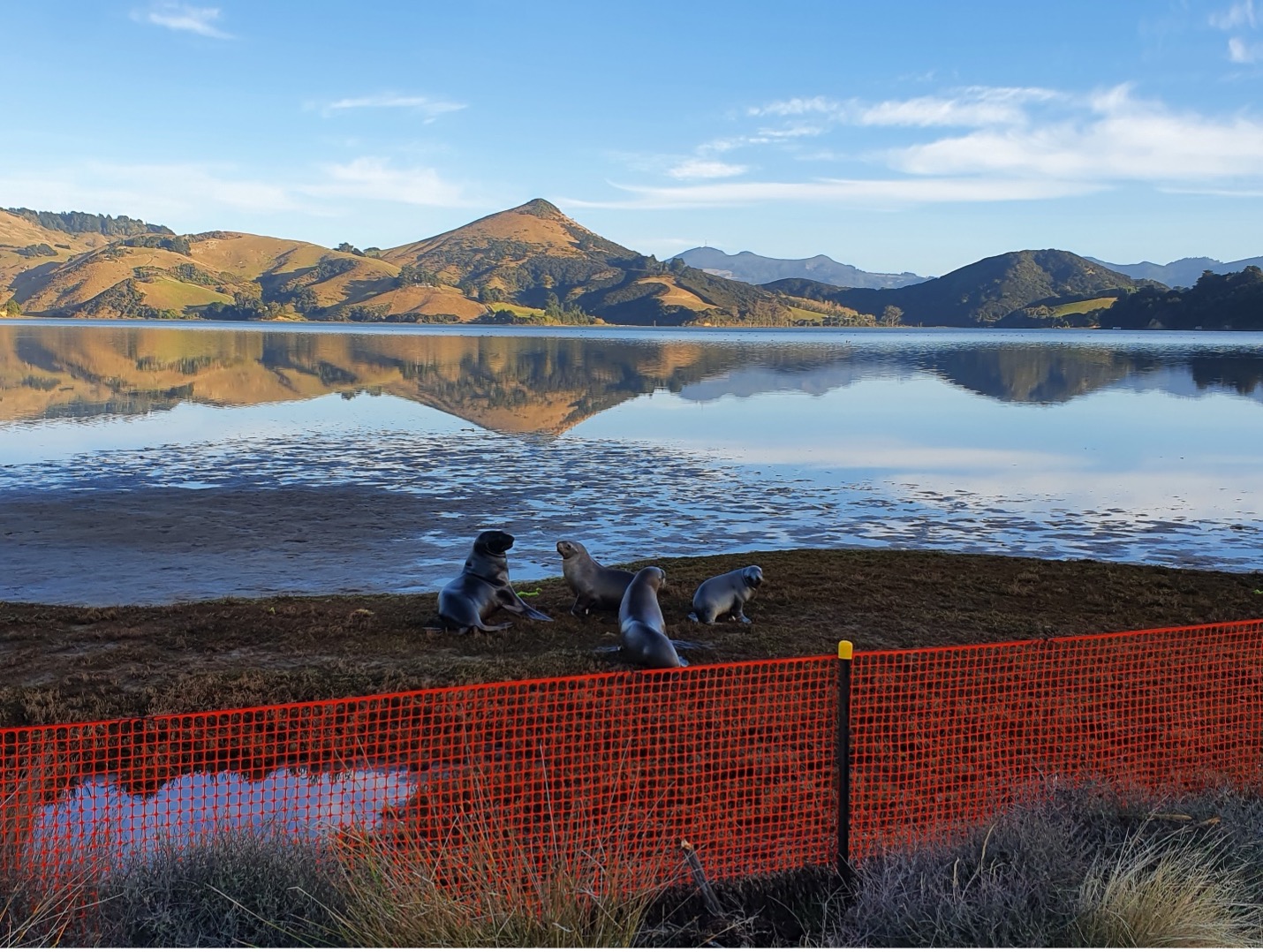
Orange fence in front of sea lions laying on the beach
Using measures that welcome New Zealand sea lions to the mainland but also protect them. Photo credit: Jim Fyfe

Frans and her colleagues developed a framework to create an integrated species distribution model database. It uses several models to capture female sea lions’ breeding habitat requirements and inland movement – sand, grass, and forest for different times in the season, slopes and cliffs to check access, inland water and other land features, as well as data that showed human impact – roads, farms, residences. These models were informed using tracking data from sea lion colonies on nearby islands and working closely with the New Zealand Department of Conservation.

“There is currently only one official breeding colony on the mainland right now, and only a few other spots where they’ve had pups, but the populations are still small,” Frans said. “Nearly 400 sites seem like an incredible potential for a bright future for these sea lions. All signs point to many more sea lion pups in the future, if we do our best to welcome them.”
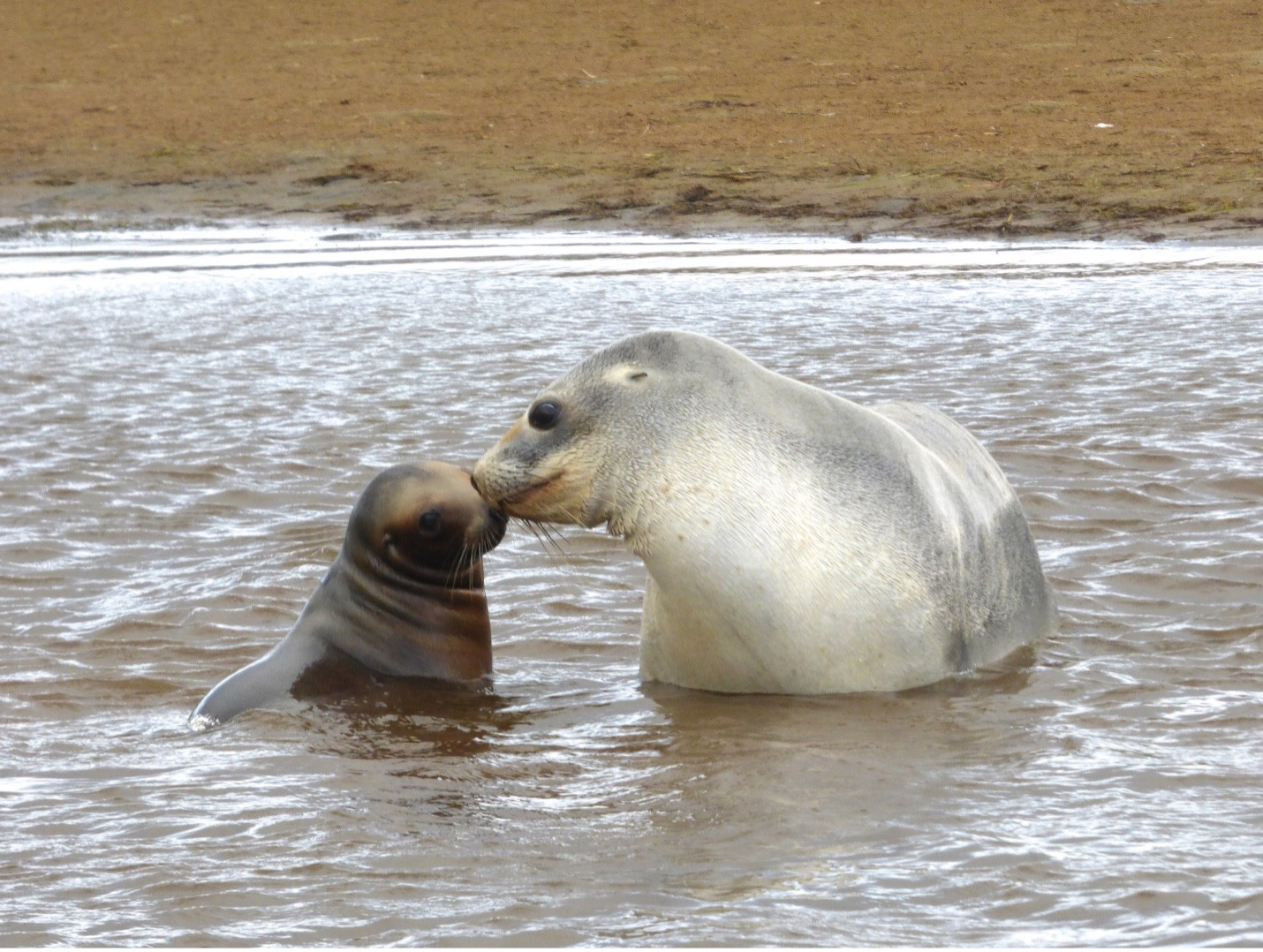
Mother New Zealand sea lion and pup
Mother New Zealand sea lion and pup. Photo credit: Janet Ledingham

The maps the team created are available to the public to be used to identify potential hazards and explore new habitats as the charismatic animals hedge their way home.

In addition to Frans, “Integrated SDM database: Enhancing the relevance and utility of species distribution models in conservation management” was written by Amélie Augé, Jim Fyfe, Yuqian Zhang, Nathan McNally, Hendrik Edelhoff, Niko Balkenhol and Jan Engler.

The work is supported by the New Zealand Department of Conservation, National Science Foundation Graduate Research Fellowship Program and the Michigan State University Enrichment Fellowship.

This article was originally featured on the Center for Systems Integration and Sustainability website.


 

MEDIA CONTACTS

Sue Nichols
Natural Resources and ConservationClimate and EnvironmentVeterinary SciencesHealth and MedicineVeterinary Sciences

Latest News

MSUToday Weekly Update

The MSUToday Weekly Update email showcases how Spartans are making a difference through academic excellence, research impact and community outreach. Get inspired by these stories of innovation, collaboration and determination. Plus, enjoy photos and videos of campus and more MSU content to help keep you connected to the Spartan community.

Sign UpUpdate My Information

Connect With Us

Visit our Facebook pageVisit our page on XVisit our Instagram pageVisit our LinkedIn pageVisit our YouTube pageVisit our TikTok page

Health and Safety

  • MSU Police and Public Safety
  • Olin Health Center
  • Counseling & Psychiatric Services (CAPS)
  • University Health and Wellbeing
  • MSU Health Care
  • Civil Rights and Title IX
  • Our Commitment
  • Center for Survivors
  • Security & Fire Safety Report
  • University Policy on Relationship Violence and Sexual Misconduct
  • Notice of Non-Discrimination, Anti-Harassment and Non-Retaliation
  • Health Care Non-Discrimination Notice

Support Services

  • Disability Resources
  • Supportive Services
  • Learning Resources

Working at MSU

  • Human Resources
  • EBS Login
  • Job Postings
  • Employee Assistance Program

Reports

  • CARES Act Funding
  • Student Achievement and Outcomes

Contact us

517-355-1855

Address

Michigan State University 426 Auditorium Road East Lansing, MI 48824

Follow Us

  • Visit our Facebook page
  • Visit our page on X
  • Visit our Instagram page
  • Visit our TikTok page
  • Visit our LinkedIn page
  • Visit our YouTube page

If you're having accessibility issues, please let us know.

Know More: Campus Safety Information and ResourcesTransparency Reporting: Budget & Salary/Compensation
  • Contact Information|
  • Site Map|
  • Privacy Statement|
  • Site Accessibility|
  • Call MSU: (517) 355-1855|
  • Visit: msu.edu|
  • Notice of Nondiscrimination|

SPARTANS WILL|© Michigan State University|