Q&A with musician Michael Dease
Michigan State University is one of the top 100 research universities in the world and a member of the prestigious Association of American Universities, widely regarded as among the top research-intensive institutions in North America. The following story highlights one of the many examples of MSU’s research excellence and innovation.
Michael Dease is a professor of jazz trombone in the Department of Jazz Studies in the College of Music at Michigan State University.
Q: Why is jazz music important?
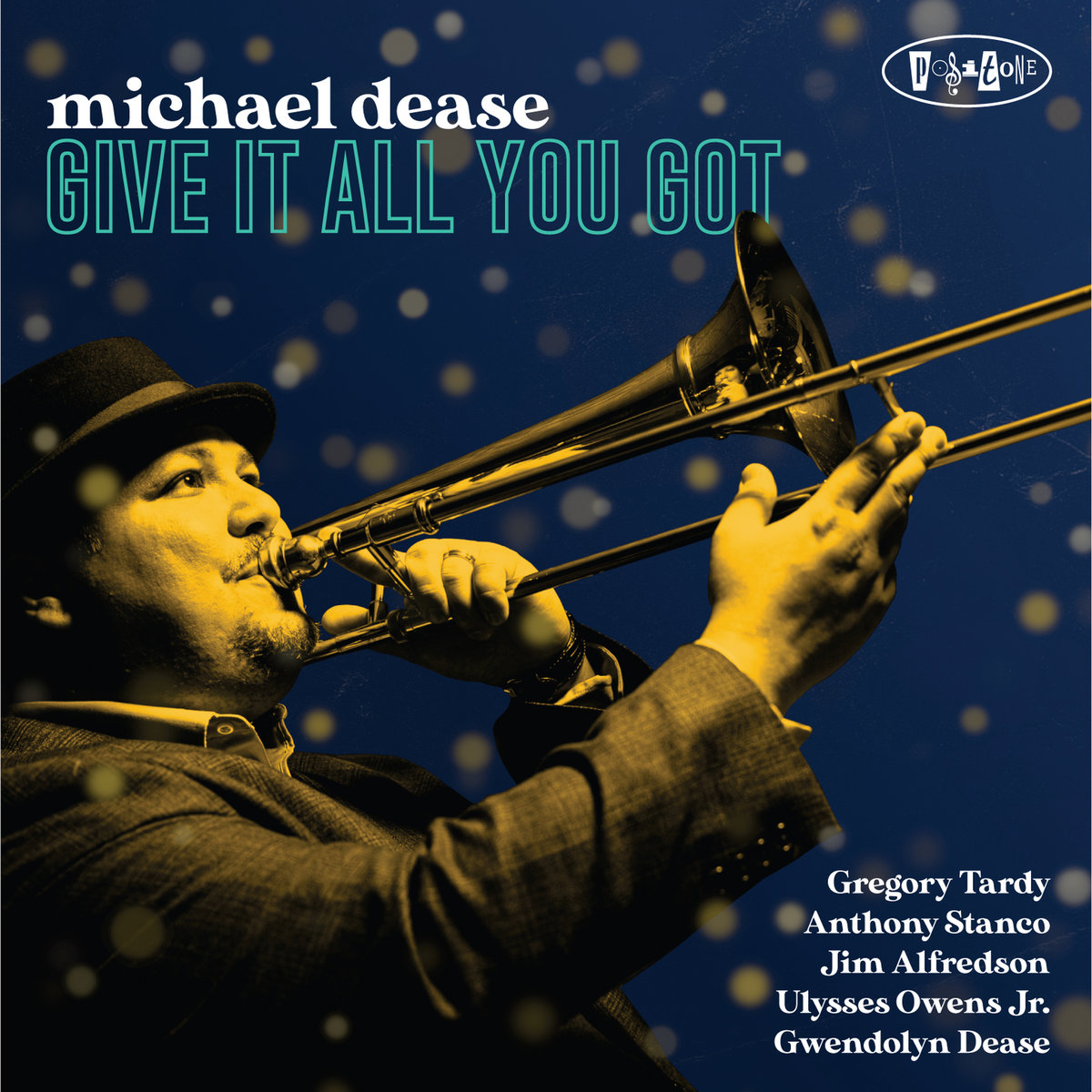
A: Music has served a cultural purpose for thousands of years, bringing people in a society together. It can be a very personal one-on-one experience, such as the music played during courtship or it can be music for the masses, sending you to war or celebrating patriotism. There is even music played at funerals. Music serves to carry forward our emotions and move you to the next state.
Jazz music is at heart a dance music. It is music created to make you move. Jazz music has rich beginnings in improvisation. Jazz music is a great example of fusion combining African rhythms and harmonies with European instruments and forms. Very hip! It melds all these things together.
The music is a direct product of the innovative social interactions happening in New Orleans around the turn of the century. People from far across the world in the West Indies, Caribbean and South America all came together to exchange ideas and listen to each other’s ideas, culture, and of course, their music. There were self-taught musicians playing right next to classically-trained musicians and jazz exploded.
When I listen to jazz music, I’m a part of a conversation. The music is speaking rhythms and phrases to me and then, my emotional response is me speaking back to the music. Sometimes, if the music (could be any genre) is speaking at me and I don’t like what it is saying, my response is to go turn it off.
There is a lot of logic to music composition. There is a call and a response. For example, in “A Sliver of Silver,” the melody starts out really high, strong and proud. Ba-baa-ba-ba and that sets up the question answered through the rest of the performance.
Q: What inspires you?
A: Helping others inspires me more than anything. I grew up in Augusta, Georgia. I remember trying to learn how to play jazz music, and I didn’t have access to teachers or the opportunity to perform in bands. Thirty years ago, the whole music camp experience for jazz music didn’t exist. There wasn’t anything within 20-200 miles. And before the internet, there was no way to learn about these types of programs or opportunities. Plus, most kids can barely afford books and sneakers let alone travel and tuition for a jazz summer camp.
I really wanted to give back and created a jazz summer camp (for students ages 14-29) based on the success of MSU’s Jazz Studies program. The summer camp is held at the Brevard Music Center in Brevard, North Carolina. The faculty I hired for the camp draws on the strengths of MSU’s program and internationally renowned faculty. People like guitarist Jocelyn Gould, who was a former MSU jazz student and now plays all over the world.
Q: Why study music at MSU?
A: One of the supportive ideals that make music happen at a high level is allowing and providing a space for people to be themselves. I think music should be a “safe space” to be who you are, to be heard, listened to and respected. For the artist to feel like they can take a risk without getting burned. That allows performance to be at the highest level, for composition to go places it hasn’t before and for teachers to give students to practice what they teach or preach. If students don’t have that it’s just theory.
The new Billman Music Pavilion has provided such an inspiring sense of relief. To look at the new rooms and hear the sounds like we always knew it could be but couldn’t experience until now. I was really struck the first time I saw music students owning, working and relaxing in the building in a way they never had before.
Individual elements of music are interconnected and related. Our program has a first-year student practicing with a second-year doctoral student for one hour every day. When you put students together like that, you have cross-pollination of information. Joel will say, ‘Wow, Hannah is so much further along the path than I was at his age and it inspires me to practice more.” Meanwhile, Hannah will say, “Wow, Joel is amazing, and I can’t wait to sound like him when I am older.”
MSU’s program also provides opportunities for students to learn from jazz legends like Ron Carter who mentored MSU faculty member Rodney Whitaker. We all look up to the living legends of jazz music and when you mix the younger and older generations together, you get a different type of fusion reaction.

