Jump to HeaderJump to Main ContentJump to Footer
Michigan State University
  • Browse Stories By

    Topics

    Explore stories by subject area

    • Arts and Culture
    • Business and Economy
    • Climate and Environment
    • Education and Learning
    • Engineering, Science and Technology
    • Government and Society
    • Health and Medicine
    • Media and Communications
    • MSU Leadership and Impact
    • Sports and Recreation
    • Student and Campus Experience
    View All Stories

    Collections

    Curated story series

    • Turfgrass
    • Ask the Expert
    • Big Ideas
    • Climate solutions
    • Water at MSU
    • Mobility
    • Spartan Perspectives
    • Student views
    • Graduate voices
    • Faculty voices
    View All Collections

    Featured

    Editor's picks

    • The Spartans behind your favorite Michigan golf courses

      July 22, 2026

      The Spartans behind your favorite Michigan golf courses

    • MSU in the 1990s: 10 Spartan milestones

      July 14, 2026

      MSU in the 1990s: 10 Spartan milestones

MSUTODAY
  • Browse Stories By

< Browse Stories By

Topics

Explore stories by subject area

  • Arts and Culture
  • Business and Economy
  • Climate and Environment
  • Education and Learning
  • Engineering, Science and Technology
  • Government and Society
  • Health and Medicine
  • Media and Communications
  • MSU Leadership and Impact
  • Sports and Recreation
  • Student and Campus Experience
  • View All Stories

Collections

Curated story series

  • Turfgrass
  • Ask the Expert
  • Big Ideas
  • Climate solutions
  • Water at MSU
  • Mobility
  • Spartan Perspectives
  • Student views
  • Graduate voices
  • Faculty voices
  • View All Collections

Featured

Editor's picks

  • The Spartans behind your favorite Michigan golf courses

    July 22, 2026

    The Spartans behind your favorite Michigan golf courses

  • MSU in the 1990s: 10 Spartan milestones

    July 14, 2026

    MSU in the 1990s: 10 Spartan milestones

  • For Media
  • Experts
  • Releases and Statements
  • Sign Up
  • Update Information

Resources

  • A to Z Index
  • Find People
  • Maps
  • Email
  • Student Information System (SIS)
  • D2L
  • Libraries
  • Tech Support
  • MSU Misconduct Hotline
  • Social Media Directory
  • Events Calendar
  • For Media
Michigan State University
MSUToday
  • For Media
  • Experts
  • Releases and Statements
  • Sign Up
  • Update Information
MSUTODAY
Natural Sciences

Aug. 11, 2021

These bacteria clean up radioactive waste

Spartan research reveals ‘sponge’ made by Geobacter can soak up uranium

By: Matt Davenport

For decades, scientists suspected that bacteria known as Geobacter could clean up radioactive uranium waste, but it wasn’t clear how the microbes did it.

 

MSU Professor Gemma Reguera

“The biological mechanism of how they were doing this remained elusive for 20 years,” said Gemma Reguera, the Spartan microbiologist whose team solved that mystery 10 years ago. Well, three-quarters of the mystery. She’s now cracked the rest of the case.


What Reguera discovered in 2011 was that, on one side of their cells, the Geobacter make protein filaments that act like little wires to literally zap uranium. This does two things. For one, the jolt triggers chemical reactions that give the bacteria energy. Secondly, that chemistry traps the uranium in a mineral form, preventing the radioactive material from spreading through the environment.


But those protein wires accounted for just about 75% of the uranium that the Geobacter were cleaning up.


“We always knew we were missing something,” said Reguera, a professor of microbiology and molecular genetics in the College of Natural Science. “What we didn’t know was what was happening at the cell surface, particularly on the side of the cell that had no wires to immobilize the uranium.”


Now, Reguera’s team has the answer. Molecules called lipopolysaccharides coat the cell surface and soak up the uranium like a sponge.


Published online August 4 in the journal Applied and Environmental Microbiology, this finding could create new ways not only to remediate dangerous pollution, but also to recycle and reclaim increasingly scarce metals from electronics waste. The next step, Reguera said, is investigating whether the Geobacter and their sponges can be encouraged to pull other toxic metals from waste streams.
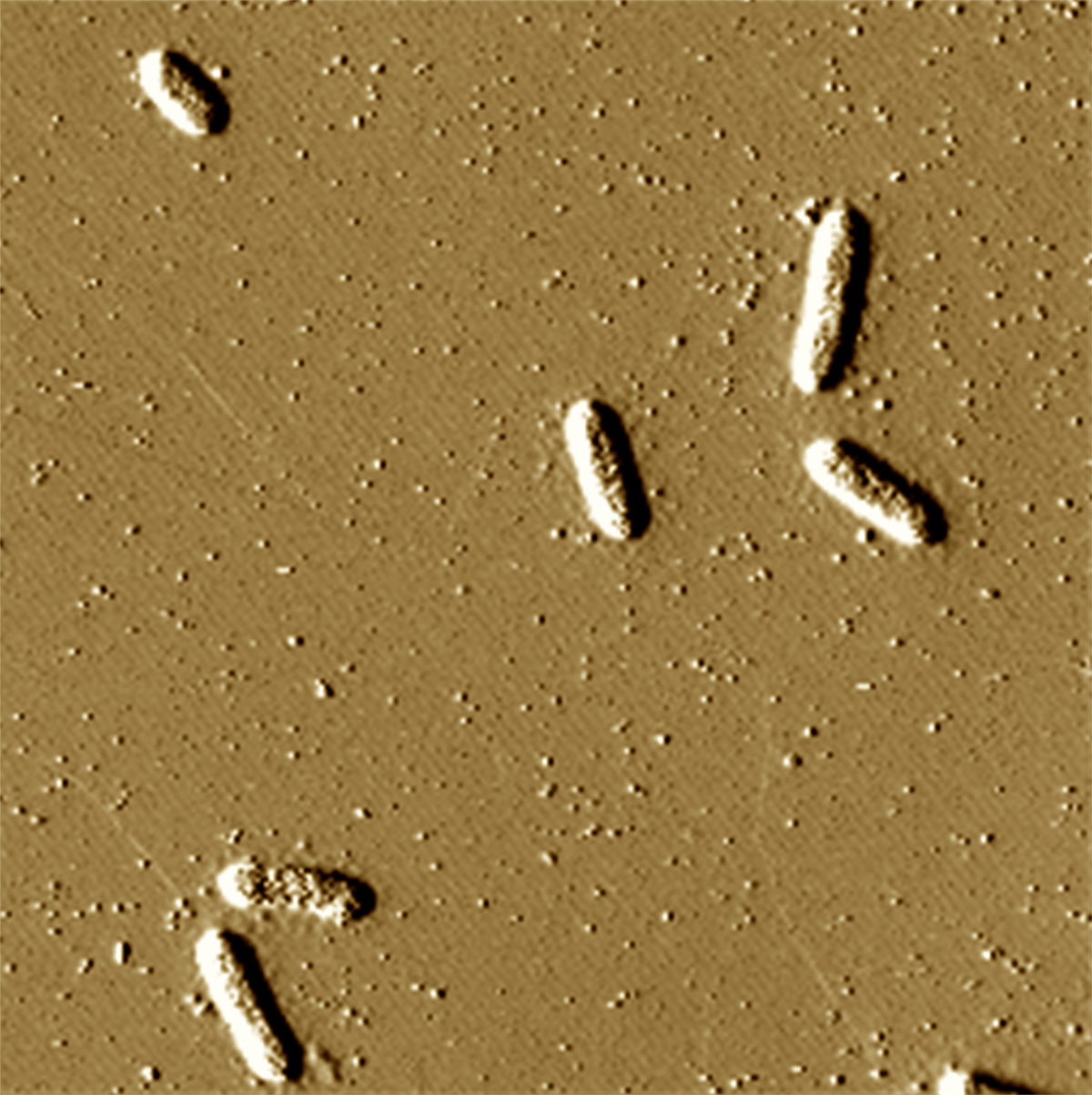
 

A micrograph shows rod-like Geobacter bacteria and the vesicles they release, seen as little dots throughout the image, which contain uranium the bacteria pull from their environment.
Spartan researchers have revealed that Geobacter bacteria — the rod-like shapes in this microscope image — package uranium into vesicles, which are seen as the light specks dotting the image. Credit: Morgen Clark

“We can ask whether we can make a system for the selective removal of metals,” Reguera said. It would work kind of like a fermenter, where respiring microscopic yeast cells make alcohol, only here, the respiration of Geobacter bacteria would trap toxic and important metals using protein nanowires and the newly discovered molecular sponges.


As the Geobacter soak up uranium, they also start packaging it into vesicles, which are bubble-like orbs coated with the lipopolysaccharides. The bacterial cells release the vesicles and replenish their lipopolysaccharide coating to sop up more uranium.


“It’s a mechanism to remodel the cell surface and ensure maximum protection. The cells produce some vesicles under normal growth conditions but increase production to get rid of the trapped uranium. We are now investigating how to scale up vesicle production,” Reguera said. “We could essentially make a factory for these vesicles to pull metals out of water.”


For Reguera, how this discovery was made is as exciting as the discovery itself. Her team’s protein wire finding in 2011 was published toward the end of the project’s funding. Starting up a new investigation into what happened to the other 25% of uranium the Geobacter soaked up would take time.


Learn more about Professor Reguera's earlier Geobacter research in this video from 2012.

Fortunately, there was an undergraduate researcher on Reguera’s team, Michael Paxhia, who continued the project with support from the College of Natural Science and a professorial assistantship. Two graduate students, Michael Manzella and Jenna Young, were so intrigued by the problem that they mentored Paxhia while working on their separate projects.

Without formal funding from a major agency, the trio identified the genes responsible for making Geobacter’s special lipopolysaccharides. Furthermore, if those genes weren’t working right, that would let uranium into cells, killing the bacteria.


These lab members have since graduated: Paxhia is a postdoctoral researcher in the U.K., Manzella is a biology lecturer at Indiana University-Bloomington and Young is the co-founder and lead scientist at Fraser Valley Distilling in Colorado.


But their work built the foundation for current doctoral student Morgen Clark. Clark’s research, which is now supported by the National Science Foundation, completed the puzzle, showing that Geobacter soaked up the uranium with the lipopolysaccharide sponge and packed it into vesicles.


“This is a story led by incredibly skilled, highly motivated students,” Reguera said. “I can’t tell you how proud I am.”


MEDIA CONTACTS

Gemma Reguera, Zach Richardson
Natural SciencesEngineering, Science and TechnologyNatural SciencesPollutionClimate and Environment

Latest News

MSUToday Weekly Update

The MSUToday Weekly Update email showcases how Spartans are making a difference through academic excellence, research impact and community outreach. Get inspired by these stories of innovation, collaboration and determination. Plus, enjoy photos and videos of campus and more MSU content to help keep you connected to the Spartan community.

Sign UpUpdate My Information

Connect With Us

Visit our Facebook pageVisit our page on XVisit our Instagram pageVisit our LinkedIn pageVisit our YouTube pageVisit our TikTok page

Health and Safety

  • MSU Police and Public Safety
  • Olin Health Center
  • Counseling & Psychiatric Services (CAPS)
  • University Health and Wellbeing
  • MSU Health Care
  • Civil Rights and Title IX
  • Our Commitment
  • Center for Survivors
  • Security & Fire Safety Report
  • University Policy on Relationship Violence and Sexual Misconduct
  • Notice of Non-Discrimination, Anti-Harassment and Non-Retaliation
  • Health Care Non-Discrimination Notice

Support Services

  • Disability Resources
  • Supportive Services
  • Learning Resources

Working at MSU

  • Human Resources
  • EBS Login
  • Job Postings
  • Employee Assistance Program

Reports

  • CARES Act Funding
  • Student Achievement and Outcomes

Contact us

517-355-1855

Address

Michigan State University 426 Auditorium Road East Lansing, MI 48824

Follow Us

  • Visit our Facebook page
  • Visit our page on X
  • Visit our Instagram page
  • Visit our TikTok page
  • Visit our LinkedIn page
  • Visit our YouTube page

If you're having accessibility issues, please let us know.

Know More: Campus Safety Information and ResourcesTransparency Reporting: Budget & Salary/Compensation
  • Contact Information|
  • Site Map|
  • Privacy Statement|
  • Site Accessibility|
  • Call MSU: (517) 355-1855|
  • Visit: msu.edu|
  • Notice of Nondiscrimination|

SPARTANS WILL|© Michigan State University|