Jump to HeaderJump to Main ContentJump to Footer
Michigan State University
  • Browse Stories By

    Topics

    Explore stories by subject area

    • Arts and Culture
    • Business and Economy
    • Climate and Environment
    • Education and Learning
    • Engineering, Science and Technology
    • Government and Society
    • Health and Medicine
    • Media and Communications
    • MSU Leadership and Impact
    • Sports and Recreation
    • Student and Campus Experience
    View All Stories

    Collections

    Curated story series

    • Turfgrass
    • Ask the Expert
    • Big Ideas
    • Climate solutions
    • Water at MSU
    • Mobility
    • Spartan Perspectives
    • Student views
    • Graduate voices
    • Faculty voices
    View All Collections

    Featured

    Editor's picks

    • The Spartans behind your favorite Michigan golf courses

      July 22, 2026

      The Spartans behind your favorite Michigan golf courses

    • MSU in the 1990s: 10 Spartan milestones

      July 14, 2026

      MSU in the 1990s: 10 Spartan milestones

MSUTODAY
  • Browse Stories By

< Browse Stories By

Topics

Explore stories by subject area

  • Arts and Culture
  • Business and Economy
  • Climate and Environment
  • Education and Learning
  • Engineering, Science and Technology
  • Government and Society
  • Health and Medicine
  • Media and Communications
  • MSU Leadership and Impact
  • Sports and Recreation
  • Student and Campus Experience
  • View All Stories

Collections

Curated story series

  • Turfgrass
  • Ask the Expert
  • Big Ideas
  • Climate solutions
  • Water at MSU
  • Mobility
  • Spartan Perspectives
  • Student views
  • Graduate voices
  • Faculty voices
  • View All Collections

Featured

Editor's picks

  • The Spartans behind your favorite Michigan golf courses

    July 22, 2026

    The Spartans behind your favorite Michigan golf courses

  • MSU in the 1990s: 10 Spartan milestones

    July 14, 2026

    MSU in the 1990s: 10 Spartan milestones

  • For Media
  • Experts
  • Releases and Statements
  • Sign Up
  • Update Information

Resources

  • A to Z Index
  • Find People
  • Maps
  • Email
  • Student Information System (SIS)
  • D2L
  • Libraries
  • Tech Support
  • MSU Misconduct Hotline
  • Social Media Directory
  • Events Calendar
  • For Media
Michigan State University
MSUToday
  • For Media
  • Experts
  • Releases and Statements
  • Sign Up
  • Update Information
MSUTODAY
Biodiversity and Wildlife

July 15, 2021

Inheriting mother’s friends key to hyena success

By: Sarah Zwickle

In the wild, inheriting advantageous physical traits may be the difference between a long life and a short one. But for the spotted hyena, another kind of inheritance, one that has nothing to do with genetics, turns out to be extremely important for health and longevity — social networks inherited from their mothers.

A new study, based on 27 years of observational data from Michigan State University Distinguished Professor Kay Holekamp, expands a previously established theoretical model of spotted hyena social networking to show how these networks emerge, how long they last and how they affect a hyena’s life trajectory.

The paper is featured as the front cover for the journal Science.
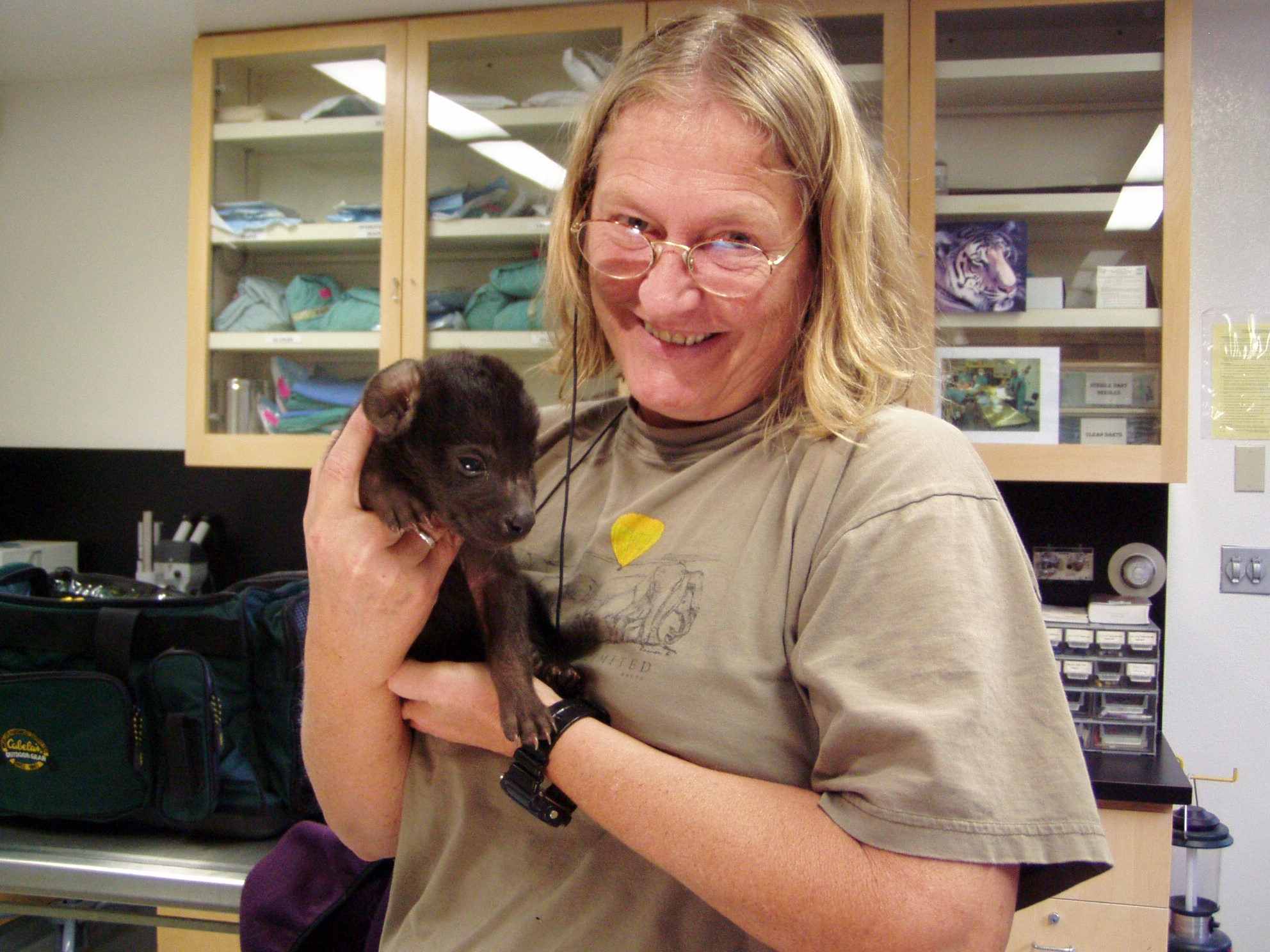
Michigan State University's Professor Kay Holekamp poses with a hyena cub.
Kay Holekamp, MSU Distinguished Professor, has collected over 30 years of detailed hyena observational data.

“There are a lot of species where genetic inheritance to be bigger and stronger allows an animal to dominate, but that doesn’t happen in hyena society,” said Holekamp, professor in the Department of Integrative Biology and director of the interdisciplinary program in Ecology, Evolution and Behavior who co-authored the paper. “We see tiny cubs dominating great huge males, so we know body size is not a good predictor of who will be socially dominant in spotted hyenas.”

Co-authors Erol Akçay, associate professor at the University of Pennsylvania, and Amiyaal Ilany, senior lecturer at Israel’s Bar-Ilan University, used sophisticated modeling techniques of social evolution to establish general theoretical principles for how social networks among hyenas are passed on. But to test and expand the model, they needed data from the wild.

“The foundation of this paper was laid when Amiyaal asked to have access to our hyena data because he wanted to model association patterns in hyenas, and I’m always delighted to share data,” said Holekamp, whose research group has close observational records for several generations of hyena from the Masai Mara National Game Reserve in Kenya.
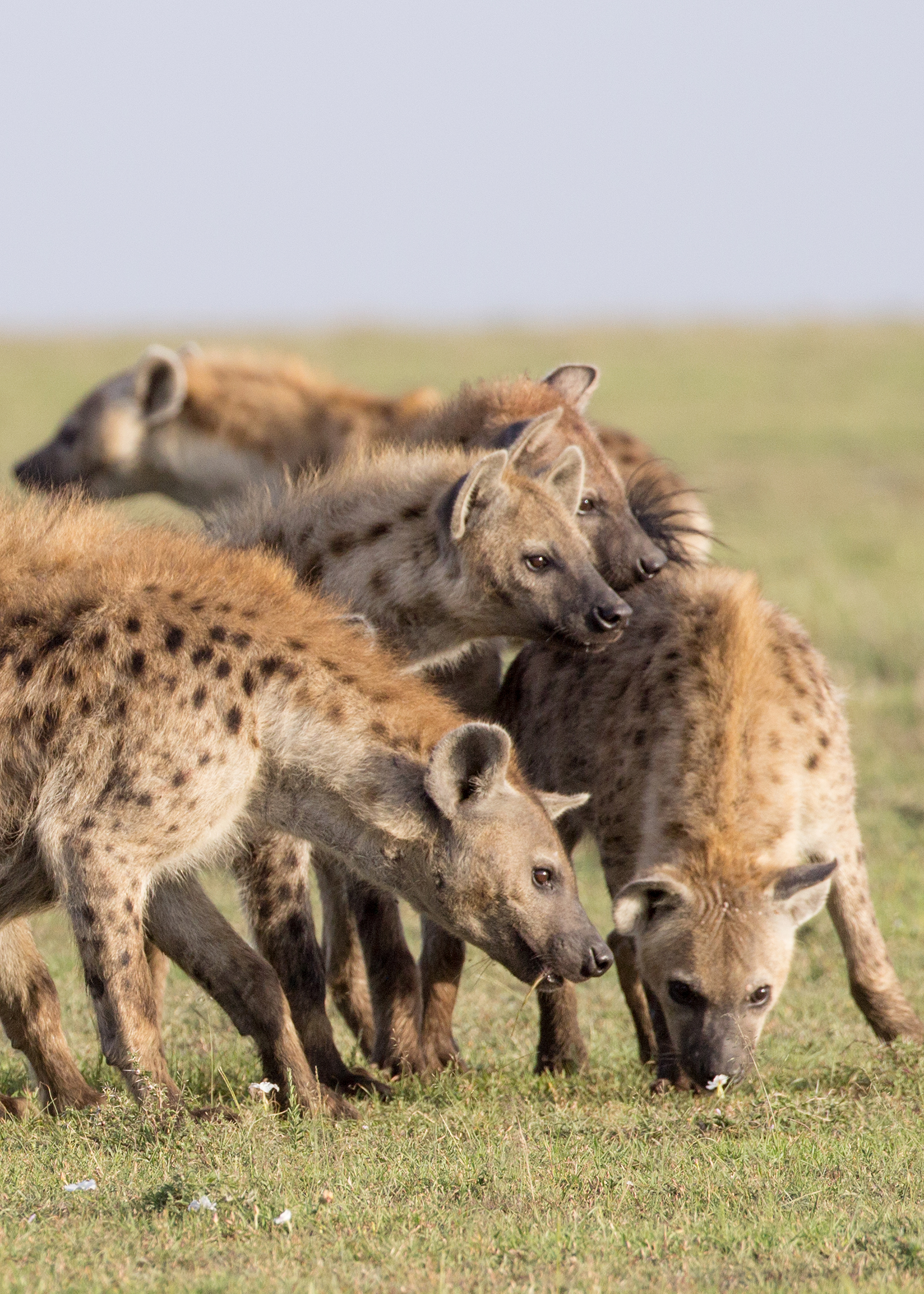
A photo shows a group of several spotted hyenas — animals with golden fur dotted with darker spots.
Multiple hyenas lean against one another and engage in social sniffing, an affiliative behavior that functions to promote social bonding among clan mates. Offspring of the females in this photo are likely to associate with the close associates of their mothers even after their own mothers have died, which is a key point of the paper. Credit: Lily Johnson-Ulrich

By meticulously tracking of hundreds of individual hyenas based on their specific spot patterns, social networks could be determined by proximity — who spent time with whom, how closely and for how long. Combining this rich dataset with the social evolution models developed by Akçay and Ilany, the team was able to show that, remarkably, hyena cubs become friends with their mothers’ close associates very early in life.

“We knew that the social structure of hyenas is based in part on one’s rank in the agonistic hierarchy, which we know is inherited from mothers,” Akçay said. “But what we found, that affiliative, or friendly interactions are also inherited, hadn’t been shown.”

Networks of mothers and their offspring are similar early on because hyena cubs stick close to their mothers for the first two years of life. But the researchers noticed that even as the young hyenas stopped spending so much time in proximity with their mothers, they continued to sustain similar networks. This was particularly true for female offspring, who generally remain members of the clan for life.

“We have data in some cases showing that the network similarity between mothers and offspring, especially female offspring, was still very high after six or so years,” Ilany said. “You may not be seeing your mother as often, or she even may have died, but you still have similar friends.”

Importantly, higher-ranking mothers imprinted their social networks on their cubs more accurately and for a longer time than lower-ranking mothers, and these networks had a direct effect on life-span and reproductive success.
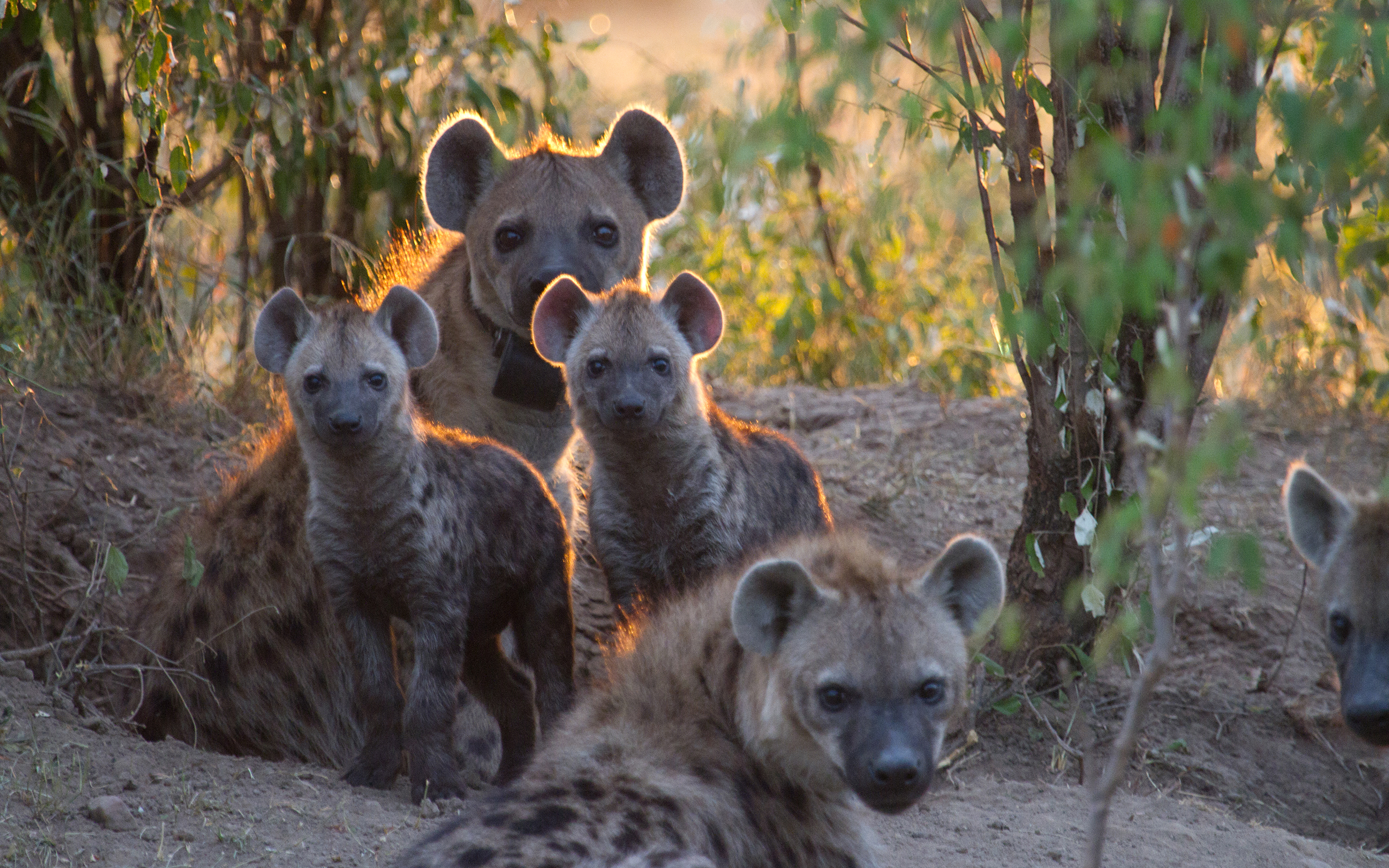
A spotted hyena mother rests behind three of her cubs.
A collared female spotted hyena with her litter of two cubs and another cub at the clan’s communal den in the Masai Mara National Game Reserve in Kenya. Credit: Phoebe Parker-Shames

Mother-offspring pairs with more similar social networks lived longer, the team found, underscoring how factors other than genetics hold sway in key evolutionary outcomes.

“One explanation for why inheritance of social networks works better for high- than low-ranking hyenas may be that low-ranking females tend to go off on their own more often to avoid competition with higher-ranking hyenas, so their cubs have fewer learning opportunities than cubs of high-ranking females,” Holekamp said. “This shows the beauty of the hyena’s fusion-fission society. The low-rankers can make the best of a bad situation by using separation to get away from their competition.”

The paper is just one example of how the unprecedented amount of data collected by Holekamp’s research group since the 1980s is leading to an explosion of new research and insight into the social evolution of hyenas.

“The long-term nature of our research allows scientists to address questions about fitness consequences that you can’t do with a long-lived organism unless you sit and watch them year after year after year,” Holekamp said. “We are at a point where we have really fabulous fitness data in addition to documenting years of interesting behavioral phenomena, and we can follow individuals over time to find out what the fitness consequences are of these behavior patterns.”


MEDIA CONTACTS

Kay Holekamp, Caroline Brooks
Biodiversity and WildlifeClimate and EnvironmentBiodiversity and WildlifeNatural SciencesEngineering, Science and Technology

Latest News

MSUToday Weekly Update

The MSUToday Weekly Update email showcases how Spartans are making a difference through academic excellence, research impact and community outreach. Get inspired by these stories of innovation, collaboration and determination. Plus, enjoy photos and videos of campus and more MSU content to help keep you connected to the Spartan community.

Sign UpUpdate My Information

Connect With Us

Visit our Facebook pageVisit our page on XVisit our Instagram pageVisit our LinkedIn pageVisit our YouTube pageVisit our TikTok page

Health and Safety

  • MSU Police and Public Safety
  • Olin Health Center
  • Counseling & Psychiatric Services (CAPS)
  • University Health and Wellbeing
  • MSU Health Care
  • Civil Rights and Title IX
  • Our Commitment
  • Center for Survivors
  • Security & Fire Safety Report
  • University Policy on Relationship Violence and Sexual Misconduct
  • Notice of Non-Discrimination, Anti-Harassment and Non-Retaliation
  • Health Care Non-Discrimination Notice

Support Services

  • Disability Resources
  • Supportive Services
  • Learning Resources

Working at MSU

  • Human Resources
  • EBS Login
  • Job Postings
  • Employee Assistance Program

Reports

  • CARES Act Funding
  • Student Achievement and Outcomes

Contact us

517-355-1855

Address

Michigan State University 426 Auditorium Road East Lansing, MI 48824

Follow Us

  • Visit our Facebook page
  • Visit our page on X
  • Visit our Instagram page
  • Visit our TikTok page
  • Visit our LinkedIn page
  • Visit our YouTube page

If you're having accessibility issues, please let us know.

Know More: Campus Safety Information and ResourcesTransparency Reporting: Budget & Salary/Compensation
  • Contact Information|
  • Site Map|
  • Privacy Statement|
  • Site Accessibility|
  • Call MSU: (517) 355-1855|
  • Visit: msu.edu|
  • Notice of Nondiscrimination|

SPARTANS WILL|© Michigan State University|