Jump to HeaderJump to Main ContentJump to Footer
Michigan State University
MSUTODAY
  • Browse Stories By

    Topics

    Explore stories by subject area

    • Arts and Culture
    • Business and Economy
    • Climate and Environment
    • Education and Learning
    • Engineering, Science and Technology
    • Government and Society
    • Health and Medicine
    • Media and Communications
    • MSU Leadership and Impact
    • Sports and Recreation
    • Student and Campus Experience
    View All Stories

    Collections

    Curated story series

    • Turfgrass
    • Ask the Expert
    • Big Ideas
    • Climate solutions
    • Water at MSU
    • Mobility
    • Spartan Perspectives
    • Student views
    • Graduate voices
    • Faculty voices
    View All Collections

    Featured

    Editor's picks

    • The Spartans behind your favorite Michigan golf courses

      July 22, 2026

      The Spartans behind your favorite Michigan golf courses

    • MSU in the 1990s: 10 Spartan milestones

      July 14, 2026

      MSU in the 1990s: 10 Spartan milestones

MSUTODAY
  • Browse Stories By

< Browse Stories By

Topics

Explore stories by subject area

  • Arts and Culture
  • Business and Economy
  • Climate and Environment
  • Education and Learning
  • Engineering, Science and Technology
  • Government and Society
  • Health and Medicine
  • Media and Communications
  • MSU Leadership and Impact
  • Sports and Recreation
  • Student and Campus Experience
  • View All Stories

Collections

Curated story series

  • Turfgrass
  • Ask the Expert
  • Big Ideas
  • Climate solutions
  • Water at MSU
  • Mobility
  • Spartan Perspectives
  • Student views
  • Graduate voices
  • Faculty voices
  • View All Collections

Featured

Editor's picks

  • The Spartans behind your favorite Michigan golf courses

    July 22, 2026

    The Spartans behind your favorite Michigan golf courses

  • MSU in the 1990s: 10 Spartan milestones

    July 14, 2026

    MSU in the 1990s: 10 Spartan milestones

  • For Media
  • Experts
  • Releases and Statements
  • Sign Up
  • Update Information

Resources

  • A to Z Index
  • Find People
  • Maps
  • Email
  • Student Information System (SIS)
  • D2L
  • Libraries
  • Tech Support
  • MSU Misconduct Hotline
  • Social Media Directory
  • Events Calendar
  • For Media
Michigan State University
MSUToday
  • For Media
  • Experts
  • Releases and Statements
  • Sign Up
  • Update Information
MSU Economic Impact

June 24, 2021

Are zebra mussels eating or helping toxic algae?

Long-term studies reveal a surprising relationship

By: Emilie Lorditch

While invasive zebra mussels consume small plant-like organisms called phytoplankton, Michigan State University researchers discovered during a long-term study that zebra mussels can actually increase Microcystis, a type of phytoplankton known as “blue-green algae” or cyanobacteria, that forms harmful floating blooms.  

“Microcystis literally means small cell, but numerous cells cluster together in colonies that can float to the surface to form scums,” said Orlando Sarnelle, a professor emeritus with the Department of Fisheries and Wildlife within the College of Agriculture and Natural Resources. “It is one of the most common causes of nuisance algal blooms in nutrient-enriched waters, including Lake Erie where it is a concern for municipal water supplies.”
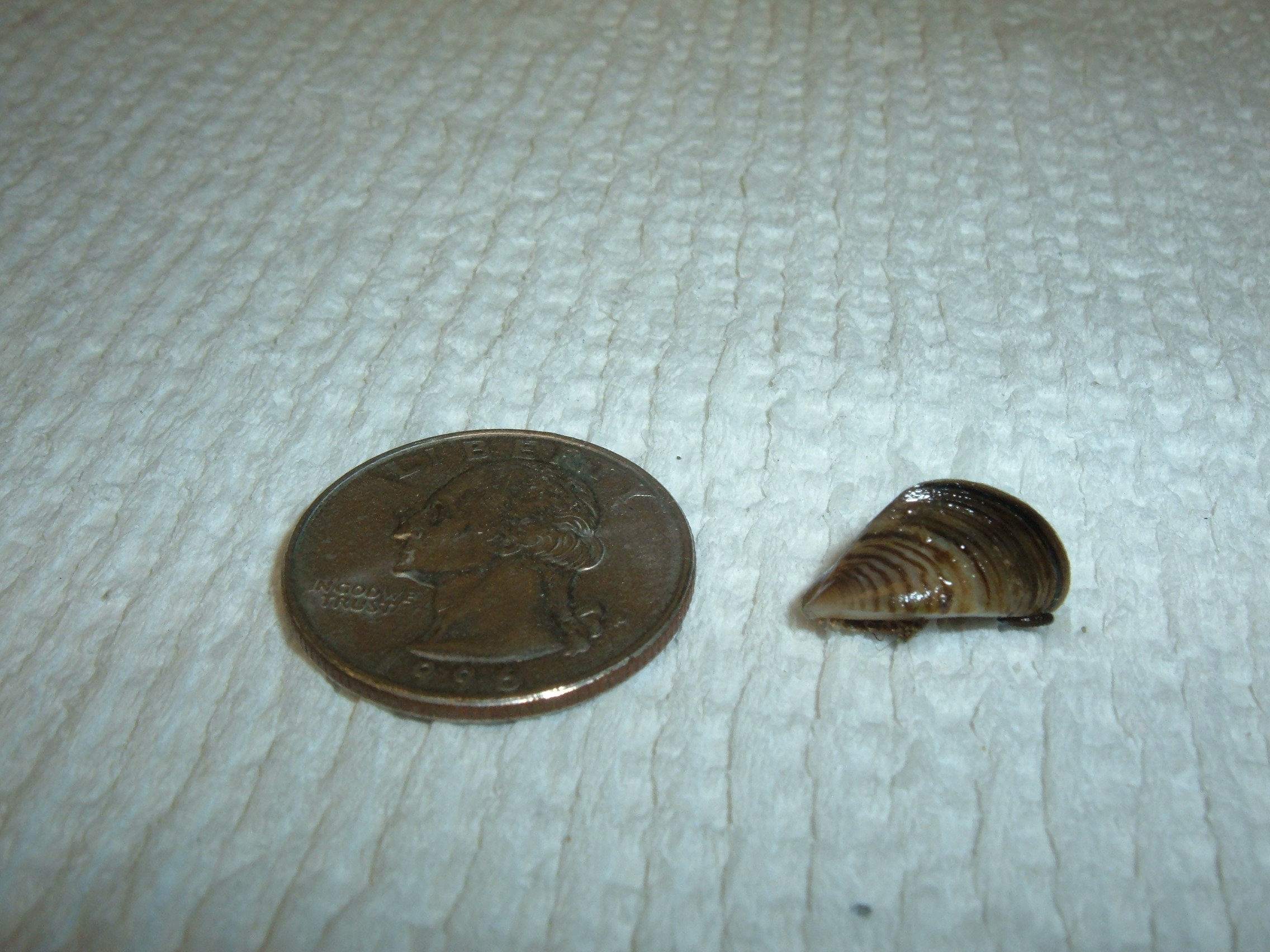
Dime-size zebra mussel
Zebra mussel Courtesy of Jeffrey White
In the 1990s, researchers observed the appearance of dime-sized zebra mussels in Gull Lake, Michigan. Shortly after the mussels arrived, the researchers noticed an increase in Microcystis, which was surprising because the lake has low levels of phosphorus and Microcystis has a well-documented need for high-nutrient waters.
  

“Lakes colonized by zebra mussels tend to have about three times more Microcystis,” said Stephen Hamilton, a professor at the W.K. Kellogg Biological Station and the Department of Integrative Biology within the College of Natural Science, who was also curious to see if there was a relationship between the Microcystis and zebra mussels.
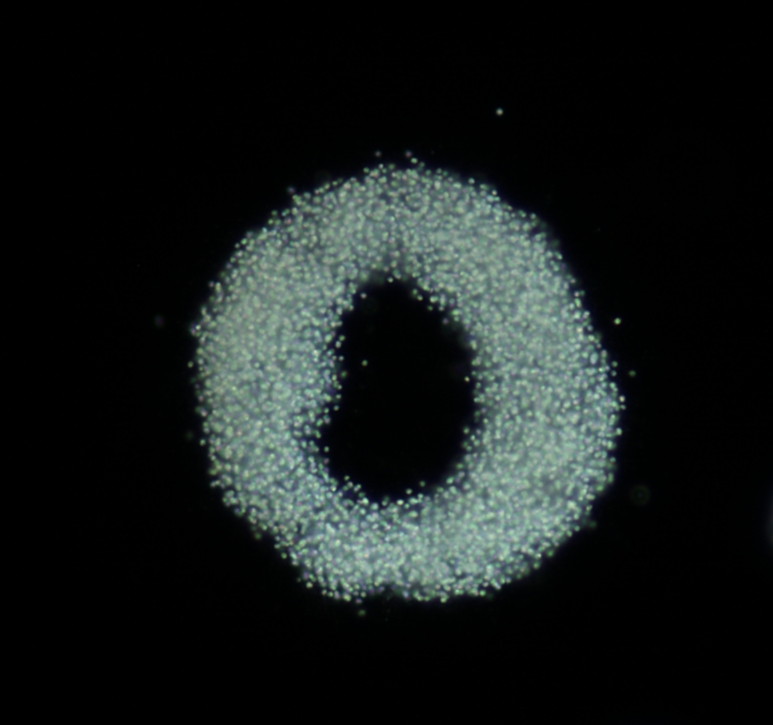
Microcystis
Microcystis Courtesy of Orlando Sarnelle

“We observed that zebra mussels can filter out the Microcystis with other particles, but then they spit out the Microcystis because evidently it is unpalatable to them,” Hamilton said.

Sarnelle collaborated with Hamilton on a multiyear study that was part of the National Science Foundation's Long-Term Ecological Research Network. Forty years ago, the NSF recognized the need for research studies that lasted more than a few years and launched the LTER Network. This study is one of five projects highlighted in a recent issue of the Ecological Society of America’s journal, Ecosphere.
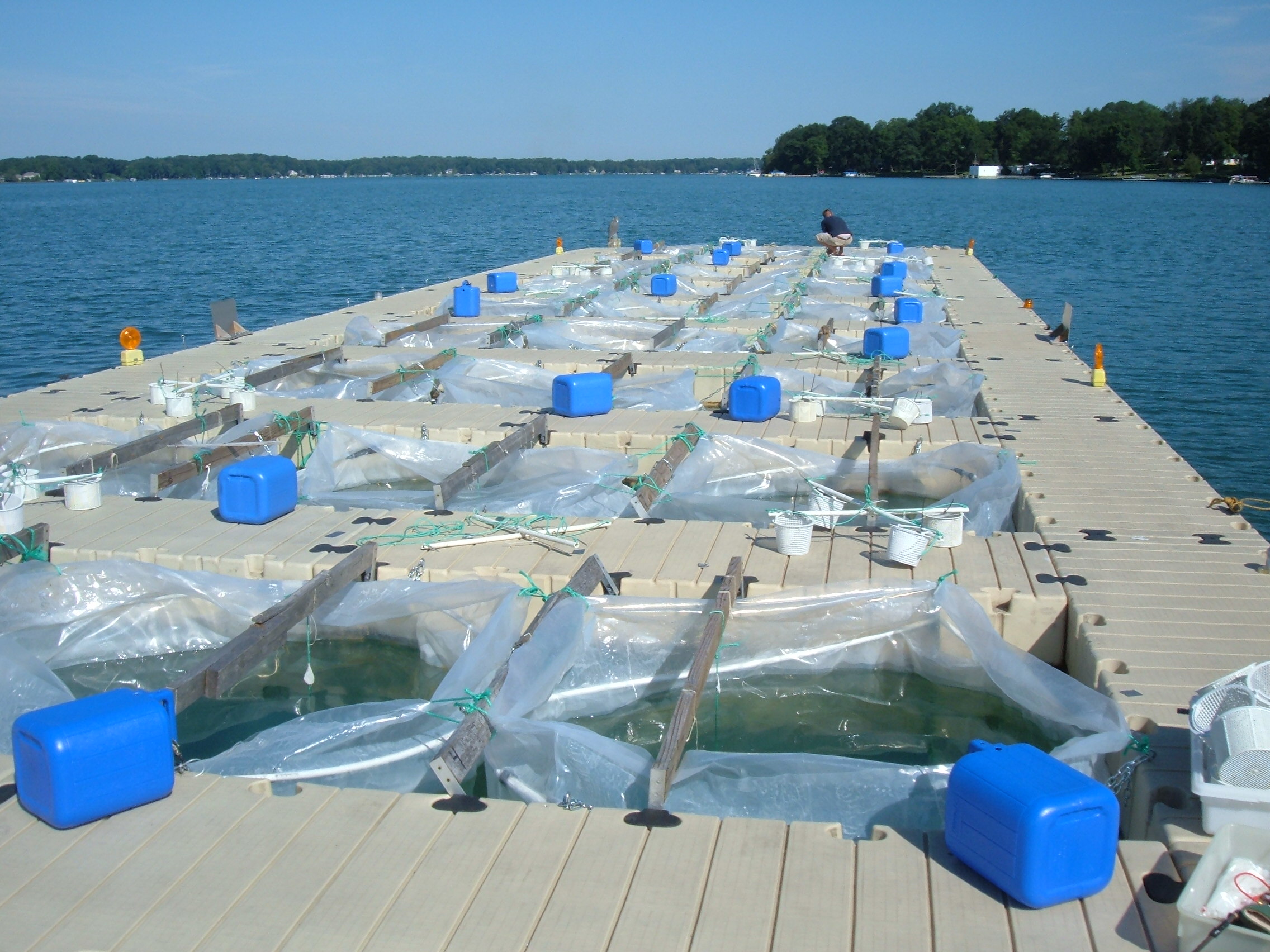
Field testing zebra mussels and Microcystis - NSF Long Term Ecological Research Network
Studying zebra mussels and Microcystis in the field Courtesy of Orlando Sarnelle
“Long-term measurements are essential to our understanding of many ecological phenomena,” Sarnelle said. “There are many things you can’t answer in the typical two- to four-year  grant cycle.”


The researchers suspected the zebra mussels were consuming competitors of Microcystis, which paved the way for the cyanobacteria to flourish under lower nutrient availability than it usually needs. In 2010, an unexpected summer die-off of zebra mussels in Gull Lake during prolonged warm temperatures provided a whole-lake test of the relationship, an opportunity that scientists sometimes call a “natural experiment.”

“Normally, Microcystis thrives in warmer water,” said Jeffrey White, who was a graduate student advised by Sarnelle at the time and is now a faculty member at Framingham State University in Framingham, Massachusetts. “Instead, we saw an 80% decrease in the Gull Lake Microcystis population when the zebra mussels died despite optimal temperatures for its growth.”

The researchers were able to use the long-term study data to confirm their hypothesis.

“This fortuitous observation following years of sampling strengthens the argument that there is a cause-and-effect relationship, and not just a correlation, between zebra mussels and increased Microcystis,” Hamilton said. “Multiyear studies can catch slow, unusual or extreme events that could be making important changes resulting in long-term lasting effects in the ecosystems."


MEDIA CONTACTS

Zach Richardson
MSU Economic ImpactMSU Leadership and ImpactClimate and EnvironmentBiodiversity and Wildlife

Latest News

MSUToday Weekly Update

The MSUToday Weekly Update email showcases how Spartans are making a difference through academic excellence, research impact and community outreach. Get inspired by these stories of innovation, collaboration and determination. Plus, enjoy photos and videos of campus and more MSU content to help keep you connected to the Spartan community.

Sign UpUpdate My Information

Connect With Us

Visit our Facebook pageVisit our page on XVisit our Instagram pageVisit our LinkedIn pageVisit our YouTube pageVisit our TikTok page

Health and Safety

  • MSU Police and Public Safety
  • Olin Health Center
  • Counseling & Psychiatric Services (CAPS)
  • University Health and Wellbeing
  • MSU Health Care
  • Civil Rights and Title IX
  • Our Commitment
  • Center for Survivors
  • Security & Fire Safety Report
  • University Policy on Relationship Violence and Sexual Misconduct
  • Notice of Non-Discrimination, Anti-Harassment and Non-Retaliation
  • Health Care Non-Discrimination Notice

Support Services

  • Disability Resources
  • Supportive Services
  • Learning Resources

Working at MSU

  • Human Resources
  • EBS Login
  • Job Postings
  • Employee Assistance Program

Reports

  • CARES Act Funding
  • Student Achievement and Outcomes

Contact us

517-355-1855

Address

Michigan State University 426 Auditorium Road East Lansing, MI 48824

Follow Us

  • Visit our Facebook page
  • Visit our page on X
  • Visit our Instagram page
  • Visit our TikTok page
  • Visit our LinkedIn page
  • Visit our YouTube page

If you're having accessibility issues, please let us know.

Know More: Campus Safety Information and ResourcesTransparency Reporting: Budget & Salary/Compensation
  • Contact Information|
  • Site Map|
  • Privacy Statement|
  • Site Accessibility|
  • Call MSU: (517) 355-1855|
  • Visit: msu.edu|
  • Notice of Nondiscrimination|

SPARTANS WILL|© Michigan State University|