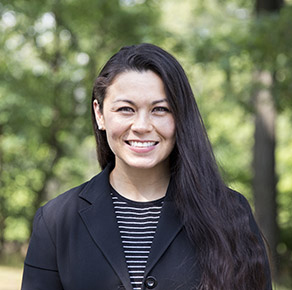
Leslie Gonzales is an associate professor in the College of Education. The following faculty voice is repurposed from the College of Education website and originally appeared in The Chronicle of Higher Education.
When people ask me what I do and I tell them I am a professor, the next questions are always, “Oh, what do you teach? What do you study?” When I share with them that I study the experiences and outcomes of college and university professors, most are puzzled and want to know why I would choose to dedicate my career to this topic.
My answer is nearly the same today as it was in 2006 when I launched my research agenda in graduate school: I study faculty careers and work because we constitute a fascinating and influential profession. We teach, research and engage with local, national and sometimes international communities.
In each of these capacities we interact with the next generation of leaders — people who go on to lead schools, provide health care to patients, manage businesses and build communities. For these reasons, it is critical to document the composition of our profession and (always changing) nature of our work. Moreover, underlying my research interests is a commitment to ensuring that academia is an equitable place where diverse work and a diverse faculty are not only welcome but valued.
While I have always been committed to studying inequities in the academy, I can say that the realities of these inequities have never been more apparent than when the pandemic began sweeping through our universities and our lives. COVID-19 has brought more changes, more quickly, than ever before.
Since we switched to working from home, we have been forced to adapt our teaching, research and service responsibilities, many while raising children or caring for other family members, on top of the emotional and mental toll associated with the pandemic. For some, especially faculty of color, we have been juggling all of the above while coping with the fact that the illness has touched our families or friends.
Colleges and universities have strived to respond, and I have been both hopeful and disappointed by these institutional responses. We have an opportunity now, and when we emerge from this difficult period, to create more supportive academic environments for all faculty members.
The demand for “can-do” attitudes about shifting teaching to an online space from home is based on the assumption that instructors have consistent access to technology, Wi-Fi and stable housing. However, higher education reporters have found that non-tenure-track faculty, especially part-time instructors, are sometimes housing- and food-insecure. In the early days of campus shutdowns, contingent faculty all around the country noted they did not have access to consistent Wi-Fi or technology resources.
Moreover, many institutions adopted “tenure-extension policies,” framing them as powerful solutions, but these extensions do little for faculty who work on semesterly contracts. Although the initial report did not disaggregate data between faculty or staff, subsequent reporting has revealed that contingent professors — among other low-paid staff — have suffered a disproportionate number of layoffs. It is also critical to note that tenure extensions do little for caregivers or for people’s mental health and well-being. In some ways, tenure extensions merely allow institutions to kick the can down the road.
Instead of reproducing inequities and valuing productivity over the well-being of faculty who conduct research, teach and engage with students and carry out service, I want to outline three ideas that higher education leaders, as well as more empowered tenured members of the academic profession, might consider.
How should higher education leaders help?
Ground yourselves in equity. Equity is different from equality in that equality offers the same resources and solutions to everyone. Equity, however, demands that leaders learn and recognize how people’s situations and conditions vary, particularly in connection with racism, genderism, ableism and classism, and then provide context-informed support.
In the case of supporting faculty in the context of COVID, equity-grounded leadership requires recognizing people have experienced this pandemic in wildly different ways. Before adopting a new policy solution, consider how the solution honors the experience and conditions of those located in the margins of the academy. For example, before applying pay cuts, examine institutional data to understand how different categories of faculty will be differently impacted.
Recognize that COVID-19’s disparate impact on communities of color is real. It is very likely that faculty (and staff) of color are navigating not only the stress of working from home, but also coping with the loss of loved ones, and they should be supported accordingly. Contingent faculty are doing all of this with fewer resources. Consider (re)allocating resources to ensure that culturally relevant counseling services and programmatic efforts are a part of your efforts. This may mean developing new partnerships with counselors or agencies that have specific expertise for working with communities of color.
And finally, because it is key to maintain the diversity gains that have been made among tenure-track faculty, institutional leaders should work with academic leaders throughout their institution but also across scholarly and institutional associations to broaden definitions of worthy work, with special attention to the kinds of scholarship that racially minoritized faculty often (not always) take on (community engagement, public scholarship). COVID-19 has forced institutions to have conversations about productivity and tenure-worthy work profiles. This is a perfect opportunity for institutions and faculties to work together to support future portfolios that may look different than portfolios of the past.
COVID-19 is a crisis to which higher education leaders can respond with old ideas and approaches that will only reinforce inequities, or we can choose equity.

