Jump to HeaderJump to Main ContentJump to Footer
Michigan State University
  • Browse Stories By

    Topics

    Explore stories by subject area

    • Arts and Culture
    • Business and Economy
    • Climate and Environment
    • Education and Learning
    • Engineering, Science and Technology
    • Government and Society
    • Health and Medicine
    • Media and Communications
    • MSU Leadership and Impact
    • Sports and Recreation
    • Student and Campus Experience
    View All Stories

    Collections

    Curated story series

    • Turfgrass
    • Ask the Expert
    • Big Ideas
    • Climate solutions
    • Water at MSU
    • Mobility
    • Spartan Perspectives
    • Student views
    • Graduate voices
    • Faculty voices
    View All Collections

    Featured

    Editor's picks

    • The Spartans behind your favorite Michigan golf courses

      July 22, 2026

      The Spartans behind your favorite Michigan golf courses

    • MSU in the 1990s: 10 Spartan milestones

      July 14, 2026

      MSU in the 1990s: 10 Spartan milestones

MSUTODAY
  • Browse Stories By

< Browse Stories By

Topics

Explore stories by subject area

  • Arts and Culture
  • Business and Economy
  • Climate and Environment
  • Education and Learning
  • Engineering, Science and Technology
  • Government and Society
  • Health and Medicine
  • Media and Communications
  • MSU Leadership and Impact
  • Sports and Recreation
  • Student and Campus Experience
  • View All Stories

Collections

Curated story series

  • Turfgrass
  • Ask the Expert
  • Big Ideas
  • Climate solutions
  • Water at MSU
  • Mobility
  • Spartan Perspectives
  • Student views
  • Graduate voices
  • Faculty voices
  • View All Collections

Featured

Editor's picks

  • The Spartans behind your favorite Michigan golf courses

    July 22, 2026

    The Spartans behind your favorite Michigan golf courses

  • MSU in the 1990s: 10 Spartan milestones

    July 14, 2026

    MSU in the 1990s: 10 Spartan milestones

  • For Media
  • Experts
  • Releases and Statements
  • Sign Up
  • Update Information

Resources

  • A to Z Index
  • Find People
  • Maps
  • Email
  • Student Information System (SIS)
  • D2L
  • Libraries
  • Tech Support
  • MSU Misconduct Hotline
  • Social Media Directory
  • Events Calendar
  • For Media
Michigan State University
MSUToday
  • For Media
  • Experts
  • Releases and Statements
  • Sign Up
  • Update Information
MSUTODAY
Natural Sciences

May 26, 2021

Say hello to a vast underground ecosystem

MSU researchers help reveal how ‘forests’ of microbes living in geological hotspots play an underestimated role in Earth’s carbon cycle

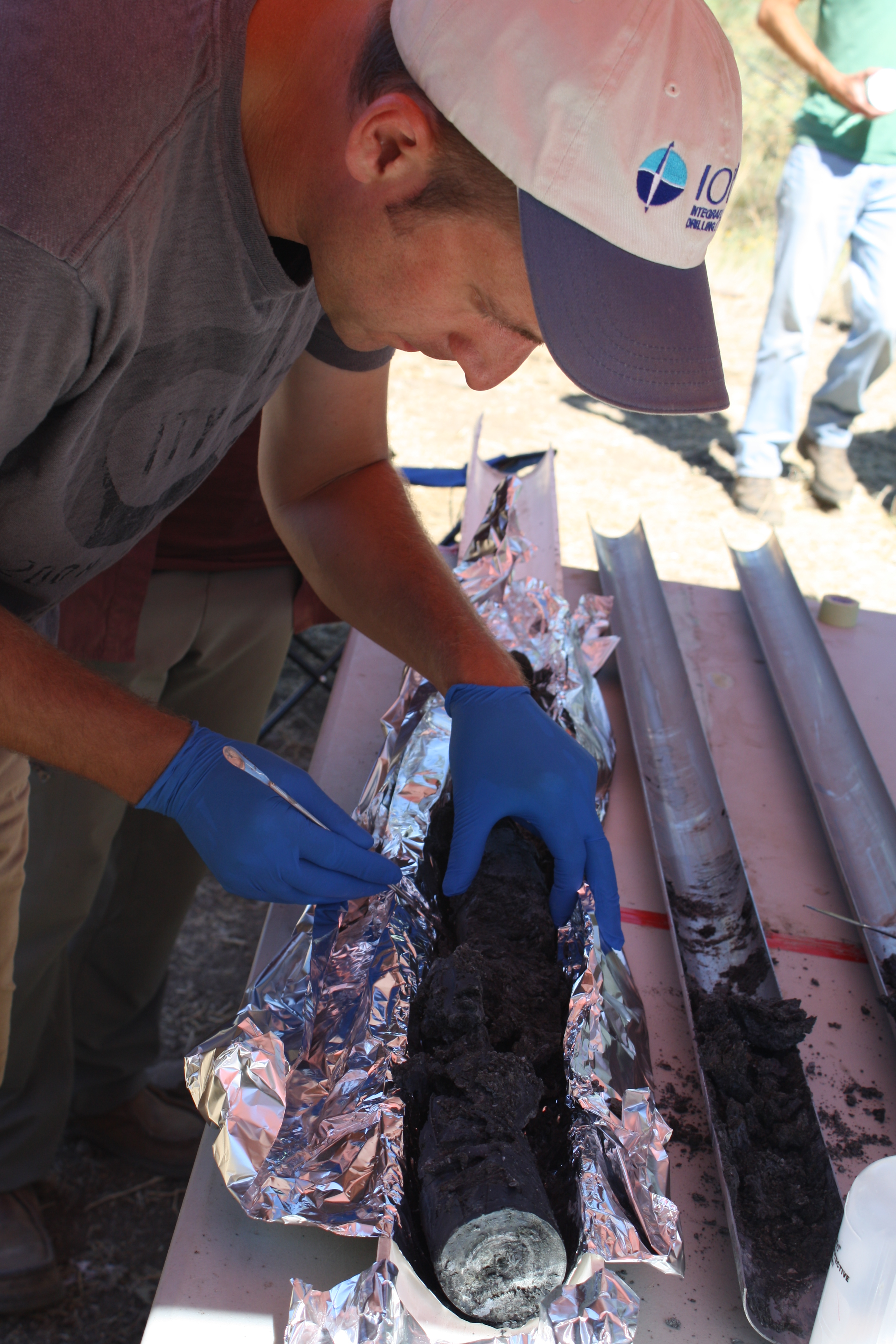
MSU Associate Professor Matthew Schrenk, wearing blue gloves, examines a dark cylindrical sample outdoors at a research site.
MSU Associate Professor Matthew Schrenk samples a rock specimen for microbes.

Michigan State University researchers have helped unveil an expansive microbial ecosystem living deep within Earth that is fueled by chemicals produced by volcanic eruptions and continental collisions.


Spartans joined an interdisciplinary and international team of scientists to show that these microbial communities eat the carbon, sulfur and iron compounds generated by geological processes beneath Costa Rica. The team published its results in the journal Nature Geosciences on April 22.


“There is a diverse and thriving microbial ecosystem beneath our feet that impacts the Earth in many important ways,” said Matthew Schrenk, an associate professor in MSU’s College of Natural Science. Schrenk works in the Department of Earth and Environmental Sciences and the Department of Microbiology and Molecular Genetics.


“A huge amount of the Earth’s biodiversity is beneath our feet, and they’re critical to the functioning of the planet. Most people don’t realize that,” he said.


Heather Miller, a doctoral student in Schrenk’s research group, also contributed to the study.
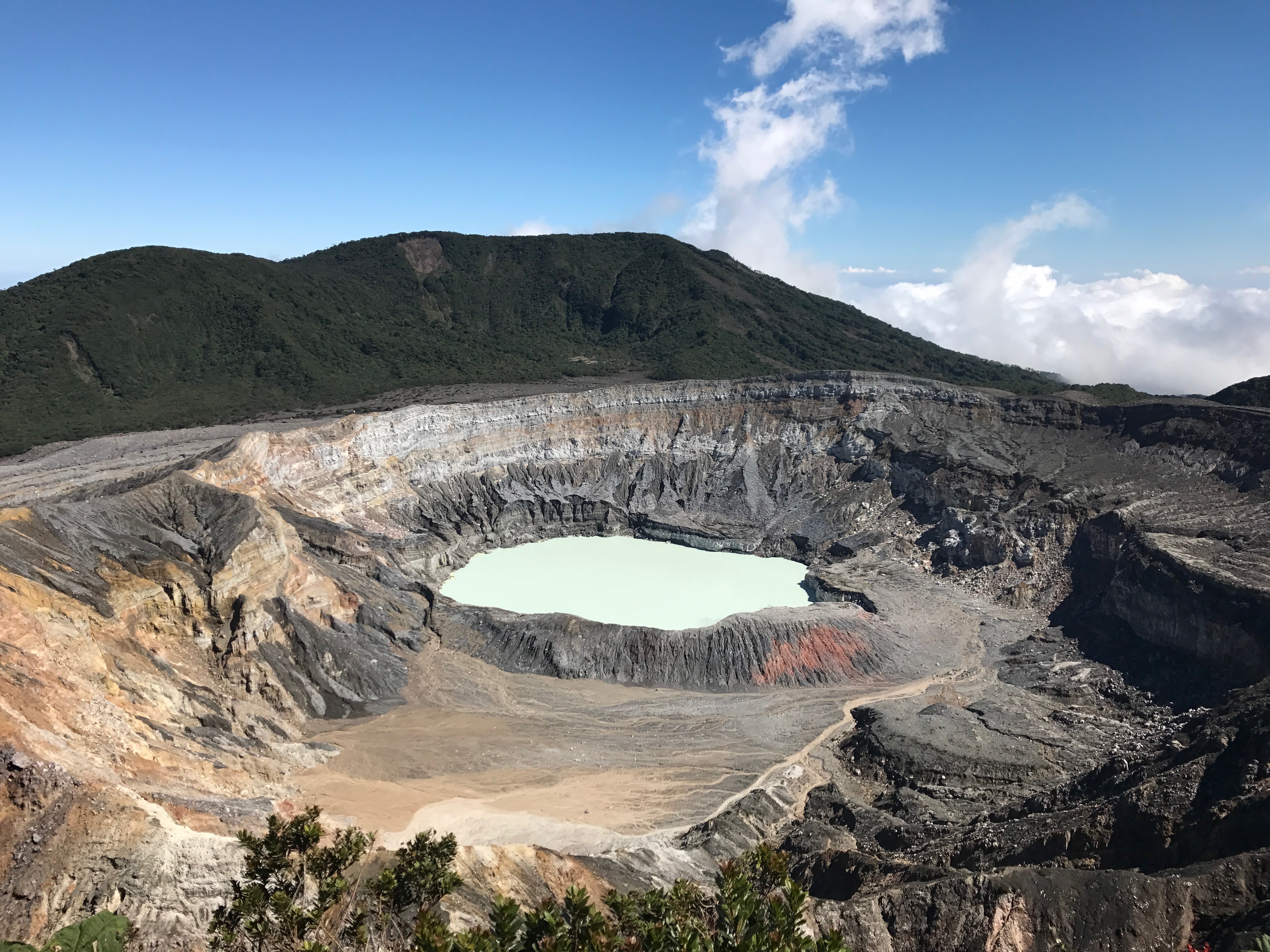
 

Under a blue sky and green mountaintops, a reflective hot spring sits nestled in exposed gray and beige rocks.
MSU researchers and their colleagues studied the microbial communities by sampling hot springs in Costa Rica — like the one shown here — that are connected to deep Earth environments. Credit: Tom Owens

The research team — led by Karen Lloyd, an associate professor at the University of Tennessee, and Donato Giovannelli, a professor at the University of Naples Federico II in Italy — found that this microbial ecosystem sequesters a huge amount of carbon dioxide. In fact, the team estimated that up to 170 metric tons of carbon could be gobbled up by the ecosystem every year.

“This work shows that carbon may be siphoned off to feed a large ecosystem,” said Peter Barry, assistant scientist at the Woods Hole Oceanographic Institution and co-author of the study. “This means that biology might affect carbon fluxes in and out of the Earth’s mantle, which forces scientists to change how they think about the deep carbon cycle over geologic time scales.”

When there’s a collision between the Earth’s tectonic plates — specifically an oceanic plate and a continental plate — one plate gets pushed down, or subducted, into the mantle carrying with it materials that accumulated at the seafloor. The other plate becomes studded with volcanoes, which serves as conduits for gases escaping to the atmosphere. This is the main process by which chemical elements are moved between Earth’s surface and its interior, eventually recycling these materials over millions of years back to the surface.
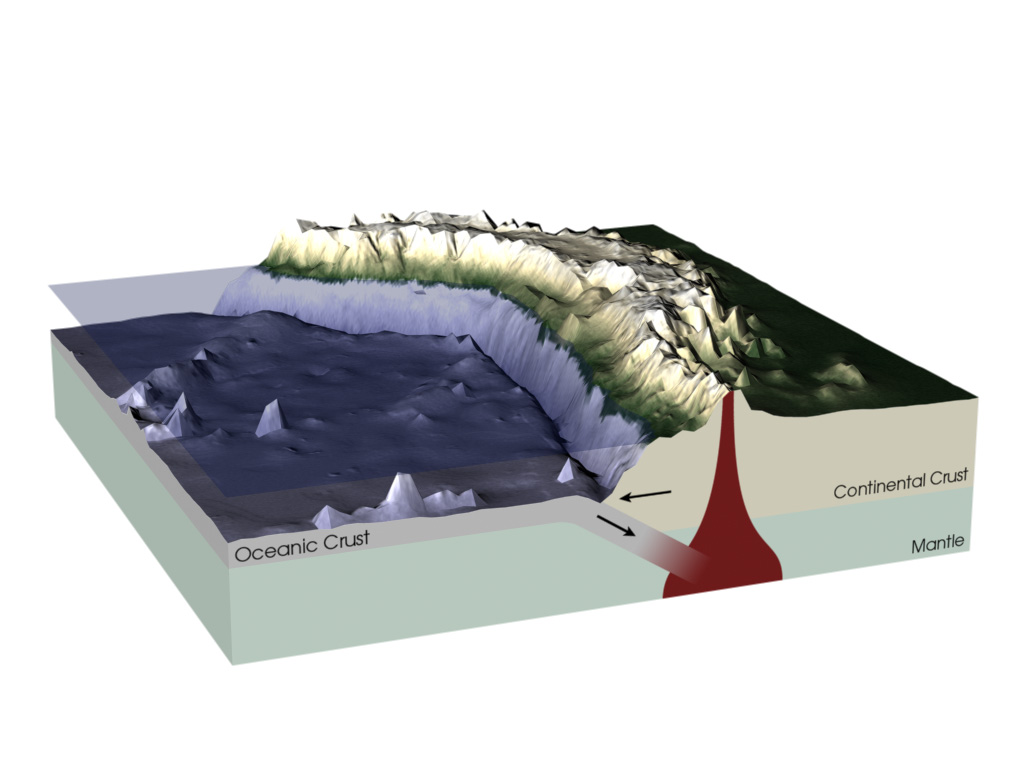
A 3-D illustration shows a thin slab of gray oceanic crust, which is covered by water, being pushed underneath thicker beige continental crust and into the Earth’s mantle, shown in a light green color. Mountains and volcanoes have formed on the continental crust above the subduction zone.
An illustration of a subduction zone. Credit: Robert Simmon, NASA GSFC

“Subduction zones are fascinating environments,” said Maarten de Moor, associate professor at the National University of Costa Rica and co-author on the study. “They produce volcanic mountains and serve as portals for carbon moving between the interior and exterior of Earth.”

In the new study, the team found microbes that live deep underground across the entirety of the subduction zone under Costa Rica act as gatekeepers, limiting the quantities of the chemicals, including important greenhouse gases, that make it into the atmosphere.

“These microbes use chemicals from the subduction zone to form the base of an ecosystem that is large and filled with diverse primary and secondary producers,” said the University of Tennessee’s Lloyd, a co-corresponding author of the paper. “It’s like a vast forest, but underground.”
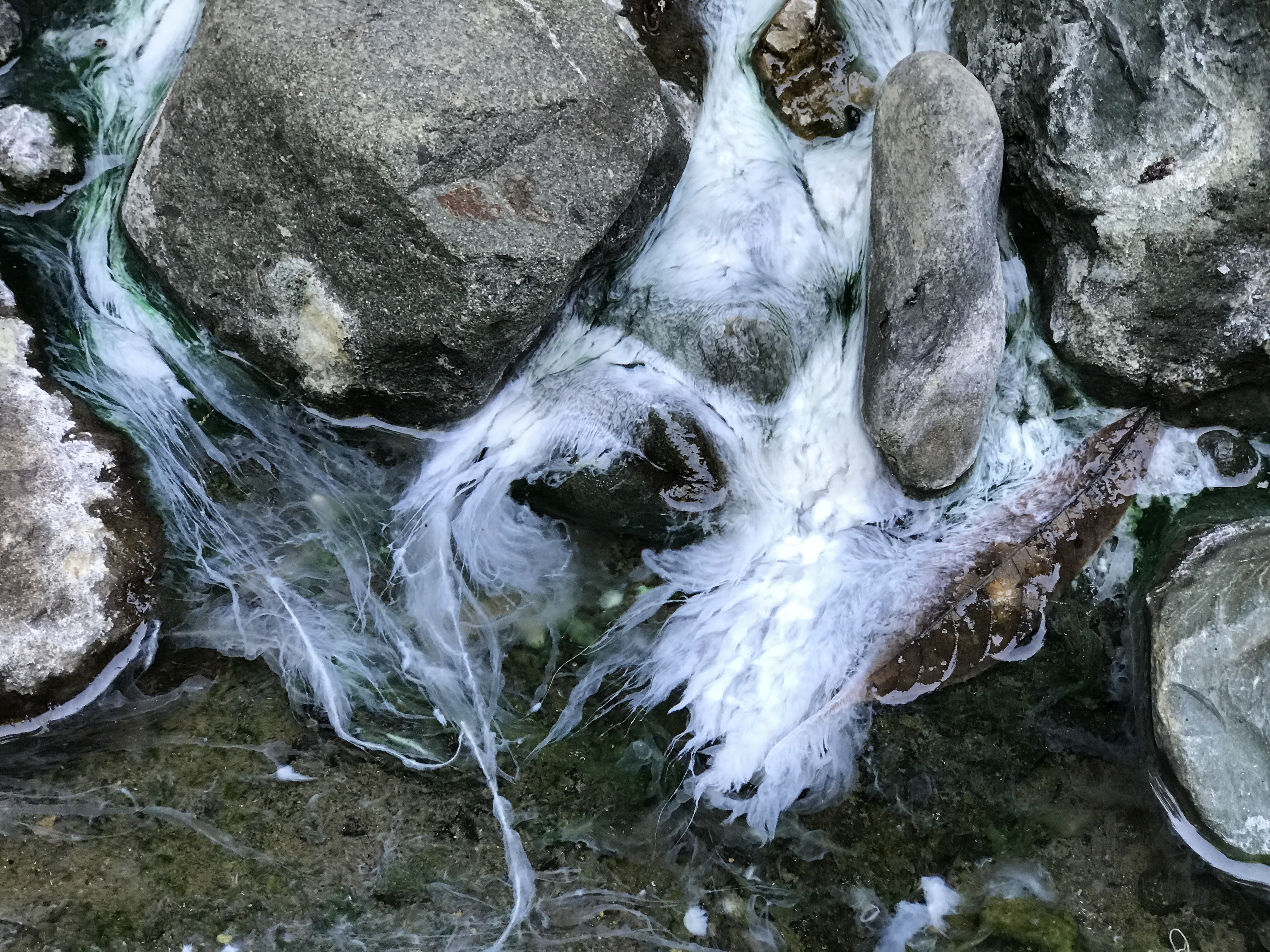
A white “froth” that is a microbial biofilm floats on the surface of a hot spring enclosed by gray rocks and filled with clear water.
A close-up photo of a hot spring reveals white microbial biofilms fueled by chemicals associated with volcanic activity. Credit: Donato Giovannelli

This suggests that the known qualitative relationship between geology and biology may have significant quantitative implications for our understanding of how the distribution of carbon and other elements on Earth have changed throughout its history, potentially impacting global climate.

“We already know of many ways in which biology has influenced the habitability of our planet, leading to the rise in atmospheric oxygen, for example,” said Giovannelli of the University of Naples Federico II and co-corresponding author. “Now, our ongoing work is revealing another exciting way in which life and our planet coevolved.”


MEDIA CONTACTS

Matthew Schrenk
Natural SciencesEngineering, Science and TechnologyNatural SciencesClimate and Climate SolutionsClimate and Environment

Latest News

MSUToday Weekly Update

The MSUToday Weekly Update email showcases how Spartans are making a difference through academic excellence, research impact and community outreach. Get inspired by these stories of innovation, collaboration and determination. Plus, enjoy photos and videos of campus and more MSU content to help keep you connected to the Spartan community.

Sign UpUpdate My Information

Connect With Us

Visit our Facebook pageVisit our page on XVisit our Instagram pageVisit our LinkedIn pageVisit our YouTube pageVisit our TikTok page

Health and Safety

  • MSU Police and Public Safety
  • Olin Health Center
  • Counseling & Psychiatric Services (CAPS)
  • University Health and Wellbeing
  • MSU Health Care
  • Civil Rights and Title IX
  • Our Commitment
  • Center for Survivors
  • Security & Fire Safety Report
  • University Policy on Relationship Violence and Sexual Misconduct
  • Notice of Non-Discrimination, Anti-Harassment and Non-Retaliation
  • Health Care Non-Discrimination Notice

Support Services

  • Disability Resources
  • Supportive Services
  • Learning Resources

Working at MSU

  • Human Resources
  • EBS Login
  • Job Postings
  • Employee Assistance Program

Reports

  • CARES Act Funding
  • Student Achievement and Outcomes

Contact us

517-355-1855

Address

Michigan State University 426 Auditorium Road East Lansing, MI 48824

Follow Us

  • Visit our Facebook page
  • Visit our page on X
  • Visit our Instagram page
  • Visit our TikTok page
  • Visit our LinkedIn page
  • Visit our YouTube page

If you're having accessibility issues, please let us know.

Know More: Campus Safety Information and ResourcesTransparency Reporting: Budget & Salary/Compensation
  • Contact Information|
  • Site Map|
  • Privacy Statement|
  • Site Accessibility|
  • Call MSU: (517) 355-1855|
  • Visit: msu.edu|
  • Notice of Nondiscrimination|

SPARTANS WILL|© Michigan State University|