Jump to HeaderJump to Main ContentJump to Footer
Michigan State University
  • Browse Stories By

    Topics

    Explore stories by subject area

    • Arts and Culture
    • Business and Economy
    • Climate and Environment
    • Education and Learning
    • Engineering, Science and Technology
    • Government and Society
    • Health and Medicine
    • Media and Communications
    • MSU Leadership and Impact
    • Sports and Recreation
    • Student and Campus Experience
    View All Stories

    Collections

    Curated story series

    • Turfgrass
    • Ask the Expert
    • Big Ideas
    • Climate solutions
    • Water at MSU
    • Mobility
    • Spartan Perspectives
    • Student views
    • Graduate voices
    • Faculty voices
    View All Collections

    Featured

    Editor's picks

    • The Spartans behind your favorite Michigan golf courses

      July 22, 2026

      The Spartans behind your favorite Michigan golf courses

    • MSU in the 1990s: 10 Spartan milestones

      July 14, 2026

      MSU in the 1990s: 10 Spartan milestones

MSUTODAY
  • Browse Stories By

< Browse Stories By

Topics

Explore stories by subject area

  • Arts and Culture
  • Business and Economy
  • Climate and Environment
  • Education and Learning
  • Engineering, Science and Technology
  • Government and Society
  • Health and Medicine
  • Media and Communications
  • MSU Leadership and Impact
  • Sports and Recreation
  • Student and Campus Experience
  • View All Stories

Collections

Curated story series

  • Turfgrass
  • Ask the Expert
  • Big Ideas
  • Climate solutions
  • Water at MSU
  • Mobility
  • Spartan Perspectives
  • Student views
  • Graduate voices
  • Faculty voices
  • View All Collections

Featured

Editor's picks

  • The Spartans behind your favorite Michigan golf courses

    July 22, 2026

    The Spartans behind your favorite Michigan golf courses

  • MSU in the 1990s: 10 Spartan milestones

    July 14, 2026

    MSU in the 1990s: 10 Spartan milestones

  • For Media
  • Experts
  • Releases and Statements
  • Sign Up
  • Update Information

Resources

  • A to Z Index
  • Find People
  • Maps
  • Email
  • Student Information System (SIS)
  • D2L
  • Libraries
  • Tech Support
  • MSU Misconduct Hotline
  • Social Media Directory
  • Events Calendar
  • For Media
Michigan State University
MSUToday
  • For Media
  • Experts
  • Releases and Statements
  • Sign Up
  • Update Information
MSUTODAY
Biodiversity and Wildlife

March 2, 2021

Student view: A love for insects

Graduate student Jenna Walters shares her passion for entomology and insect photography, and her research on the impacts of extreme heat on blueberry pollination.

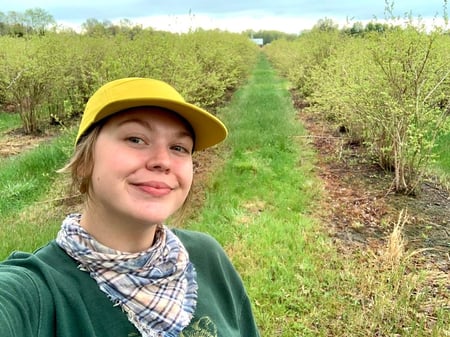
Jenna Walters

Jenna Walters earned her bachelor’s degree in environmental biology/zoology with a minor in entomology at MSU. She is a graduate student in the Department of Entomology. The following student view is edited and repurposed from the College of Agriculture and Natural Resources.

Insects are incredible! They have been stewards of the land long before humans, with fossil evidence suggesting insects living on Earth around 479 million years ago. Insects also have the largest biomass of terrestrial animals, with an estimated 10 quintillion individual insects alive at any time, which means there are 200 million insects for every one human. Insects have shaped the way people live, the foods we eat and the landscapes we live in. The history and influence of insects is incredibly important to understand, yet still so many unknowns remain. It’s exciting to be a part of a field that has so many mysteries to uncover.
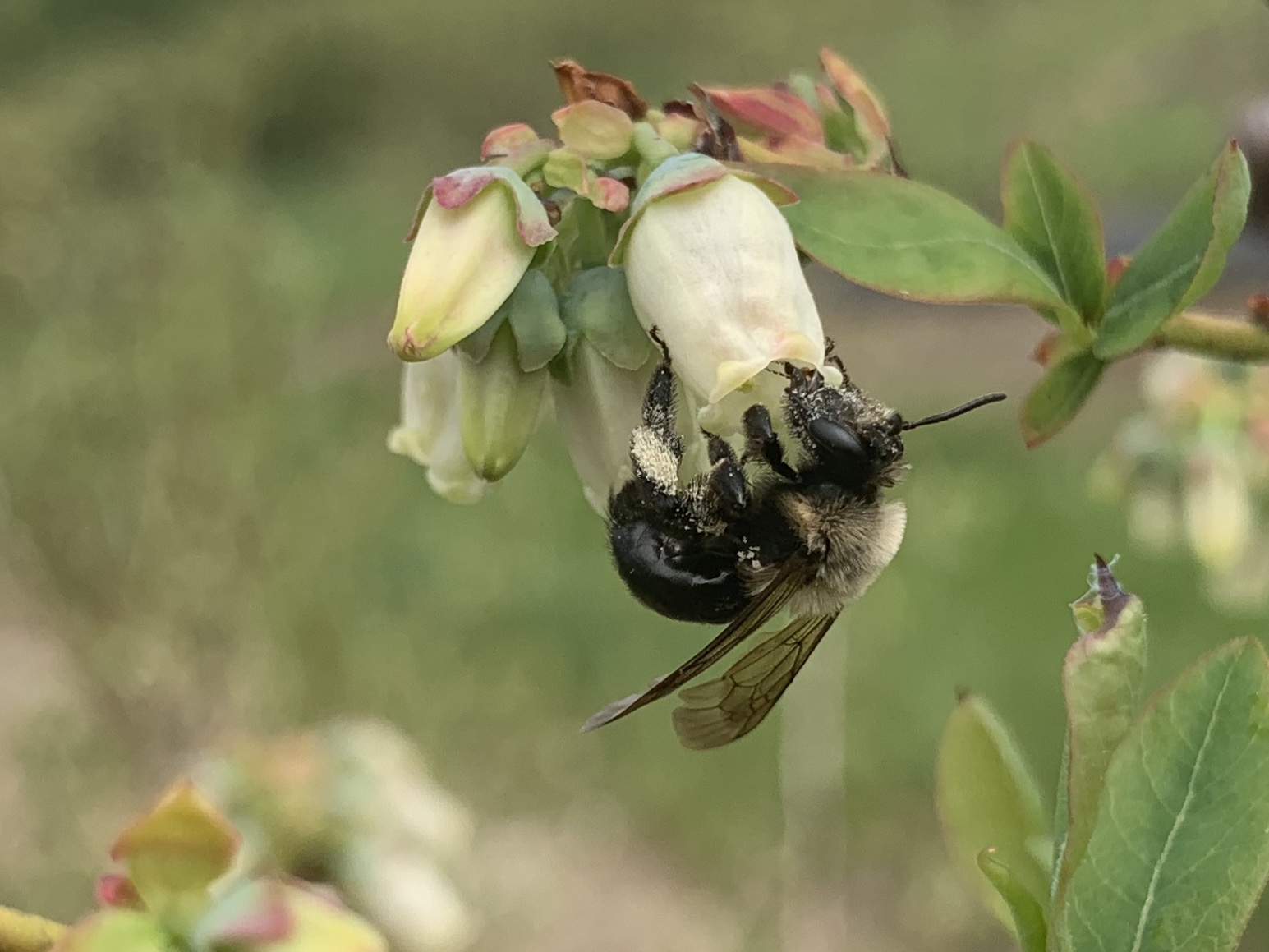
Miner bee pollinating a flower
A miner bee, Andrena carlini, covered in pollen visiting a blueberry flower at MSU's Trevor Nichols Research Center in Fennville, Michigan. This native bee vibrates their wing muscles to release blueberry pollen from the flower, making them efficient blueberry pollinators. Photo by Jenna Walters.

My research is focused on understanding the impacts of extreme heat on blueberry pollination. Specifically, I seek to understand the impacts of extreme heat on the reproductive functioning and output of blueberry plants and their native bee pollinators.

For some context, wild blueberries are native to Michigan, and these wild blueberries have been used to cultivate blueberry crops, which are managed in agricultural landscapes. Michigan is a leading producer of northern highbush blueberries, yielding about 100 million pounds every year. This yield is largely attributed to blueberry pollinators, both wild and managed, who perform the very necessary service of pollination.
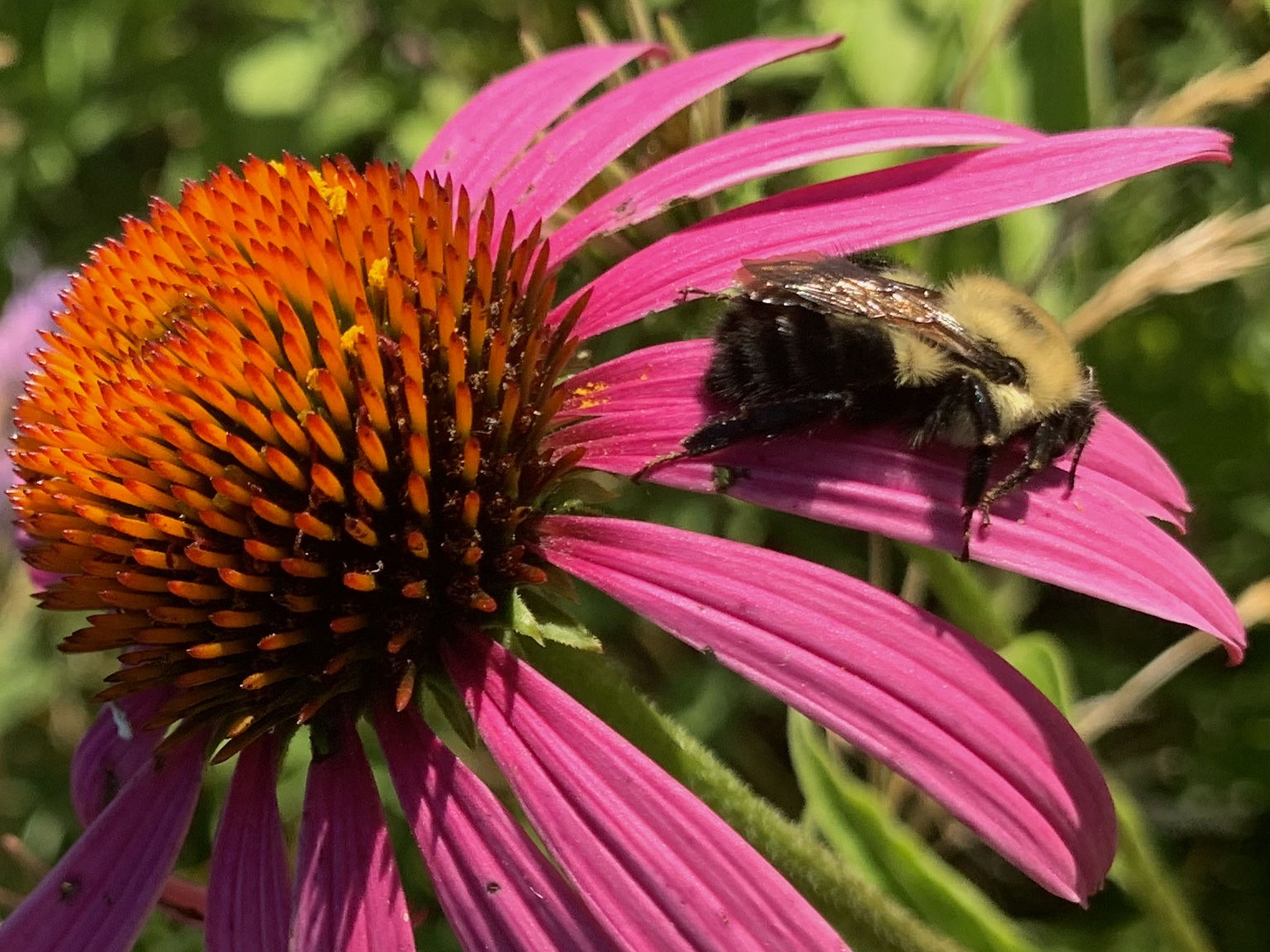
Bumble bee sitting on a flower
A common eastern bumble bee (Bombus impatiens) sleeping on an Echinacea purpurea petal in the early morning at MSU's Clarksville Research Center in Clarksville, Michigan. Before this bee can take off for a busy day, she needs to warm up under the sun. Photo by Jenna Walters.

When a bee visits a blueberry flower, they push their heads inside it to reach nectar stored at the base of a flower. As they push themselves into the flower, they bump up against the stamen, or the male part of the flower, and the style, or the female part of the flower. Pollen is then released from the tip of the stamen, or the anthers, which collects on the furry body of a bee. This pollen is groomed by the bee, packing it onto themselves to transfer back to their nest. As a bee visits different flowers, a little bit of pollen is transferred to the sticky stigma on the flower style, and thus pollination has occurred.

Pollen serves a critical role for the productivity and reproductive output for both the plant and the bee. For the plant, once pollen is placed on the stigma, germination occurs and pollen tubes travel down the flower style to fertilize it, which turns into seeds. The greater number of fertilized seeds in a blueberry, the bigger it is. For the bee, pollen is the primary resource of protein and lipids for bees. A nutritious pollen diet during larval development leads to larger, healthier and more resilient bees.
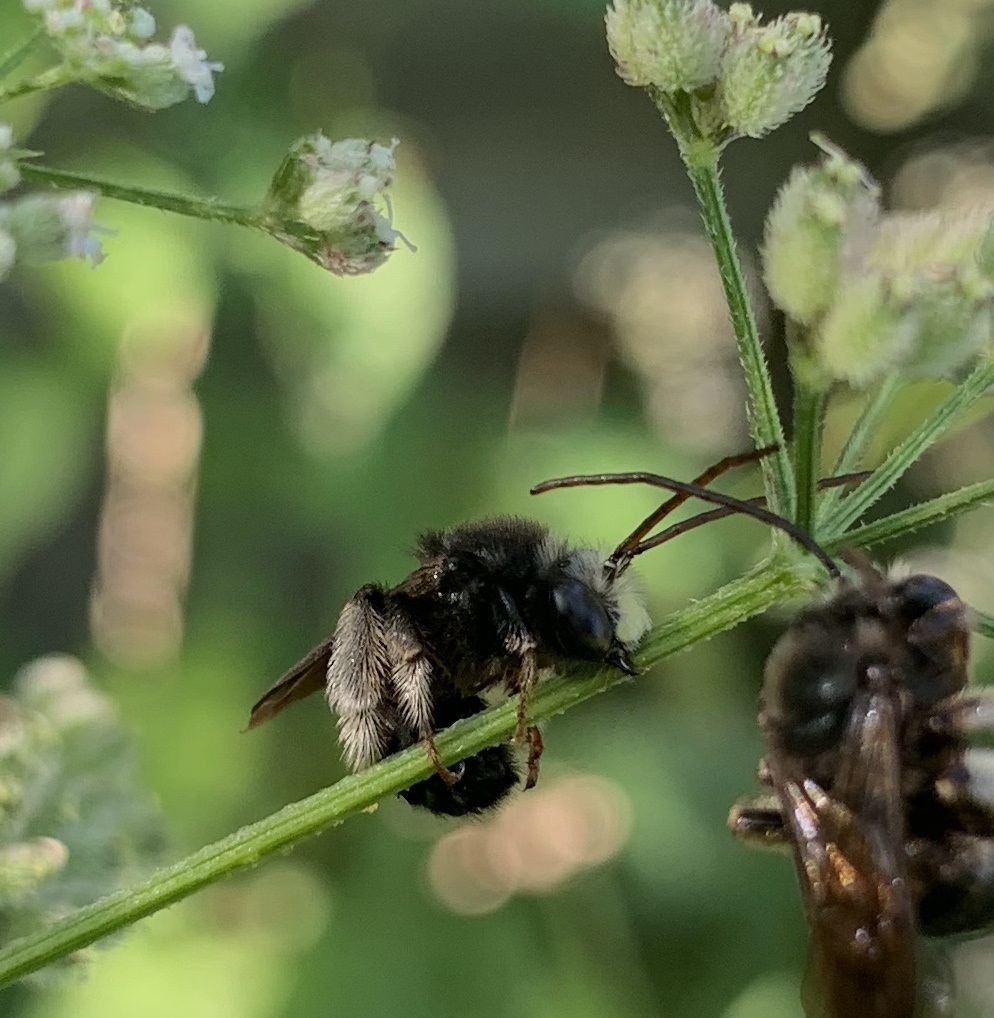
Bee sitting on a flower stem
A male two-spotted long horn bee (Melissodes bimaculatus) using his mandibles to clamp onto a plant stem. During the day, two-spotted long horn males are busy flying around in search of females but at night, males cluster together to sleep, hanging from plant stems as seen here. Picture taken in Lansing, Michigan. Photo by Jenna Walters.

So, what happens if that pollen is exposed to extreme heat? As climate change intensifies, extreme heat events have increased in duration, frequency and intensity. This is true globally, including Michigan. In 2018, an extreme heat occurred during blueberry bloom, and we saw a 30-million-pound loss in yield compared to the previous year. It’s uncommon for heat extremes to occur in Michigan during spring, so this phenomenon was totally unexplored. We know even less about how that heat wave could have affected bee development, health and subsequent populations. By uncovering the ways heat affects blueberry pollination systems, we can create strategies to protect them as climate change continues to intensify.


 

MEDIA CONTACTS

Beth Bonsall, Mallory Marienfeld
Biodiversity and WildlifeClimate and EnvironmentFine ArtsArts and CultureNatural SciencesEngineering, Science and Technology

Collection

more content from this collection

Student Views

Latest News

MSUToday Weekly Update

The MSUToday Weekly Update email showcases how Spartans are making a difference through academic excellence, research impact and community outreach. Get inspired by these stories of innovation, collaboration and determination. Plus, enjoy photos and videos of campus and more MSU content to help keep you connected to the Spartan community.

Sign UpUpdate My Information

Connect With Us

Visit our Facebook pageVisit our page on XVisit our Instagram pageVisit our LinkedIn pageVisit our YouTube pageVisit our TikTok page

Health and Safety

  • MSU Police and Public Safety
  • Olin Health Center
  • Counseling & Psychiatric Services (CAPS)
  • University Health and Wellbeing
  • MSU Health Care
  • Civil Rights and Title IX
  • Our Commitment
  • Center for Survivors
  • Security & Fire Safety Report
  • University Policy on Relationship Violence and Sexual Misconduct
  • Notice of Non-Discrimination, Anti-Harassment and Non-Retaliation
  • Health Care Non-Discrimination Notice

Support Services

  • Disability Resources
  • Supportive Services
  • Learning Resources

Working at MSU

  • Human Resources
  • EBS Login
  • Job Postings
  • Employee Assistance Program

Reports

  • CARES Act Funding
  • Student Achievement and Outcomes

Contact us

517-355-1855

Address

Michigan State University 426 Auditorium Road East Lansing, MI 48824

Follow Us

  • Visit our Facebook page
  • Visit our page on X
  • Visit our Instagram page
  • Visit our TikTok page
  • Visit our LinkedIn page
  • Visit our YouTube page

If you're having accessibility issues, please let us know.

Know More: Campus Safety Information and ResourcesTransparency Reporting: Budget & Salary/Compensation
  • Contact Information|
  • Site Map|
  • Privacy Statement|
  • Site Accessibility|
  • Call MSU: (517) 355-1855|
  • Visit: msu.edu|
  • Notice of Nondiscrimination|

SPARTANS WILL|© Michigan State University|