With growing concern about the "COVID slide" effects of distance learning, researchers at Michigan State University and the University of Michigan have developed two project-based learning studies that seek to help teachers boost student engagement.
One effort, Multiple Literacies in Project-Based Learning, or ML-PBL, is increasing science achievement and supporting the social and emotional development of more than 1,000 third graders in Michigan. The innovative science curriculum is based upon project-based learning – an approach to education in which students explore academic subjects through meaningful explorations that pique their interests as they seek to solve real-world problems.
In a randomized controlled trial study, the MSU research team found that third grade students in PBL classrooms throughout Michigan who engaged in hands-on, inquiry-based projects with real-world applications scored 8 percentage points higher on a state science test, significantly outperforming students who experienced typical science teaching methods. Importantly, these effects held regardless of reading level.
"As the pandemic has magnified the importance of health and science, so has it exposed the great need to motivate and engage students in STEM,” said Joseph Krajcik, Lappan-Phillips Professor of Science Education and director of the CREATE for STEM Institute at MSU. “The number of students pursuing STEM careers has declined for decades. ML-PBL provides a framework to teach young children thinking and problem-solving skills, which they'll use in all their other classes and well into adulthood.

"Scientists always wonder, 'why is this happening?' or engineers ask, 'how can I make something better?'" Krajcik said. "But for some reason in science classes, no matter what grade level — elementary, middle school, high school or college — the wonderment and the focus of how and why something works has been taken away. That's a problem."
And the data proves this. Twelfth-grade science scores have remained unchanged since 1995, according to the highly regarded global Trends in International Mathematics and Science Study. Separate results from the Program for International Student Assessment show that science learning is stagnant and U.S. students perform just slightly above average when compared to their global counterparts.
The ML-PBL curriculum presents students with compelling phenomena and complex problems that connect to their lives. It builds usable science knowledge, fosters mathematics and literacy skills, and creates access to and ownership of science learning for all students. It includes instructional materials, unit assessments and sustained professional-learning opportunities for teachers.
Students in third-grade ML-PBL classrooms work on four projects throughout the year, addressing and making sense of questions that drive their learning:
- Why do I see so many squirrels, but I can’t find any stegosauruses?
- How can we design fun moving toys that other kids can build?
- How can we help the birds near our school grow up and thrive?
- How can we plan gardens for our community to grow plants for food?
“By making sense of the world and finding solutions to complex problems, students learn that science is meaningful and personally valuable,” Krajcik said.
Krajcik’s co-investigator, Barbara Schneider, John A. Hannah University Distinguished Professor in the MSU’s College of Education and the Department of Sociology, said the results will turn science education on its head.
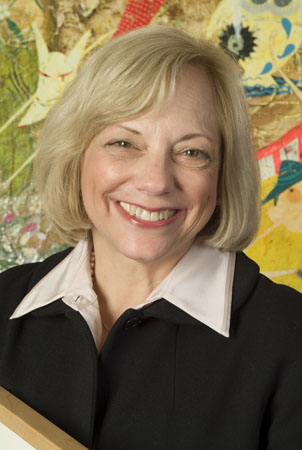
"Technology and science have made a huge difference in our lives, especially in the types of jobs created now," Schneider said. "We're in a time where we need to concentrate on what we should be teaching young people today in schools. For decades we’ve seen students interested in STEM but get turned off about it in the classroom. PBL changes that."
Importantly, the ML-PBL research also found that rigorous project-based learning promotes educational equity because it benefits students regardless of geography, socio-economics, race or ethnicity, or special needs.
The research was funded by Lucas Education Research, a division of the George Lucas Educational Foundation, GLEF.
“Knowing what works in education is key to improving our nation’s schools,” said George Lucas, chairman of GLEF. “What we see with project-based learning is students tackling real-life problems together fueled by curiosity about the world and their desire to contribute to it in meaningful ways.”
In another joint study, the Project-approach to Literacy and Civic Engagement, U of M and MSU researchers found that second grade students gained five to six months more learning in social studies and two months more in informational reading after receiving project-based instruction, including students from low-income backgrounds from underrepresented racial and ethnic groups.
The Project PLACE curriculum involves four projects governing economics, geography, history and civics. In civics, for example, students craft a proposal — conveyed through letters and a group presentation — asking government officials to make improvements to a public space, such as a local playground.
“Too often, students in high-poverty school districts are denied the opportunity to experience intellectually rigorous and engaging curricula,” said Nell Duke, professor of education at the University of Michigan. “This study shows what can happen when that opportunity is available. Through project-based learning, students made contributions to their local community and showed growth on measures of achievement. I’m hopeful that the project-based learning approach that we studied will be taken up more widely.”
Unlike traditional memorization-based curricula, project-based learning enables students from all backgrounds to develop deep, useable knowledge about their world and is essential to our economy, security and society, Krajcik said.
"Often people think of science as just a body of knowledge to be memorized, but it's the practice of science that gets children excited and builds deep learning and understanding,” Krajcik said. We're working to help all kids develop the intellectual skills needed to live in our science- and technology-based world. That's what this research is all about."
MSU's Anne-Lise Halvorsen, associate professor of teacher education, is co-investigator of Project PLACE with U of M’s Duke.
MSU’s CREATE for STEM Institute is a research institute operating in collaboration between the colleges of Education (ranked #1 program in elementary and secondary education for 26 years straight), Natural Science, Engineering, Lyman Briggs, and in coordination with the Office of the Provost. CREATE was established in 2011 and leads in developing and researching the effectiveness of innovative science curriculum for K-12 and undergraduate levels on science, math and engineering teaching and learning.

