
Jump to HeaderJump to Main ContentJump to Footer
Michigan State University
  • Browse Stories By

    Topics

    Explore stories by subject area

    • Arts and Culture
    • Business and Economy
    • Climate and Environment
    • Education and Learning
    • Engineering, Science and Technology
    • Government and Society
    • Health and Medicine
    • Media and Communications
    • MSU Leadership and Impact
    • Sports and Recreation
    • Student and Campus Experience
    View All Stories

    Collections

    Curated story series

    • Turfgrass
    • Ask the Expert
    • Big Ideas
    • Climate solutions
    • Water at MSU
    • Mobility
    • Spartan Perspectives
    • Student views
    • Graduate voices
    • Faculty voices
    View All Collections

    Featured

    Editor's picks

    • The Spartans behind your favorite Michigan golf courses

      July 22, 2026

      The Spartans behind your favorite Michigan golf courses

    • MSU in the 1990s: 10 Spartan milestones

      July 14, 2026

      MSU in the 1990s: 10 Spartan milestones

MSUTODAY
  • Browse Stories By

< Browse Stories By

Topics

Explore stories by subject area

  • Arts and Culture
  • Business and Economy
  • Climate and Environment
  • Education and Learning
  • Engineering, Science and Technology
  • Government and Society
  • Health and Medicine
  • Media and Communications
  • MSU Leadership and Impact
  • Sports and Recreation
  • Student and Campus Experience
  • View All Stories

Collections

Curated story series

  • Turfgrass
  • Ask the Expert
  • Big Ideas
  • Climate solutions
  • Water at MSU
  • Mobility
  • Spartan Perspectives
  • Student views
  • Graduate voices
  • Faculty voices
  • View All Collections

Featured

Editor's picks

  • The Spartans behind your favorite Michigan golf courses

    July 22, 2026

    The Spartans behind your favorite Michigan golf courses

  • MSU in the 1990s: 10 Spartan milestones

    July 14, 2026

    MSU in the 1990s: 10 Spartan milestones

  • For Media
  • Experts
  • Releases and Statements
  • Sign Up
  • Update Information

Resources

  • A to Z Index
  • Find People
  • Maps
  • Email
  • Student Information System (SIS)
  • D2L
  • Libraries
  • Tech Support
  • MSU Misconduct Hotline
  • Social Media Directory
  • Events Calendar
  • For Media
Michigan State University
MSUToday
  • For Media
  • Experts
  • Releases and Statements
  • Sign Up
  • Update Information
MSUTODAY
Agricultural Sciences and Farming

Feb. 25, 2021

Probing how plants deal with drought

A new $1.2 million grant could help farmers bring more drought-resistant crops to their fields

By: Matt Davenport
MSU Assistant Professor Polly Hsu

The National Science Foundation has awarded Michigan State University researcher Polly Hsu a $1.2 million grant to probe plant genetics at a new level to better understand how crops cope with drought.


This work could help farmers and scientists better protect plants as water scarcity is projected to affect more and more people over the next century.


“Plants face so much stress. They can’t get up and move, so they have to deal with whatever environment they’re in,” said Hsu, an assistant professor in the Department of Biochemistry and Molecular Biology. “And when people think about the major stresses, they usually think about drought first.”


Over the past 50 years, drought has been responsible for about two-thirds of the crop loss in the United States. Hsu’s goal is to better illuminate the connection between a plant’s genes and its cellular functions as it responds to the stress of water scarcity.


This information could help growers breed more resilient crops and enable scientists to create new ways to protect plants.


“We will have the potential to come up with an entirely new set of approaches to improve crop performance,” said Hsu, who was recruited to MSU in 2018 under the Global Impact Initiative.


Hsu’s team is particularly interested in a hormone called abscisic acid. As water becomes scarce, plants produce more of the hormone. This ultimately tells the plant to close its pores — which are normally open to take in carbon dioxide for photosynthesis — so that it can better seal in water.


Broadly speaking, a plant’s response to abscisic acid happens in two genetic steps.


In the first step, the plant fires up certain genes to create molecules known as messenger RNA, which are like little instruction booklets.


“Abscisic acid controls a large number of a plant’s genes and people know a lot about how this hormone controls the first step,” Hsu said. “People know very little about the second step.”


In this step, tiny builders in the plant’s cells, called ribosomes, take those instructions, read them and use them to assemble specific proteins to steer the plant’s behavior.


“We really want to understand that next step,” Hsu said.
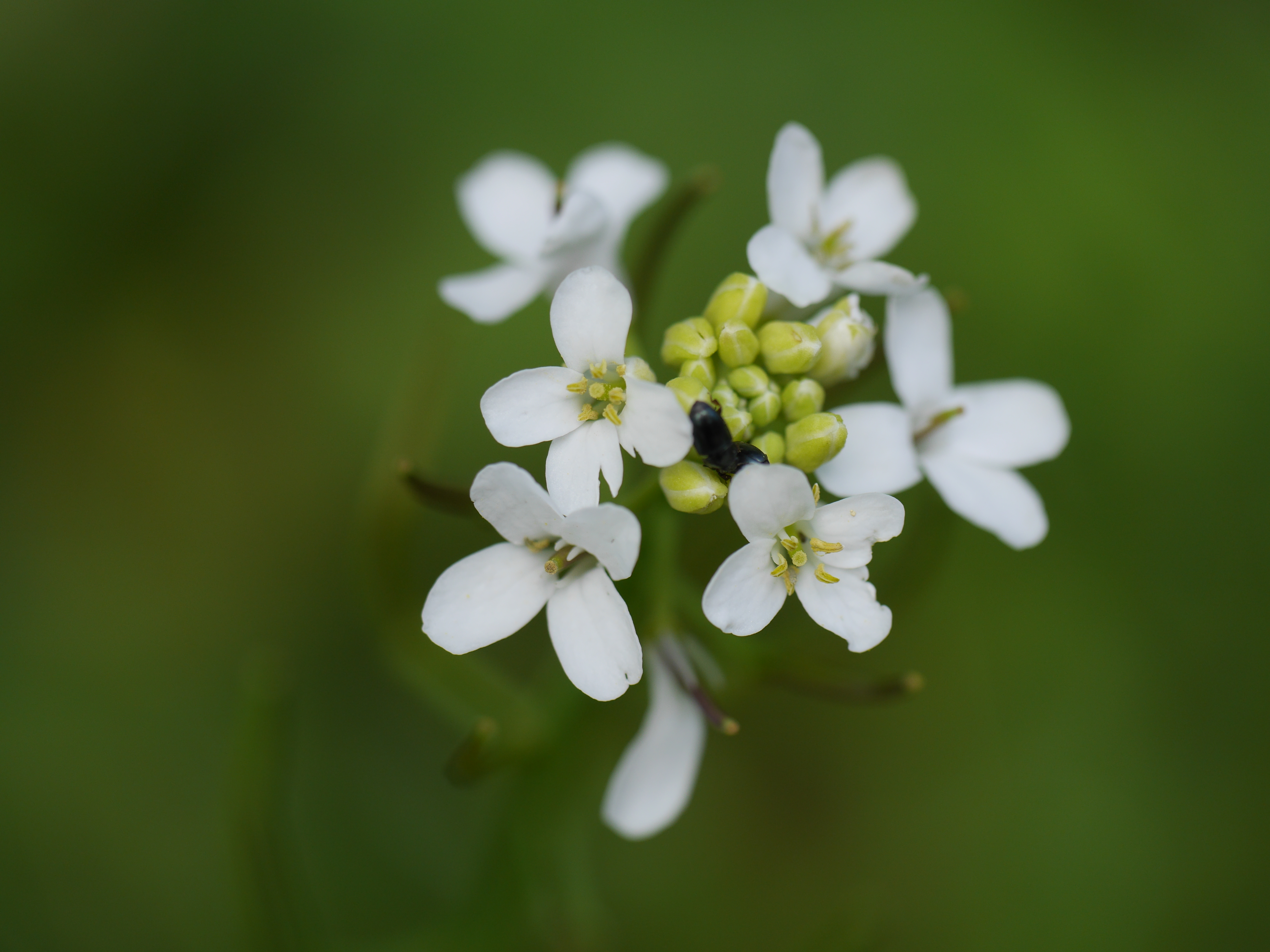
 

A close-up photograph of an Arabidopsis plant shows tiny green buds and small white flowers with four petals
For its study, Hsu’s team will use Arabidopsis plants, like the one shown here.

To do that, Hsu’s team is using next-generation sequencing tools and computational methods that are relatively new to the field. As a postdoc, she belonged to a lab that was among the first to use these methods in plant science.


“There were a lot of challenges then,” said Hsu. “But now we’re really good at doing this.”


Hsu’s NSF project will start by examining that second step in Arabidopsis plants, a popular plant model that belongs to the mustard family, which includes kale, cabbage and broccoli. But her team also wants to understand how its findings translate to a broader range of crops, in potentially a broader range of settings outside of drought.


Plants not only produce abscisic acid hormone during drought, but also in response to other stressors that limit their access to water, such as high soil salinity and extreme temperatures.


“All of these are tied to water availability. That’s why I really want to focus on this hormone, because it controls a lot of stress tolerance,” Hsu said. “I chose it because I want to do something important for agriculture.”


MEDIA CONTACTS

Polly Hsu, Caroline Brooks
Agricultural Sciences and FarmingClimate and EnvironmentNatural SciencesEngineering, Science and TechnologyNatural Sciences

Latest News

MSUToday Weekly Update

The MSUToday Weekly Update email showcases how Spartans are making a difference through academic excellence, research impact and community outreach. Get inspired by these stories of innovation, collaboration and determination. Plus, enjoy photos and videos of campus and more MSU content to help keep you connected to the Spartan community.

Sign UpUpdate My Information

Connect With Us

Visit our Facebook pageVisit our page on XVisit our Instagram pageVisit our LinkedIn pageVisit our YouTube pageVisit our TikTok page

Health and Safety

  • MSU Police and Public Safety
  • Olin Health Center
  • Counseling & Psychiatric Services (CAPS)
  • University Health and Wellbeing
  • MSU Health Care
  • Civil Rights and Title IX
  • Our Commitment
  • Center for Survivors
  • Security & Fire Safety Report
  • University Policy on Relationship Violence and Sexual Misconduct
  • Notice of Non-Discrimination, Anti-Harassment and Non-Retaliation
  • Health Care Non-Discrimination Notice

Support Services

  • Disability Resources
  • Supportive Services
  • Learning Resources

Working at MSU

  • Human Resources
  • EBS Login
  • Job Postings
  • Employee Assistance Program

Reports

  • CARES Act Funding
  • Student Achievement and Outcomes

Contact us

517-355-1855

Address

Michigan State University 426 Auditorium Road East Lansing, MI 48824

Follow Us

  • Visit our Facebook page
  • Visit our page on X
  • Visit our Instagram page
  • Visit our TikTok page
  • Visit our LinkedIn page
  • Visit our YouTube page

If you're having accessibility issues, please let us know.

Know More: Campus Safety Information and ResourcesTransparency Reporting: Budget & Salary/Compensation
  • Contact Information|
  • Site Map|
  • Privacy Statement|
  • Site Accessibility|
  • Call MSU: (517) 355-1855|
  • Visit: msu.edu|
  • Notice of Nondiscrimination|

SPARTANS WILL|© Michigan State University|