Jump to HeaderJump to Main ContentJump to Footer
Michigan State University
MSUTODAY
  • Browse Stories By

    Topics

    Explore stories by subject area

    • Arts and Culture
    • Business and Economy
    • Climate and Environment
    • Education and Learning
    • Engineering, Science and Technology
    • Government and Society
    • Health and Medicine
    • Media and Communications
    • MSU Leadership and Impact
    • Sports and Recreation
    • Student and Campus Experience
    View All Stories

    Collections

    Curated story series

    • Turfgrass
    • Ask the Expert
    • Big Ideas
    • Climate solutions
    • Water at MSU
    • Mobility
    • Spartan Perspectives
    • Student views
    • Graduate voices
    • Faculty voices
    View All Collections

    Featured

    Editor's picks

    • 9 reasons to love being a Spartan

      Aug. 28, 2026

      9 reasons to love being a Spartan

    • NIH awards multi-university team over $4M to improve women’s health

      Sept. 15, 2026

      NIH awards multi-university team over $4M to improve women’s health

MSUTODAY
  • Browse Stories By

< Browse Stories By

Topics

Explore stories by subject area

  • Arts and Culture
  • Business and Economy
  • Climate and Environment
  • Education and Learning
  • Engineering, Science and Technology
  • Government and Society
  • Health and Medicine
  • Media and Communications
  • MSU Leadership and Impact
  • Sports and Recreation
  • Student and Campus Experience
  • View All Stories

Collections

Curated story series

  • Turfgrass
  • Ask the Expert
  • Big Ideas
  • Climate solutions
  • Water at MSU
  • Mobility
  • Spartan Perspectives
  • Student views
  • Graduate voices
  • Faculty voices
  • View All Collections

Featured

Editor's picks

  • 9 reasons to love being a Spartan

    Aug. 28, 2026

    9 reasons to love being a Spartan

  • NIH awards multi-university team over $4M to improve women’s health

    Sept. 15, 2026

    NIH awards multi-university team over $4M to improve women’s health

  • For Media
  • Experts
  • Releases and Statements
  • Sign Up
  • Update Information

Resources

  • A to Z Index
  • Find People
  • Maps
  • Email
  • Student Information System (SIS)
  • D2L
  • Libraries
  • Tech Support
  • MSU Misconduct Hotline
  • Social Media Directory
  • Events Calendar
  • For Media
Michigan State University
MSUToday
  • For Media
  • Experts
  • Releases and Statements
  • Sign Up
  • Update Information
Natural Sciences

Jan. 14, 2021

Livestock workers face high MRSA risk

MSU researchers reveal surprisingly high risk levels, share precautions that work against MRSA — and COVID-19

By: Matt Davenport

For Michigan State University’s Felicia Wu, the surprise isn’t that people who work with livestock are at higher risk of picking up antibiotic-resistant bacteria, but instead how much higher their risk levels are.


“This is a bit of a wakeup call,” said Wu, John. A Hannah Distinguished Professor in the Departments of Food Science and Human Nutrition and Agricultural, Food and Resource Economics. “I don’t think there was much awareness that swine workers are at such high risk, for example. Or that large animal vets are also at extremely high risk.”


Compared with individuals who don’t work with animals, those working on swine farms are more than 15 times more likely to harbor a particular strain of a bacterium known as methicillin-resistant Staphylococcus aureus, or MRSA, acquired from livestock. For cattle workers, that number is nearly 12. For livestock veterinarians, it approaches eight.
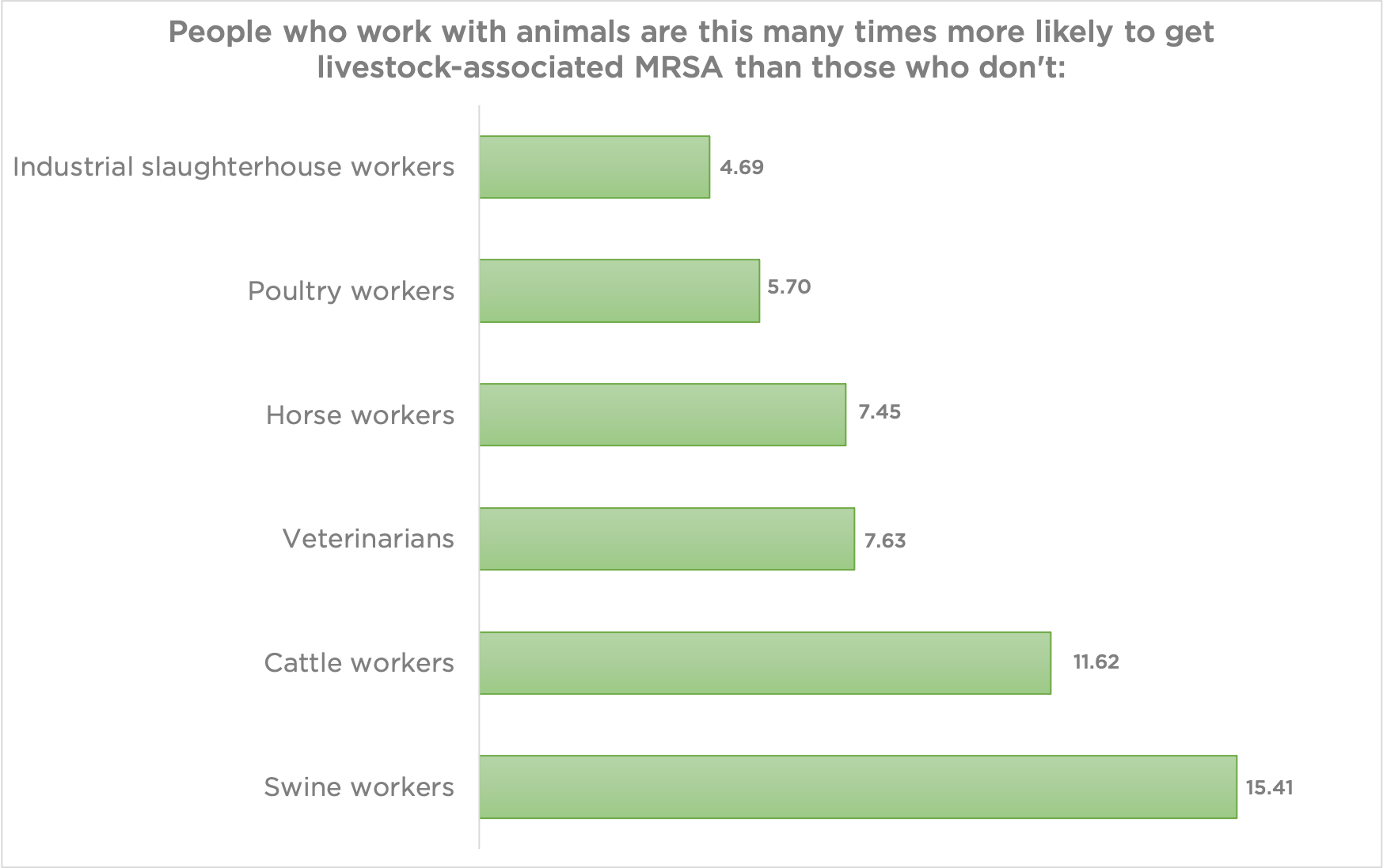
 

A bar graph shows the relative risk for livestock workers relative to those who don't work with animals. The risk is 4.69 times higher for industrial slaughterhouse workers; 5.70 for poultry workers; 7.45 for horse workers; 7.65 for veterinarians; 11.62 for cattle workers and 15.41 for swine workers.
The average livestock worker was more than five times more likely to encounter livestock-associated MRSA than someone who doesn’t work with animals, according to new research.

 Wu and Chen Chen, a research assistant professor in the Department of Food Science and Human Nutrition, published their findings, along with the risk factors for other related professions, in the journal Occupational & Environmental Medicine. Their paper highlights these elevated risks, what farmers can do to protect themselves and what we understand about the public health burden posed by livestock-associated MRSA.


“Livestock-associated MRSA is a strain of MRSA that is especially infectious among animals. Now it has evolved to infect humans as well,” said Wu, who was recently named a fellow of the Society for Risk Analysis. “Bacteria have shown an amazing ability to jump across species to colonize and cause infections.”


Livestock-associated MRSA is a zoonotic disease, a disease that can transmit between animals and humans. Such diseases can have devastating consequences for human health. The novel coronavirus pandemic, for example, was caused by a virus that likely originated in bats.


Although the novel coronavirus and livestock-associated MRSA work and spread in different ways, they both are a reminder that when people understand the risks posed by such diseases, they do have some power to minimize them. For example, good hygienic practices and policies supported by science can make meaningful differences, especially in the case of livestock-acquired MRSA, Wu said.


“The final message is that we need to protect our health and the health of our animals,” she said. “We don’t have control over bats, but we do have some level of control over how we raise and handle our poultry, cattle and swine.”
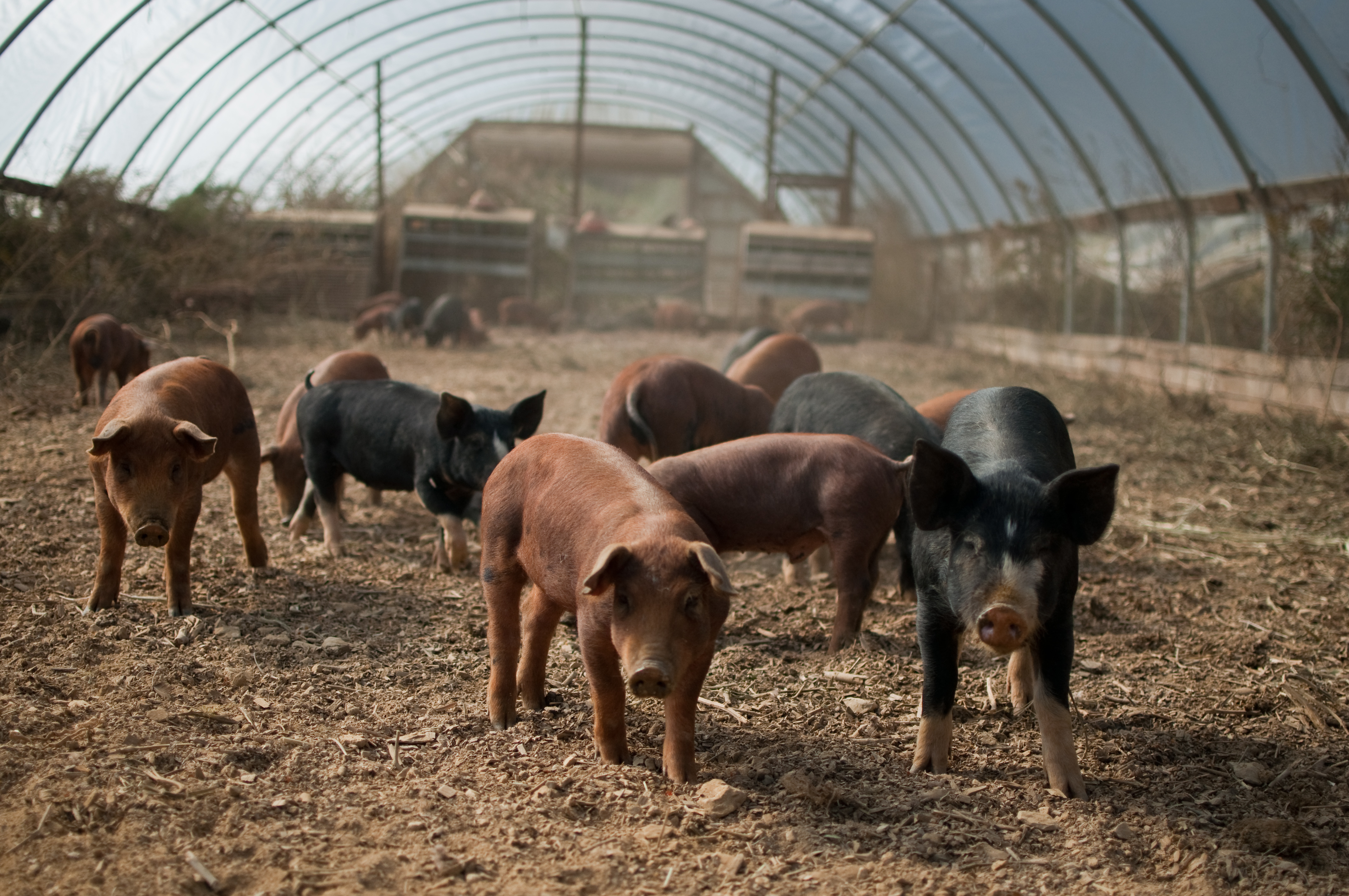
 

A group of brown and black pigs stand on dusty soil in an arched enclosure.
Farmers who work with swine are 15 times more likely to acquire livestock-associated MRSA than people who don’t work with animals. Credit: Brian Johnson and Dane Kantner (licensed under CC BY-SA 2.0)

Although it’s possible to carry MRSA without it becoming a problem, the bacteria can cause serious infections when given the chance. Livestock-associated MRSA was first documented in the early 2000s and appears to be less dangerous to humans than MRSA that evolved in health care settings, where it built up defenses against a range of antibiotics.


The livestock-associated strain also appears to be less prevalent than community-associated MRSA, caused by bacteria lurking in gyms, schools and workplaces, which are typically more treatable than their counterparts found in hospitals and doctors’ offices.


For these reasons, livestock-associated MRSA doesn’t garner as much attention as other strains, but there’s still much to learn about the bacteria from livestock and their impact on human health, Wu said. When she first came to MSU in 2013, she became interested in how the growing problem of antibiotic resistance was being influenced by bacteria that jumped to humans from livestock.


“We don’t understand how much of that problem we have in human populations,” said Wu. “This particular paper is trying understand one aspect of that.”


To calculate the risk levels of acquiring livestock-associated MRSA, Wu and Chen combed through 15 years of published literature, extracting data about the likelihood of people acquiring the bacteria based on their livestock-related profession. The risk was elevated for every occupation they studied: vets, slaughterhouse employees and people who worked with swine, horses, cattle and poultry.


But there is also positive news to share along with the unsettling risk numbers. In 2017, the U.S. Food and Drug Administration introduced rules and monitoring programs to curb the use of antibiotics. Farmers can still use antibiotics to treat and prevent disease, but the agency forbid the use of antibiotics to spur animal growth. This has reduced the pressure on bacteria in agriculture settings to evolve resistance to antibiotics.


There are also a number of straightforward precautions individuals can take to help protect themselves and their animals. MRSA lives on soft tissue — on people’s skin and in their noses — and can do so without causing harm when that tissue is intact. Reducing exposure of broken skin to the environment by keeping cuts and open wounds clean and covered can help reduce the risk of infection. Other simple steps, like regular hand-washing along with wearing gloves and protective clothing, can also stem the spread of livestock-acquired MRSA.


“Once the bacteria get a hold in an environment, they are really, really hard to get rid of,” said Wu. “Reducing the risk of antibiotic-resistant infections is one of the main goals that farmers have”


(Note for media: In online coverage, please include a link to the original paper published online in October 2020: https://doi.org/10.1136/oemed-2020-106418)


MEDIA CONTACTS

Felicia Wu
Natural SciencesEngineering, Science and TechnologyClimate and EnvironmentNutritionHealth and Medicine

Latest News

MSUToday Weekly Update

The MSUToday Weekly Update email showcases how Spartans are making a difference through academic excellence, research impact and community outreach. Get inspired by these stories of innovation, collaboration and determination. Plus, enjoy photos and videos of campus and more MSU content to help keep you connected to the Spartan community.

Sign UpUpdate My Information

Connect With Us

Visit our Facebook pageVisit our page on XVisit our Instagram pageVisit our LinkedIn pageVisit our YouTube pageVisit our TikTok page

Health and Safety

  • MSU Police and Public Safety
  • Olin Health Center
  • Counseling & Psychiatric Services (CAPS)
  • University Health and Wellbeing
  • MSU Health Care
  • Civil Rights and Title IX
  • Our Commitment
  • Center for Survivors
  • Security & Fire Safety Report
  • University Policy on Relationship Violence and Sexual Misconduct
  • Notice of Non-Discrimination, Anti-Harassment and Non-Retaliation
  • Health Care Non-Discrimination Notice

Support Services

  • Disability Resources
  • Supportive Services
  • Learning Resources

Working at MSU

  • Human Resources
  • EBS Login
  • Job Postings
  • Employee Assistance Program

Reports

  • CARES Act Funding
  • Student Achievement and Outcomes

Contact us

517-355-1855

Address

Michigan State University 426 Auditorium Road East Lansing, MI 48824

Follow Us

  • Visit our Facebook page
  • Visit our page on X
  • Visit our Instagram page
  • Visit our TikTok page
  • Visit our LinkedIn page
  • Visit our YouTube page

If you're having accessibility issues, please let us know.

Know More: Campus Safety Information and ResourcesTransparency Reporting: Budget & Salary/Compensation
  • Contact Information|
  • Site Map|
  • Privacy Statement|
  • Site Accessibility|
  • Call MSU: (517) 355-1855|
  • Visit: msu.edu|
  • Notice of Nondiscrimination|

SPARTANS WILL|© Michigan State University|