Jump to HeaderJump to Main ContentJump to Footer
Michigan State University
MSUTODAY
  • Browse Stories By

    Topics

    Explore stories by subject area

    • Arts and Culture
    • Business and Economy
    • Climate and Environment
    • Education and Learning
    • Engineering, Science and Technology
    • Government and Society
    • Health and Medicine
    • Media and Communications
    • MSU Leadership and Impact
    • Sports and Recreation
    • Student and Campus Experience
    View All Stories

    Collections

    Curated story series

    • Turfgrass
    • Ask the Expert
    • Big Ideas
    • Climate solutions
    • Water at MSU
    • Mobility
    • Spartan Perspectives
    • Student views
    • Graduate voices
    • Faculty voices
    View All Collections

    Featured

    Editor's picks

    • 9 reasons to love being a Spartan

      Aug. 28, 2026

      9 reasons to love being a Spartan

    • NIH awards multi-university team over $4M to improve women’s health

      Sept. 15, 2026

      NIH awards multi-university team over $4M to improve women’s health

MSUTODAY
  • Browse Stories By

< Browse Stories By

Topics

Explore stories by subject area

  • Arts and Culture
  • Business and Economy
  • Climate and Environment
  • Education and Learning
  • Engineering, Science and Technology
  • Government and Society
  • Health and Medicine
  • Media and Communications
  • MSU Leadership and Impact
  • Sports and Recreation
  • Student and Campus Experience
  • View All Stories

Collections

Curated story series

  • Turfgrass
  • Ask the Expert
  • Big Ideas
  • Climate solutions
  • Water at MSU
  • Mobility
  • Spartan Perspectives
  • Student views
  • Graduate voices
  • Faculty voices
  • View All Collections

Featured

Editor's picks

  • 9 reasons to love being a Spartan

    Aug. 28, 2026

    9 reasons to love being a Spartan

  • NIH awards multi-university team over $4M to improve women’s health

    Sept. 15, 2026

    NIH awards multi-university team over $4M to improve women’s health

  • For Media
  • Experts
  • Releases and Statements
  • Sign Up
  • Update Information

Resources

  • A to Z Index
  • Find People
  • Maps
  • Email
  • Student Information System (SIS)
  • D2L
  • Libraries
  • Tech Support
  • MSU Misconduct Hotline
  • Social Media Directory
  • Events Calendar
  • For Media
Michigan State University
MSUToday
  • For Media
  • Experts
  • Releases and Statements
  • Sign Up
  • Update Information
Government and Society

Jan. 20, 2021

Faculty voice: Why Harris won

By: LaShawn Harris, Liz Schondelmayer
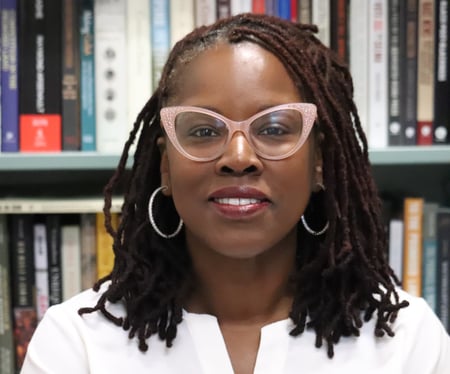
LaShawn Harris

LaShawn Harris is an associate professor in the Department of History within the College of Social Science. Her research focuses on the experiences of African Americans, particularly Black women and girls. The following content is repurposed from the College of Social Science website.

As the first woman, Black and South Asian American, and Historically Black College and University alum, Kamala Harris’ historic election represents what is possible in American politics. Her win opens the door for those who have been historically and systematically excluded from the political process; for those whose voices have been silenced by race, gender and class discrimination; and for Black and Brown people that have been historically read as unworthy of citizenship and undeserving of taking part in the political process.  

Harris’ rich and diverse background and experiences matter because of the potential opportunity to situate working-class people at the center of policymaking. And as a Black and Asian woman, Harris’ historic win matters because it may signal a racially and ethnically diverse Biden-Harris administration.

American voters participated in the 2020 presidential election like their lives depended on it. Record number voter turnout was, in part, shaped by the current socioeconomic and political movement. National leaders’ blatant challenges to American democracy and its institutions, a public war against the American press, the resurgence of domestic terrorist groups, deliberate attempts to disenfranchise millions of citizens, uncertain economic futures and a global pandemic drove millions to cast early votes and wait in long lines for hours. The highest voter turnout in more than a century was a reflection of the citizenry’s hope for decency, unity, equality and political transformation. 

For many, the 2020 election will be symbolic of many defining and unprecedented moments. This year, we saw the result of a deeply divided electorate that longed for political, economic and social reform and transformation, and a presidential race that highlighted a fragile and fractured democracy.

However, we also saw the historic win of the first woman, Black and Asian American to become Vice President of the United States, which disrupted longstanding race and gender barriers in American politics. This election was so important to so many people, citizens were even willing to stage mass demonstrations in the middle of a global pandemic.

Participation in electoral politics, either as voters or political candidates, has historically proven difficult for Black Americans. In more recent years, lawmakers have implemented new election laws, including restrictive voter ID requirements and proof of citizenship, redistricting, poll closures and voter purges. New voting measures are not meant to expand the electorate but rather to suppress minority votes. And, to borrow from historian Carol Anderson, voter suppression is destroying our democracy. 

Across the nation, local grassroots activists, leaders and politicians are doing the hard and necessary work of ensuring an inclusive electoral process and government for all citizens. Similar to the political initiatives of 1950s and 1960s civil and human rights leaders, such as Ella Baker and Fannie Lou Hamer, contemporary activists and elected officials are actively mobilizing voters and bringing greater public awareness about voter suppression, public election reform and voter education programs.

Many are also employing legal action, public education and grassroots organizing to create political change throughout the nation. For example, former Georgia representative and 2018 gubernatorial candidate Stacey Abrams and other community leaders founded a national voting rights organization called Fair Fight Action, in 2018. The group fights against voter suppression in Georgia and beyond, as well as trains grassroots activists to lobby for new local and national election laws. Beyond grassroots activism, it’s also important that citizens turn out in full capacity during elections, and check their secretary of state’s web pages and their voter registration. These strategies work toward voter protection and ballot access for millions of citizens. 

MEDIA CONTACTS

Liz Schondelmayer
Government and SocietyPoliticsSocial Sciences

Collection

more content from this collection

Faculty Voices

Latest News

MSUToday Weekly Update

The MSUToday Weekly Update email showcases how Spartans are making a difference through academic excellence, research impact and community outreach. Get inspired by these stories of innovation, collaboration and determination. Plus, enjoy photos and videos of campus and more MSU content to help keep you connected to the Spartan community.

Sign UpUpdate My Information

Connect With Us

Visit our Facebook pageVisit our page on XVisit our Instagram pageVisit our LinkedIn pageVisit our YouTube pageVisit our TikTok page

Health and Safety

  • MSU Police and Public Safety
  • Olin Health Center
  • Counseling & Psychiatric Services (CAPS)
  • University Health and Wellbeing
  • MSU Health Care
  • Civil Rights and Title IX
  • Our Commitment
  • Center for Survivors
  • Security & Fire Safety Report
  • University Policy on Relationship Violence and Sexual Misconduct
  • Notice of Non-Discrimination, Anti-Harassment and Non-Retaliation
  • Health Care Non-Discrimination Notice

Support Services

  • Disability Resources
  • Supportive Services
  • Learning Resources

Working at MSU

  • Human Resources
  • EBS Login
  • Job Postings
  • Employee Assistance Program

Reports

  • CARES Act Funding
  • Student Achievement and Outcomes

Contact us

517-355-1855

Address

Michigan State University 426 Auditorium Road East Lansing, MI 48824

Follow Us

  • Visit our Facebook page
  • Visit our page on X
  • Visit our Instagram page
  • Visit our TikTok page
  • Visit our LinkedIn page
  • Visit our YouTube page

If you're having accessibility issues, please let us know.

Know More: Campus Safety Information and ResourcesTransparency Reporting: Budget & Salary/Compensation
  • Contact Information|
  • Site Map|
  • Privacy Statement|
  • Site Accessibility|
  • Call MSU: (517) 355-1855|
  • Visit: msu.edu|
  • Notice of Nondiscrimination|

SPARTANS WILL|© Michigan State University|
