Jump to HeaderJump to Main ContentJump to Footer
Michigan State University
  • Browse Stories By

    Topics

    Explore stories by subject area

    • Arts and Culture
    • Business and Economy
    • Climate and Environment
    • Education and Learning
    • Engineering, Science and Technology
    • Government and Society
    • Health and Medicine
    • Media and Communications
    • MSU Leadership and Impact
    • Sports and Recreation
    • Student and Campus Experience
    View All Stories

    Collections

    Curated story series

    • Turfgrass
    • Ask the Expert
    • Big Ideas
    • Climate solutions
    • Water at MSU
    • Mobility
    • Spartan Perspectives
    • Student views
    • Graduate voices
    • Faculty voices
    View All Collections

    Featured

    Editor's picks

    • The Spartans behind your favorite Michigan golf courses

      July 22, 2026

      The Spartans behind your favorite Michigan golf courses

    • MSU in the 1990s: 10 Spartan milestones

      July 14, 2026

      MSU in the 1990s: 10 Spartan milestones

MSUTODAY
  • Browse Stories By

< Browse Stories By

Topics

Explore stories by subject area

  • Arts and Culture
  • Business and Economy
  • Climate and Environment
  • Education and Learning
  • Engineering, Science and Technology
  • Government and Society
  • Health and Medicine
  • Media and Communications
  • MSU Leadership and Impact
  • Sports and Recreation
  • Student and Campus Experience
  • View All Stories

Collections

Curated story series

  • Turfgrass
  • Ask the Expert
  • Big Ideas
  • Climate solutions
  • Water at MSU
  • Mobility
  • Spartan Perspectives
  • Student views
  • Graduate voices
  • Faculty voices
  • View All Collections

Featured

Editor's picks

  • The Spartans behind your favorite Michigan golf courses

    July 22, 2026

    The Spartans behind your favorite Michigan golf courses

  • MSU in the 1990s: 10 Spartan milestones

    July 14, 2026

    MSU in the 1990s: 10 Spartan milestones

  • For Media
  • Experts
  • Releases and Statements
  • Sign Up
  • Update Information

Resources

  • A to Z Index
  • Find People
  • Maps
  • Email
  • Student Information System (SIS)
  • D2L
  • Libraries
  • Tech Support
  • MSU Misconduct Hotline
  • Social Media Directory
  • Events Calendar
  • For Media
Michigan State University
MSUToday
  • For Media
  • Experts
  • Releases and Statements
  • Sign Up
  • Update Information
MSUTODAY
Education and Learning

Dec. 16, 2020

Defying gravity: A new spin on intro physics for life sciences

A new curriculum developed and tested at MSU puts the focus on the physics that life scientists need

By: Matt Davenport

The basic physics that a budding biologist needs to know is different from what’s useful to an astronomy student, so a new Michigan State University introductory physics curriculum is specifically tailored for life sciences majors. 


MSU Professor Lisa Lapidus has been developing and piloting a new yearlong curriculum that bucks traditional physics pedagogy. Instead of following convention, the new program provides students who are pursuing careers in the life sciences — about half of the students who take introductory physics — with physics content tailored to their needs.
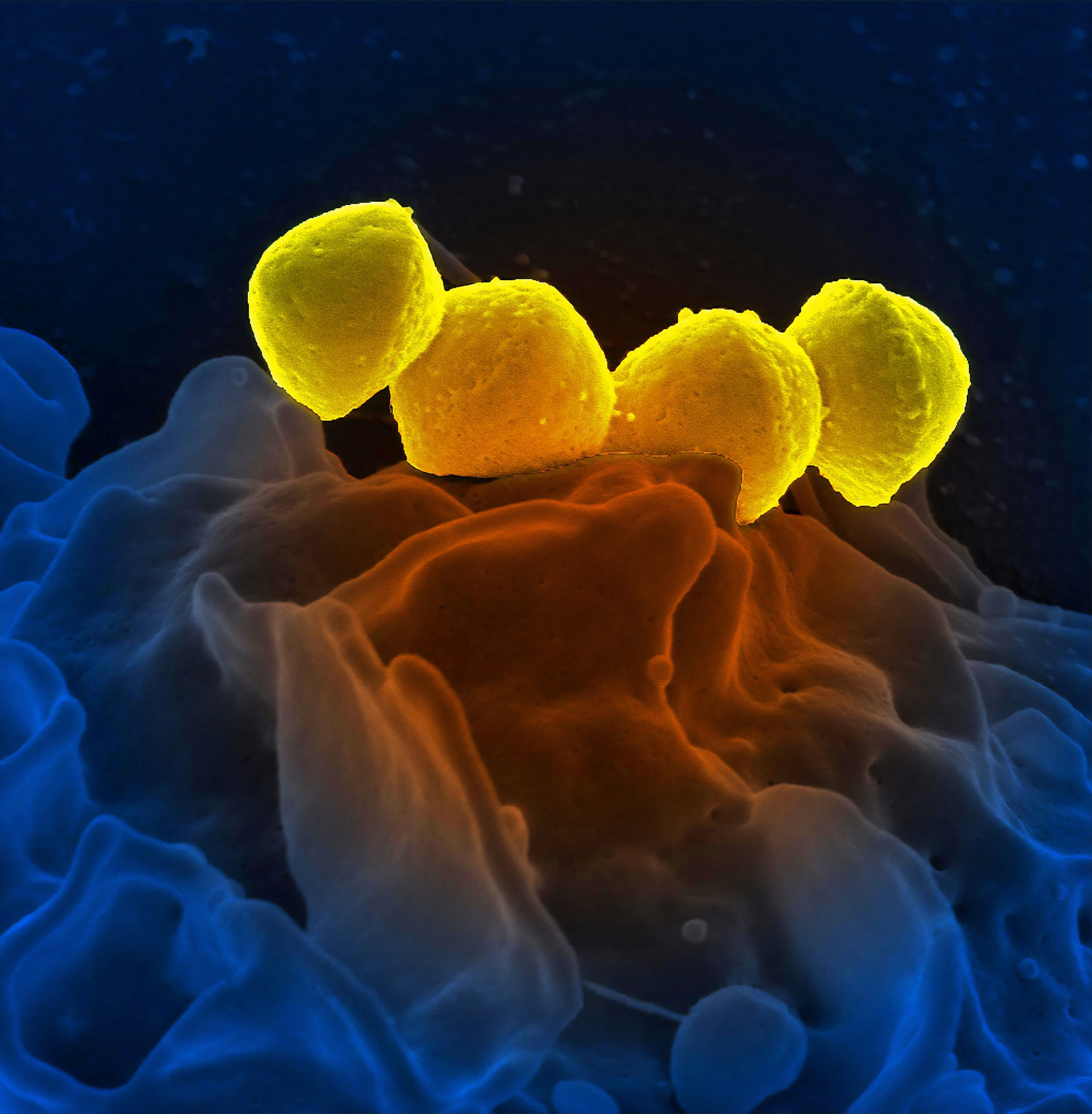
 

A microscope image from the CDC shows four yellow-colored orbs, which are bacteria, resting on the wavy surface of a white blood cell.
MSU’s new curriculum focuses on the physics most relevant to living things, like these four microscopic bacteria, shown yellow in this colorized micrograph. Credit: CDC on Unsplash

“It was pretty obvious to me that the current choices about what’s being taught in physics don’t reflect the reality of the biology that students in the life sciences are studying,” said Lapidus, a professor in the Departments of Physics and Astronomy as well as Biochemistry and Molecular Biology. “We need to teach them what would actually be useful to them.”


Lapidus detailed the curriculum and results from MSU’s four-year pilot program in the journal The Biophysicist, published online Nov. 24. About 1,000 undergraduates participated in the successful pilot program that began in 2016 and will be scaled up to accommodate at least that number of life science students every semester by 2022.


For the last several decades, conventional intro physics courses haven’t generally differentiated between majors. Students would learn the same material whether they wanted to be astronomers or anesthesiologists: the properties of gravity, the path a baseball takes absent air resistance, or how much energy is stored in a spinning flywheel.


“The more I taught intro physics courses, the more I realized that none of this was ever going to be used,” Lapidus said. “Is it important that a biochemist understands how a flywheel works?”


Lapidus’s courses, dubbed Physics at the Molecular and Cellular Level, shed many time-honored but ultimately less serviceable concepts in favor of more relevant topics.
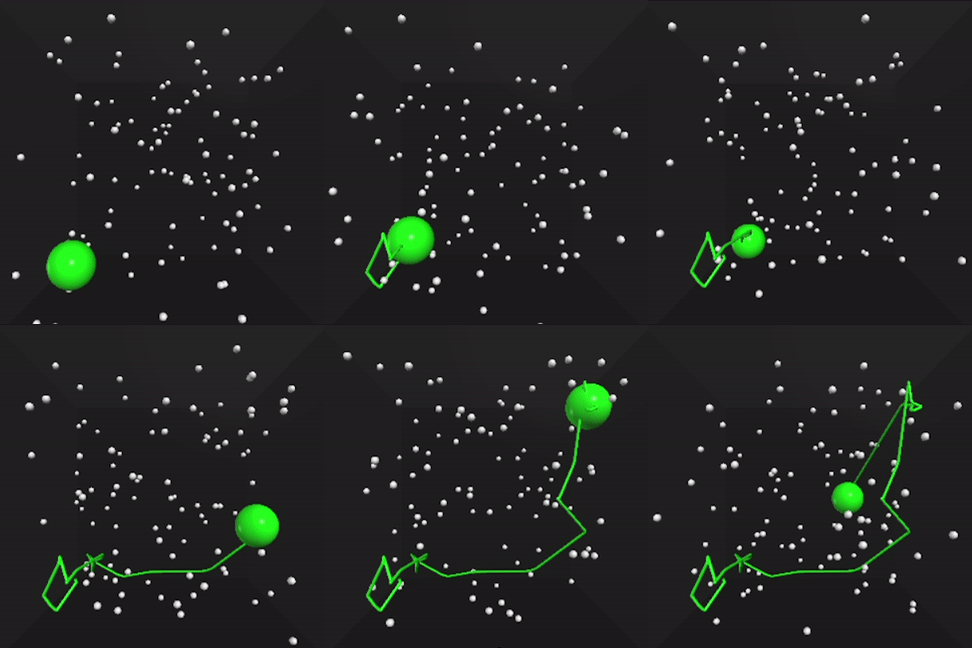
 

This computer simulation illustrates diffusion, a fundamental motion in biology. Here, a large green sphere represents a biomolecule diffusing, going through what's a called a random walk as it bounces smaller white spheres representing water molecules.
Another feature of the curriculum is that students are exposed to computer coding and simulations to help understand complex biological problems. This simulation illustrates diffusion, a core concept that accounts for how, say, a biomolecule (shown in green) moves through water (the smaller white spheres). Credit: Lisa Lapidus

For example, students aren’t expected to grapple with how gravity governs the planets’ orbits or to fixate on frictionless baseballs soaring without air resistance. Lessons such as these are simplified — if not omitted — to focus on understanding the complex motion of cells and biomolecules as they collide and schlep through viscous water.


“It turns things on their head a little bit, but I like it,” said Larry Browning, a physics professor at South Dakota State University who is implementing the curriculum there.


“A lot of the physics classes we offer are very general information. They’re not specific enough for what life science students need,” he said. “In the previous way, biology-focused students were almost on their own to find applications for the physics. Now we give them tools to help them along this journey.”


Lapidus is a veteran teacher of introductory physics, which has helped her identify areas where the curriculum could be updated. She also brings her personal perspective as a classically trained physicist who has been tackling biological problems with her research.

 

MSU Professor Lisa Lapidus
MSU Professor Lisa Lapidus. Credit: Harley J. Seeley

“My physics background explained a lot of what I needed to know, it just wasn’t in the right context,” she said.


She credits a former adviser with helping provide that context. Now, she’s paying that forward with the support of her departments and colleagues, especially Matthew Comstock, an associate professor in the MSU Department of Physics and Astronomy.


She also didn’t have to start from scratch. Over the past several years, instructors at other universities have been innovating approaches and resources to help intro physics resonate more with life science students. Lapidus has incorporated and built on those to develop a complete curriculum.


The pandemic has altered the immediate plans for this curriculum, but Lapidus has been able to adapt it for remote learning while keeping students engaged. And she’s still working to optimize this class for the future, when classes can safely resume in person and when both faculty and students will be working in MSU’s state-of-the-art STEM Teaching and Learning Facility. STEM stands for science, technology, engineering and math.


“We have online options,” Lapidus said. “But the student who’s reading this in January ought to know we are planning to teach in the new STEM building.”


MEDIA CONTACTS

Lisa Lapidus
Education and LearningEducation and LearningNuclear ScienceEngineering, Science and Technology

Latest News

MSUToday Weekly Update

The MSUToday Weekly Update email showcases how Spartans are making a difference through academic excellence, research impact and community outreach. Get inspired by these stories of innovation, collaboration and determination. Plus, enjoy photos and videos of campus and more MSU content to help keep you connected to the Spartan community.

Sign UpUpdate My Information

Connect With Us

Visit our Facebook pageVisit our page on XVisit our Instagram pageVisit our LinkedIn pageVisit our YouTube pageVisit our TikTok page

Health and Safety

  • MSU Police and Public Safety
  • Olin Health Center
  • Counseling & Psychiatric Services (CAPS)
  • University Health and Wellbeing
  • MSU Health Care
  • Civil Rights and Title IX
  • Our Commitment
  • Center for Survivors
  • Security & Fire Safety Report
  • University Policy on Relationship Violence and Sexual Misconduct
  • Notice of Non-Discrimination, Anti-Harassment and Non-Retaliation
  • Health Care Non-Discrimination Notice

Support Services

  • Disability Resources
  • Supportive Services
  • Learning Resources

Working at MSU

  • Human Resources
  • EBS Login
  • Job Postings
  • Employee Assistance Program

Reports

  • CARES Act Funding
  • Student Achievement and Outcomes

Contact us

517-355-1855

Address

Michigan State University 426 Auditorium Road East Lansing, MI 48824

Follow Us

  • Visit our Facebook page
  • Visit our page on X
  • Visit our Instagram page
  • Visit our TikTok page
  • Visit our LinkedIn page
  • Visit our YouTube page

If you're having accessibility issues, please let us know.

Know More: Campus Safety Information and ResourcesTransparency Reporting: Budget & Salary/Compensation
  • Contact Information|
  • Site Map|
  • Privacy Statement|
  • Site Accessibility|
  • Call MSU: (517) 355-1855|
  • Visit: msu.edu|
  • Notice of Nondiscrimination|

SPARTANS WILL|© Michigan State University|