Jump to HeaderJump to Main ContentJump to Footer
Michigan State University
  • Browse Stories By

    Topics

    Explore stories by subject area

    • Arts and Culture
    • Business and Economy
    • Climate and Environment
    • Education and Learning
    • Engineering, Science and Technology
    • Government and Society
    • Health and Medicine
    • Media and Communications
    • MSU Leadership and Impact
    • Sports and Recreation
    • Student and Campus Experience
    View All Stories

    Collections

    Curated story series

    • Turfgrass
    • Ask the Expert
    • Big Ideas
    • Climate solutions
    • Water at MSU
    • Mobility
    • Spartan Perspectives
    • Student views
    • Graduate voices
    • Faculty voices
    View All Collections

    Featured

    Editor's picks

    • The Spartans behind your favorite Michigan golf courses

      July 22, 2026

      The Spartans behind your favorite Michigan golf courses

    • MSU in the 1990s: 10 Spartan milestones

      July 14, 2026

      MSU in the 1990s: 10 Spartan milestones

MSUTODAY
  • Browse Stories By

< Browse Stories By

Topics

Explore stories by subject area

  • Arts and Culture
  • Business and Economy
  • Climate and Environment
  • Education and Learning
  • Engineering, Science and Technology
  • Government and Society
  • Health and Medicine
  • Media and Communications
  • MSU Leadership and Impact
  • Sports and Recreation
  • Student and Campus Experience
  • View All Stories

Collections

Curated story series

  • Turfgrass
  • Ask the Expert
  • Big Ideas
  • Climate solutions
  • Water at MSU
  • Mobility
  • Spartan Perspectives
  • Student views
  • Graduate voices
  • Faculty voices
  • View All Collections

Featured

Editor's picks

  • The Spartans behind your favorite Michigan golf courses

    July 22, 2026

    The Spartans behind your favorite Michigan golf courses

  • MSU in the 1990s: 10 Spartan milestones

    July 14, 2026

    MSU in the 1990s: 10 Spartan milestones

  • For Media
  • Experts
  • Releases and Statements
  • Sign Up
  • Update Information

Resources

  • A to Z Index
  • Find People
  • Maps
  • Email
  • Student Information System (SIS)
  • D2L
  • Libraries
  • Tech Support
  • MSU Misconduct Hotline
  • Social Media Directory
  • Events Calendar
  • For Media
Michigan State University
MSUToday
  • For Media
  • Experts
  • Releases and Statements
  • Sign Up
  • Update Information
MSUTODAY
Engineering

Aug. 17, 2020

Michigan State scientists grow the first functioning mini human heart model

By: Kim Ward

Michigan State University researchers have created for the first time a miniature human heart model in the laboratory, complete with all primary heart cell types and a functioning structure of chambers and vascular tissue.
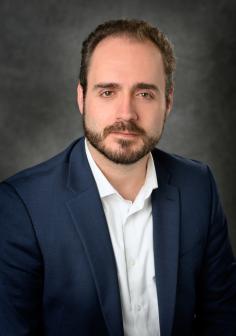
 

Aitor Aguirre, assistant professor of biomedical engineering at MSU’s Institute for Quantitative Health Science and Engineering.

“These minihearts constitute incredibly powerful models in which to study all kinds of cardiac disorders with a degree of precision unseen before,” said Aitor Aguirre, the study’s senior author and assistant professor of biomedical engineering at MSU’s Institute for Quantitative Health Science and Engineering.


This study, “Generation of Heart Organoids Modeling Early Human Cardiac Development Under Defined Conditions,” appears on the bioRxiv preprint server and was funded by grants from the American Heart Association and the National Institutes of Health. In the United States, heart disease is the No. 1 cause of death.


The human heart organoids, or hHOs for short, were created by way of a novel stem cell framework that mimics the embryonic and fetal developmental environments.


“Organoids — meaning resembling an organ — are self-assembling 3D cell constructs that recapitulate organ properties and structure to a significant extent,” said Yonatan Israeli, a graduate student in the Aguirre Lab and first author of the study.


The innovation deploys a bioengineering process that uses induced pluripotent stem cells – adult cells from a patient to trigger embryonic-like heart development in a dish – generating a functional mini heart after a few weeks. The stem cells are obtained from consenting adults and therefore free of ethical concerns.


“This process allows the stem cells to develop, basically as they would in an embryo, into the various cell types and structures present in the heart,” Aguirre said. “We give the cells the instructions and they know what they have to do when all the appropriate conditions are met.”


Because the organoids followed the natural cardiac embryonic development process, the researchers studied, in real time, the natural growth of an actual fetal human heart.


This technology allows for the creation of numerous hHOs simultaneously with relative ease, contrasting with existing tissue engineering approaches that are expensive, labor intensive and not readily scalable.


One of the primary issues facing the study of fetal heart development and congenital heart defects is access to a developing heart. Researchers have been confined to the use of mammalian models, donated fetal remains and in vitro cell research to approximate function and development.


“Now we can have the best of both worlds, a precise human model to study these diseases — a tiny human heart — without using fetal material or violating ethical principles. This constitutes a great step forward,” Aguirre said.


What’s next? For Aguirre, the process is twofold. First, the heart organoid represents an unprecedented look into the nuts and bolts of how a fetal heart develops.


“In the lab, we are currently using heart organoids to model congenital heart disease — the most common birth defect in humans affecting nearly 1% of the newborn population,” Aguirre said. “With our heart organoids, we can study the origin of congenital heart disease and find ways to stop it.”


And second, while the hHO is complex, it is far from perfect. For the team, improving the final organoid is another key avenue of future research. “The organoids are small models of the fetal heart with representative functional and structural features,” Israeli said. “They are, however, not as perfect as a human heart yet. That is something we are working toward.”


Aguirre and team are excited about the wide-ranging applicability of these miniature hearts. They enable an unprecedented ability to study many other cardiovascular-related diseases — from chemotherapy-induced cardiotoxicity to the effect of diabetes, during pregnancy, on the developing fetal heart.


Other researchers involved in this study were Aaron Wasserman, Mitchell Gabalski and Kristen Ball at MSU; and Chao Zhou, Jinyon Zhou and Guangming Ni at Washington University in St. Louis.


(Note for media: Please include a link to the original paper in online coverage: https://www.biorxiv.org/content/10.1101/2020.06.25.171611v2)


EngineeringEngineering, Science and TechnologyHealth ProfessionsHealth and MedicineDiseases, Conditions and Treatments

Latest News

MSUToday Weekly Update

The MSUToday Weekly Update email showcases how Spartans are making a difference through academic excellence, research impact and community outreach. Get inspired by these stories of innovation, collaboration and determination. Plus, enjoy photos and videos of campus and more MSU content to help keep you connected to the Spartan community.

Sign UpUpdate My Information

Connect With Us

Visit our Facebook pageVisit our page on XVisit our Instagram pageVisit our LinkedIn pageVisit our YouTube pageVisit our TikTok page

Health and Safety

  • MSU Police and Public Safety
  • Olin Health Center
  • Counseling & Psychiatric Services (CAPS)
  • University Health and Wellbeing
  • MSU Health Care
  • Civil Rights and Title IX
  • Our Commitment
  • Center for Survivors
  • Security & Fire Safety Report
  • University Policy on Relationship Violence and Sexual Misconduct
  • Notice of Non-Discrimination, Anti-Harassment and Non-Retaliation
  • Health Care Non-Discrimination Notice

Support Services

  • Disability Resources
  • Supportive Services
  • Learning Resources

Working at MSU

  • Human Resources
  • EBS Login
  • Job Postings
  • Employee Assistance Program

Reports

  • CARES Act Funding
  • Student Achievement and Outcomes

Contact us

517-355-1855

Address

Michigan State University 426 Auditorium Road East Lansing, MI 48824

Follow Us

  • Visit our Facebook page
  • Visit our page on X
  • Visit our Instagram page
  • Visit our TikTok page
  • Visit our LinkedIn page
  • Visit our YouTube page

If you're having accessibility issues, please let us know.

Know More: Campus Safety Information and ResourcesTransparency Reporting: Budget & Salary/Compensation
  • Contact Information|
  • Site Map|
  • Privacy Statement|
  • Site Accessibility|
  • Call MSU: (517) 355-1855|
  • Visit: msu.edu|
  • Notice of Nondiscrimination|

SPARTANS WILL|© Michigan State University|