August 10, 2020
Melissa Bush is a senior in the Lyman Briggs College. This piece is repurposed content from MSU Undergraduate Research. Read the original here.
I was introduced to the REPID program in Fall 2018 by an email sent from advisers at Lyman Briggs College, where I am pursuing my degree in Human Biology.
REPID stands for Research Education Program to Increase Diversity in Health Researchers, and is a research opportunity for undergraduate students that takes place during the summer months at MSU. Specifically, the REPID program works to provide funding and training for underrepresented persons interested in conducting research in the fields of cardiovascular, pulmonary and hematologic disciplines.
The program works to match you with faculty who study topics you are interested in. It was developed and directed by Dr. Elahe Crockett, one of the most dedicated and accomplished faculty I’ve had the privilege of working with as an undergrad. She cares about her students and goes above and beyond to make sure we get the most out of our time spent in the lab. Learning with her made me very grateful for people like her who are committed to the success of underrepresented students in research.
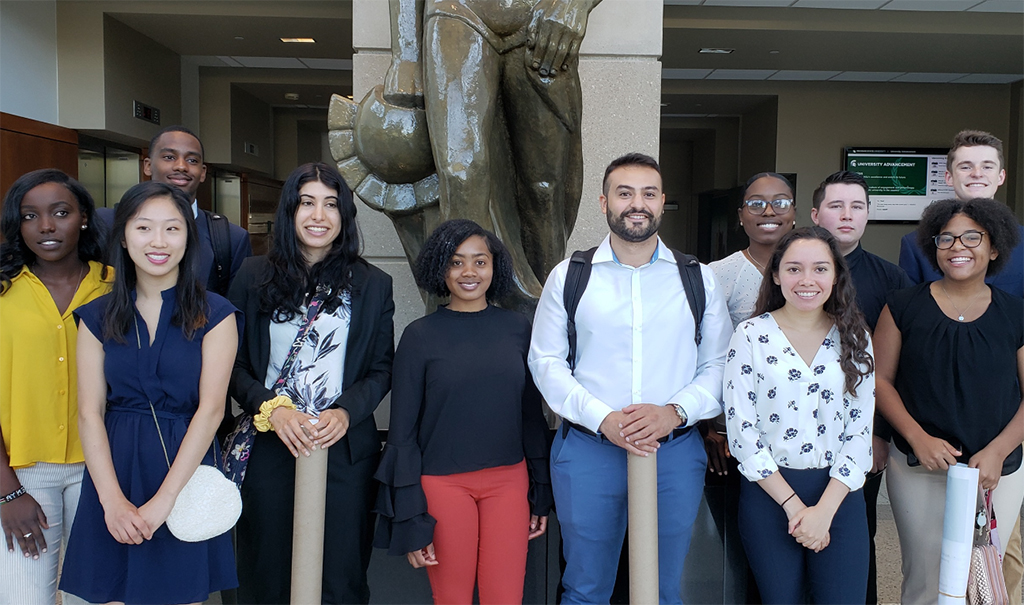
Looking back at my experience with this program, it’s crazy to think that just a couple of lines in an email would end up changing the trajectory of my senior year at MSU so greatly. Personally, I was interested in applying for the REPID program because I wanted to know what it was like to do “bench work” research. I was specifically interested in learning what it meant to do “cancer research,” since this phrase is relatively common but abstract for many people, myself included.
I was fortunate enough to be placed into an immunology lab studying a type of cell called an iNKT, or invariant natural killer T cell, headed by Dr. Rupali Das. Her field of study relating to iNKT cells investigates their various properties and how they may be one day used as an alternative therapy to cancer.
It was a very unique oppurtunity to participate first-hand in research through REPID and learn what it meant to work in a lab.
Being a student who’s interested in going into medicine, there’s a lot of obvious overlap and benefit to getting involved in research. I’ve learned a lot about immunology and the specific focus of Dr. Das’s lab, in addition to various lab techniques like how to do PCRs, ELISAs, flow cytometry and much more. It’s been rewarding to see what I’ve been learning in my classes apply to a real-life setting.
I think a lot of the time as students we have an attitude of indifference towards what we learn in class and question why it's important to know because we just study for quizzes and exams and don’t often have the opportunity to apply our learning. Being in REPID has been an awesome opportunity because I get to learn in a more hands-on manner, in a setting outside of the lecture hall. I get to be involved in producing data that will eventually help Dr. Das and other members of her lab learn or discover things that no one else knows.
But learning in a research lab goes beyond just the science. I’ve made great strides in learning how to work with people from all different backgrounds, particularly with the Master’s and Ph.D. students in the lab. It’s been inspiring to see their work ethic and learn so much from them on a daily basis. Contributing to a team effort like in research is a skill valuable for any career path, especially those interested in medicine or the healthcare field like myself.
I also had the chance to present a poster at the Mid-Michigan Symposium for Undergraduate Research Experiences. It was a great experience creating this poster to showcase the work I had completed over the summer and sharing it with students from all over Michigan. It allowed me to get a feel for how research conferences work and understand how to navigate that type of professional environment.
I’ve been especially grateful for REPID because of their commitment to working with underrepresented minorities in the research field. The National Institutes of Health, which funds REPID, have long sought to bring attention to the health disparities that exist amongst certain groups of people, whether by age, gender, socioeconomic status or any combination of these things. Their mission is to support minority students who aspire to become researchers so that these disparities may be lessened and more focused toward research that will improve health care and overall quality of life for minorities disproportionately impacted.
Inclusivity in the research work field is incredibly important because a greater diversity of backgrounds and perspectives in the lab drives scientific discovery. We need diversity in research so that the right questions are being investigated with input from more than one subset of the population.

