A novel machine learning model developed by researchers at Michigan State University suggests that mutations to the SARS-CoV-2 genome have made the virus more infectious.
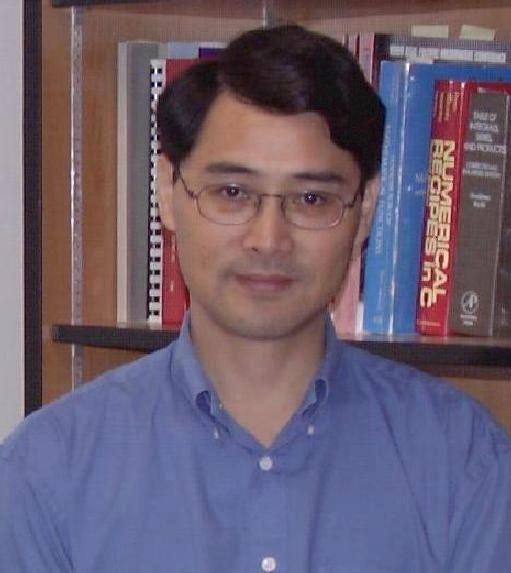
The model, developed by lead researcher Guowei Wei, professor in the departments of Mathematics and Biochemistry and Molecular Biology, analyzed SARS-CoV-2 genotyping from more than 20,000 viral genome samples. The researchers analyzed mutations to the spike protein — a protein primarily responsible for facilitating infection — and found that five of the six known virus subtypes are now more infectious.
As with any virus, many mutations are ultimately benign, posing little to no risk to infected patients. Some mutations even reduce infectiousness. But some mutations lead to a more infectious virus.
Wei and his team have studied and analyzed mutation patterns and locations for months, tracking changes against the official viral genome sample captured in January.
“Knowledge about the infectivity of SARS-CoV-2 is a vital factor for preventive measurements against COVID-19 and reopening the global economy,” Wei said. “A crucial question is what are the ramifications of these mutations to COVID-19 transmission, diagnostics, prevention and treatment.”
Viral infection occurs when the spike protein interacts with a human host cell receptor called angiotensin-converting enzyme 2 — ACE2 for short. As it relates to ACE2, scientists are concerned about a concept known as binding affinity, or the strength of the binding interaction between the spike protein and host receptor during the initial stage of infection.
“Viral infectivity increases if the binding affinity strengthens,” Wei said. “Currently, more than 50 mutations have been found along with the binding interface on the spike proteins receptor-binding domain — RBD for short — which has 194 possible mutation sites.”
Wei’s machine learning model, an advanced neural network, analyzed more than 8,000 protein interaction records to determine the impact of the current known mutations on the binding affinity of the SARS-CoV-2 spike protein. The result, which suggested increased binding affinity in five of the six known subtypes, indicated that infectivity may have increased as a result of the mutations.
Concerned about the potential for further mutation, Wei and his team turned their model to the future.
“It’s extremely important to know whether future SARS-CoV-2 subtypes would pose an imminent danger to public health,” Wei said. “To this end, we have conducted a systematic screening of all possible 3,686 future mutations on 194 possible mutation sites along the RBD.”
Wei’s model predicts that multiple residues on the receptor-binding motif — a component area of the RBD — have high chances to mutate into more infectious COVID-19 strains.
He cautions that although artificial intelligence based predictions are consistent with available experimental findings, further studies are needed to fully understand mutation impacts on COVID-19 infectivity, which is vital to the public health response to COVID-19.
As part of their research, Wei and team also predict that the novel coronavirus spreading around the world is slightly more infectious than the original SARS virus discovered in 2003.
Wei said the results align with those of another study recently published by researchers at the Scripps Research Institute in Florida. This study examined spike protein mutations in a laboratory setting, also finding that the virus is mutating in ways that increase its infectiousness.
The paper, Mutations strengthened SARS-CoV-2 infectivity, along with much of the published research concerning COVID-19 and the SARS-CoV-2 virus, appears on the preprint server ArXiv.
Wei is a faculty member in MSU’s College of Natural Science in the departments of Mathematics and Biochemistry & Molecular Biology, and in the College of Engineering in the department of Electrical and Computer Engineering.
His additional research on COVID-19 includes: Decoding asymptomatic COVID-19 infection and transmission, Review of COVID-19 antibody therapies, Mutations on COVID-19 diagnostic targets, Repositioning of 8565 existing drugs for COVID-19, Unveiling the molecular mechanism of SARS-CoV-2 main protease inhibition from 92 crystal structures, Decoding SARS-CoV-2 transmission, evolution and ramification on COVID-19 diagnosis, vaccine, and medicine, Potentially highly potent drugs for 2019-nCoV, and Machine intelligence design of 2019-nCoV drugs
Research interests: mathematical molecular biosciences and biophysics, artificial intelligence and machine learning, drug design and pharmacology, biomedical imaging and surface analysis, high order interface methods, nano modeling and simulation, quantum kinetic theory, wavelet local spectral theory, and dynamical systems.
(Note for media: Please include a link to the original paper in online coverage: https://arxiv.org/pdf/2005.14669.pdf)