Jump to HeaderJump to Main ContentJump to Footer
Michigan State University
  • Browse Stories By

    Topics

    Explore stories by subject area

    • Arts and Culture
    • Business and Economy
    • Climate and Environment
    • Education and Learning
    • Engineering, Science and Technology
    • Government and Society
    • Health and Medicine
    • Media and Communications
    • MSU Leadership and Impact
    • Sports and Recreation
    • Student and Campus Experience
    View All Stories

    Collections

    Curated story series

    • Turfgrass
    • Ask the Expert
    • Big Ideas
    • Climate solutions
    • Water at MSU
    • Mobility
    • Spartan Perspectives
    • Student views
    • Graduate voices
    • Faculty voices
    View All Collections

    Featured

    Editor's picks

    • The Spartans behind your favorite Michigan golf courses

      July 22, 2026

      The Spartans behind your favorite Michigan golf courses

    • MSU in the 1990s: 10 Spartan milestones

      July 14, 2026

      MSU in the 1990s: 10 Spartan milestones

MSUTODAY
  • Browse Stories By

< Browse Stories By

Topics

Explore stories by subject area

  • Arts and Culture
  • Business and Economy
  • Climate and Environment
  • Education and Learning
  • Engineering, Science and Technology
  • Government and Society
  • Health and Medicine
  • Media and Communications
  • MSU Leadership and Impact
  • Sports and Recreation
  • Student and Campus Experience
  • View All Stories

Collections

Curated story series

  • Turfgrass
  • Ask the Expert
  • Big Ideas
  • Climate solutions
  • Water at MSU
  • Mobility
  • Spartan Perspectives
  • Student views
  • Graduate voices
  • Faculty voices
  • View All Collections

Featured

Editor's picks

  • The Spartans behind your favorite Michigan golf courses

    July 22, 2026

    The Spartans behind your favorite Michigan golf courses

  • MSU in the 1990s: 10 Spartan milestones

    July 14, 2026

    MSU in the 1990s: 10 Spartan milestones

  • For Media
  • Experts
  • Releases and Statements
  • Sign Up
  • Update Information

Resources

  • A to Z Index
  • Find People
  • Maps
  • Email
  • Student Information System (SIS)
  • D2L
  • Libraries
  • Tech Support
  • MSU Misconduct Hotline
  • Social Media Directory
  • Events Calendar
  • For Media
Michigan State University
MSUToday
  • For Media
  • Experts
  • Releases and Statements
  • Sign Up
  • Update Information
MSUTODAY
Arts and Culture

Aug. 10, 2020

Closing the health care gap through patient engagement, partnership

By: Zach Richardson

Michigan State University researchers have been awarded a $3.75 million grant from the National Institutes of Health for research focused on decreasing cardiovascular disease risk morbidity and mortality for minority and low-income populations with diabetes mellitus.


Cardiovascular disease is the leading cause of diabetes-related morbidity and mortality.


The researchers have found that better patient engagement and communication between patients and physicians may improve medication adherence. This leads to better-controlled blood sugar, cholesterol, blood pressure, increased patient satisfaction with providers and, ultimately, decreased burden of illness on the patient and on the health care system.


Poor adherence to medication and prevention plans have been shown to be a significant factor in medical plans failing for individuals with CVD and DM. Between 21-42% of patients with Type 2 DM do not take blood sugar, blood pressure or statin medications as prescribed, contributing to increased death. Importantly, this issue is pronounced among the underserved and low resource populations, which show higher rates of chronic illness and lower medication adherence. The proposed program wants to close that gap through improved interaction with patients.


“If all patients have access to the same evidence-based care, are engaged and on the same page with their providers all the time, that will narrow the health care disparity gap and improve health outcomes for all,” said Adesuwa "Ade" Olomu, principal investigator on the grant and the Blanch B. and Frederick C. Swartz Endowed Professor of Medicine, vice chair for research in the Department of Medicine and Faculty Excellence Advocate for the College of Human Medicine.

 

Adesuwa "Ade" Olomu, Blanch B. and Frederick C. Swartz Endowed Professor of Medicine, vice chair for research in the Department of Medicine and Faculty Excellence Advocate for the College of Human Medicine.


The research team will evaluate the impact of its proposed patient activation program, which consists of the Office Guidelines Applied to Practice Model and mobile phone text messaging reinforcement, called Care4life. Together, the program will increase medication adherence and prevention of CVD among patients compared to texting alone. The study will enroll 378 patients in 16 teams in randomized Federally Qualified Health Clinics in Michigan.


“Chronic illness is a long-term project, a journey of 1000 miles, not a few feet,” said William Hart-Davidson, co-investigator on the grant and professor in the Department of WRAC and associate dean of Research and Graduate Education in the College of Arts & Letters. “If you’re walking across the country, you get lost. If you’re even one degree off, you end up in the wrong place. Adding those metaphorical road signs to course-correct and offer feedback in long-term chronic illnesses is imperative.”

 

William Hart-Davidson, professor and associate dean of Graduate Education and Graduate Faculty in the Department of Writing, Rhetoric and American Cultures.


The combination of improved face-to-face patient interaction and mobile reinforcement will heighten overall communication between patients and care providers, improving the frequency, accuracy and timeliness of communication while boosting shared goals and mutual respect.


“It’s important that we look at that time of self-management for patients between visits,” Hart-Davidson said. “We’ve found that there’s a significant difference in adherence when patients are given agency in their care. Our program creates that connection between patients and their plans at a deeper level.”


If successfully translated to clinical practice, the results of this research have the potential to significantly affect patient care, improving outcomes for DM and CVD. On a larger scale, the research that the MSU Office-GAP research team is implementing paves the way for shifting clinical practice across a spectrum of chronic disease where medication nonadherence is an issue.


“The point is to let the patient know that there is someone listening, that they’re not alone,” said Hart-Davidson. “We’re making a more reliable connection. It’s just enough of a nudge to reinforce the care plan.”
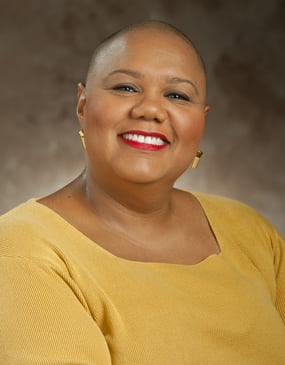
 

Karen Kelly-Blake, associate professor at the Center for Ethics and Humanities in the Life Sciences and the Department of Medicine.


Additional MSU co-investigators and consultants on the grant include Karen Kelly-Blake, associate professor at the Center for Ethics and Humanities in the Life Sciences and the Department of Medicine; Joseph Gardiner, professor of epidemiology and biostatistics and statistics in the Department of Epidemiology and Biostatistics; Zhehui Luo, assistant director of biostatistics and associate professor of epidemiology and biostatistics; Eric Kasten, assistant professor in the Department of Radiology and director of the Biomedical Research Informatics Core; Margaret Holmes-Rovner, professor emerita of the Center for Ethics and Humanities in the Life Sciences; Michele Heisler, professor of health behavior and health education, and associate director for Global REACH at the University of Michigan; and Kim Eagle, Albion Walter Hewlett professor of internal medicine and director of the Frankel Cardiovascular Center at University of Michigan Health System.


MEDIA CONTACTS

Adesuwa Olomu, William Hart-Davidson
Arts and CultureHealth ProfessionsHealth and MedicineMSU ResearchMSU Leadership and Impact

Latest News

MSUToday Weekly Update

The MSUToday Weekly Update email showcases how Spartans are making a difference through academic excellence, research impact and community outreach. Get inspired by these stories of innovation, collaboration and determination. Plus, enjoy photos and videos of campus and more MSU content to help keep you connected to the Spartan community.

Sign UpUpdate My Information

Connect With Us

Visit our Facebook pageVisit our page on XVisit our Instagram pageVisit our LinkedIn pageVisit our YouTube pageVisit our TikTok page

Health and Safety

  • MSU Police and Public Safety
  • Olin Health Center
  • Counseling & Psychiatric Services (CAPS)
  • University Health and Wellbeing
  • MSU Health Care
  • Civil Rights and Title IX
  • Our Commitment
  • Center for Survivors
  • Security & Fire Safety Report
  • University Policy on Relationship Violence and Sexual Misconduct
  • Notice of Non-Discrimination, Anti-Harassment and Non-Retaliation
  • Health Care Non-Discrimination Notice

Support Services

  • Disability Resources
  • Supportive Services
  • Learning Resources

Working at MSU

  • Human Resources
  • EBS Login
  • Job Postings
  • Employee Assistance Program

Reports

  • CARES Act Funding
  • Student Achievement and Outcomes

Contact us

517-355-1855

Address

Michigan State University 426 Auditorium Road East Lansing, MI 48824

Follow Us

  • Visit our Facebook page
  • Visit our page on X
  • Visit our Instagram page
  • Visit our TikTok page
  • Visit our LinkedIn page
  • Visit our YouTube page

If you're having accessibility issues, please let us know.

Know More: Campus Safety Information and ResourcesTransparency Reporting: Budget & Salary/Compensation
  • Contact Information|
  • Site Map|
  • Privacy Statement|
  • Site Accessibility|
  • Call MSU: (517) 355-1855|
  • Visit: msu.edu|
  • Notice of Nondiscrimination|

SPARTANS WILL|© Michigan State University|