Jump to HeaderJump to Main ContentJump to Footer
Michigan State University
MSUTODAY
  • Browse Stories By

    Topics

    Explore stories by subject area

    • Arts and Culture
    • Business and Economy
    • Climate and Environment
    • Education and Learning
    • Engineering, Science and Technology
    • Government and Society
    • Health and Medicine
    • Media and Communications
    • MSU Leadership and Impact
    • Sports and Recreation
    • Student and Campus Experience
    View All Stories

    Collections

    Curated story series

    • Turfgrass
    • Ask the Expert
    • Big Ideas
    • Climate solutions
    • Water at MSU
    • Mobility
    • Spartan Perspectives
    • Student views
    • Graduate voices
    • Faculty voices
    View All Collections

    Featured

    Editor's picks

    • 9 reasons to love being a Spartan

      Aug. 28, 2026

      9 reasons to love being a Spartan

    • NIH awards multi-university team over $4M to improve women’s health

      Sept. 15, 2026

      NIH awards multi-university team over $4M to improve women’s health

MSUTODAY
  • Browse Stories By

< Browse Stories By

Topics

Explore stories by subject area

  • Arts and Culture
  • Business and Economy
  • Climate and Environment
  • Education and Learning
  • Engineering, Science and Technology
  • Government and Society
  • Health and Medicine
  • Media and Communications
  • MSU Leadership and Impact
  • Sports and Recreation
  • Student and Campus Experience
  • View All Stories

Collections

Curated story series

  • Turfgrass
  • Ask the Expert
  • Big Ideas
  • Climate solutions
  • Water at MSU
  • Mobility
  • Spartan Perspectives
  • Student views
  • Graduate voices
  • Faculty voices
  • View All Collections

Featured

Editor's picks

  • 9 reasons to love being a Spartan

    Aug. 28, 2026

    9 reasons to love being a Spartan

  • NIH awards multi-university team over $4M to improve women’s health

    Sept. 15, 2026

    NIH awards multi-university team over $4M to improve women’s health

  • For Media
  • Experts
  • Releases and Statements
  • Sign Up
  • Update Information

Resources

  • A to Z Index
  • Find People
  • Maps
  • Email
  • Student Information System (SIS)
  • D2L
  • Libraries
  • Tech Support
  • MSU Misconduct Hotline
  • Social Media Directory
  • Events Calendar
  • For Media
Michigan State University
MSUToday
  • For Media
  • Experts
  • Releases and Statements
  • Sign Up
  • Update Information

July 20, 2020

Can&rsquo;t get off of Snapchat or Facebook? Research reveals differences between platforms

By: Caroline Brooks

You might think social media is addictive, but how do certain platforms measure against one another? Researchers from Michigan State University and California State University–Fullerton conducted the first study comparing problematic use between Facebook and Snapchat — while also uncovering surprising findings about users’ personality traits.
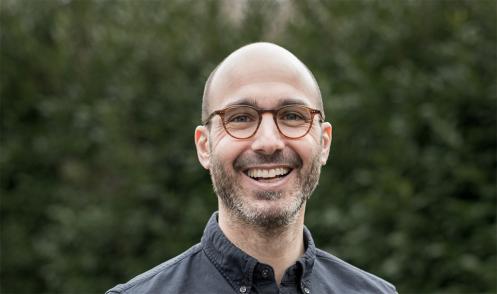
Dar Meshi, cognitive neuroscientist and assistant professor in MSU’s College of Communication Arts and Sciences.

“Both Facebook and Snapchat have separate features that make users want to keep coming back and using these platforms,” said Dar Meshi, a cognitive neuroscientist and assistant professor in MSU’s College of Communication Arts and Sciences. “We were interested in measuring not only problematic use, but also the specific social rewards people might be looking for when using them.”

The study, published in the journal Addictive Behaviors Reports, measured 472 college-aged participants’ time spent on the two platforms, quit attempts and problematic use. The researchers also asked participants to fill out a questionnaire that measured their preferences for social rewards — or, types of social interactions they enjoy — such as admiration, passivity, prosocial interactions, sexual relationships, sociability and, lastly, negative social potency.

“We found that participants spent more time on Snapchat than on Facebook, and they also demonstrated more problematic use of Snapchat,” Meshi said. “Surprisingly though, participants reported more attempts to quit Facebook.”

While Meshi and co-author Ofir Turel, a professor of information systems and decision sciences, did not examine what specific mechanisms within the two platforms led to problematic use, they did find a psychological parallel with users’ problematic use.

“Remarkably, we saw a correlation between problematic use on both platforms and negative social potency — which is people’s desire to be cruel, callous and use others for personal gain,” Meshi said. “These survey items asked about one’s enjoyment embarrassing or angering others, for example.”

Meshi explained that people with more problematic use had higher preference levels for negative social potency rewards; so, the more problematic your use is, the more you enjoy these negative social interactions. Negative social potency, admiration (receiving admiration from others) and sociability were found to be positively associated with problematic Snapchat use, but only negative social potency correlated with problematic Facebook use.

The other surprising finding, Meshi said, was that participants attempted to quit Facebook more than Snapchat.

“Given our finding that college students’ use of Snapchat is more problematic, we thought there would have been more attempts to quit or curtail use,” Meshi said.

Meshi explained that understanding which social reward preferences are related to problematic use is essential for clinical psychologists as they treat patients.

“If there’s a patient who says they’re having problems overusing these platforms, the clinician will have a better understanding as to what drives them socially and should be better able to help them,” said Meshi.

(Note for media: Please include the following link to the study in all online media coverage: https://doi.org/10.1016/j.abrep.2020.100294)


MEDIA CONTACTS

Dar Meshi

Latest News

MSUToday Weekly Update

The MSUToday Weekly Update email showcases how Spartans are making a difference through academic excellence, research impact and community outreach. Get inspired by these stories of innovation, collaboration and determination. Plus, enjoy photos and videos of campus and more MSU content to help keep you connected to the Spartan community.

Sign UpUpdate My Information

Connect With Us

Visit our Facebook pageVisit our page on XVisit our Instagram pageVisit our LinkedIn pageVisit our YouTube pageVisit our TikTok page

Health and Safety

  • MSU Police and Public Safety
  • Olin Health Center
  • Counseling & Psychiatric Services (CAPS)
  • University Health and Wellbeing
  • MSU Health Care
  • Civil Rights and Title IX
  • Our Commitment
  • Center for Survivors
  • Security & Fire Safety Report
  • University Policy on Relationship Violence and Sexual Misconduct
  • Notice of Non-Discrimination, Anti-Harassment and Non-Retaliation
  • Health Care Non-Discrimination Notice

Support Services

  • Disability Resources
  • Supportive Services
  • Learning Resources

Working at MSU

  • Human Resources
  • EBS Login
  • Job Postings
  • Employee Assistance Program

Reports

  • CARES Act Funding
  • Student Achievement and Outcomes

Contact us

517-355-1855

Address

Michigan State University 426 Auditorium Road East Lansing, MI 48824

Follow Us

  • Visit our Facebook page
  • Visit our page on X
  • Visit our Instagram page
  • Visit our TikTok page
  • Visit our LinkedIn page
  • Visit our YouTube page

If you're having accessibility issues, please let us know.

Know More: Campus Safety Information and ResourcesTransparency Reporting: Budget & Salary/Compensation
  • Contact Information|
  • Site Map|
  • Privacy Statement|
  • Site Accessibility|
  • Call MSU: (517) 355-1855|
  • Visit: msu.edu|
  • Notice of Nondiscrimination|

SPARTANS WILL|© Michigan State University|