Jump to HeaderJump to Main ContentJump to Footer
Michigan State University
  • Browse Stories By

    Topics

    Explore stories by subject area

    • Arts and Culture
    • Business and Economy
    • Climate and Environment
    • Education and Learning
    • Engineering, Science and Technology
    • Government and Society
    • Health and Medicine
    • Media and Communications
    • MSU Leadership and Impact
    • Sports and Recreation
    • Student and Campus Experience
    View All Stories

    Collections

    Curated story series

    • Turfgrass
    • Ask the Expert
    • Big Ideas
    • Climate solutions
    • Water at MSU
    • Mobility
    • Spartan Perspectives
    • Student views
    • Graduate voices
    • Faculty voices
    View All Collections

    Featured

    Editor's picks

    • The Spartans behind your favorite Michigan golf courses

      July 22, 2026

      The Spartans behind your favorite Michigan golf courses

    • MSU in the 1990s: 10 Spartan milestones

      July 14, 2026

      MSU in the 1990s: 10 Spartan milestones

MSUTODAY
  • Browse Stories By

< Browse Stories By

Topics

Explore stories by subject area

  • Arts and Culture
  • Business and Economy
  • Climate and Environment
  • Education and Learning
  • Engineering, Science and Technology
  • Government and Society
  • Health and Medicine
  • Media and Communications
  • MSU Leadership and Impact
  • Sports and Recreation
  • Student and Campus Experience
  • View All Stories

Collections

Curated story series

  • Turfgrass
  • Ask the Expert
  • Big Ideas
  • Climate solutions
  • Water at MSU
  • Mobility
  • Spartan Perspectives
  • Student views
  • Graduate voices
  • Faculty voices
  • View All Collections

Featured

Editor's picks

  • The Spartans behind your favorite Michigan golf courses

    July 22, 2026

    The Spartans behind your favorite Michigan golf courses

  • MSU in the 1990s: 10 Spartan milestones

    July 14, 2026

    MSU in the 1990s: 10 Spartan milestones

  • For Media
  • Experts
  • Releases and Statements
  • Sign Up
  • Update Information

Resources

  • A to Z Index
  • Find People
  • Maps
  • Email
  • Student Information System (SIS)
  • D2L
  • Libraries
  • Tech Support
  • MSU Misconduct Hotline
  • Social Media Directory
  • Events Calendar
  • For Media
Michigan State University
MSUToday
  • For Media
  • Experts
  • Releases and Statements
  • Sign Up
  • Update Information
MSUTODAY
Fitness and Exercise

Oct. 28, 2019

Marriage could be good for your health &ndash; unless you're bisexual

By: Ning Hsieh

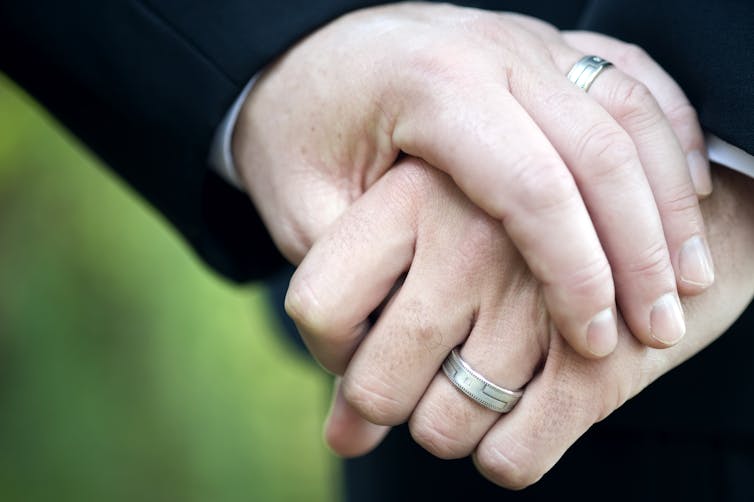
hand resting on hand with wedding ring

Ning Hsieh, assistant professor of sociology, and Hui Liu, professor of sociology, wrote this piece for The Conversation, an independent collaboration between editors and academics that provides informed news analysis and commentary to the general public. See the entire list of articles written by MSU faculty for The Conversation.

Is marriage good for you?

A large number of studies show that married people enjoy better health than unmarried people, such as lower rates of depression and cardiovascular conditions, as well as longer lives.

However, these findings have been developed primarily based on data of heterosexual populations and different-sex marriages. Only more recently have a few studies looked into gay and lesbian populations and same-sex marriages to test if marriage is related to better health in these populations – and the evidence is mixed.

Our study, published online on Sept. 19, evaluates the advantages of marriage across heterosexual, bisexual, and gay or lesbian adults. We discovered that bisexual adults do not experience better health when married.

Marriage and health data

Using representative data from the 2013 to 2017 National Health Interview Survey, we compared reports of self-rated health and functional limitation – difficulty doing activities without assistance or special equipment – across 1,428 bisexual adults, 2,654 gay and lesbian adults and 150,403 heterosexual adults.

Both heterosexual and gay and lesbian individuals are better off in terms of health when they are married than when unmarried.

For example, the odds of reporting good health are about 36% higher among married gay and lesbian adults than never married or previously married gay and lesbian adults.

Rates of functional limitation, such as difficulty climbing stairs and going out for shopping, are 25% to 43% lower among married heterosexual adults than cohabiting, never married and previously married heterosexual adults.

Why does this happen? There are two popular explanations.

The marriage protection argument posits that marriage increases economic security and social support and encourages healthier lifestyles – for example, less smoking and drinking.

The marriage selection argument suggests that people with more education, income and other health-favorable characteristics are more likely to get married and stay in marriage.

However, unlike heterosexual and gay or lesbian adults, our study shows that married bisexuals are not healthier than unmarried bisexuals.

Interestingly, among bisexuals who are married or cohabiting, those with a same-sex partner are healthier than those with a different-sex partner. Their odds of reporting good health are 2.3 times higher and the rates of functional limitation are 61% lower.

Relationship stigma

Our findings suggest that bisexuals face unique challenges in their relationships that may reduce the health advantage linked to marriage.

A growing number of studies have found that bisexual individuals experience poorer health than heterosexual, gay or lesbian individuals. This includes higher rates of mental disorders, cardiovascular conditions and disability.

Bisexual people are often perceived by both heterosexual and gay and lesbian people as indecisive about their sexual orientation, sexually permissive, and unfaithful or untrustworthy as romantic partners. For example, an experimental study showed that people more often project such negative stereotypes onto a bisexual man dating a woman than they do onto a heterosexual man dating a woman or a gay man dating a man.

Researchers like ourselves still don’t fully understand the ways in which stigma influences bisexuals’ relationships and health.

We suspect that this stigma may undermine the health and well-being of bisexual people. It may strain their relationships and create expectations of rejection. Their efforts to conceal a bisexual identity from a partner or other people may also trigger stress.

We hope to see marriage one day become not only more accessible to all, but also equally favorable for all.

This article is republished from The Conversation under a Creative Commons license. Read the original article.


MEDIA CONTACTS

Hui Liu
Fitness and ExerciseHealth and MedicineSocial SciencesGovernment and Society

Latest News

MSUToday Weekly Update

The MSUToday Weekly Update email showcases how Spartans are making a difference through academic excellence, research impact and community outreach. Get inspired by these stories of innovation, collaboration and determination. Plus, enjoy photos and videos of campus and more MSU content to help keep you connected to the Spartan community.

Sign UpUpdate My Information

Connect With Us

Visit our Facebook pageVisit our page on XVisit our Instagram pageVisit our LinkedIn pageVisit our YouTube pageVisit our TikTok page

Health and Safety

  • MSU Police and Public Safety
  • Olin Health Center
  • Counseling & Psychiatric Services (CAPS)
  • University Health and Wellbeing
  • MSU Health Care
  • Civil Rights and Title IX
  • Our Commitment
  • Center for Survivors
  • Security & Fire Safety Report
  • University Policy on Relationship Violence and Sexual Misconduct
  • Notice of Non-Discrimination, Anti-Harassment and Non-Retaliation
  • Health Care Non-Discrimination Notice

Support Services

  • Disability Resources
  • Supportive Services
  • Learning Resources

Working at MSU

  • Human Resources
  • EBS Login
  • Job Postings
  • Employee Assistance Program

Reports

  • CARES Act Funding
  • Student Achievement and Outcomes

Contact us

517-355-1855

Address

Michigan State University 426 Auditorium Road East Lansing, MI 48824

Follow Us

  • Visit our Facebook page
  • Visit our page on X
  • Visit our Instagram page
  • Visit our TikTok page
  • Visit our LinkedIn page
  • Visit our YouTube page

If you're having accessibility issues, please let us know.

Know More: Campus Safety Information and ResourcesTransparency Reporting: Budget & Salary/Compensation
  • Contact Information|
  • Site Map|
  • Privacy Statement|
  • Site Accessibility|
  • Call MSU: (517) 355-1855|
  • Visit: msu.edu|
  • Notice of Nondiscrimination|

SPARTANS WILL|© Michigan State University|