Jump to HeaderJump to Main ContentJump to Footer
Michigan State University
  • Browse Stories By

    Topics

    Explore stories by subject area

    • Arts and Culture
    • Business and Economy
    • Climate and Environment
    • Education and Learning
    • Engineering, Science and Technology
    • Government and Society
    • Health and Medicine
    • Media and Communications
    • MSU Leadership and Impact
    • Sports and Recreation
    • Student and Campus Experience
    View All Stories

    Collections

    Curated story series

    • Turfgrass
    • Ask the Expert
    • Big Ideas
    • Climate solutions
    • Water at MSU
    • Mobility
    • Spartan Perspectives
    • Student views
    • Graduate voices
    • Faculty voices
    View All Collections

    Featured

    Editor's picks

    • The Spartans behind your favorite Michigan golf courses

      July 22, 2026

      The Spartans behind your favorite Michigan golf courses

    • MSU in the 1990s: 10 Spartan milestones

      July 14, 2026

      MSU in the 1990s: 10 Spartan milestones

MSUTODAY
  • Browse Stories By

< Browse Stories By

Topics

Explore stories by subject area

  • Arts and Culture
  • Business and Economy
  • Climate and Environment
  • Education and Learning
  • Engineering, Science and Technology
  • Government and Society
  • Health and Medicine
  • Media and Communications
  • MSU Leadership and Impact
  • Sports and Recreation
  • Student and Campus Experience
  • View All Stories

Collections

Curated story series

  • Turfgrass
  • Ask the Expert
  • Big Ideas
  • Climate solutions
  • Water at MSU
  • Mobility
  • Spartan Perspectives
  • Student views
  • Graduate voices
  • Faculty voices
  • View All Collections

Featured

Editor's picks

  • The Spartans behind your favorite Michigan golf courses

    July 22, 2026

    The Spartans behind your favorite Michigan golf courses

  • MSU in the 1990s: 10 Spartan milestones

    July 14, 2026

    MSU in the 1990s: 10 Spartan milestones

  • For Media
  • Experts
  • Releases and Statements
  • Sign Up
  • Update Information

Resources

  • A to Z Index
  • Find People
  • Maps
  • Email
  • Student Information System (SIS)
  • D2L
  • Libraries
  • Tech Support
  • MSU Misconduct Hotline
  • Social Media Directory
  • Events Calendar
  • For Media
Michigan State University
MSUToday
  • For Media
  • Experts
  • Releases and Statements
  • Sign Up
  • Update Information
MSUTODAY
Natural Sciences

April 16, 2024

‘Something funky’ is afoot with how electrons hop

By: Kara Headley
The Journal of Chemical Physics
Researchers believe that understanding how electrons move within small, natural systems could power a more sustainable future for our energy grid.  

That is, in part, why researchers from the Michigan State University-Department of Energy Plant Research Laboratory, or PRL, are looking at how electrons move within protein nanocrystals.

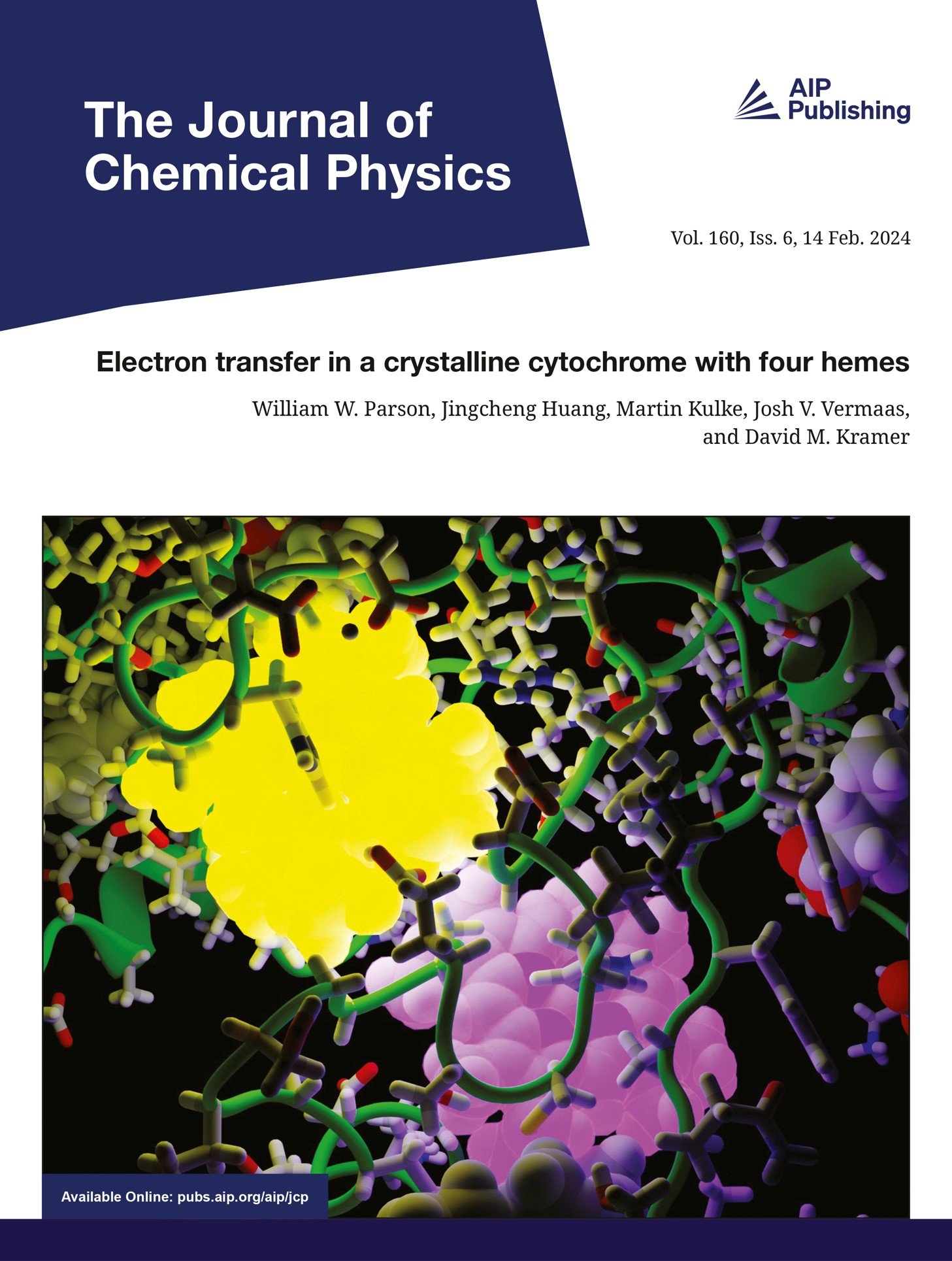
In doing so, they’ve discovered that previous theories on the subject might not apply in every case. Their latest work to reconcile theory and reality has now led to a recent publication in "The Journal of Chemical Physics."

The story so far

In 2020, researchers in Dave Kramer’s lab at the PRL observed electron flow in by pointing a light source at a crystal made of proteins that contained many molecules called hemes. Heme molecules have an array of important biological processes they perform, like carrying oxygen and electrons.

The researchers found that the rate at which the electrons jump from one heme to another highly depended on the temperature of the crystal. This temperature effect is very important because it can indicate how the electrons make their jumps. Do they have to go over a big barrier like a pole vaulter, or do they make more shallow jumps like a long jumper? According to previous theory — which did use some simplifying assumptions — it should not have been temperature dependent.
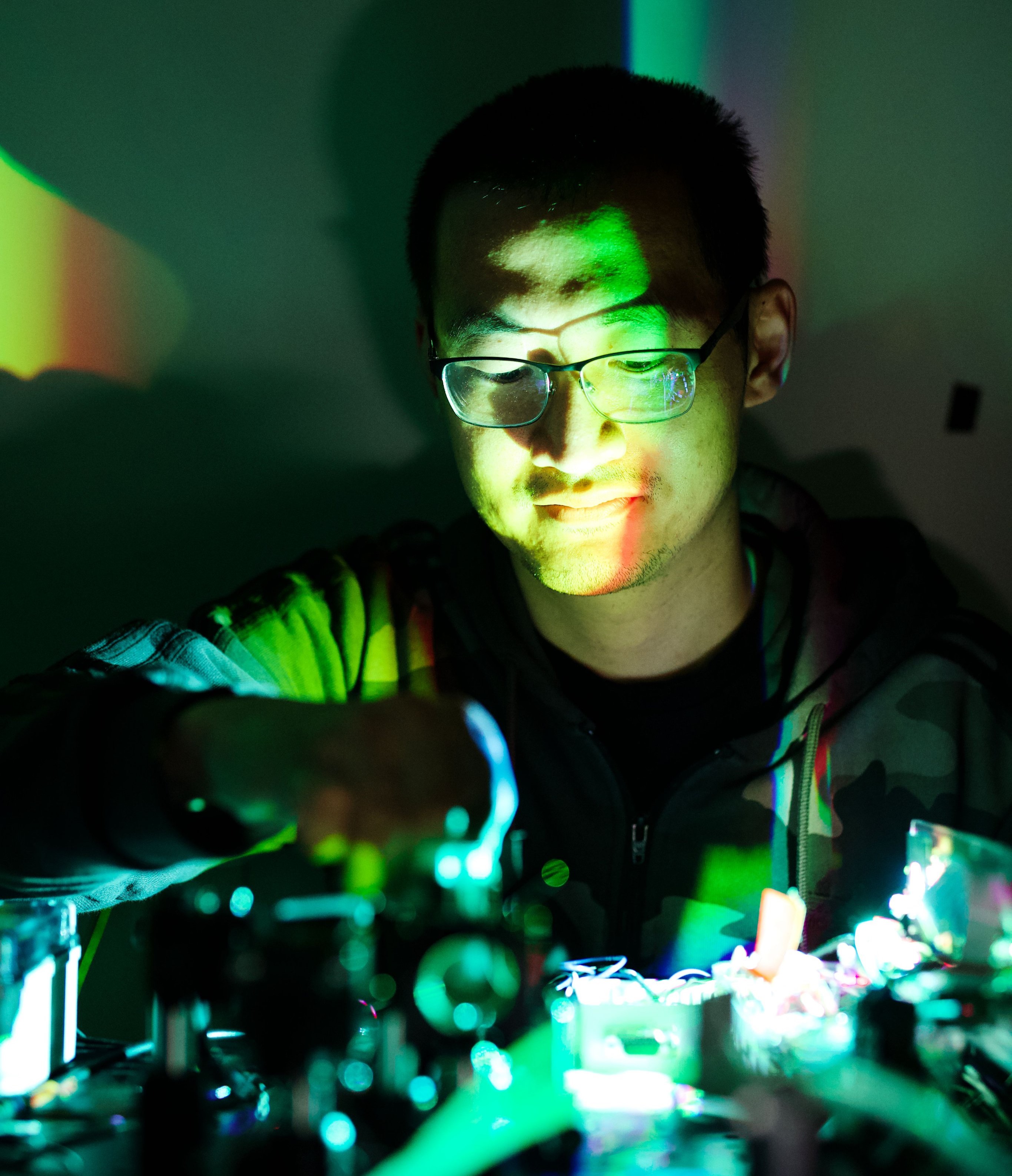
Jincheng Huang
“We got a result that is far away from the simplified theories,” said Jingcheng Huang, an author for the study and postdoctoral researcher in the Kramer lab.

“The theory works in so far as the rate constants are at the right order of magnitude, except if you start changing the temperature,” continued Josh Vermaas, assistant professor at the PRL and an author of the study.

This strange temperature dependance has led to two papers so far that attempt to explain these results. The most recent is the paper published in "The Journal of Chemical Physics."

A partial match

Like a person crossing a stream by hopping rock to rock, electrons travel through the crystals by jumping from heme to heme. The researchers could track where the electrons are in the crystal based on color.

Hemes change color — from red to pink — and the spread of the color change allows the researchers to watch the electrons move in the crystal. What surprised the researchers was that the color change was more drastically controlled by temperature compared to what was predicted by current theory.
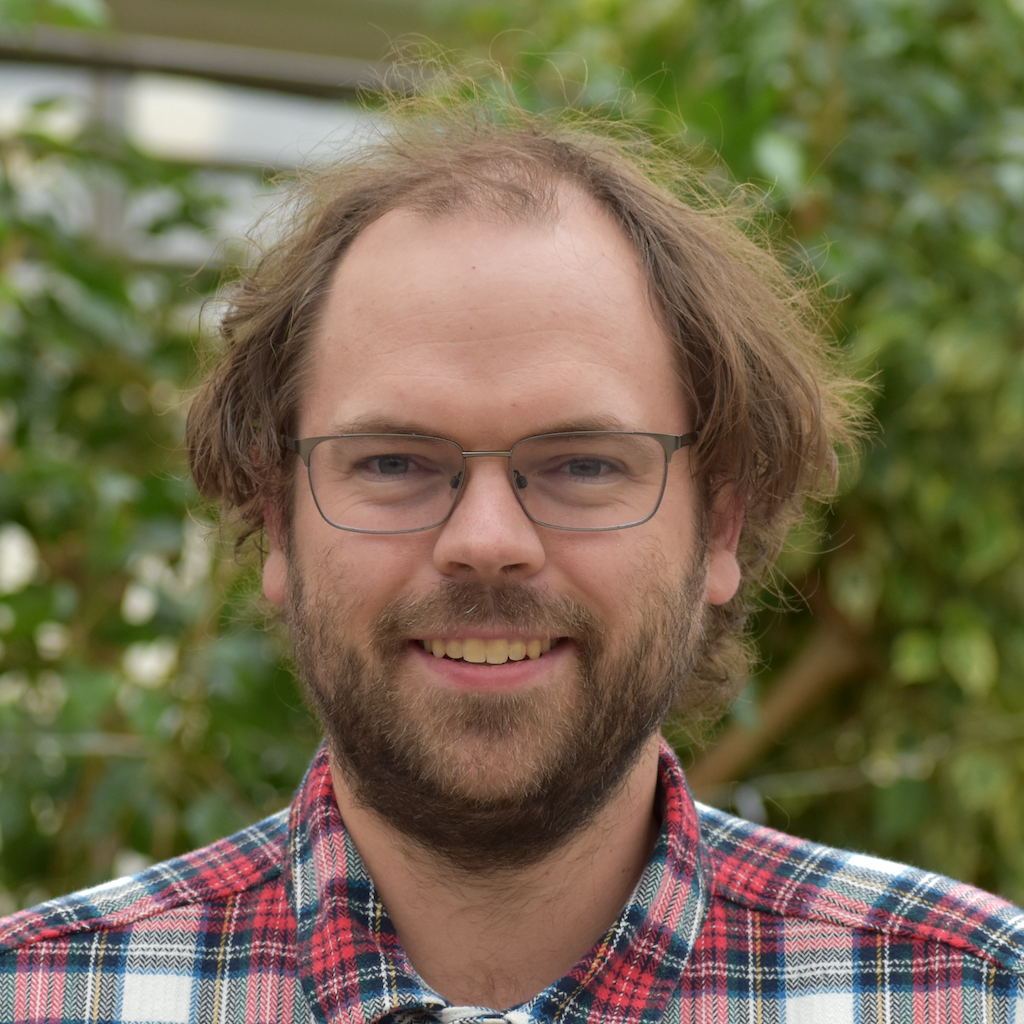
Josh Vermaas

Using computer simulations known as molecular dynamics with the help from the MSU Institute for Cyber-Enabled Research, the researchers showed how this energy transfer – the movement of electrons – happens over a short period of time.

“The computer simulation confirms what we’ve observed experimentally, at least closer than the simplified theory,” Huang said. “The theory and experiment, they match partially, but there are still some things that were not included in the equation.”

“We get an answer,” Vermaas said. "But there’s still something funky going on.”

For this paper, the PRL researchers teamed up with William Parson, professor of biochemistry from the University of Washington School of Medicine. Parson’s earlier work helped provide a foundation for the PRL research and invoked the Nobel prize-winning theory of Rudolph Marcus to explain how quickly electrons can hop from heme to heme.
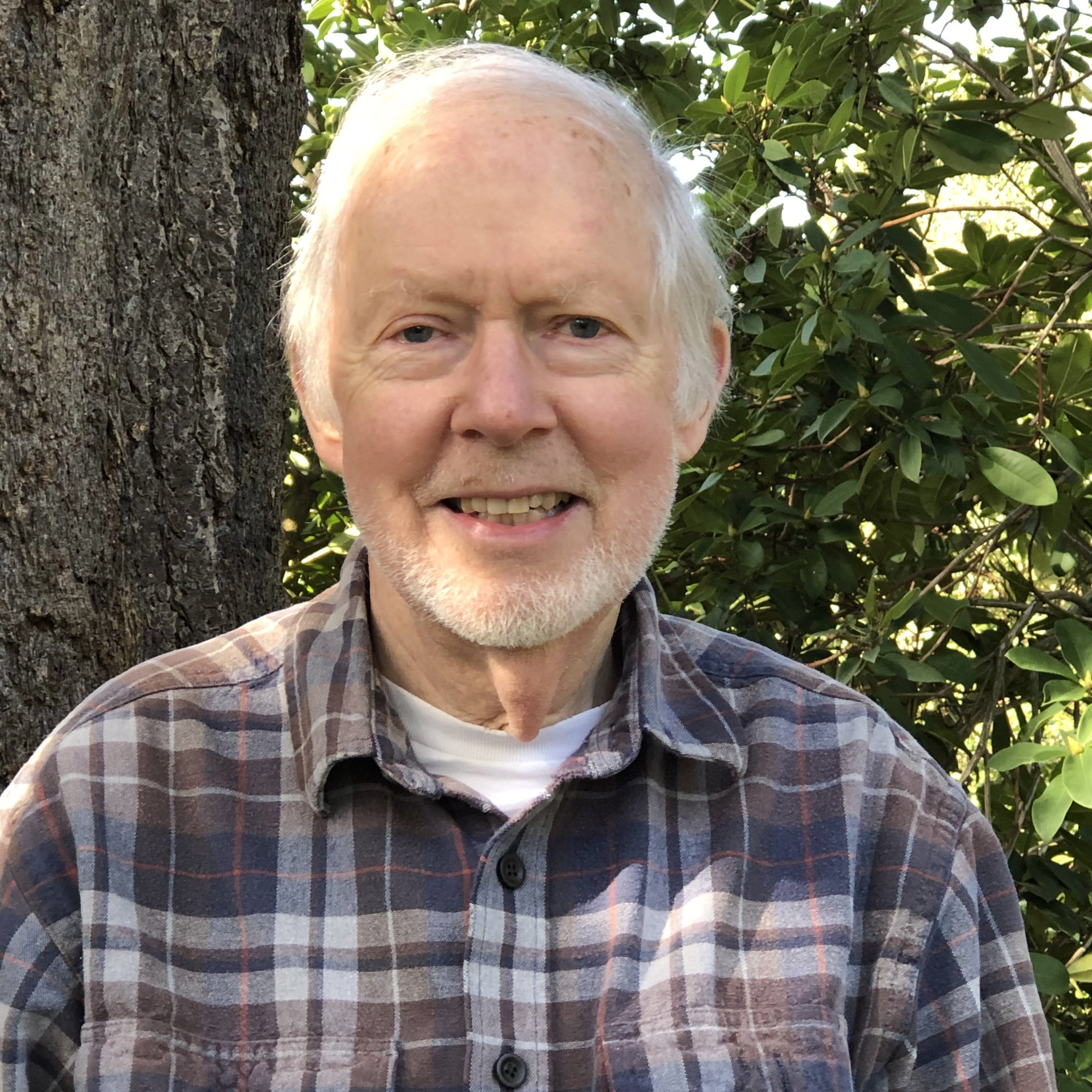
William Parson

“Dave knew that I had been trying to generalize the semiclassical Marcus equation for electron-transfer reactions and to find ways of avoiding its most troublesome assumptions,” Parson explained. “So when Jingcheng and Dave found that the electron transfer in crystals of the small tetraheme cytochrome was much slower than the Marcus equation predicted, Dave asked if I had any suggestions. That challenge kept me up at night for over three years.”

There is still more to be uncovered with this mystery, especially for the researchers working to connect it to energy through PRL’s primary research focus: photosynthesis.

“The initial goal of my project is to try to redirect energy from the photosynthetic apparatus to some other targets, for example, to enzymes that can produce biofuel,” Huang said.

“These kinds of crystals or potentially other similar electron transfer media could be used to power that sort of thing,” Vermaas said. “We’re a long ways off, but that's the overall goal.”

The work in this article was supported by the Office of Science, Office of Basic Energy Sciences of the U.S. Department of Energy under Grant No. DE-FG02-91ER20021; the National Science Foundation under Award No. 1359494; and through computational resources and services provided by the Institute for Cyber-Enabled Research at Michigan State University.

This story originally appeared on the College of Natural Science website.

Natural SciencesEngineering, Science and TechnologyMSU ResearchMSU Leadership and ImpactMSU Research

Latest News

MSUToday Weekly Update

The MSUToday Weekly Update email showcases how Spartans are making a difference through academic excellence, research impact and community outreach. Get inspired by these stories of innovation, collaboration and determination. Plus, enjoy photos and videos of campus and more MSU content to help keep you connected to the Spartan community.

Sign UpUpdate My Information

Connect With Us

Visit our Facebook pageVisit our page on XVisit our Instagram pageVisit our LinkedIn pageVisit our YouTube pageVisit our TikTok page

Health and Safety

  • MSU Police and Public Safety
  • Olin Health Center
  • Counseling & Psychiatric Services (CAPS)
  • University Health and Wellbeing
  • MSU Health Care
  • Civil Rights and Title IX
  • Our Commitment
  • Center for Survivors
  • Security & Fire Safety Report
  • University Policy on Relationship Violence and Sexual Misconduct
  • Notice of Non-Discrimination, Anti-Harassment and Non-Retaliation
  • Health Care Non-Discrimination Notice

Support Services

  • Disability Resources
  • Supportive Services
  • Learning Resources

Working at MSU

  • Human Resources
  • EBS Login
  • Job Postings
  • Employee Assistance Program

Reports

  • CARES Act Funding
  • Student Achievement and Outcomes

Contact us

517-355-1855

Address

Michigan State University 426 Auditorium Road East Lansing, MI 48824

Follow Us

  • Visit our Facebook page
  • Visit our page on X
  • Visit our Instagram page
  • Visit our TikTok page
  • Visit our LinkedIn page
  • Visit our YouTube page

If you're having accessibility issues, please let us know.

Know More: Campus Safety Information and ResourcesTransparency Reporting: Budget & Salary/Compensation
  • Contact Information|
  • Site Map|
  • Privacy Statement|
  • Site Accessibility|
  • Call MSU: (517) 355-1855|
  • Visit: msu.edu|
  • Notice of Nondiscrimination|

SPARTANS WILL|© Michigan State University|
