Jump to HeaderJump to Main ContentJump to Footer
Michigan State University
MSUTODAY
  • Browse Stories By

    Topics

    Explore stories by subject area

    • Arts and Culture
    • Business and Economy
    • Climate and Environment
    • Education and Learning
    • Engineering, Science and Technology
    • Government and Society
    • Health and Medicine
    • Media and Communications
    • MSU Leadership and Impact
    • Sports and Recreation
    • Student and Campus Experience
    View All Stories

    Collections

    Curated story series

    • Turfgrass
    • Ask the Expert
    • Big Ideas
    • Climate solutions
    • Water at MSU
    • Mobility
    • Spartan Perspectives
    • Student views
    • Graduate voices
    • Faculty voices
    View All Collections

    Featured

    Editor's picks

    • The Spartans behind your favorite Michigan golf courses

      July 22, 2026

      The Spartans behind your favorite Michigan golf courses

    • MSU in the 1990s: 10 Spartan milestones

      July 14, 2026

      MSU in the 1990s: 10 Spartan milestones

MSUTODAY
  • Browse Stories By

< Browse Stories By

Topics

Explore stories by subject area

  • Arts and Culture
  • Business and Economy
  • Climate and Environment
  • Education and Learning
  • Engineering, Science and Technology
  • Government and Society
  • Health and Medicine
  • Media and Communications
  • MSU Leadership and Impact
  • Sports and Recreation
  • Student and Campus Experience
  • View All Stories

Collections

Curated story series

  • Turfgrass
  • Ask the Expert
  • Big Ideas
  • Climate solutions
  • Water at MSU
  • Mobility
  • Spartan Perspectives
  • Student views
  • Graduate voices
  • Faculty voices
  • View All Collections

Featured

Editor's picks

  • The Spartans behind your favorite Michigan golf courses

    July 22, 2026

    The Spartans behind your favorite Michigan golf courses

  • MSU in the 1990s: 10 Spartan milestones

    July 14, 2026

    MSU in the 1990s: 10 Spartan milestones

  • For Media
  • Experts
  • Releases and Statements
  • Sign Up
  • Update Information

Michigan State University

Resources

  • A to Z Index
  • Find People
  • Maps
  • Email
  • Student Information System (SIS)
  • D2L
  • Libraries
  • Tech Support
  • MSU Misconduct Hotline
  • Social Media Directory
  • Events Calendar
  • For Media
Michigan State University
MSUToday
  • For Media
  • Experts
  • Releases and Statements
  • Sign Up
  • Update Information
Politics

Sept. 18, 2024

Ask the expert: Political polarization in US has increased due to diploma divide

This ask the expert is part of MSU’s “Ask the experts: 2024 election issues series” where experts answer questions on specific issues. For this one, the topic is rising polarization and reasons for its cause.


With under two months until the presidential election, political polarization is high and rising. A key reason is the increasing educational differences between the two political parties, according to a new book from a Michigan State University political science professor.

Matt Grossmann, director of MSU’s Institute for Public Policy and Social Research, has published “Polarized By Degrees,” a book that explores the nation’s current political polarization and how it interacts with a diploma divide and a culture war between the parties. 

Given the findings in “Polarized By Degrees,” Grossmann, also a professor in the Department of Political Science in the College of Social Science, answers questions about how educated liberals are winning the culture war but provoking a backlash and how the diploma divide has polarized views of expertise and social institutions.
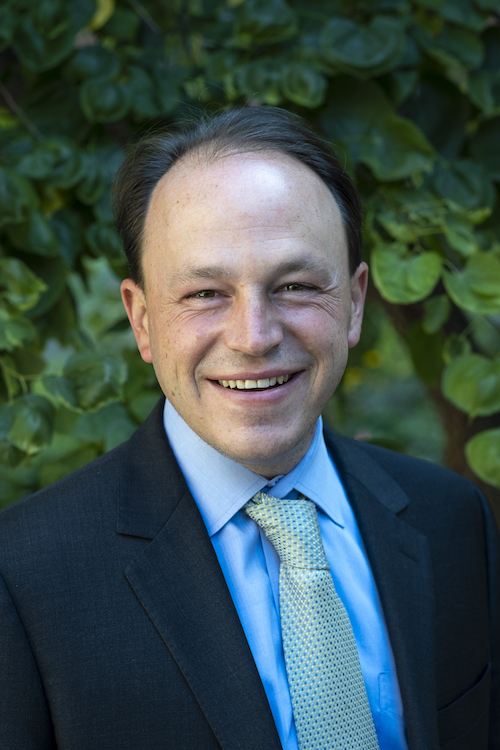
Headshot of Matt Grossmann.
Matt Grossmann is the director of MSU’s Institute for Public Policy and Social Research.

Why has polarization become so pervasive?

Americans are now more likely to have viewpoints and social identities that match their partisanship, taking a clear side in a bifurcated political system. Their views of the other side have deteriorated, even if they feel lukewarm about their own side. And politics has become about everything, from consumer choices to family lifestyles, making each decision a guide to your politics and no institution credibly independent.

How have the two parties changed in terms of educational attainment?

Educational attainment has risen dramatically in the United States. But the Republican Party has remained dominated by white voters without college degrees. The Democratic coalition has changed dramatically: a majority of Bill Clinton’s voters in 1992 were white voters without college degrees, but now they account for less than a quarter of the Democratic coalition. This increasing education divide between the parties also means citizens hold opposing views as to who is better able to make policy decisions, with Democrats preferring credentialed experts. At the same time, Republican voters have increasingly held populist views and show skepticism toward supposed experts, including teachers, scientists, journalists, universities, nonprofit organizations and even corporations. This divergence of views is contributing to an electorate that is becoming more divided.

How does this educational divide contribute to polarization?

American society has experienced fundamental changes — from shifting relations between social groups and evolving language and behavior norms to the increasing value of a college degree. These transformations have polarized the nation’s political climate and ignited a perpetual culture war.  Policymaking increasingly requires expertise, but Republican voters and leaders have become far more skeptical of experts — seeing them as part of the liberal opposition. As college-educated voters make their home in the Democratic Party, almost no institution is still seen as neutral in the culture wars that increasingly define our politics.

What will it take to bring more unity to the country?

There is no easy way out of our increasingly polarized politics. Most of the mechanisms that produce it are self-reinforcing: as the Democratic coalition changes, so do its priorities — and it increasingly becomes seen as the party of educated liberals. These changes have affected many other nations, but the U.S. has the strictest two-party system in the world. That means movements that would be seen as third parties elsewhere, such as green parties on the left or populist parties on the right, instead transform our major parties. With only two sides, it is hard for any social institution to stay above the fray.


Where can people get your new book to read more?

“Polarized by Degrees” is available wherever you buy your books. In honor of the book launch, a public event will be held Friday, Sept. 20, at 5 p.m. at Hooked, located at 3142 E. Michigan Ave. in Lansing.

MEDIA CONTACTS

Jack Harrison, Tony Zammit
PoliticsGovernment and SocietyHigher EducationEducation and LearningMSU ResearchMSU Leadership and Impact

Collection

more content from this collection

Ask the Expert

Latest News

MSUToday Weekly Update

The MSUToday Weekly Update email showcases how Spartans are making a difference through academic excellence, research impact and community outreach. Get inspired by these stories of innovation, collaboration and determination. Plus, enjoy photos and videos of campus and more MSU content to help keep you connected to the Spartan community.

Sign UpUpdate My Information

Connect With Us

Visit our Facebook pageVisit our page on XVisit our Instagram pageVisit our LinkedIn pageVisit our YouTube pageVisit our TikTok page

Health and Safety

  • MSU Police and Public Safety
  • Olin Health Center
  • Counseling & Psychiatric Services (CAPS)
  • University Health and Wellbeing
  • MSU Health Care
  • Civil Rights and Title IX
  • Our Commitment
  • Center for Survivors
  • Security & Fire Safety Report
  • University Policy on Relationship Violence and Sexual Misconduct
  • Notice of Non-Discrimination, Anti-Harassment and Non-Retaliation
  • Health Care Non-Discrimination Notice

Support Services

  • Disability Resources
  • Supportive Services
  • Learning Resources

Working at MSU

  • Human Resources
  • EBS Login
  • Job Postings
  • Employee Assistance Program

Reports

  • CARES Act Funding
  • Student Achievement and Outcomes

Contact us

517-355-1855

Address

Michigan State University 426 Auditorium Road East Lansing, MI 48824

Follow Us

  • Visit our Facebook page
  • Visit our page on X
  • Visit our Instagram page
  • Visit our TikTok page
  • Visit our LinkedIn page
  • Visit our YouTube page

If you're having accessibility issues, please let us know.

Know More: Campus Safety Information and ResourcesTransparency Reporting: Budget & Salary/Compensation
Michigan State University
  • Contact Information|
  • Site Map|
  • Privacy Statement|
  • Site Accessibility|
  • Call MSU: (517) 355-1855|
  • Visit: msu.edu|
  • Notice of Nondiscrimination|

SPARTANS WILL|© Michigan State University|