Mental health has become a part of wellness discussions in schools, workplaces and health care organizations. In higher education, there has been a greater focus on mental health as one component of wellness that supports students in learning and persisting through to graduation. LeConté Dill, associate professor of African American and African Studies at Michigan State University, finds her students are taking control of their health more holistically in ways that include creative expression, community building and therapy.
Dill has spent 25 years working with and researching public health, health and social policy, and intersections of the arts and health. She has been writing, publishing and teaching poetry even longer. During her doctorate at the University of California, Berkeley, she studied how creative expression and writing can be used to understand and articulate health issues, particularly among youth of color in urban neighborhoods.
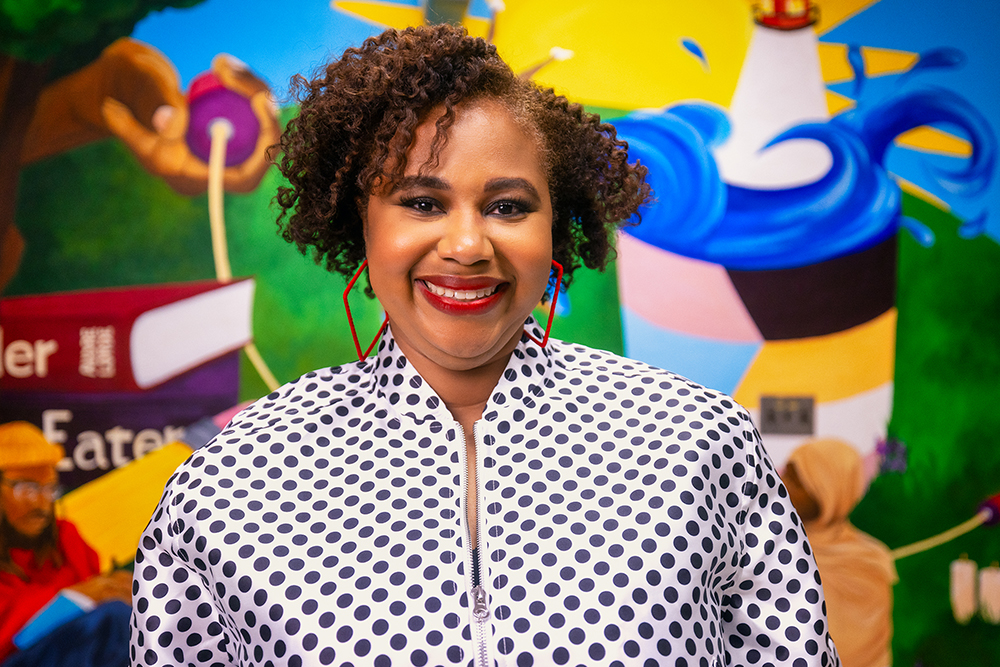
A certified mindfulness instructor, Dill is focused on ensuring her teaching and research intersect with the arts and humanities and health care fields to explore ways of centering wellness for all. Her most recent funded project at MSU enables her work specifically with Black women in student and staff roles to better understand how community-building and wellness practices are supported through physical space and time together.
Here, Dill discusses how a broader understanding of wellness could affect modern public health now and in the future.
How does mental health relate to overall health and wellness?
In the United States, mental health and public health are seen as different. It’s not just in framing, it’s how agencies from the federal, state and local levels are run and funded.
I’ve worked in public health departments and at the Centers for Disease Control and Prevention, and their focus is on physical health and diseases. Mental health is in a separate office or department at national, state and county levels fragmenting health and wellness within these agencies and within our own understandings. This fragmentation can lead to poor health outcomes and well-being. We have to cut across these silos as we think about people’s holistic health.
There are eight dimensions of wellness — emotional, spiritual, physical, financial, social, intellectual, environmental and vocational — and those give us a more holistic frame. It is important to also consider how we foster wellness collectively and think about being accountable to each other and to community-building.
Why is mental health and wellness important, especially for Black women and girls?
Being a Black woman, if I’m only hearing about health disparities, health inequities, negative statistics and narratives, that’s depressing.
The narrative is that Black people don’t go to therapy or that Black people don’t engage in mental health. It’s not that there isn’t a stigma or barriers to access, but some of the most marginalized folks are indeed engaging in and demanding mental health support in different ways.
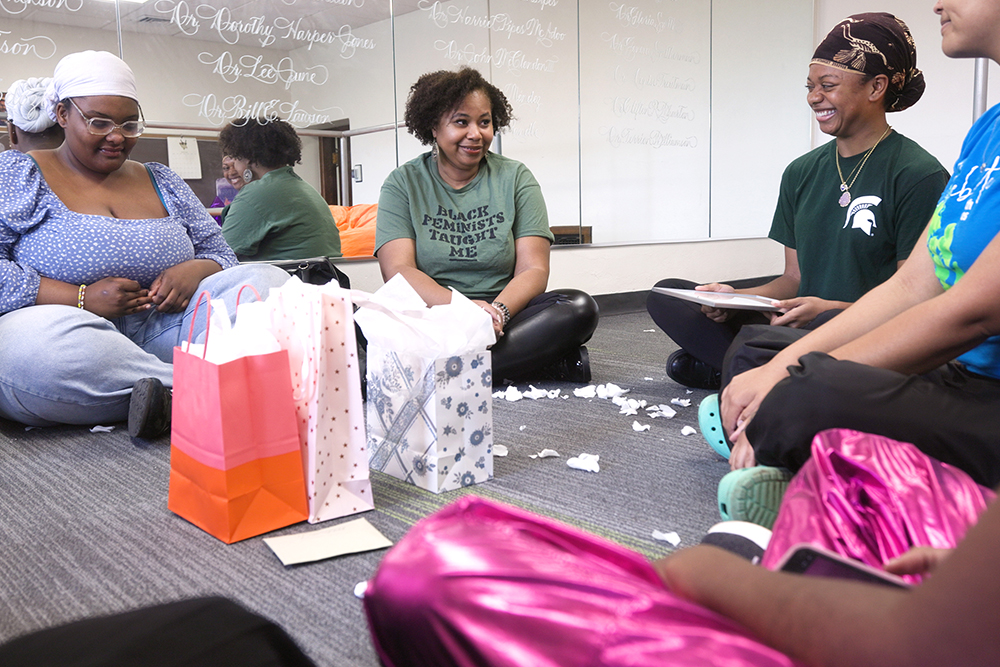
For Black women and girls, trained therapists are critical, but there are other mental health practitioners in their communities. It could be faith-based leaders or cross-generation ‘sista circles’ of Black women who act as support groups or community leaders and folks living out expansive types of health and wellness practices and cultural practices. People are engaging in it more than we talk about.
A lot of my research has been with middle school and high school students, and I work closely with college students as well. They are readily asking for mental health support, seeking it out. They’re engaging in types of therapy and asking for it in a way that’s different from my generation and the generations prior. I’m excited and grateful for this.
What are some missed connections in the public health system?
Right before I started my doctorate, I was working in the Department of Public Health for the city of Berkeley, California. The release of the city’s health status report found that 30% of Berkeley’s Black population had left in the previous 10-year period. We casually talked about this as we discussed social determinants of health, but we weren’t really asking questions of why these people left or where they went or how it was related to health inequities.
Because my doctoral program in public health drew upon approaches from multiple academic disciplines,I went to classes in the departments that were asking these questions. They weren’t always calling it health or tied to health, but they were talking about the social and structural determinants that we talk about in the public health field. Sociology was theorizing about social factors. Urban planning was creating interventions and doing historical analysis. Education was connecting changes with public agencies and policies. English was putting language to social phenomena that connect to personal experiences.
By studying in these different departments, I was able to learn that public health might talk about social determinants and health equity, but it didn’t always have the framing or the analysis for the deeper story.
What kind of training is important for the health care practitioners of tomorrow?
Because of the way health care is structured in the U.S., the psychologists are not in the same learning spaces as the future physicians or as the social workers or as the public health practitioners when they’re getting advanced training. They could be but, oftentimes, it’s not the way that schools are created. And they definitely are not in the same learning spaces as the city planners or educators or historians or artists. But again, they could be. In thinking about connecting this learning, this teaching, this training — it’s apparent these divisions hamper practitioners from deepening their learning and understanding for the benefit of the larger community.
When I’m teaching in the public health and medical space, I remind students that they are telling and collecting stories all the time. Health histories, intake conversations — it’s storytelling and, in addition to being for patients and clients, it’s also for health practitioners. It’s helping them remember — remembering the practices of wellness that patients and community members already have or remembering tools of family members, of ancestors, of cultural touchstones. These are wells of knowledge that aren’t in traditional health textbooks.
In health care, a lot of practitioners do practice art as an outlet, but don’t always connect that to their method or their practices in their offices, clinics or waiting rooms. The arts expose us to deeper histories, as well as to strategies of recovery, rehabilitation and healing.

