Jump to HeaderJump to Main ContentJump to Footer
Michigan State University
  • Browse Stories By

    Topics

    Explore stories by subject area

    • Arts and Culture
    • Business and Economy
    • Climate and Environment
    • Education and Learning
    • Engineering, Science and Technology
    • Government and Society
    • Health and Medicine
    • Media and Communications
    • MSU Leadership and Impact
    • Sports and Recreation
    • Student and Campus Experience
    View All Stories

    Collections

    Curated story series

    • Turfgrass
    • Ask the Expert
    • Big Ideas
    • Climate solutions
    • Water at MSU
    • Mobility
    • Spartan Perspectives
    • Student views
    • Graduate voices
    • Faculty voices
    View All Collections

    Featured

    Editor's picks

    • The Spartans behind your favorite Michigan golf courses

      July 22, 2026

      The Spartans behind your favorite Michigan golf courses

    • MSU in the 1990s: 10 Spartan milestones

      July 14, 2026

      MSU in the 1990s: 10 Spartan milestones

MSUTODAY
  • Browse Stories By

< Browse Stories By

Topics

Explore stories by subject area

  • Arts and Culture
  • Business and Economy
  • Climate and Environment
  • Education and Learning
  • Engineering, Science and Technology
  • Government and Society
  • Health and Medicine
  • Media and Communications
  • MSU Leadership and Impact
  • Sports and Recreation
  • Student and Campus Experience
  • View All Stories

Collections

Curated story series

  • Turfgrass
  • Ask the Expert
  • Big Ideas
  • Climate solutions
  • Water at MSU
  • Mobility
  • Spartan Perspectives
  • Student views
  • Graduate voices
  • Faculty voices
  • View All Collections

Featured

Editor's picks

  • The Spartans behind your favorite Michigan golf courses

    July 22, 2026

    The Spartans behind your favorite Michigan golf courses

  • MSU in the 1990s: 10 Spartan milestones

    July 14, 2026

    MSU in the 1990s: 10 Spartan milestones

  • For Media
  • Experts
  • Releases and Statements
  • Sign Up
  • Update Information

Resources

  • A to Z Index
  • Find People
  • Maps
  • Email
  • Student Information System (SIS)
  • D2L
  • Libraries
  • Tech Support
  • MSU Misconduct Hotline
  • Social Media Directory
  • Events Calendar
  • For Media
Michigan State University
MSUToday
  • For Media
  • Experts
  • Releases and Statements
  • Sign Up
  • Update Information
MSUTODAY
Natural Sciences

May 24, 2024

Above average: MSU ecologists review a century of statistical ecology

Crunching numbers isn’t exactly how Neil Gilbert, a postdoctoral researcher at Michigan State University, envisioned a career in ecology.

“I think it's a little funny that I'm doing this statistical ecology work because I was always OK at math, but never particularly enjoyed it,” he explained. “As an undergrad, I thought, I’ll be an ecologist — that means that I can be outside, looking at birds, that sort of thing.”  

As it turns out,” he chuckled, “ecology is a very quantitative discipline.” 

Now, working in the Zipkin Quantitative Ecology lab, Gilbert is the lead author on a new article in a special collection of the journal "Ecology" that reviews the past century of statistical ecology.  

Statistical ecology, or the study of ecological systems using mathematical equations, probability and empirical data, has grown over the last century. As increasingly large datasets and complex questions took center stage in ecological research, new tools and approaches were needed to properly address them.

Neil Gilbert

To better understand how statistical ecology changed over the last century, Gilbert and his fellow authors examined a selection of 36 highly cited papers on statistical ecology — all published in "Ecology" since its inception in 1920.  

The team’s paper examines work on statistical models across a range of ecological scales from individuals to populations, communities, ecosystems and beyond. The team also reviewed publications providing practical guidance on applying models. Gilbert noted that because, “many practicing ecologists lack extensive quantitative training,” such publications are key to shaping studies. 

"Ecology" is an advantageous place for such papers, because it is one of, “the first internationally important journals in the field. It has played an outsized role in publishing important work,” said lab leader Elise Zipkin, a Red Cedar Distinguished Associate Professor in the Department of Integrative Biology. “It has a reputation of publishing some of the most influential papers on the development and application of analytical techniques from the very beginning of modern ecological research." The team found a persistent evolution of models and concepts in the field, especially over the past few decades, driven by refinements in techniques and exponential increases in computational power. 

“Statistical ecology has exploded in the last 20 to 30 years because of advances in both data availability and the continued improvement of high-performance computing clusters,” Gilbert explained. 

Included among the 36 reviewed papers were a landmark 1945 study by Lee R. Dice on predicting the co-occurrence of species in space — "Ecology’s" most highly cited paper of all time — and an influential 2002 paper led by Darryl MacKenzie on occupancy models.  Ecologists use these models to identify the range and distribution of species in an environment.  

Mackenzie’s work on species detection and sampling, “played an outsized role in the study of species distributions,” says Zipkin. MacKenzie’s paper, which was cited more than 5,400 times, spawned various software packages that are now widely used by ecologists, she explained. 

The team didn’t look back just for nostalgia’s sake, however:  Zipkin, who is also director of MSU’s Ecology, Evolution, and Behavior, or EEB, program, was recently appointed as the Statistical Innovations Editor at "Ecology."
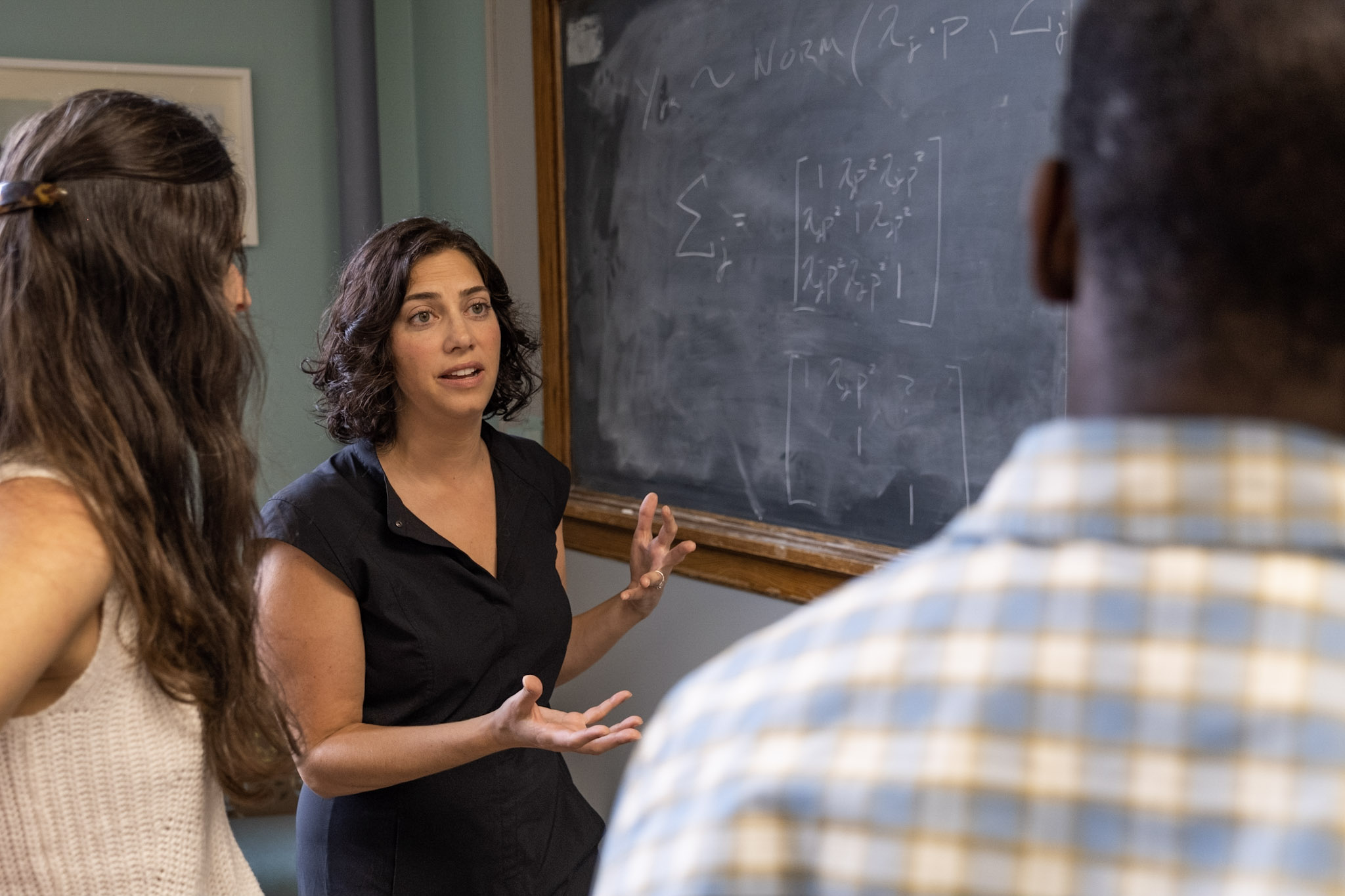
Elise Zipkin

Zipkin will be the first person to assume the role. As the inaugural appointee, she aims to build upon the journal’s legacy of publishing influential work on statistical ecology and reinvigorate "Ecology’s" influence in a decentralized publishing landscape. 

Both Zipkin and Gilbert noted that the emergence of new journals has diluted "Ecology’s" impact on statistical ecology in recent years. The lab’s 100-year review of statistical ecology work in "Ecology" provided an opportunity to highlight the journal’s longstanding influence, and to set the stage for a new emphasis on statistical ecology under Zipkin’s guidance. 

The Zipkin lab’s paper, and the special collection of "Ecology" in which it appears, are “the first efforts to drum up excitement,” about the future of statistical ecology, according to Zipkin. 

 “The field of ecology is always evolving. Understanding what has happened over the last century can help us to determine what might be coming in the next century and where the important innovations are likely to be,” she explained, “I want 'Ecology' to be the place where researchers publish their best, most broadly applicable research.” 

This story originally appeared on the College of Natural Science website. 

Natural SciencesEngineering, Science and TechnologyBiodiversity and WildlifeClimate and EnvironmentNatural Sciences

Latest News

MSUToday Weekly Update

The MSUToday Weekly Update email showcases how Spartans are making a difference through academic excellence, research impact and community outreach. Get inspired by these stories of innovation, collaboration and determination. Plus, enjoy photos and videos of campus and more MSU content to help keep you connected to the Spartan community.

Sign UpUpdate My Information

Connect With Us

Visit our Facebook pageVisit our page on XVisit our Instagram pageVisit our LinkedIn pageVisit our YouTube pageVisit our TikTok page

Health and Safety

  • MSU Police and Public Safety
  • Olin Health Center
  • Counseling & Psychiatric Services (CAPS)
  • University Health and Wellbeing
  • MSU Health Care
  • Civil Rights and Title IX
  • Our Commitment
  • Center for Survivors
  • Security & Fire Safety Report
  • University Policy on Relationship Violence and Sexual Misconduct
  • Notice of Non-Discrimination, Anti-Harassment and Non-Retaliation
  • Health Care Non-Discrimination Notice

Support Services

  • Disability Resources
  • Supportive Services
  • Learning Resources

Working at MSU

  • Human Resources
  • EBS Login
  • Job Postings
  • Employee Assistance Program

Reports

  • CARES Act Funding
  • Student Achievement and Outcomes

Contact us

517-355-1855

Address

Michigan State University 426 Auditorium Road East Lansing, MI 48824

Follow Us

  • Visit our Facebook page
  • Visit our page on X
  • Visit our Instagram page
  • Visit our TikTok page
  • Visit our LinkedIn page
  • Visit our YouTube page

If you're having accessibility issues, please let us know.

Know More: Campus Safety Information and ResourcesTransparency Reporting: Budget & Salary/Compensation
  • Contact Information|
  • Site Map|
  • Privacy Statement|
  • Site Accessibility|
  • Call MSU: (517) 355-1855|
  • Visit: msu.edu|
  • Notice of Nondiscrimination|

SPARTANS WILL|© Michigan State University|
