Sofia Mireles-Gonzalez grew up in a border town in Mexico and saw firsthand how the issues surrounding immigration affected her community. This experience influenced her to seek a degree in journalism to one day tell the stories of immigrants that often go untold.
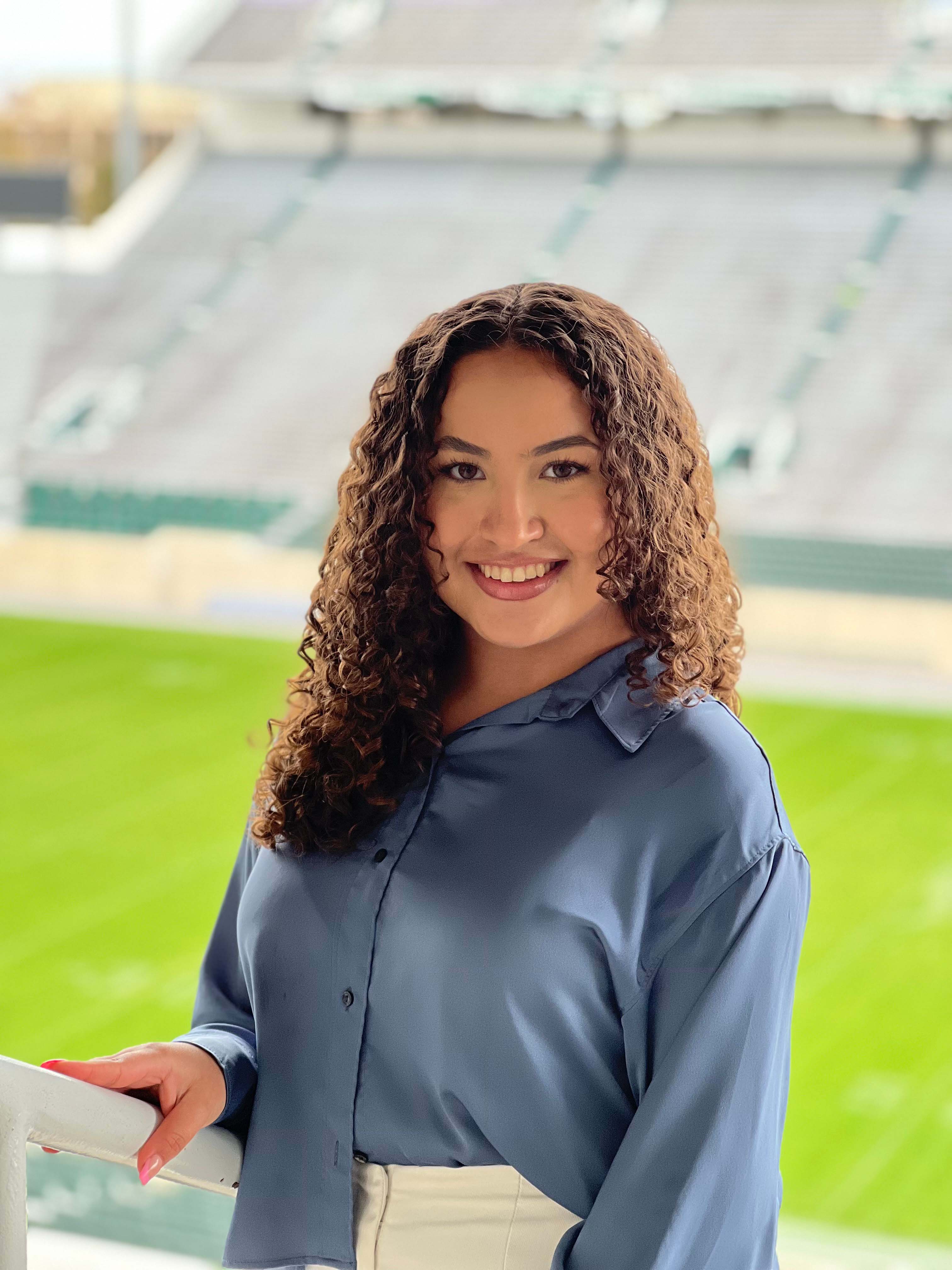
A third-year student in Michigan State University’s College of Communication Arts and Sciences, Mireles-Gonzalez is majoring in broadcast journalism and aims to pursue a minor in Chicano/Latino Studies, an educational path that she hopes will lead to a career as an immigration journalist.
“Growing up, I always saw the immigration issues that were happening and how it was affecting my community. I know that, many times, their stories are not told to other people so not everyone knows what is happening,” Mireles-Gonzalez said. “The goal of a journalist is to know the truth, so pursuing a career in journalism is going to help me know the truth about why they immigrated to another country and how they are being affected by immigration policies, immigration laws and things that are happening at the border.”
Mireles-Gonzalez was born in the United States, but was raised in Diaz Ordaz, a Mexican town known for “El Chalan,” a hand-pulled cable ferry that travels across the Rio Grande between Los Ebanos, Texas, and Gustavo Diaz Ordaz, Tamaulipas, Mexico.
After attending school in Mexico for 11 years, she made the transition to the American education system and started high school at IDEA Public Schools in Mission, Texas. During her time there, Mireles-Gonzalez lived with her aunt, uncle and cousins who hold an important place in her life. She traveled to Mexico every holiday weekend to visit her parents using “El Chalan,” and when the river was too high, she had to cross the international bridge from Camargo, Tamaulipas, to Rio Grande City in Texas.
“We had to walk the bridge to go to school. That was part of my story, going back and forth from Mexico to the U.S. and being raised in a small town,” she said.
Learning and understanding
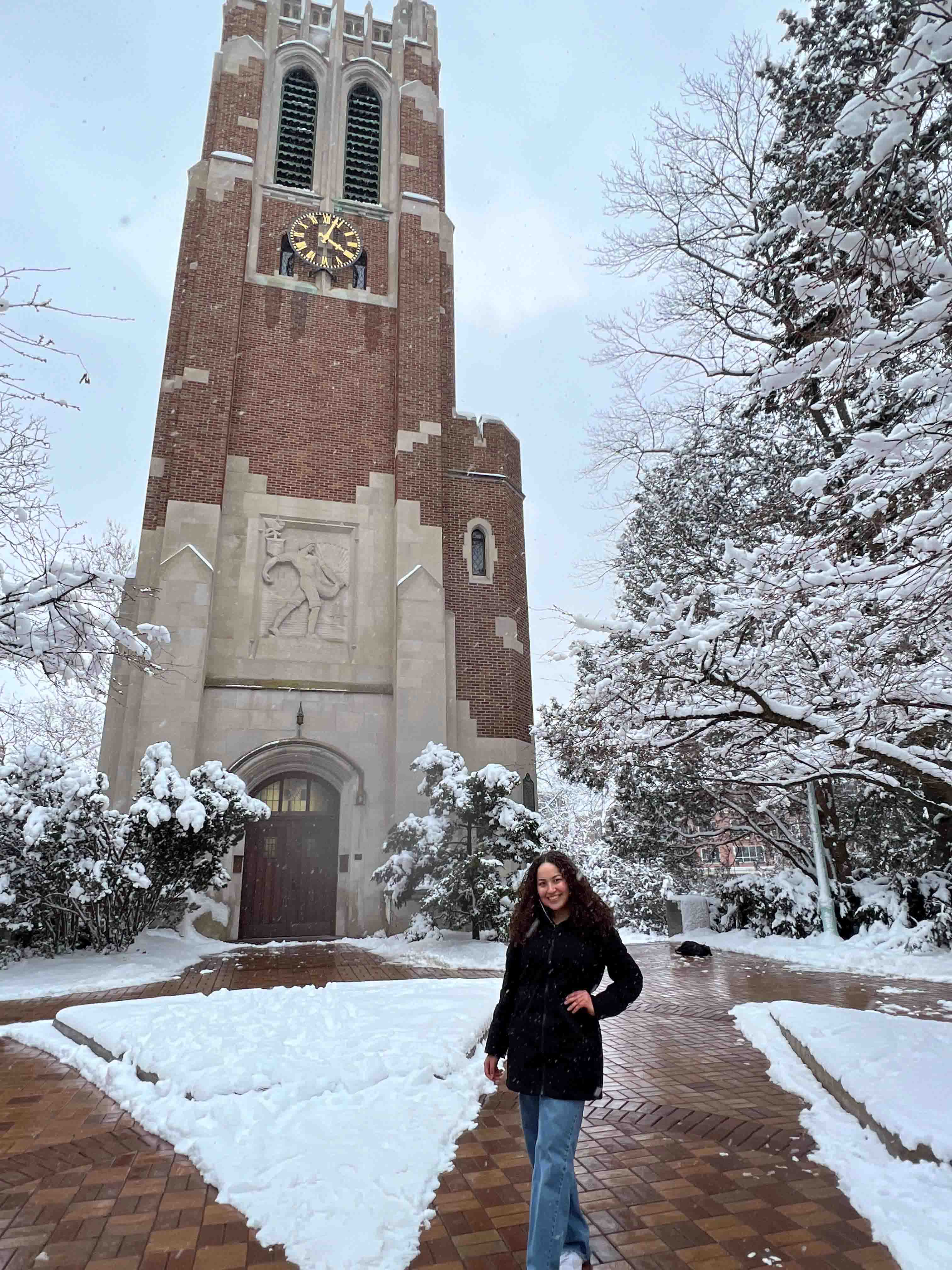
For the first 14 years of her life, Mireles-Gonzalez spoke only Spanish. When she started high school in Texas in 2017, she was sitting through Advanced Placement and pre-Advanced Placement classes that were taught completely in English. She relied heavily on her friends and teachers, many of whom were bilingual, to help as she transitioned from Spanish to English as her primary language.
It was a difficult transition for Mireles-Gonzalez who was always the top student in her classes during her school years in Mexico. She would frequently give speeches and presentations and participate in school events. Attending a school where classes were only taught in English made additional participation more difficult.
But a high school English teacher made an enormous difference for Mireles-Gonzalez as she began learning English.
“She had a lot of patience,” Mireles-Gonzalez said. “She was reading all my papers written in broken English, and I don’t know how she did it, but she understood everything. She sat with me multiple times and translated things I didn’t understand. Just being in her class every day and hearing her giving the class in English, it made it easier.”
Mireles-Gonzalez went through another difficult transition coming to MSU. She sat down in one of her first college classes and realized that she was the only Latina in the classroom, which made her question whether she belonged. With English being her second language, it was sometimes challenging to communicate with fellow students and professors, as they seemed to be completely adapted to an environment that was new for her.
“It’s a big cultural shock. It’s a big change in language,” Mireles-Gonzalez said. “I was having a hard time feeling comfortable talking to other people because impostor syndrome really hit me. I was like, ‘Why am I here? Why do other people talk faster than me? Why are other people able to communicate easier than me?’ But then I was able to also understand that we have different backgrounds.”
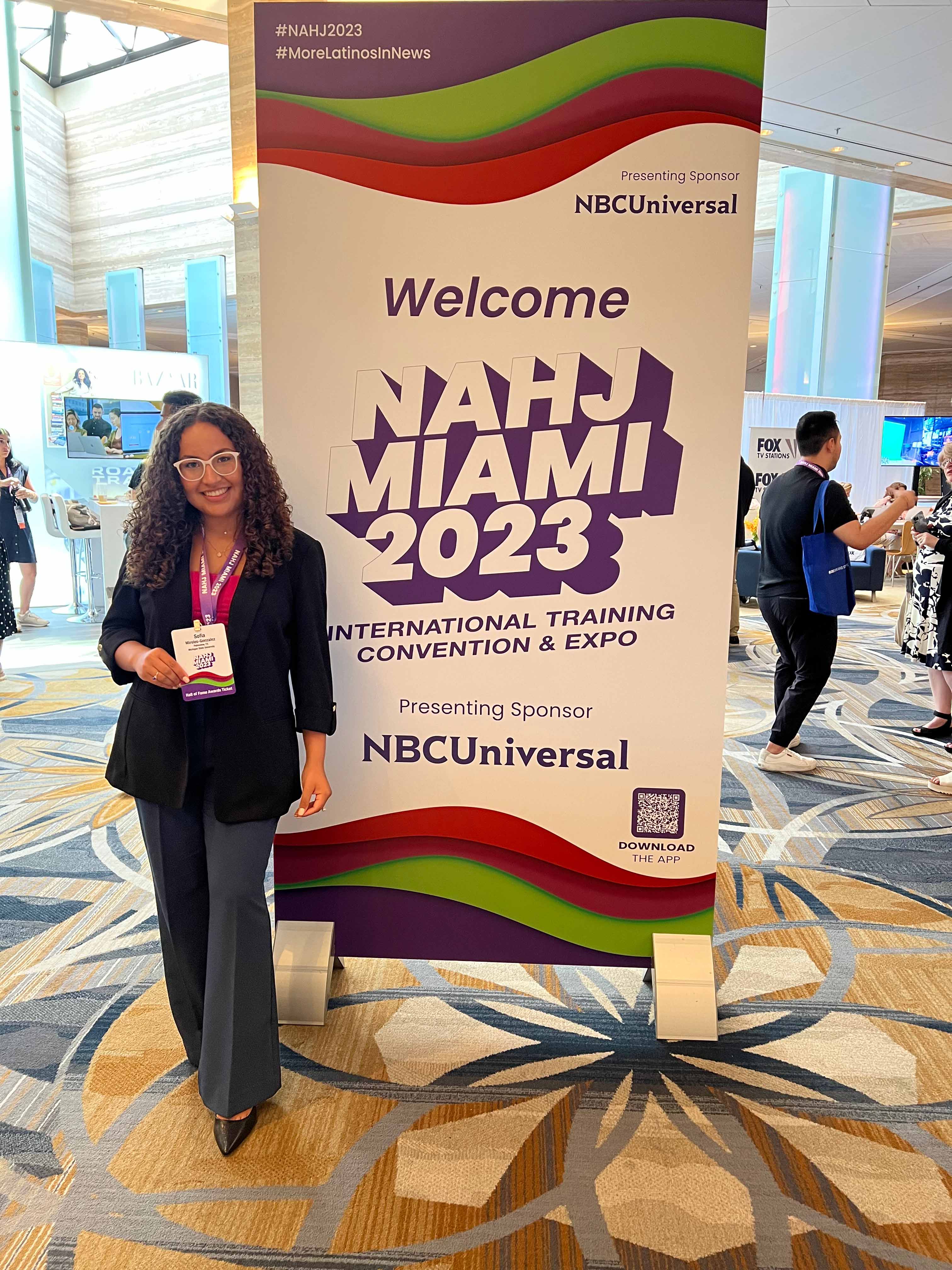
After attending the National Association of Hispanic Journalists International Training Convention and Expo in Miami, Florida, this past July — and being surrounded by other Latino/a journalists in the media industry — she said it was clear that being Latina and bilingual is a superpower.
Finding her footing with supportive programs
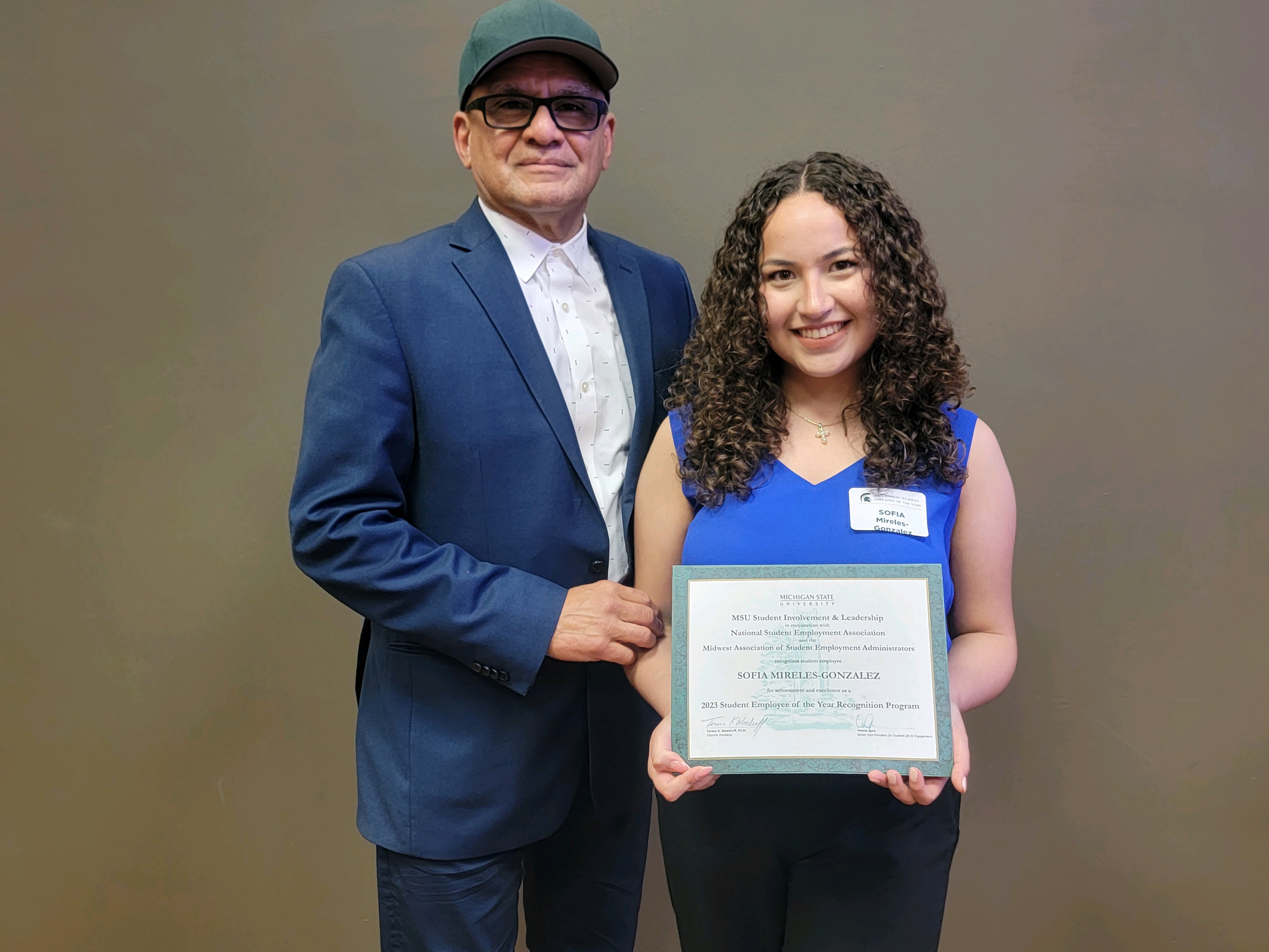
It all made for a difficult first year, but Mireles-Gonzalez found help and support through the university’s College Assistance Migrant Program, or CAMP — a residential program that assists migrant and seasonal farm worker students with academic, social and financial support to help them complete their first year at MSU. She also found help through the Office of Cultural and Academic Transitions, or OCAT, which offers cultural, social and academic activities to create supportive communities to help students better understand themselves and others.
OCAT offers student success initiatives with a focus on historically underrepresented student communities, with some initiatives including the Success Series, Maximizing Academic Growth In College summer transition program for incoming students, heritage month programming, support of the Council of Racial and Ethnic Students, the annual Dia de la Mujer Leadership and Empowerment Conference and other efforts.
Through their work, OCAT staff help students find a home away from home, especially for those students who come from historically underserved communities, said Juan Flores, an OCAT coordinator who focuses on Latinx student success initiatives. He likes to call OCAT’s efforts “learning beyond the classroom.”
In face-to-face settings, OCAT works with hundreds of MSU students, but, indirectly, OCAT supports the thousands of underrepresented students at MSU.
“We know the achievement gaps that exist for students from historically underrepresented communities, so we try to be very cognizant of that through our work. Ultimately, we want to help to retain them on campus and offer support via student-centered programming that will contribute to their success at and beyond MSU,” Flores said.
Almost as soon as she arrived on campus, Mireles-Gonzalez found a home through OCAT, and she immediately wanted to find a way to give back. An incoming first-year student at the time, she took the initiative to ask how she could help OCAT as it prepared for the academic year. It resulted in OCAT offering her a work-study job.
Flores and Jason Worley, an OCAT coordinator who focuses on Black and African American student success initiatives, found that Mireles-Gonzalez was a hard-working, personable and punctual student.
“She’s one of the most determined students I have met since I’ve been here,” Worley said. “There have been times where I’ve talked to her and she was visibly down, but not letting it break her. She’ll talk with you, and if you give her some advice, she’ll take it and run with it. She just keeps on going. Even when she’s down, she’s always getting back up.”
At times that were especially hard — like when Mireles-Gonzalez felt that she did not belong at MSU or that she did not want to be at MSU anymore — she relied heavily on her now-mentors: Migrant Student Services Director Luis Garcia, CAMP Student Services Coordinator Aleida Martinez-Flores and Migrant Student Services Associate Director Elias Lopez.
They were people she knew who would not let her down.
“Being in CAMP has really connected me with my community here at MSU,” she said. “It makes me feel more seen. I feel like the support system that I have with CAMP is amazing. Knowing that you have a support system, they have made me feel that I belong and that all the things I do are important.”
Coming from a different country and growing up speaking a different language may have made Mireles-Gonzalez’s transition to high school in Texas — and her transition to MSU — more difficult, but she is immensely proud of her background and heritage.
Creating her future
Before Mireles-Gonzalez graduates, she would like to start an MSU chapter of the National Association of Hispanic Journalists to bring together Latino/a students like her who are pursuing careers in media and entertainment and to help first-generation students through the transition to college.
And, one day, she hopes to give back to her family and her hometown and country as an immigration journalist.
“I’m the first in my family to go to college. Being able to share my knowledge with family members who weren’t able to or didn’t have the privilege to go to college, for me, was very important,” she said. “At MSU, I’m learning things that they weren’t able to learn. I really appreciate everything that I have accomplished here.”
Learn more about the Office of Cultural and Academic Transitions and the College Assistance Migrant Program at MSU.
MSU recognizes National Hispanic Heritage Month, and our community is coming together to strengthen resources, programs, research centers and scholarships serving Hispanic and Latinx students at MSU. Learn more at givingto.msu.edu.

