Jump to HeaderJump to Main ContentJump to Footer
Michigan State University
  • Browse Stories By

    Topics

    Explore stories by subject area

    • Arts and Culture
    • Business and Economy
    • Climate and Environment
    • Education and Learning
    • Engineering, Science and Technology
    • Government and Society
    • Health and Medicine
    • Media and Communications
    • MSU Leadership and Impact
    • Sports and Recreation
    • Student and Campus Experience
    View All Stories

    Collections

    Curated story series

    • Turfgrass
    • Ask the Expert
    • Big Ideas
    • Climate solutions
    • Water at MSU
    • Mobility
    • Spartan Perspectives
    • Student views
    • Graduate voices
    • Faculty voices
    View All Collections

    Featured

    Editor's picks

    • The Spartans behind your favorite Michigan golf courses

      July 22, 2026

      The Spartans behind your favorite Michigan golf courses

    • MSU in the 1990s: 10 Spartan milestones

      July 14, 2026

      MSU in the 1990s: 10 Spartan milestones

MSUTODAY
  • Browse Stories By

< Browse Stories By

Topics

Explore stories by subject area

  • Arts and Culture
  • Business and Economy
  • Climate and Environment
  • Education and Learning
  • Engineering, Science and Technology
  • Government and Society
  • Health and Medicine
  • Media and Communications
  • MSU Leadership and Impact
  • Sports and Recreation
  • Student and Campus Experience
  • View All Stories

Collections

Curated story series

  • Turfgrass
  • Ask the Expert
  • Big Ideas
  • Climate solutions
  • Water at MSU
  • Mobility
  • Spartan Perspectives
  • Student views
  • Graduate voices
  • Faculty voices
  • View All Collections

Featured

Editor's picks

  • The Spartans behind your favorite Michigan golf courses

    July 22, 2026

    The Spartans behind your favorite Michigan golf courses

  • MSU in the 1990s: 10 Spartan milestones

    July 14, 2026

    MSU in the 1990s: 10 Spartan milestones

  • For Media
  • Experts
  • Releases and Statements
  • Sign Up
  • Update Information

Resources

  • A to Z Index
  • Find People
  • Maps
  • Email
  • Student Information System (SIS)
  • D2L
  • Libraries
  • Tech Support
  • MSU Misconduct Hotline
  • Social Media Directory
  • Events Calendar
  • For Media
Michigan State University
MSUToday
  • For Media
  • Experts
  • Releases and Statements
  • Sign Up
  • Update Information
MSUTODAY
Entrepreneurship

April 20, 2022

Growing leaders in sustainability

MSU’s experiential learning programs prepare students for environmental stewardship careers

By: Melody Kindraka, Deon Foster, Kelsie Lane
Michigan State University’s 5,300-acre campus is the ideal laboratory for students interested in building a greener future. With more than 600 courses incorporating sustainability into the curriculum or through experiential learning, the university is preparing tomorrow’s leaders in environmental stewardship.

In addition, MSU is working toward the goal of achieving climate neutrality by 2050. By integrating the work necessary to meet this goal into research and curricular opportunities, the university also can create high-impact experiences for students and enhance student success.

Getting hands-on


The Residential Initiative on the Study of the Environment, or RISE, is a living-learning program for first- and second-year students with an interest in the environment. Open to any major, the students live in Bailey Hall and, on top of their classes, participate in co-curricular activities (shown in the gallery below).
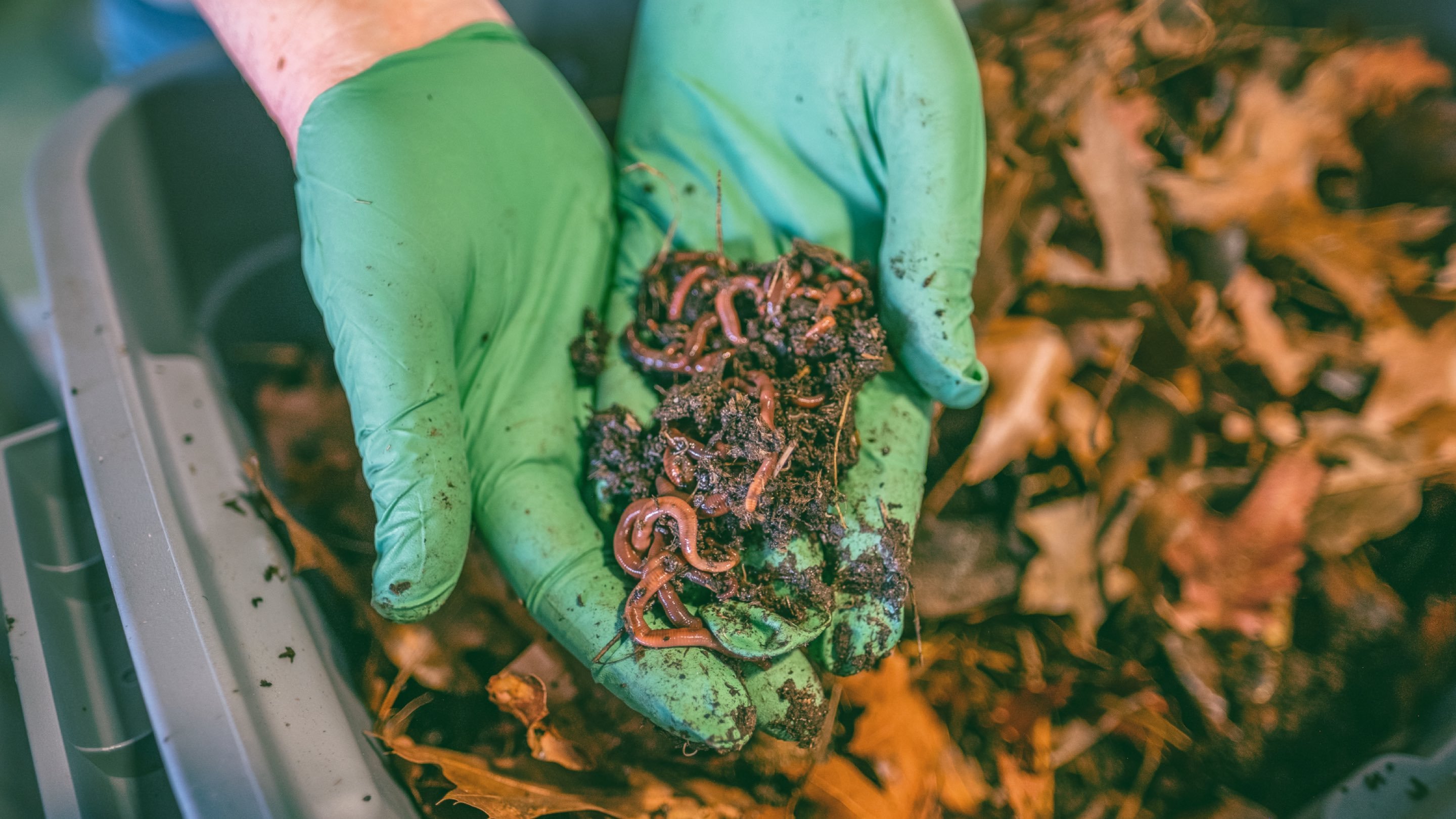
Hands in green gloves hold a bunch of worms and dirt above a bin full of brown leaves.
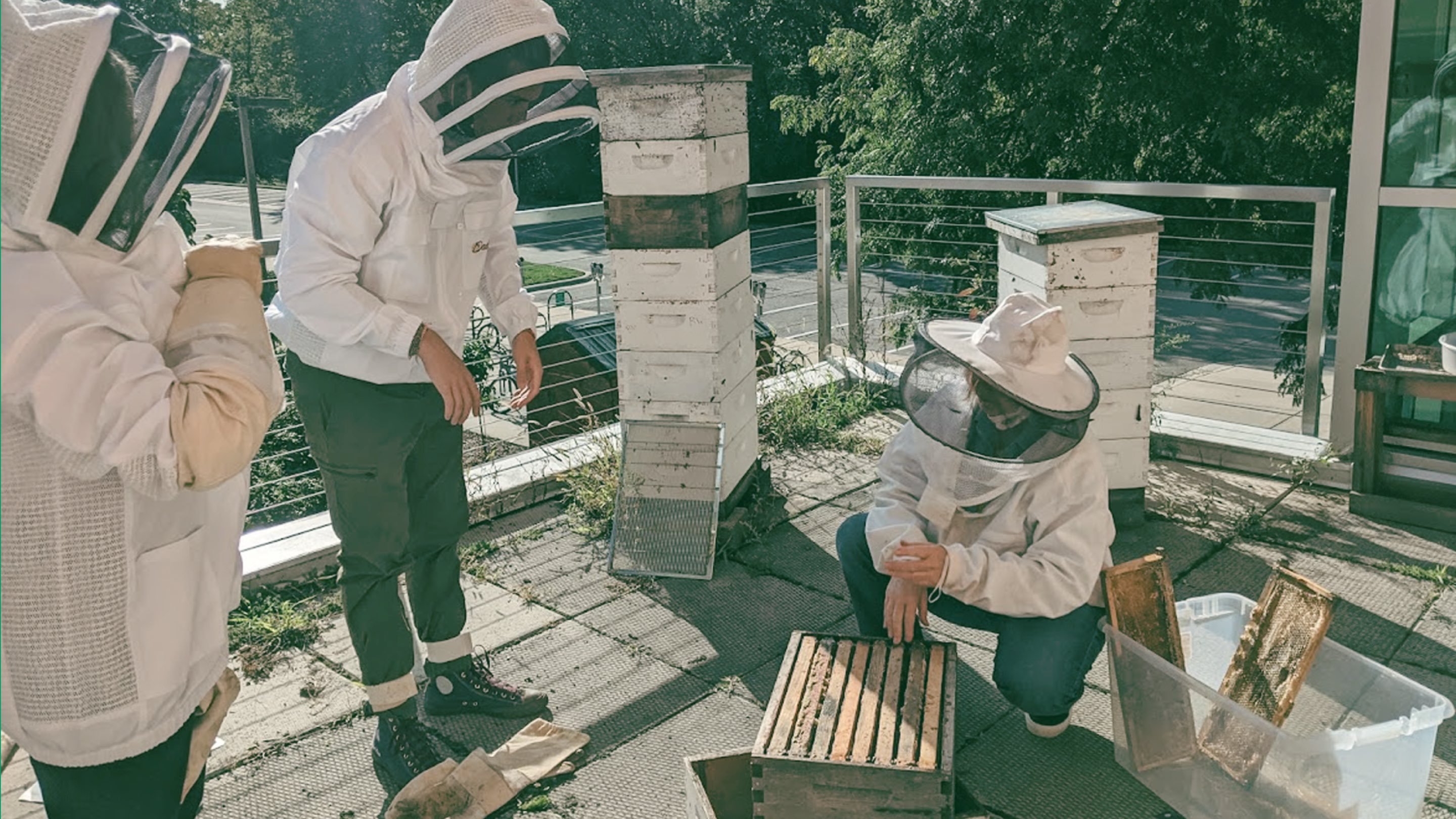
Three individuals in beekeeper outfits collect honey from a rooftop bee colony.
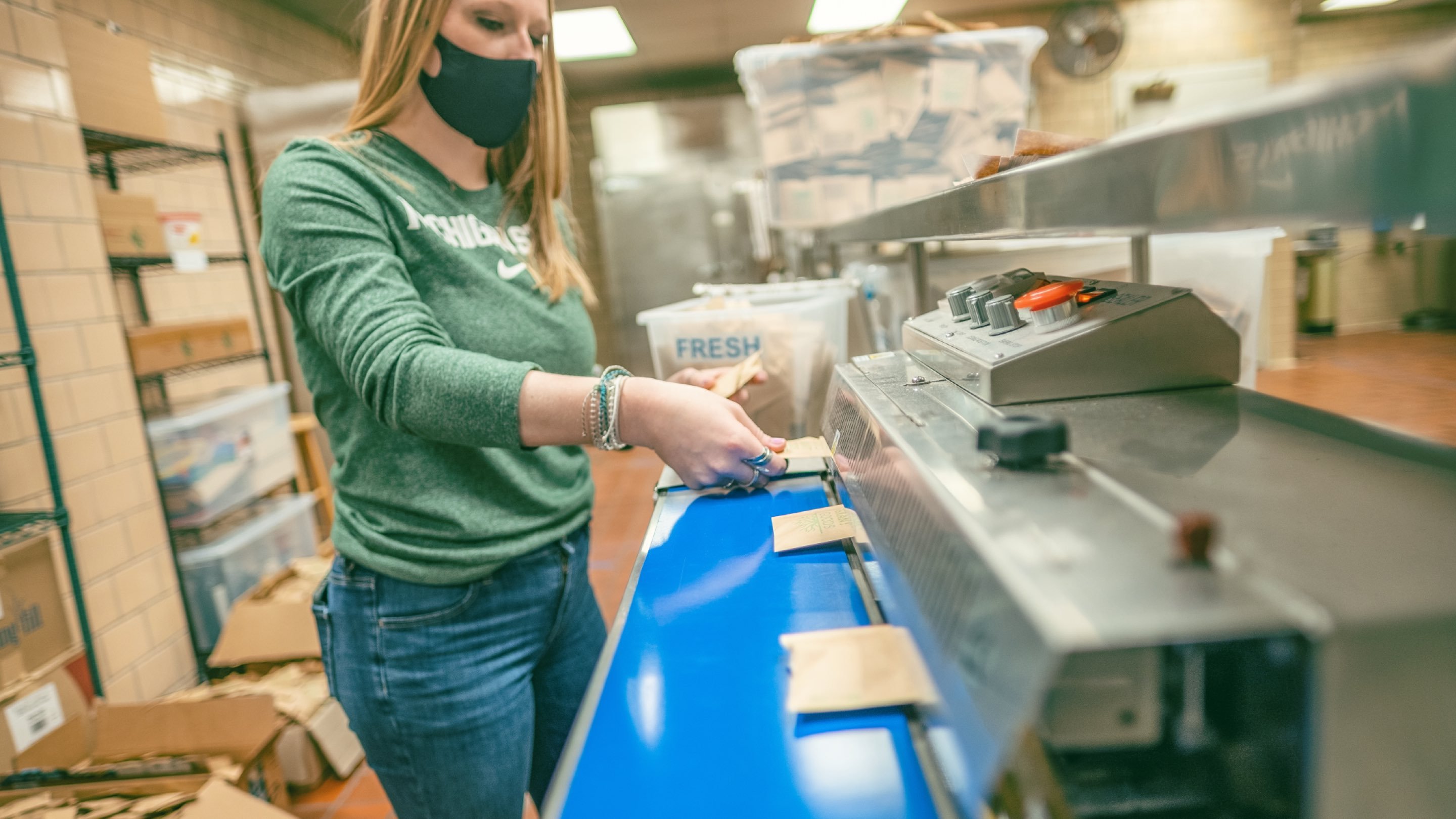
A female with bold hair in a MSU t-shirt and wearing a face covering inserts tea packets into a machine for closure.
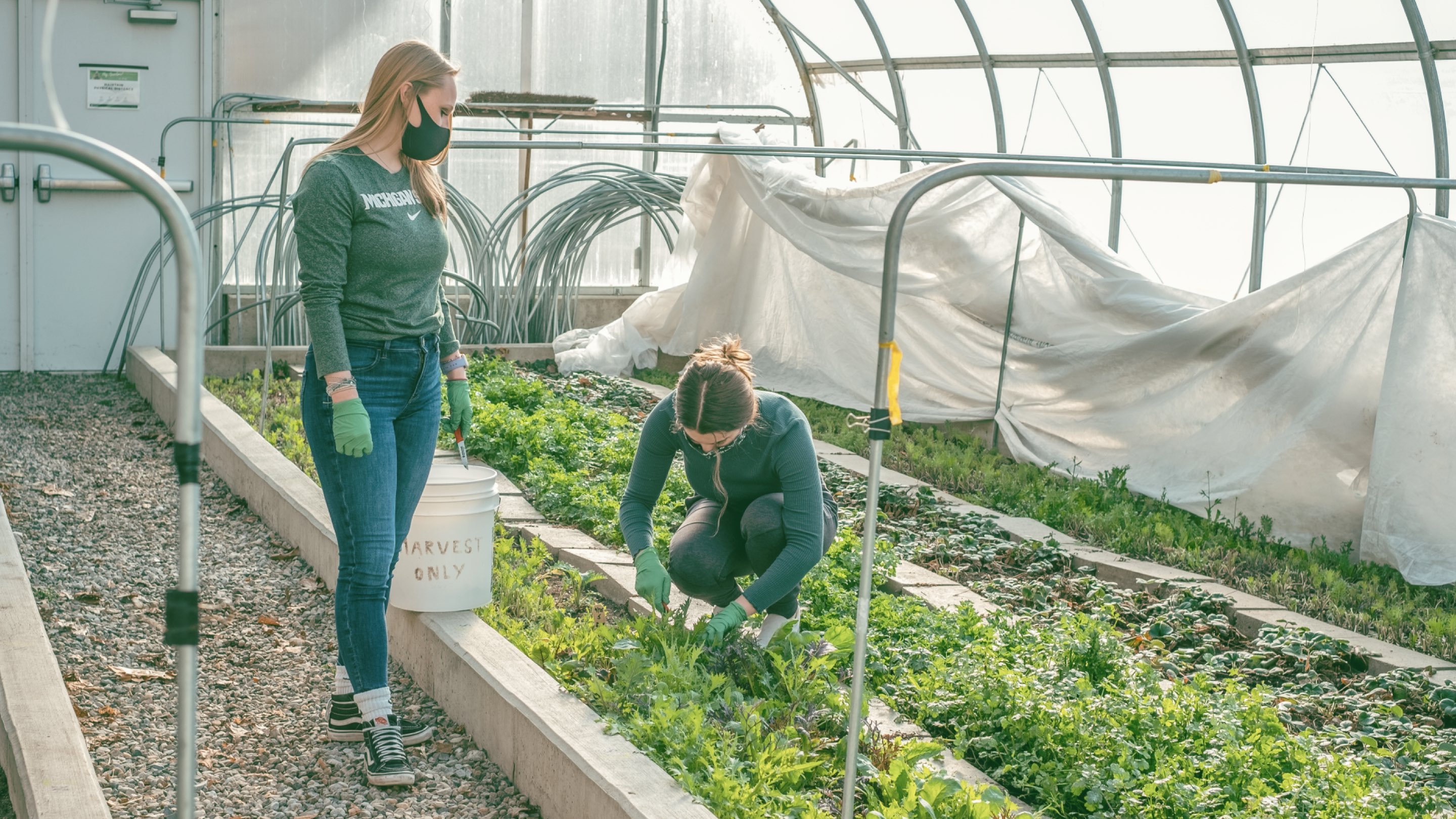
Two women, one standing and one kneeling, work on green plants in a greenhouse.
Hands in green gloves hold a bunch of worms and dirt above a bin full of brown leaves.
Three individuals in beekeeper outfits collect honey from a rooftop bee colony.

Vermicompost

Better known as the worm bins, vermicompost is a type of composting in which worms are used to consume and process food scraps, then excrete nutrient rich castings. Worm castings eliminate the need for synthetic fertilizers, creating a more sustainable food system that diverts food waste from landfills. Photo by Derrick L. Turner.

Bailey Bees

The project has the distinction of being the first time honeybee colonies were placed on the roof of a residence hall in the country. In maintaining the colonies, students learn how honeybees contribute to creating a sustainable food system by pollinating surrounding crops as well as providing honey. Photo courtesy of RISE.

Entrepreneurship

Land Grant Goods is a business founded and managed by RISE students. Participants have the opportunity to develop entrepreneurship and networking skills while also learning about food systems and environmentally conscious products. Students manage all aspects, from production to packaging to marketing goods. In this photo, a student is sealing packages of herbal tea, one of the Land Grant Goods products. Photo by Derrick L. Turner.

Bailey Greenhouse and Urban Farm

Situated directly outside Bailey Hall is a passive solar greenhouse, also known as a hoop house, where students grow organic produce. This growing space provides students the opportunity to directly engage in a small footprint sustainable food system. All harvested produce is sold to the dining hall at Brody. Photo by Derrick L. Turner.

Vermicompost

Better known as the worm bins, vermicompost is a type of composting in which worms are used to consume and process food scraps, then excrete nutrient rich castings. Worm castings eliminate the need for synthetic fertilizers, creating a more sustainable food system that diverts food waste from landfills. Photo by Derrick L. Turner.

Bailey Bees

The project has the distinction of being the first time honeybee colonies were placed on the roof of a residence hall in the country. In maintaining the colonies, students learn how honeybees contribute to creating a sustainable food system by pollinating surrounding crops as well as providing honey. Photo courtesy of RISE.

01 / 04

Individual students may also propose and lead their own project. Particularly, students are encouraged to explore undergraduate research opportunities and are connected with MSU researchers who share their passion area.

“When a student can meet and work alongside the MSU faculty doing research in their area of interest, we know there exists a greater likelihood of academic success,” says Laurie Thorp, RISE director.

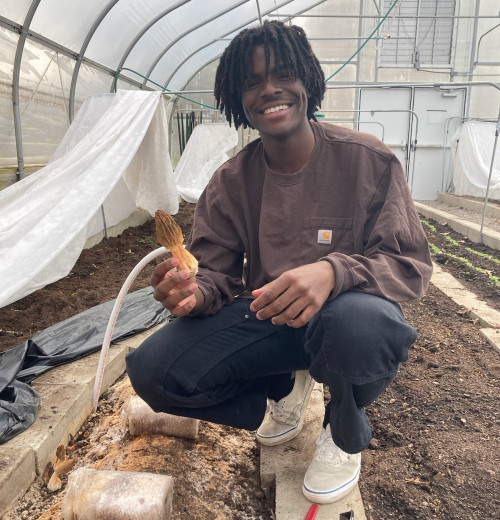
A Black man kneels next to a garden in a greenhouse. He is holding a morel mushroom.
First-year student Alassane Sow shows off a morel mushroom grown in the RISE hoop house as part of an undergraduate research project. Photo by Jorhie Beadle.
Alassane Sow, a first-year student in the College of Natural Science, is working with Greg Bonito, associate professor in the College of Agriculture and Natural Resources, on a process for growing morel mushrooms year-round. This could allow farmers to earn profit outside the growing season.

“This project is an intersection of my passion for fungi and my previous experience farming,” says Sow. “It has been great at teaching me more mycology and opening more opportunities to conduct research.”

Recently, RISE partnered with MSU’s Burgess Institute to open the Venture Kitchen as a space for students to develop food-based startups and products. The fully licensed commercial kitchen in the MSU Union is designed to support and encourage student food-based innovation and businesses.

“The hands-on opportunities immediately drew me in,” says Ben Bridge, a first-year student in the College of Engineering. “However, what stood out to me most is that RISE goes beyond just environmental endeavors; their main focus is on making students better servant leaders. They want to help cultivate my skill set and curiosity, which in turn would lead to environmental consciousness.”

Finding a place to belong


MSU has long been known for its living-learning programs, smaller learning communities that allow students who share similar academic interests to live together in a designated residence hall.

“The RISE program has given me so much support in finding out what I want to pursue in my future,” says Catherine Maurer, a sophomore studying biosystems and agricultural engineering. “My first semester was a tough transition, and the advising and support from RISE was integral to my mental health and success at MSU.”

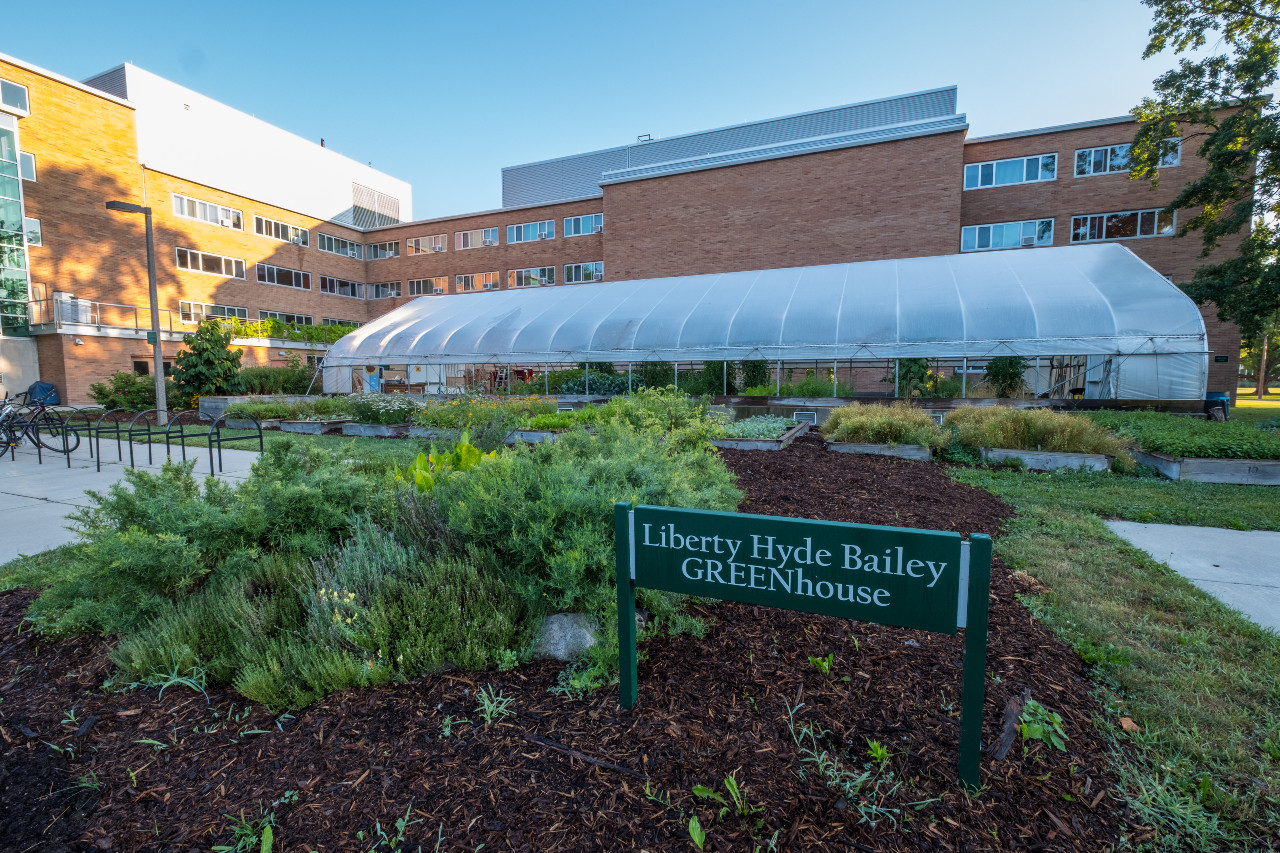
Blue skye and a brick building are shown behind a greenhouse seen from the side. In the forefront are green bushes in mulch with a sign saying: Liberty Hyde Bailey GREENhouse.
Bailey Hall and the Bailey Greenhouse and Urban Farm are named after Liberty Hyde Bailey, the 19th-century MSU professor known as “America’s Father of Modern Horticulture.” Photo by Jorhie Beadle.


As a residential learning program, the RISE staff can provide in-hall academic advising and peer tutoring. There are also weekly workshops to engage students in further hands-on learning and provide skills for academic success. Topics include time management, healthy study habits, purpose-finding and mental health care.

“As we continue to navigate the COVID-19 pandemic, we are focused on how to best serve students dealing with that trauma,” says Jorhie Beadle, RISE assistant director. “We started hosting ‘crafternoons’ as a time when students can get a reprieve from too much time in their heads and in front of computers. It is also a safe space for students to talk about the daily stressors of being in college.”

Feeling empowered to make change


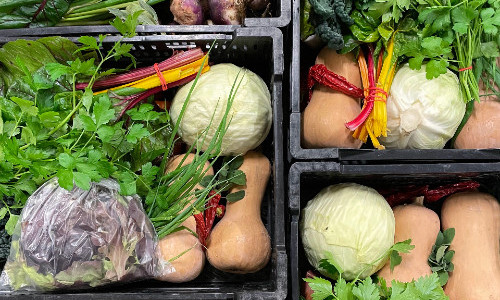
A view from above of colorful vegetables in crates.
Multiple varieties of seasonal, fresh produce are packed into crates for distribution to CSA members. Photo by Sarah Geurkink.
Five miles south of Bailey Hall is the 15-acre MSU Student Organic Farm, part of the Horticulture Department in the College of Agriculture and Natural Resources. The farm was created in 1999 by a group of students who were interested in learning how to grow food sustainably, and by 2002 they’d expanded to become the first year-round community supported agriculture, or CSA, program in Michigan. CSA members pay a fee and in return, receive seasonal produce grown by students on the farm.

“I do not have green thumbs and cannot grow a vegetable garden on my own. However, our family cares about eating fresh, locally produced organic vegetables,” says Antoinette Tessmer, associate professor in the Eli Broad College of Business and long-time member of the Student Organic Farm CSA. “The MSU CSA has been a great solution for our family. The students work hard on customer service whether that is in person or via email.”

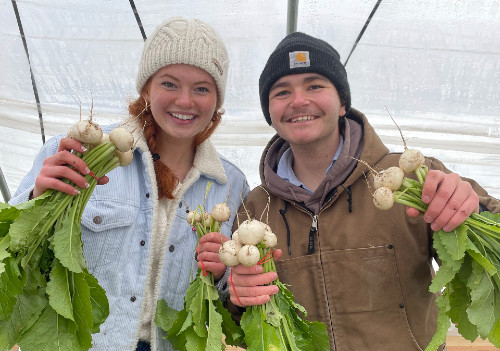
A female student on the left and male student on the right smile at the camera. They are standing in a greenhouse holding turnips.
Julianna Adams and Jacob May are proud of the successful results of their work – fresh, organic turnips. Photo by Sarah Geurkink.
Today, the farm is a certified organic, year-round teaching and production farm. It offers an immersive, hands-on farming experience for undergraduate crew members, participants of the Organic Farmer Training Program and volunteers. The farm also collaborates with MSU faculty to offer courses in organic farming, internships, interdisciplinary educational activities and research opportunities.

“Ultimately growing the produce isn’t the point; we are making a difference by growing people to be agents that feel empowered to make change,” says Sarah Geurkink, the farm manager. “I love the moment when I can stand back and the student crew is operating on its own. They are talking to each other, figuring out what to do next and taking pride in ownership.

“These students find a power they didn’t realize they had.”
"Give now" button on background of MSU trees with green overlay, Spartans in Action logo, Text: Support sustainability programs at MSU; give now

Seeding a sustainable future


Among the many resources and programs at the Student Organic Farm, the Organic Farmer Training Program is open to beginning farmers, homesteaders, educational gardeners and food system managers. Participants go on to successful endeavors in small-business farming, restaurant food distribution and youth-based garden learning opportunities.

Similarly, graduates of RISE hold jobs in solar energy production, agriculture research and production, environmental education and policy, urban gardening and food education, addressing food system inequities and packaging. Many also pursue master’s and doctoral degrees.

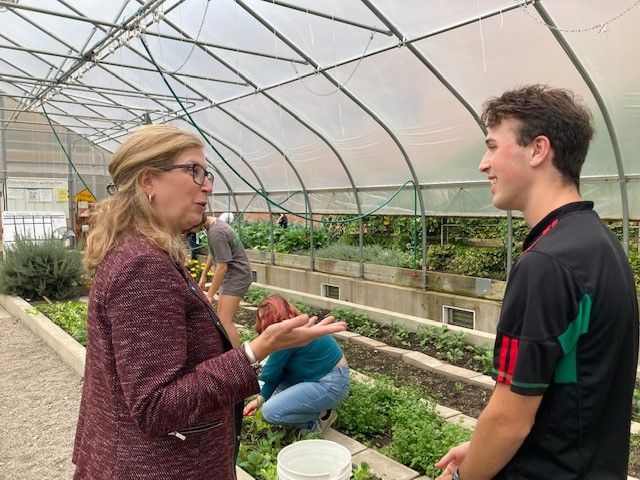
A view from the side of a white woman with blonde hair in a purple jacket speaking with a while man with brown hair in a black shirt. They are standing in a greenhouse.
Ben Bridge (right) talks to Teresa Woodruff (left), provost and executive vice president for academic affairs, about the Bailey Greenhouse and Urban Farm. Photo by Jorhie Beadle.
“RISE has benefitted my education by filling in the gaps not often taught at school and by nourishing real-world skill development,” Bridge says. “They helped us make four-year plans for college so we could look at how we want our classes to aid in our long-term goals. They brought in speakers who challenged us to think about real problems that we may have to apply our education to in the future.”

Alumnus Tremaine Phillips enjoys his continued connection with RISE, including talking to current students about possible career paths in clean energy and climate mitigation and adaptation. After graduating in 2008 with a degree in environmental economics and policy with a minor in environmental studies and a specialization in geographical information systems, Phillips received a master’s in public policy and a law degree from Ohio State University.

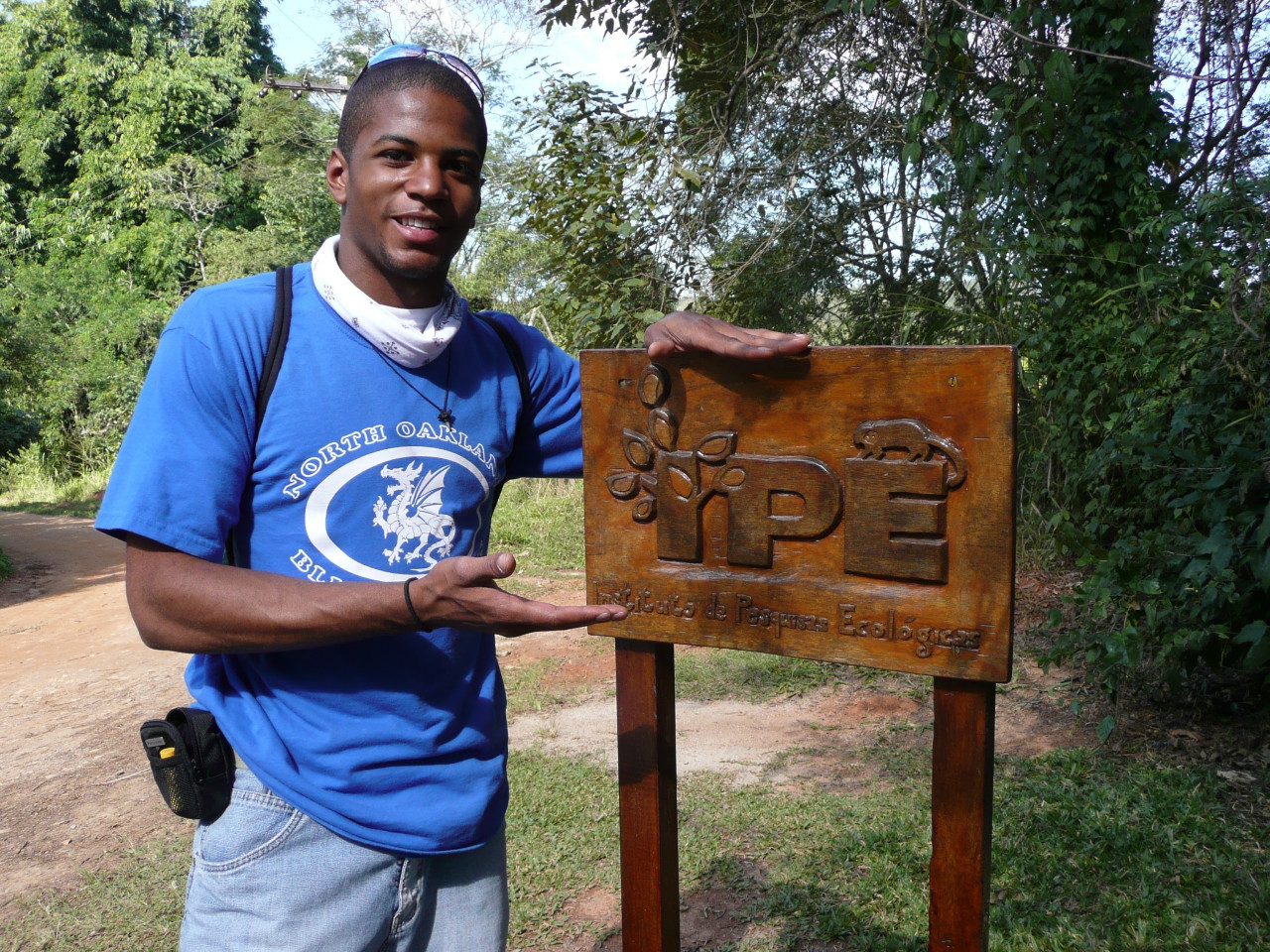
A Black man in a blue t-shirt stands next to a brown wooden sign.
While a student in 2007, Tremaine Phillips traveled to the Amazon through a Toyota Fellowship to work with TogetherGreen Audubon. He attributes his experience in RISE for obtaining the fellowship. Photo courtesy of Tremaine Phillips.
“As a Black student interested in addressing the impacts of climate change, I wanted to meet leaders in the field who looked like me and had an understanding of both environmental justice and injustice,” says Phillips. “In a big place like MSU, RISE gave me a community and connections with faculty, staff and alumni that provided some of my best experiences. RISE is a family and a network I’ll have for the rest of my life.”

In 2019, Phillips was appointed to the Michigan Public Service Commission by Governor Gretchen Whitmer. Prior to the appointment, he worked in the public and private sectors in roles focused on accelerating the nation’s transition to clean, renewable and reliable energy resources.

“Our students leave with the communication and leadership skills to address big problems — like climate change — from a cross-disciplinary perspective,” Thorp says. “In an increasingly divisive world, they have the experience and know-how to advance progress.

“They come away with a sense of belonging and purpose.”

MEDIA CONTACTS

Sarah Geurkink, Laurie Thorp
EntrepreneurshipBusiness and EconomyStudent LifeStudent and Campus ExperienceUndergraduate Research

Collection

more content from this collection

Climate Solutions

Latest News

MSUToday Weekly Update

The MSUToday Weekly Update email showcases how Spartans are making a difference through academic excellence, research impact and community outreach. Get inspired by these stories of innovation, collaboration and determination. Plus, enjoy photos and videos of campus and more MSU content to help keep you connected to the Spartan community.

Sign UpUpdate My Information

Connect With Us

Visit our Facebook pageVisit our page on XVisit our Instagram pageVisit our LinkedIn pageVisit our YouTube pageVisit our TikTok page

Health and Safety

  • MSU Police and Public Safety
  • Olin Health Center
  • Counseling & Psychiatric Services (CAPS)
  • University Health and Wellbeing
  • MSU Health Care
  • Civil Rights and Title IX
  • Our Commitment
  • Center for Survivors
  • Security & Fire Safety Report
  • University Policy on Relationship Violence and Sexual Misconduct
  • Notice of Non-Discrimination, Anti-Harassment and Non-Retaliation
  • Health Care Non-Discrimination Notice

Support Services

  • Disability Resources
  • Supportive Services
  • Learning Resources

Working at MSU

  • Human Resources
  • EBS Login
  • Job Postings
  • Employee Assistance Program

Reports

  • CARES Act Funding
  • Student Achievement and Outcomes

Contact us

517-355-1855

Address

Michigan State University 426 Auditorium Road East Lansing, MI 48824

Follow Us

  • Visit our Facebook page
  • Visit our page on X
  • Visit our Instagram page
  • Visit our TikTok page
  • Visit our LinkedIn page
  • Visit our YouTube page

If you're having accessibility issues, please let us know.

Know More: Campus Safety Information and ResourcesTransparency Reporting: Budget & Salary/Compensation
  • Contact Information|
  • Site Map|
  • Privacy Statement|
  • Site Accessibility|
  • Call MSU: (517) 355-1855|
  • Visit: msu.edu|
  • Notice of Nondiscrimination|

SPARTANS WILL|© Michigan State University|