Jump to HeaderJump to Main ContentJump to Footer
Michigan State University
  • Browse Stories By

    Topics

    Explore stories by subject area

    • Arts and Culture
    • Business and Economy
    • Climate and Environment
    • Education and Learning
    • Engineering, Science and Technology
    • Government and Society
    • Health and Medicine
    • Media and Communications
    • MSU Leadership and Impact
    • Sports and Recreation
    • Student and Campus Experience
    View All Stories

    Collections

    Curated story series

    • Turfgrass
    • Ask the Expert
    • Big Ideas
    • Climate solutions
    • Water at MSU
    • Mobility
    • Spartan Perspectives
    • Student views
    • Graduate voices
    • Faculty voices
    View All Collections

    Featured

    Editor's picks

    • The Spartans behind your favorite Michigan golf courses

      July 22, 2026

      The Spartans behind your favorite Michigan golf courses

    • MSU in the 1990s: 10 Spartan milestones

      July 14, 2026

      MSU in the 1990s: 10 Spartan milestones

MSUTODAY
  • Browse Stories By

< Browse Stories By

Topics

Explore stories by subject area

  • Arts and Culture
  • Business and Economy
  • Climate and Environment
  • Education and Learning
  • Engineering, Science and Technology
  • Government and Society
  • Health and Medicine
  • Media and Communications
  • MSU Leadership and Impact
  • Sports and Recreation
  • Student and Campus Experience
  • View All Stories

Collections

Curated story series

  • Turfgrass
  • Ask the Expert
  • Big Ideas
  • Climate solutions
  • Water at MSU
  • Mobility
  • Spartan Perspectives
  • Student views
  • Graduate voices
  • Faculty voices
  • View All Collections

Featured

Editor's picks

  • The Spartans behind your favorite Michigan golf courses

    July 22, 2026

    The Spartans behind your favorite Michigan golf courses

  • MSU in the 1990s: 10 Spartan milestones

    July 14, 2026

    MSU in the 1990s: 10 Spartan milestones

  • For Media
  • Experts
  • Releases and Statements
  • Sign Up
  • Update Information

Resources

  • A to Z Index
  • Find People
  • Maps
  • Email
  • Student Information System (SIS)
  • D2L
  • Libraries
  • Tech Support
  • MSU Misconduct Hotline
  • Social Media Directory
  • Events Calendar
  • For Media
Michigan State University
MSUToday
  • For Media
  • Experts
  • Releases and Statements
  • Sign Up
  • Update Information
MSUTODAY
Public Health

March 18, 2022

Study indicates COVID-19 patients fall into two main groups benefiting from two types of therapies

Spectrum Health, Michigan State University and six other organizations highlight the importance of precision medicine.

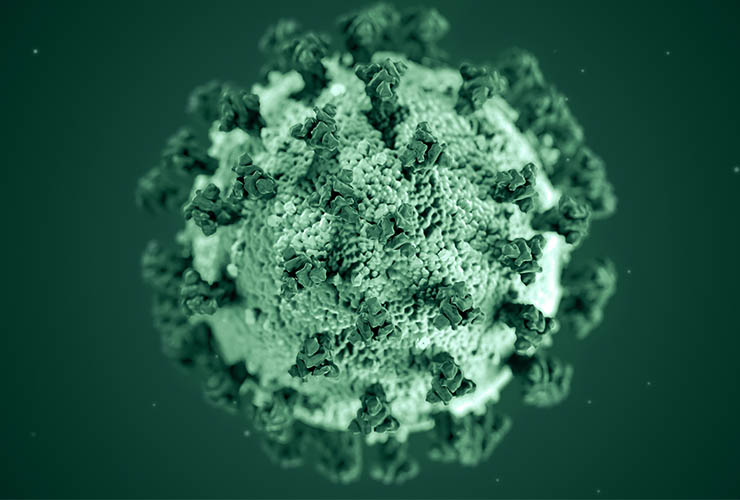
Coronavirus cell

Researchers from Spectrum Health and Michigan State University College of Human Medicine have determined that COVID-19 patients “cluster” into two main groups: one exhibiting a highly overactive immune system, the other exhibiting a specific type of immune suppression.

The study, published in Frontiers of Immunology, indicates that one group may benefit from immunosuppressive drugs, while the second group may need immune-stimulating therapies. This research demonstrates the uniqueness of individual patients with the same disease.

Surender Rajasekaran

“A greater understanding of severe COVID-19 could help identify which patients are at risk for complications, which would guide more precise therapy,” said senior author Surender Rajasekaran, assistant professor in the MSU College of Human Medicine Department of Pediatrics and Human Development, and research medical director and pediatric intensivist at Helen DeVos Children’s Hospital. “As the virus itself continues to evolve and change, there is immense benefit to understanding the patient’s response to infection.”

Rajasekaran says the research also highlights the importance of precision medicine and personalized care.

“Not only is this beneficial in battling the current COVID-19 health crisis, but it would also be invaluable in treating future infectious diseases,” Rajasekaran said. “Long-term, this data may help clinicians and researchers predict, prevent and treat long-term complications of COVID-19 and any other viral infections.”

Over the course of the pandemic, it has become clear that people have varied responses to infection by SARS-CoV-2. Some become severely ill, requiring complex life support such as mechanical ventilation with prolonged hospitalization, while others have mild infections. It is not yet well understood why some are asymptomatic and others suffer multiorgan failure or death. This unpredictability makes it challenging for clinicians to determine the clinical course and appropriate treatments.

SARS-CoV-2 is an RNA virus that elicits an overactive immune response that damages cells, which in some cases may lead to the chronic illness exhibited by “long-hauler” COVID-19 survivors. Early analysis of this complex immune response could lead to strategies that guide care by selecting the most beneficial therapies and stopping potentially harmful ones.

Rajasekaran said the goal of this study was to evaluate if the patient’s RNA could be used to increase understanding of COVID-19, and whether that knowledge could one day change the approach to the medical treatment of these patients.

The study was conducted on 51 adults hospitalized with COVID-19 at Spectrum Health. The researchers took a close look at each patient’s RNA within the blood. RNA could be used to uncover a body’s response to illness and could guide the clinical team to select the best treatment for any individual. This is the principle of “precision medicine,” an approach where treatments are tailored to one’s unique biological state.

The study team brought together researchers from across the country, representing Spectrum Health, Helen DeVos Children’s Hospital, Michigan State University, Grand Rapids Community College, Ambry Genetics, Calvin University, Grand Valley State University, Davenport University and Children’s Hospital of Pittsburgh.
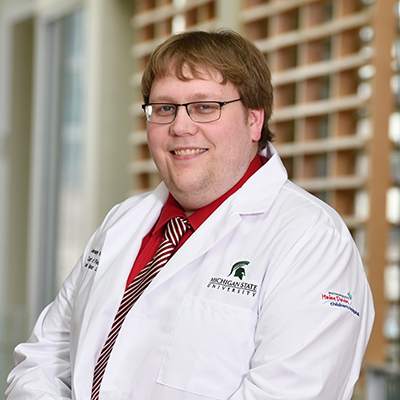
Jeremy W. Prokop

“Just like COVID-19, most infections result in a complex immune response for each patient, with no two individuals having the same biological outcomes,” said Jeremy W. Prokop, the first author of the Frontiers in Immunology paper, and assistant professor at Michigan State University College of Human Medicine. “Through forming strong collaborations between industry, academia, and hospitals we continue to get one step closer to treating each patient based on how the infection changes their body.”

Funding for this research was provided by donors from the Spectrum Health Foundation Gala 2020, the Spectrum Health - Michigan State University Alliance, Michigan State University and the National Institutes of Health.


Public HealthHealth and MedicineDiseases, Conditions and TreatmentsHealth Professions

Latest News

MSUToday Weekly Update

The MSUToday Weekly Update email showcases how Spartans are making a difference through academic excellence, research impact and community outreach. Get inspired by these stories of innovation, collaboration and determination. Plus, enjoy photos and videos of campus and more MSU content to help keep you connected to the Spartan community.

Sign UpUpdate My Information

Connect With Us

Visit our Facebook pageVisit our page on XVisit our Instagram pageVisit our LinkedIn pageVisit our YouTube pageVisit our TikTok page

Health and Safety

  • MSU Police and Public Safety
  • Olin Health Center
  • Counseling & Psychiatric Services (CAPS)
  • University Health and Wellbeing
  • MSU Health Care
  • Civil Rights and Title IX
  • Our Commitment
  • Center for Survivors
  • Security & Fire Safety Report
  • University Policy on Relationship Violence and Sexual Misconduct
  • Notice of Non-Discrimination, Anti-Harassment and Non-Retaliation
  • Health Care Non-Discrimination Notice

Support Services

  • Disability Resources
  • Supportive Services
  • Learning Resources

Working at MSU

  • Human Resources
  • EBS Login
  • Job Postings
  • Employee Assistance Program

Reports

  • CARES Act Funding
  • Student Achievement and Outcomes

Contact us

517-355-1855

Address

Michigan State University 426 Auditorium Road East Lansing, MI 48824

Follow Us

  • Visit our Facebook page
  • Visit our page on X
  • Visit our Instagram page
  • Visit our TikTok page
  • Visit our LinkedIn page
  • Visit our YouTube page

If you're having accessibility issues, please let us know.

Know More: Campus Safety Information and ResourcesTransparency Reporting: Budget & Salary/Compensation
  • Contact Information|
  • Site Map|
  • Privacy Statement|
  • Site Accessibility|
  • Call MSU: (517) 355-1855|
  • Visit: msu.edu|
  • Notice of Nondiscrimination|

SPARTANS WILL|© Michigan State University|