Jump to HeaderJump to Main ContentJump to Footer
Michigan State University
MSUTODAY
  • Browse Stories By

    Topics

    Explore stories by subject area

    • Arts and Culture
    • Business and Economy
    • Climate and Environment
    • Education and Learning
    • Engineering, Science and Technology
    • Government and Society
    • Health and Medicine
    • Media and Communications
    • MSU Leadership and Impact
    • Sports and Recreation
    • Student and Campus Experience
    View All Stories

    Collections

    Curated story series

    • Turfgrass
    • Ask the Expert
    • Big Ideas
    • Climate solutions
    • Water at MSU
    • Mobility
    • Spartan Perspectives
    • Student views
    • Graduate voices
    • Faculty voices
    View All Collections

    Featured

    Editor's picks

    • 9 reasons to love being a Spartan

      Aug. 28, 2026

      9 reasons to love being a Spartan

    • NIH awards multi-university team over $4M to improve women’s health

      Sept. 15, 2026

      NIH awards multi-university team over $4M to improve women’s health

MSUTODAY
  • Browse Stories By

< Browse Stories By

Topics

Explore stories by subject area

  • Arts and Culture
  • Business and Economy
  • Climate and Environment
  • Education and Learning
  • Engineering, Science and Technology
  • Government and Society
  • Health and Medicine
  • Media and Communications
  • MSU Leadership and Impact
  • Sports and Recreation
  • Student and Campus Experience
  • View All Stories

Collections

Curated story series

  • Turfgrass
  • Ask the Expert
  • Big Ideas
  • Climate solutions
  • Water at MSU
  • Mobility
  • Spartan Perspectives
  • Student views
  • Graduate voices
  • Faculty voices
  • View All Collections

Featured

Editor's picks

  • 9 reasons to love being a Spartan

    Aug. 28, 2026

    9 reasons to love being a Spartan

  • NIH awards multi-university team over $4M to improve women’s health

    Sept. 15, 2026

    NIH awards multi-university team over $4M to improve women’s health

  • For Media
  • Experts
  • Releases and Statements
  • Sign Up
  • Update Information

Resources

  • A to Z Index
  • Find People
  • Maps
  • Email
  • Student Information System (SIS)
  • D2L
  • Libraries
  • Tech Support
  • MSU Misconduct Hotline
  • Social Media Directory
  • Events Calendar
  • For Media
Michigan State University
MSUToday
  • For Media
  • Experts
  • Releases and Statements
  • Sign Up
  • Update Information
MSU Economic Impact

Sept. 29, 2021

What does groundwater have to do with lake algal blooms?

By: Emilie Lorditch

The source of troublesome lake algae is not always clear, but an interdisciplinary research project with two Michigan State University researchers found an answer may include colder groundwater that feeds some inland lakes. This finding could help predict the formation of harmful algal blooms to mitigate their impact on drinking water, tourism, fishing and fish toxicity.

“I have been monitoring the HABs in Gull Lake in Michigan for many years,” said Elena Litchman, an MSU Foundation professor of aquatic ecology at the Kellogg Biological Station and in the Department of Integrative Biology in the College of Natural Science. “We want to understand the processes that lead to HABs.”

A lake could have HABs one year and the next year, the lake is clear. The processes that trigger HABs are complex and it has been difficult for researchers to identify a clear answer.  

Litchman collaborated with Phanikumar Mantha, a professor in the Department of Civil and Environmental Engineering in the College of Engineering, combining their expertise in aquatic ecology and hydrological engineering respectively, to create a hydrodynamic model of Gull Lake with the help of Mantha’s former graduate student, Ammar Safaie.  

Their research was published Sept. 1 in the Journal of Geophysical Research: Biogeosciences.
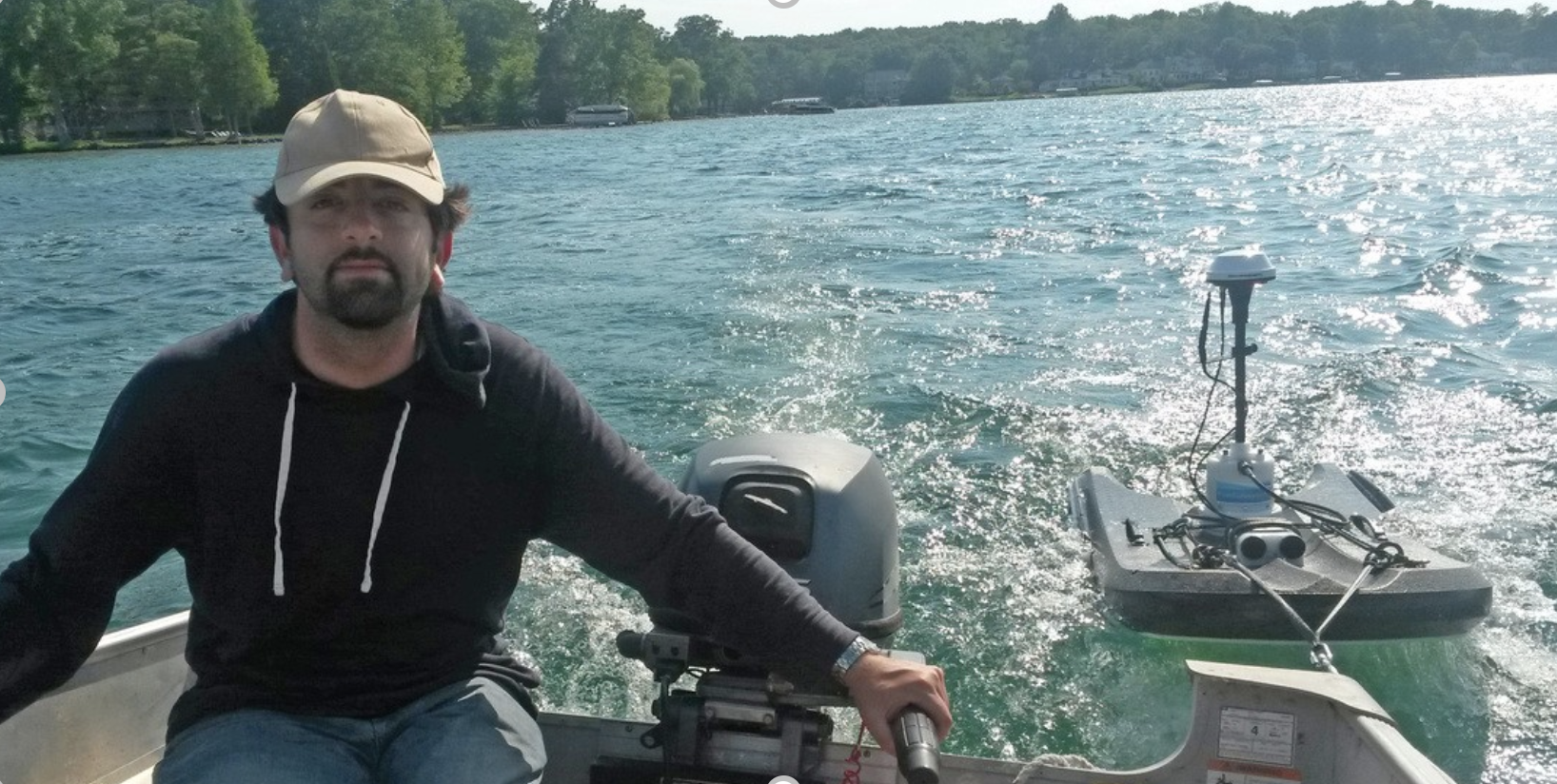
Former graduate student Ammar Safaie collecting bathymetry data for the Gull Lake model in 2015 Credit Phani Mantha
Ammar Safaie collecting bathymetry data for the Gull Lake model in 2015 Credit Image Courtesy of Phani Mantha

To create the model, Safaie crisscrossed Gull Lake to measure varying lake depths as part of a bathymetric survey in which sound waves are transmitted from the boat to the lake bottom. Instruments also measured at varying depths, lake temperature, dissolved oxygen, nutrients and phytoplankton. All the data were combined into the model, but one piece was amiss.

“The observed (deep) lake temperatures weren’t matching the model’s,” Mantha said. “The model’s temperatures were warmer, and it wasn’t making any sense initially.”

After several months, the research team figured out the missing ingredient to their model was groundwater. Gull Lake is special because it’s fed with groundwater that cools deep lake temperatures during summer months that may inhibit bloom formation.  

“This is an important finding because groundwater levels are declining worldwide,” Mantha said. “Less groundwater means that the deep waters in similar inland lakes may warm, triggering the growth of algae at some depths and depleting oxygen at other depths with implications for the survival of cold-water fish species.”  

This could mean more frequent algae outbreaks in lakes around the world when groundwater is depleted. The team plans to use the model to help predict the chances of HABs in other inland lakes.

This research was supported by the grants from the National Science Foundation 10-27061, 13-31852 and 17-54250.



MSU Economic ImpactMSU Leadership and ImpactEngineeringEngineering, Science and TechnologyEngineering

Latest News

MSUToday Weekly Update

The MSUToday Weekly Update email showcases how Spartans are making a difference through academic excellence, research impact and community outreach. Get inspired by these stories of innovation, collaboration and determination. Plus, enjoy photos and videos of campus and more MSU content to help keep you connected to the Spartan community.

Sign UpUpdate My Information

Connect With Us

Visit our Facebook pageVisit our page on XVisit our Instagram pageVisit our LinkedIn pageVisit our YouTube pageVisit our TikTok page

Health and Safety

  • MSU Police and Public Safety
  • Olin Health Center
  • Counseling & Psychiatric Services (CAPS)
  • University Health and Wellbeing
  • MSU Health Care
  • Civil Rights and Title IX
  • Our Commitment
  • Center for Survivors
  • Security & Fire Safety Report
  • University Policy on Relationship Violence and Sexual Misconduct
  • Notice of Non-Discrimination, Anti-Harassment and Non-Retaliation
  • Health Care Non-Discrimination Notice

Support Services

  • Disability Resources
  • Supportive Services
  • Learning Resources

Working at MSU

  • Human Resources
  • EBS Login
  • Job Postings
  • Employee Assistance Program

Reports

  • CARES Act Funding
  • Student Achievement and Outcomes

Contact us

517-355-1855

Address

Michigan State University 426 Auditorium Road East Lansing, MI 48824

Follow Us

  • Visit our Facebook page
  • Visit our page on X
  • Visit our Instagram page
  • Visit our TikTok page
  • Visit our LinkedIn page
  • Visit our YouTube page

If you're having accessibility issues, please let us know.

Know More: Campus Safety Information and ResourcesTransparency Reporting: Budget & Salary/Compensation
  • Contact Information|
  • Site Map|
  • Privacy Statement|
  • Site Accessibility|
  • Call MSU: (517) 355-1855|
  • Visit: msu.edu|
  • Notice of Nondiscrimination|

SPARTANS WILL|© Michigan State University|