Jump to HeaderJump to Main ContentJump to Footer
Michigan State University
MSUTODAY
  • Browse Stories By

    Topics

    Explore stories by subject area

    • Arts and Culture
    • Business and Economy
    • Climate and Environment
    • Education and Learning
    • Engineering, Science and Technology
    • Government and Society
    • Health and Medicine
    • Media and Communications
    • MSU Leadership and Impact
    • Sports and Recreation
    • Student and Campus Experience
    View All Stories

    Collections

    Curated story series

    • Turfgrass
    • Ask the Expert
    • Big Ideas
    • Climate solutions
    • Water at MSU
    • Mobility
    • Spartan Perspectives
    • Student views
    • Graduate voices
    • Faculty voices
    View All Collections

    Featured

    Editor's picks

    • 9 reasons to love being a Spartan

      Aug. 28, 2026

      9 reasons to love being a Spartan

    • NIH awards multi-university team over $4M to improve women’s health

      Sept. 15, 2026

      NIH awards multi-university team over $4M to improve women’s health

MSUTODAY
  • Browse Stories By

< Browse Stories By

Topics

Explore stories by subject area

  • Arts and Culture
  • Business and Economy
  • Climate and Environment
  • Education and Learning
  • Engineering, Science and Technology
  • Government and Society
  • Health and Medicine
  • Media and Communications
  • MSU Leadership and Impact
  • Sports and Recreation
  • Student and Campus Experience
  • View All Stories

Collections

Curated story series

  • Turfgrass
  • Ask the Expert
  • Big Ideas
  • Climate solutions
  • Water at MSU
  • Mobility
  • Spartan Perspectives
  • Student views
  • Graduate voices
  • Faculty voices
  • View All Collections

Featured

Editor's picks

  • 9 reasons to love being a Spartan

    Aug. 28, 2026

    9 reasons to love being a Spartan

  • NIH awards multi-university team over $4M to improve women’s health

    Sept. 15, 2026

    NIH awards multi-university team over $4M to improve women’s health

  • For Media
  • Experts
  • Releases and Statements
  • Sign Up
  • Update Information

Resources

  • A to Z Index
  • Find People
  • Maps
  • Email
  • Student Information System (SIS)
  • D2L
  • Libraries
  • Tech Support
  • MSU Misconduct Hotline
  • Social Media Directory
  • Events Calendar
  • For Media
Michigan State University
MSUToday
  • For Media
  • Experts
  • Releases and Statements
  • Sign Up
  • Update Information
Engineering, Science and Technology

Aug. 3, 2023

Spartans help make a surprising discovery about the sun

MSU physicists were part of an international collaboration that has discovered the highest-energy light coming from the sun

By: Matt Davenport

Sometimes, the best place to hide a secret is in broad daylight. Just ask the sun.

“The sun is more surprising than we knew,” said Mehr Un Nisa, a postdoctoral research associate at Michigan State University. “We thought we had this star figured out, but that’s not the case.”

Nisa, who will soon be joining MSU’s faculty, is the corresponding author of a new paper in the journal Physical Review Letters that details the discovery of the highest-energy light ever observed from the sun.

The international team behind the discovery also found that this type of light, known as gamma rays, is surprisingly bright. That is, there’s more of it than scientists had previously anticipated.

Watching like a HAWC

Although the high-energy light doesn’t reach the Earth’s surface, these gamma rays create telltale signatures that were detected by Nisa and her colleagues working with the High-Altitude Water Cherenkov Observatory, or HAWC.
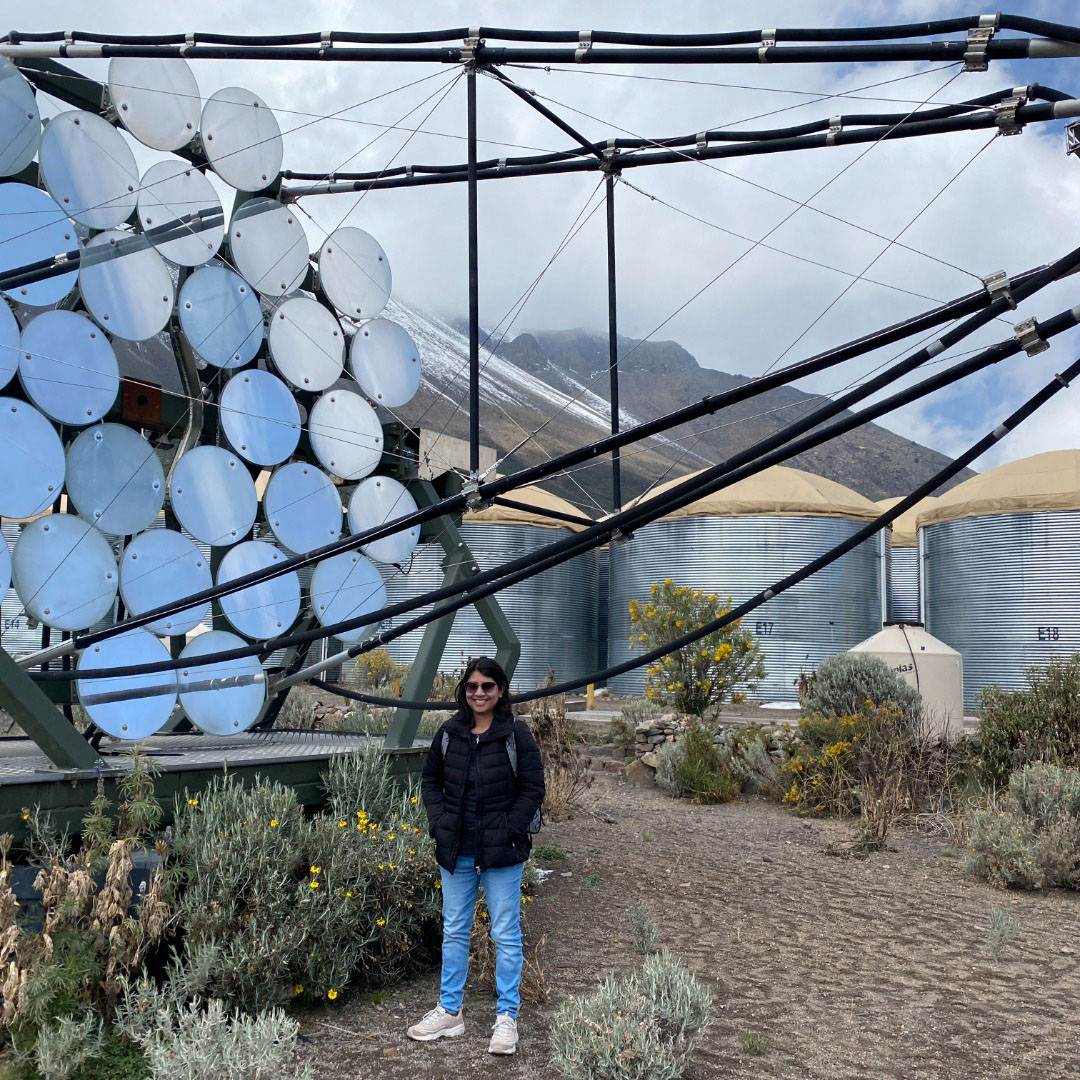
Mehr Un Nisa stands in front of some of the water tanks at the High-Altitude Water Cherenkov Observatory. A snow-capped mountain peak can be seen in the background, disappearing into the clouds.
Michigan State University postdoctoral researcher Mehr Un Nisa at the High-Altitude Water Cherenkov Observatory. Credit: Courtesy of Mehr Un Nisa

Funded by the National Science Foundation and the National Council of Humanities, Science and Technology, HAWC is an important part of the story. Unlike other observatories, it works around the clock.

“We now have observational techniques that weren’t possible a few years ago,” said Nisa, who works in the Department of Physics and Astronomy in the College of Natural Science.

“In this particular energy regime, other ground-based telescopes couldn’t look at the sun because they only work at night,” she said. “Ours operates 24/7.”

In addition to working differently from conventional telescopes, HAWC looks a lot different from the typical telescope.

Rather than a tube outfitted with glass lenses, HAWC uses a network of 300 large water tanks, each filled with about 200 metric tons of water. The network is nestled between two dormant volcano peaks in Mexico, more than 13,000 feet above sea level.
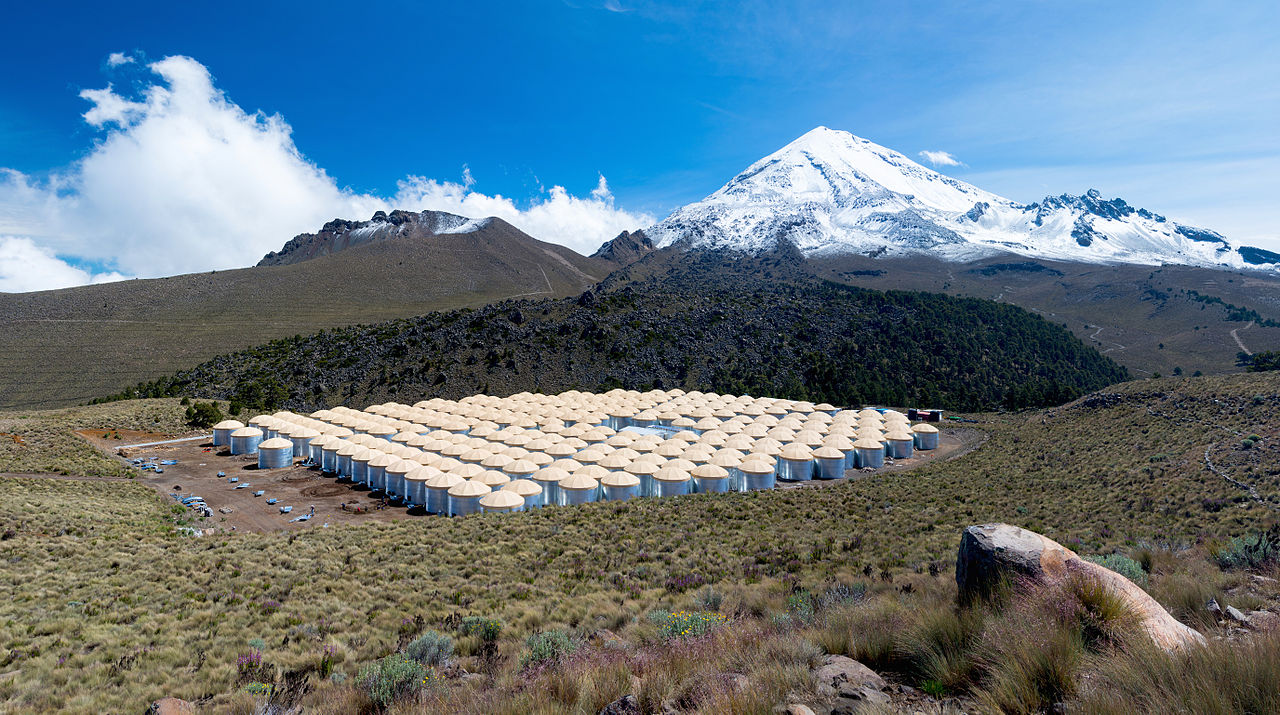
A photograph of the High-Altitude Water Cherenkov Observatory in Mexico. Hundreds of tan-domed steel water tanks sit beneath a snow-capped peak in the background.
Michigan State University belongs to the collaboration using the High-Altitude Water Cherenkov Observatory in Mexico to study high-energy phenomena in our galaxy. Credit: Jordan A. Goodman/Wikimedia Commons

From this vantage point, it can observe the aftermath of gamma rays striking air in the atmosphere. Such collisions create what are called air showers, which are a bit like particle explosions that are imperceptible to the naked eye.

The energy of the original gamma ray is liberated and redistributed amongst new fragments consisting of lower energy particles and light. It’s these particles — and the new particles they create on their way down — that HAWC can “see.”

When the shower particles interact with water in HAWC’s tanks, they create what’s known as Cherenkov radiation that can be detected with the observatory’s instruments.

Nisa and her colleagues began collecting data in 2015. In 2021, the team had accrued enough data to start examining the sun’s gamma rays with sufficient scrutiny.

“After looking at six years’ worth of data, out popped this excess of gamma rays,” Nisa said. “When we first saw it, we were like, ‘We definitely messed this up. The sun cannot be this bright at these energies.’”

Making history

The sun gives off a lot of light spanning a range of energies, but some energies are more abundant than others.

For example, through its nuclear reactions, the sun provides a ton of visible light — that is, the light we see. This form of light carries an energy of about 1 electron volt, which is a handy unit of measure in physics.
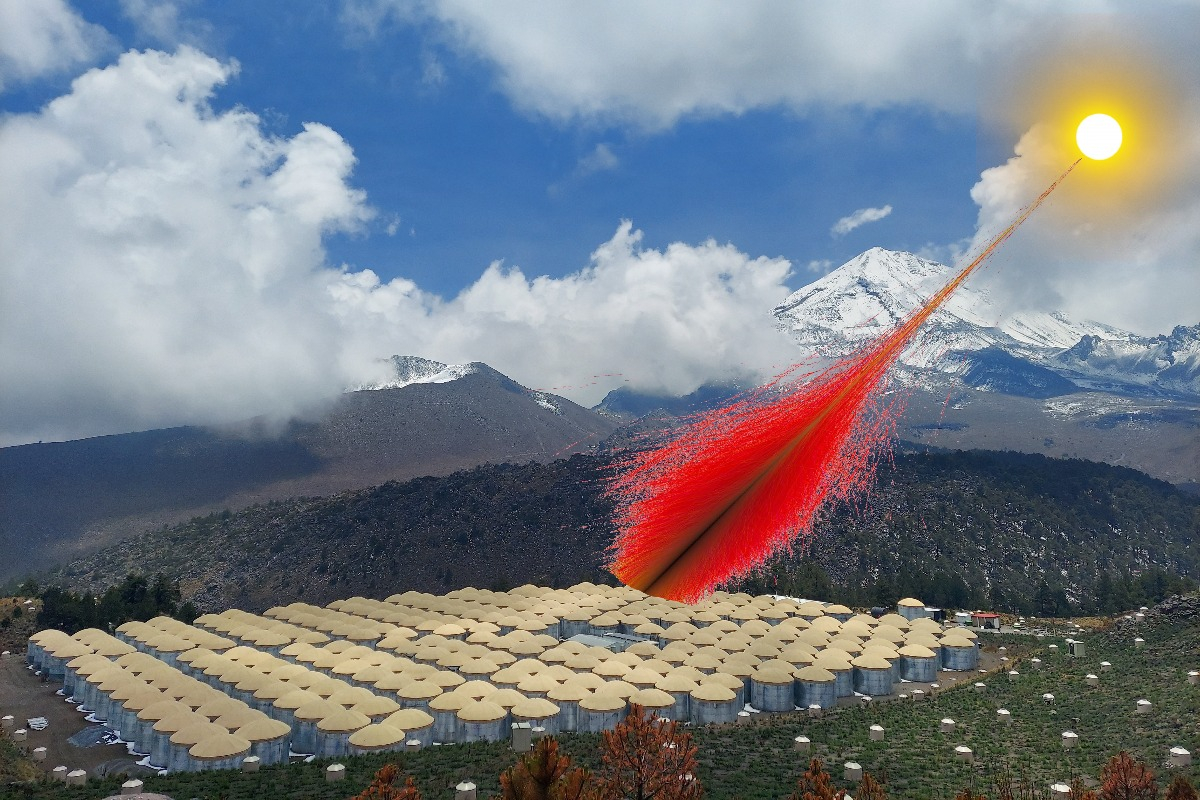
A composite image shows a photograph of the High-Altitude Water Cherenkov Observatory in Mexico. The observatory is a grid of 300 water tanks with steel walls and tan caps. A portion of these tanks are being struck by red lines, showing the trajectory of particles generated by high-energy gamma rays from the sun.
A composite image shows a photograph of the High-Altitude Water Cherenkov Observatory in Mexico observing particles, whose paths are shown as red lines, generated by high-energy gamma rays from the sun. Michigan State University researchers were part of the team that observed those particles and gamma rays. Credit: Mehr Un Nisa

The gamma rays that Nisa and her colleagues observed had about 1 trillion electron volts, or 1 tera electron volt, abbreviated 1 TeV. Not only was this energy level surprising, but so was the fact that they were seeing so much of it.

In the 1990s, scientists predicted that the sun could produce gamma rays when high-energy cosmic rays — particles accelerated by a cosmic powerhouse like a black hole or supernova — smash into protons in the sun. But, based on what was known about cosmic rays and the sun, the researchers also hypothesized it would be rare to see these gamma rays reach Earth.

At the time, though, there wasn’t an instrument capable of detecting such high-energy gamma rays and there wouldn’t be for a while. The first observation of gamma rays with energies of more than a billion electron volts came from NASA’s Fermi Gamma-ray Space Telescope in 2011.

Over the next several years, the Fermi mission showed that not only could these rays be very energetic, but also that there were about seven times more of them than scientists had originally expected. And it looked like there were gamma rays left to discover at even higher energies.

When a telescope launches into space, there’s a limit to how big and powerful its detectors can be. The Fermi telescope’s measurements of the sun’s gamma rays maxed out around 200 billion electron volts.

Theorists led by John Beacom and Annika Peter, both professors at Ohio State University, encouraged the HAWC Collaboration to take a look.

“They nudged us and said, ‘We’re not seeing a cutoff. You might be able to see something,” Nisa said.
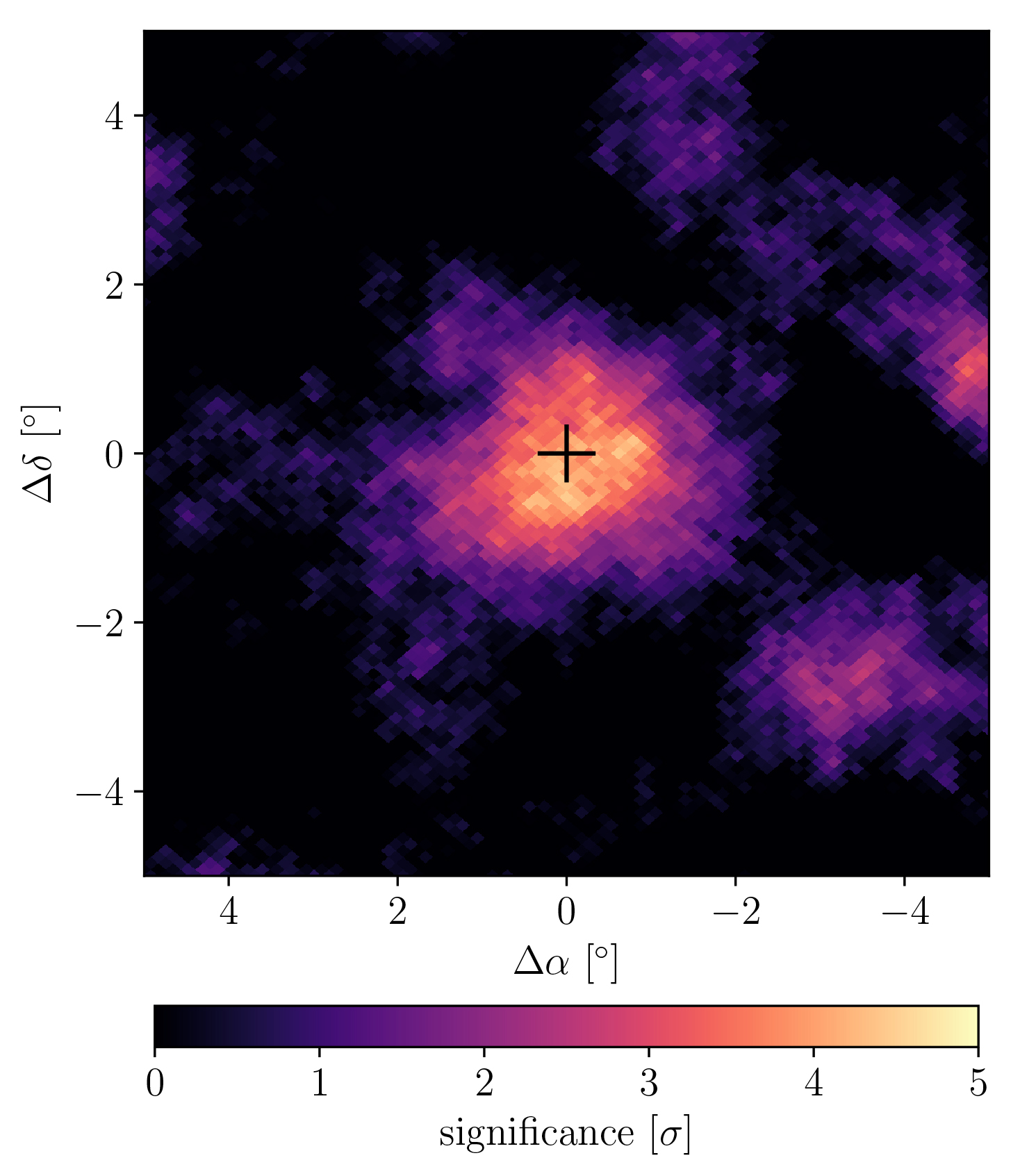
A figure that looks like a heat map shows a bright yellow spot at its center, ringed by “cooler” oranges and purples. This represents the excess of gamma rays observed by the HAWC Collaboration.
What an excess of solar gamma rays looks like to the High-Altitude Water Cherenkov Observatory Collaboration, which includes researchers from Michigan State University. Credit: Courtesy of the HAWC Collaboration

The HAWC Collaboration includes more than 30 institutions across North America, Europe and Asia, and a sizable portion of that is represented in the nearly 100 authors on the new paper. That includes three additional Spartans: graduate student Daniel Salazar-Gallegos, Professor Emeritus James Linnemann and Kirsten Tollefson, a professor of physics and astronomy and associate dean in the Graduate School at MSU.

Now, for the first time, the team has shown that the energies of the sun’s rays extend into the TeV range, up to nearly 10 TeV, which does appear to be the maximum, Nisa said.

Currently, the discovery creates more questions than answers. Solar scientists will now scratch their heads over how exactly these gamma rays achieve such high energies and what role the sun’s magnetic fields play in this phenomenon, Nisa said.

When it comes to the cosmos, though, that’s part of the excitement. It tells us that there was something wrong, missing or perhaps both when it comes to how we understand our nearest and dearest star.

“This shows that HAWC is adding to our knowledge of our galaxy at the highest energies, and it’s opening up questions about our very own sun,” Nisa said. “It’s making us see things in a different light. Literally.”


MEDIA CONTACTS

Emilie Lorditch
Engineering, Science and TechnologyNuclear ScienceNuclear Science

Latest News

MSUToday Weekly Update

The MSUToday Weekly Update email showcases how Spartans are making a difference through academic excellence, research impact and community outreach. Get inspired by these stories of innovation, collaboration and determination. Plus, enjoy photos and videos of campus and more MSU content to help keep you connected to the Spartan community.

Sign UpUpdate My Information

Connect With Us

Visit our Facebook pageVisit our page on XVisit our Instagram pageVisit our LinkedIn pageVisit our YouTube pageVisit our TikTok page

Health and Safety

  • MSU Police and Public Safety
  • Olin Health Center
  • Counseling & Psychiatric Services (CAPS)
  • University Health and Wellbeing
  • MSU Health Care
  • Civil Rights and Title IX
  • Our Commitment
  • Center for Survivors
  • Security & Fire Safety Report
  • University Policy on Relationship Violence and Sexual Misconduct
  • Notice of Non-Discrimination, Anti-Harassment and Non-Retaliation
  • Health Care Non-Discrimination Notice

Support Services

  • Disability Resources
  • Supportive Services
  • Learning Resources

Working at MSU

  • Human Resources
  • EBS Login
  • Job Postings
  • Employee Assistance Program

Reports

  • CARES Act Funding
  • Student Achievement and Outcomes

Contact us

517-355-1855

Address

Michigan State University 426 Auditorium Road East Lansing, MI 48824

Follow Us

  • Visit our Facebook page
  • Visit our page on X
  • Visit our Instagram page
  • Visit our TikTok page
  • Visit our LinkedIn page
  • Visit our YouTube page

If you're having accessibility issues, please let us know.

Know More: Campus Safety Information and ResourcesTransparency Reporting: Budget & Salary/Compensation
  • Contact Information|
  • Site Map|
  • Privacy Statement|
  • Site Accessibility|
  • Call MSU: (517) 355-1855|
  • Visit: msu.edu|
  • Notice of Nondiscrimination|

SPARTANS WILL|© Michigan State University|